Solitaire Pendants: Overview of Designs, Stone Shapes, Settings, and Metal Options
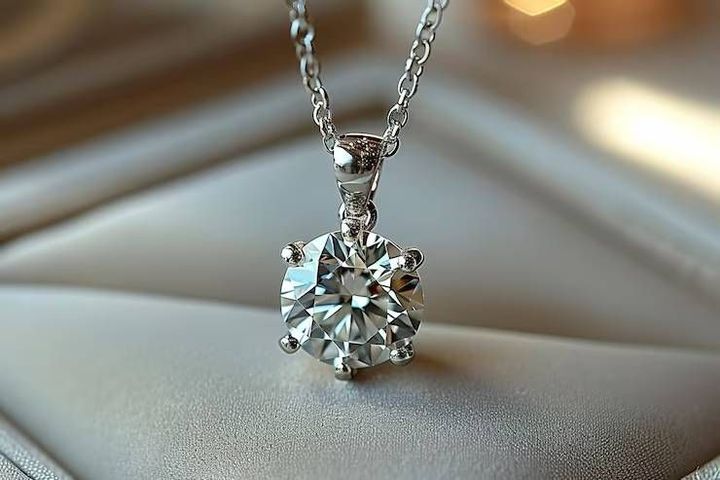
A solitaire pendant is a piece of jewelry designed around one primary gemstone, most commonly a single diamond.
The central stone is usually placed in a simple setting so that attention remains focused on its shape, proportions, and appearance. Solitaire pendants can be made using gold, platinum, or other precious-metal settings.
The basic concept has existed for many years because a single-stone design provides a straightforward way to highlight a gemstone without relying on numerous decorative elements. Modern solitaire diamond pendants are available in different shapes, metal colors, setting styles, and chain configurations.
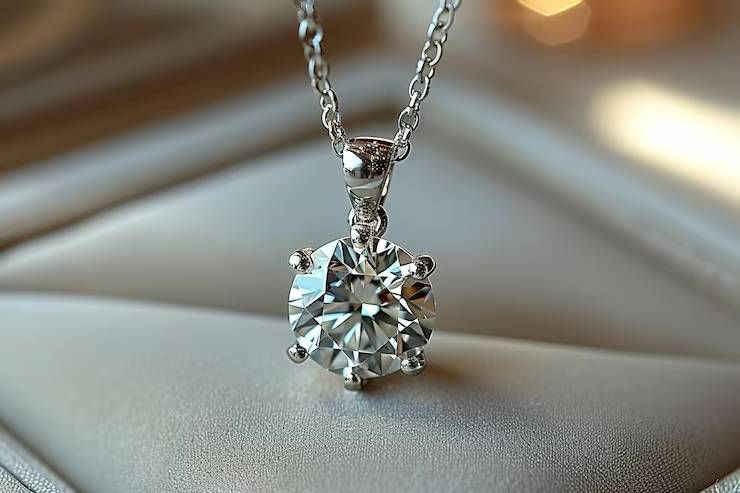
Common gemstone shapes include:
- Round brilliant
- Princess
- Oval
- Pear
- Cushion
- Emerald
- Marquise
- Heart
The appearance of a solitaire pendant depends on several components. The gemstone's cut affects how it interacts with light, while color and clarity influence its visual characteristics. The metal setting also affects the overall appearance and structural support.
A solitaire pendant may be worn as everyday jewelry or reserved for occasions such as anniversaries, celebrations, or formal events. Its relatively simple structure also makes it easy to combine with different clothing styles and other jewelry.
Main Components of a Solitaire Pendant
A typical pendant has three major components: the gemstone, the setting, and the chain.
| Component | Main Function | Common Considerations |
|---|---|---|
| Center gemstone | Provides the visual focus | Shape, cut, color, clarity |
| Pendant setting | Holds and protects the gemstone | Prongs, bezel, metal type |
| Chain | Supports and positions the pendant | Length, thickness, clasp |
The setting can significantly affect the appearance and security of a gemstone. Prong settings use small metal supports around the stone, while bezel settings surround the gemstone with a metal rim. Each approach has different visual and practical characteristics.
Why Solitaire Pendants Matter Today
Solitaire pendants remain relevant because they combine a relatively simple visual structure with a wide range of material and design choices. They can accommodate different gemstone sizes and shapes while maintaining the central single-stone concept.
For consumers researching diamond jewelry, understanding the terminology behind solitaire pendants can make product information easier to interpret. Terms such as carat, cut, color, clarity, metal purity, setting, and certification describe different characteristics and should not be treated as interchangeable.
This distinction is particularly important when comparing diamond pendant designs. A larger carat weight does not automatically indicate better appearance because cut quality, proportions, color, clarity, and setting can also influence how a diamond looks.
Gold solitaire pendants also require attention to metal purity. In India, recognized gold hallmark grades include 14K (585), 18K (750), 20K (833), 22K (916), 23K (958), and 24KS (995), according to the Bureau of Indian Standards (BIS).
For buyers and jewelry researchers, hallmarking provides an important reference for understanding precious-metal purity. BIS explains that hallmarking is intended to provide an official indication of the fineness of precious-metal articles.
Factors That Influence Solitaire Pendant Design
Several characteristics determine how a solitaire pendant looks and functions.
Diamond shape: Round diamonds are commonly associated with traditional solitaire designs, while oval, pear, marquise, and other shapes create different visual proportions.
Cut: Cut describes how a diamond's facets, proportions, and finish affect its interaction with light. It should not be confused with the diamond's shape.
Color: Diamond color grading evaluates the presence of body color in a diamond. Different grading systems may use specific scales and terminology.
Clarity: Clarity refers to internal characteristics and surface features. These characteristics can vary considerably between individual stones.
Metal: Gold and platinum are common choices for precious-metal settings. Gold may be available in different purity levels and colors.
Setting: Prong, bezel, and other settings provide different combinations of visibility, protection, and design.
Recent Developments in India
Hallmarking requirements have continued to develop in India. BIS's mandatory hallmarking framework has undergone several amendments, including changes issued during 2025 and 2026. The BIS mandatory hallmarking page lists amendments dated July 2025, March 2026, April 2026, and August 2026.
In March 2026, BIS announced an additional seven districts covered under the sixth phase of mandatory hallmarking. The listed districts were Rupnagar in Punjab; Banda in Uttar Pradesh; Beed in Maharashtra; Gomati in Tripura; Katihar in Bihar; Beawar in Rajasthan; and Neemuch in Madhya Pradesh.
BIS also published further hallmarking-related amendments during 2026. Its records show a second amendment to the Hallmarking of Gold Jewellery and Gold Artefacts Order in May 2026.
Another important development is the continued use of the Hallmark Unique Identification (HUID) system. BIS states that a hallmarked gold article carries the BIS logo, purity/fineness information, and a six-digit alphanumeric HUID. Consumers can use the BIS Care application to verify HUID information.
These developments are relevant when researching gold pendants and other gold jewelry because hallmarking coverage and verification procedures can affect how consumers assess precious-metal articles.
Laws, Regulations, and Policies Affecting Solitaire Pendants
In India, gold and silver hallmarking is governed through the BIS framework. BIS states that hallmarking is covered under the BIS Act, 2016, while the BIS (Hallmarking) Regulations, 2018 establish provisions concerning jeweller registration, assaying and hallmarking centres, and refinery licensing.
BIS registration requirements also apply to businesses involved in selling hallmarked gold and silver articles. The BIS jeweller information states that manufacturers, wholesalers, distributors, and retailers engaged in selling hallmarked precious-metal articles are required to obtain BIS registration.
For consumers, HUID verification is an important practical resource. BIS's consumer-protection guidance states that the BIS Care application provides a “Verify HUID” feature for hallmarked gold jewelry.
GST is another relevant consideration when studying the Indian jewelry market. CBIC's published GST rate information lists a 3% GST rate for articles of jewelry under heading 7113, while its sectoral FAQ explains that GST on jewelry supplied to an end consumer is calculated at 3% of the total transaction value.
Regulatory requirements can change, so current BIS and government information should be consulted when evaluating a specific transaction or compliance question.
Tools and Resources for Solitaire Pendant Research
Several official and practical resources can help people understand solitaire pendants and precious-metal jewelry.
- BIS Care App: Useful for checking the HUID associated with eligible hallmarked gold jewelry.
- BIS Hallmarking Resources: Provides information about hallmark standards, jeweller registration, mandatory hallmarking, and consumer protection.
- Diamond Grading Reports: Laboratory reports can document characteristics such as diamond shape, measurements, color, clarity, and carat weight.
- Ring and Pendant Measurement Guides: Useful for understanding dimensions and proportions when comparing jewelry designs.
- Jewelry Care Guides: Provide information about cleaning, storage, handling, and periodic inspection.
- GST Resources from CBIC: Government information can help explain the applicable indirect-tax framework for jewelry.
A useful research process is to examine the gemstone information first, then review the metal purity and hallmark information, followed by the setting and physical dimensions.
Common Solitaire Pendant Materials
| Material | Typical Characteristic | Research Point |
|---|---|---|
| 14K Gold | Lower gold content than higher-karat options | Check stated fineness |
| 18K Gold | Higher gold content | Commonly used in fine jewelry |
| 22K Gold | High gold content | Softer than many lower-karat alloys |
| Platinum | Precious metal with distinctive properties | Check metal specification |
| Silver | Lower-cost precious-metal category | Confirm applicable hallmark information |
The choice of material affects durability, appearance, maintenance, and the characteristics of the finished pendant. Metal hardness and alloy composition can influence how a setting performs during everyday use.
Frequently Asked Questions
What is a solitaire pendant?
A solitaire pendant is a pendant centered on one primary gemstone. The design normally gives the main stone visual prominence instead of using multiple central stones.
Are solitaire pendants always made with diamonds?
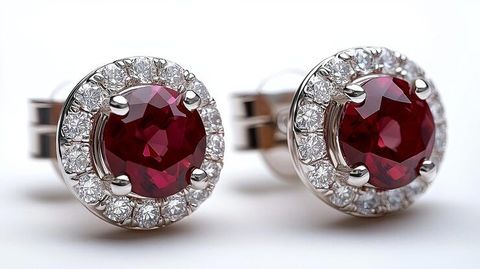
No. Diamonds are common, but a solitaire pendant can feature other gemstones, including sapphires, rubies, emeralds, or other stones.
What does HUID mean on gold jewelry?
HUID stands for Hallmark Unique Identification. BIS describes it as a six-digit alphanumeric number associated with a hallmarked gold article and provides a verification facility through the BIS Care application.
Which gold purity grades can be hallmarked in India?
BIS lists six permitted gold fineness grades for hallmarking: 14K (585), 18K (750), 20K (833), 22K (916), 23K (958), and 24KS (995).
Does a higher carat diamond automatically mean better quality?
No. Carat refers to weight, while cut, color, clarity, proportions, and other characteristics also affect a diamond's appearance and documented quality.
Conclusion
Solitaire pendants are defined by a simple central-stone concept that can be adapted to many gemstone shapes, metals, and setting styles. Their straightforward structure makes terminology such as cut, clarity, color, carat, metal purity, and hallmarking particularly useful when researching different designs.
In India, understanding BIS hallmarking and HUID verification is an important part of researching gold solitaire pendants and other gold jewelry. Regulatory developments during 2025 and 2026 also show that the hallmarking framework continues to evolve.
For informed research, consumers should examine gemstone documentation, metal specifications, hallmark information, setting construction, and applicable government requirements together. Using official BIS and government resources provides a more reliable foundation than relying only on descriptive jewelry terminology.