Pearl Studs: Guide to Pearl Types, Designs, Settings, and Key Features
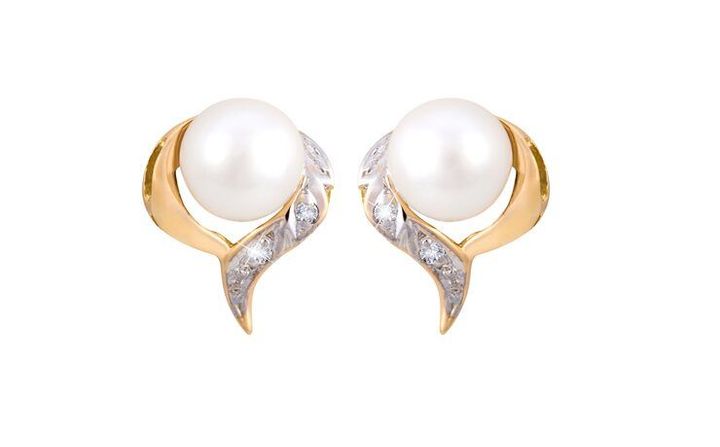
Pearl studs are earrings designed around one central pearl attached to a simple post, usually with a backing that keeps the earring in place.
Their relatively compact design makes them one of the most recognizable forms of pearl jewelry.
A pearl is an organic gemstone created when a mollusk forms layers of nacre around an irritant or implanted nucleus. The resulting pearl can vary in size, shape, color, surface appearance, and luster. These characteristics influence how pearl stud earrings look and how they should be maintained.
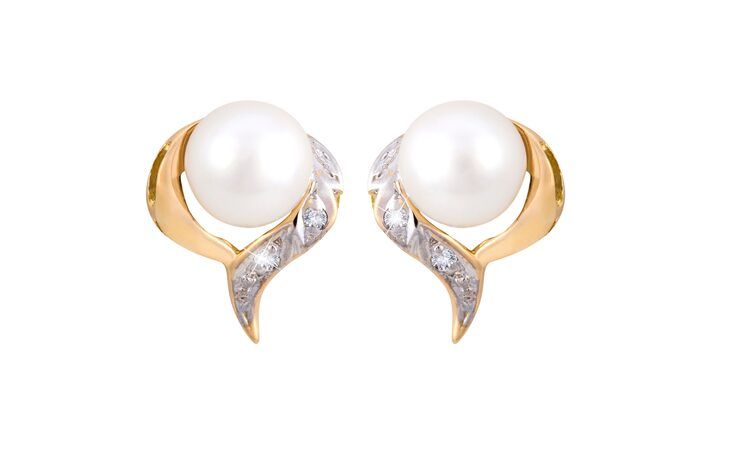
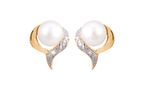
Pearl studs can be made with several pearl varieties, including freshwater, Akoya, Tahitian, and South Sea pearls. The setting may use metals such as gold, silver, or platinum. Some designs also combine pearls with diamonds or other gemstones.
The main components of a pearl stud include:
- Pearl
- Earring post
- Metal setting or cup
- Earring backing
- Optional gemstones or decorative elements
Freshwater pearl studs are commonly associated with organic shapes and a broad range of sizes and colors. Akoya pearls are generally recognized for their round shapes and pronounced luster, while South Sea and Tahitian pearls can provide larger sizes and distinctive natural colors.
Why Pearl Studs Remain Important
Pearl studs occupy a distinctive place in jewelry because their design combines a relatively simple earring structure with the natural characteristics of pearls.
They can be relevant to different groups of people, including those interested in traditional jewelry, contemporary accessories, personal collections, and formal or everyday styling.
One important consideration is that pearls are softer than many traditional gemstones. This makes knowledge about pearl quality and maintenance particularly useful.
When examining pearl stud earrings, several characteristics can be considered together:
| Feature | What to Examine | Why It Matters |
|---|---|---|
| Luster | Reflection and surface glow | Helps determine visual appearance |
| Surface | Blemishes, marks and texture | Indicates surface quality |
| Shape | Round, oval, button or baroque | Influences overall design |
| Size | Pearl diameter | Affects visual proportion |
| Color | Natural body color and overtone | Determines appearance |
| Matching | Similarity between paired pearls | Important for earrings |
| Setting | Metal and construction | Affects durability and appearance |
Pearl quality should not be judged by a single characteristic. A pearl with excellent luster but an unusual shape can have a different visual appeal from a highly symmetrical pearl with less pronounced luster.
For gold pearl earrings, the metal component also becomes relevant. The purity of gold, construction of the setting, and condition of the post and backing can affect how the earrings function over time.
Recent Developments and Jewelry Trends
Pearls have continued to appear in contemporary jewelry and fashion during 2025 and 2026. Rather than being limited to traditional round strands, recent designs have increasingly explored irregular shapes, larger forms, mixed materials, and more expressive settings.
In March 2026, Vogue reported that Fall 2026 fashion collections were presenting pearls in unconventional forms, including iridescent earrings and other reinterpretations of traditional pearl jewelry.
Vogue also reported in September 2026 that Art Deco influences were returning to jewelry design, with decorative earrings and geometric forms gaining attention. This broader design movement can influence how pearl earrings are incorporated into contemporary settings.
In July 2026, Vogue's Fall 2026 haute couture coverage also highlighted pearl details appearing in couture collections, showing continued interest in pearls as a decorative material.
The continuing interest can be summarized as follows:
- Traditional round pearl studs remain recognizable.
- Baroque and irregular pearls provide more organic silhouettes.
- Pearl-and-diamond combinations combine different textures.
- Geometric metal settings can give pearl jewelry a contemporary appearance.
- Larger pearls are increasingly used for statement-oriented designs.
- Mixed-metal and sculptural designs provide alternatives to conventional settings.
Pearl-related discussions have also increasingly included sustainability and supply considerations. A December 2024 Vogue report examined the relationship between pearl production, ocean conditions, and changing market conditions, noting that pearl cultivation depends heavily on suitable marine environments.
Laws, Hallmarking and Consumer Rules in India
Pearl studs are affected by Indian regulations primarily when they incorporate precious-metal components such as gold or silver. The Bureau of Indian Standards (BIS) states that gold and silver are currently the precious metals covered by India's hallmarking framework. Pearls themselves are not precious metals and therefore are not independently hallmarked as pearls.
For gold pearl earrings, the gold component can therefore be relevant to hallmarking requirements. BIS explains that a hallmarked gold article includes the BIS Standard Mark, purity expressed in caratage and fineness, and a six-digit alphanumeric Hallmark Unique Identification (HUID) number.
For paired jewelry, BIS advises that each article in the pair should carry the appropriate hallmark. This is particularly relevant to pearl stud earrings because the two earrings form a matched pair but remain separate articles. Detachable parts may also require appropriate marking under the applicable rules.
India's hallmarking framework has continued to develop. BIS recorded a Hallmarking of Gold Jewellery and Gold Artefacts (Amendment) Order, 2026, dated March 2, 2026, and noted that seven additional districts were brought under mandatory hallmarking in the sixth phase.
BIS also lists a Hallmarking of Gold Jewellery and Gold Artefacts (Second Amendment) Order, 2026, published on May 8, 2026.
Consumers can use the official BIS Care App's Verify HUID feature to check the HUID associated with hallmarked gold jewelry. BIS also provides information about recognized Assaying and Hallmarking Centres for testing and verification.
It is important to distinguish between pearl quality and metal purity. A hallmark primarily provides information about the precious-metal component; it does not by itself certify the quality, origin, size, luster, or treatment of the pearl.
Tools and Resources for Pearl Jewelry
Several resources can help readers understand pearl studs and related jewelry more accurately.
BIS Hallmarking Information: The BIS website provides information about hallmarking requirements, HUID verification, recognized hallmarking centres, and applicable standards.
BIS Care App: The application includes the HUID verification function for applicable hallmarked gold jewelry.
BIS Registered Jeweller List: BIS maintains a list of licensed jewellers, which was updated in February 2026.
Pearl Measurement Tools: A millimeter ruler or digital caliper can be used to understand pearl diameter when examining loose pearls or jewelry specifications.
Jewelry Magnification: A 10× loupe can help examine surface characteristics, settings, posts, and markings. BIS also notes the use of 10× magnification for examining hallmarks at registered jewelry outlets.
Jewelry Care Records: A simple spreadsheet or notes template can record pearl type, approximate size, metal purity, date of acquisition, documentation, and maintenance history.
Frequently Asked Questions
What are pearl studs?
Pearl studs are earrings featuring a pearl positioned close to the earlobe and attached to a post. They may use freshwater, Akoya, Tahitian, South Sea, or other pearls and can be mounted in gold, silver, platinum, or other jewelry materials.
Are freshwater pearl studs real pearls?
Yes. Freshwater pearls are genuine pearls produced by freshwater mollusks. Their shapes can range from relatively round forms to highly irregular baroque shapes.
How should pearl stud earrings be cared for?
Pearls should generally be protected from direct contact with perfumes, cosmetics, harsh chemicals, and abrasive materials. After use, gently wiping them with a soft, clean cloth can help remove surface residue. They should also be stored separately from harder jewelry to reduce scratching.
Does a BIS hallmark certify the pearl?
No. BIS hallmarking concerns precious-metal purity, particularly gold and silver under India's hallmarking framework. A hallmark does not independently certify pearl type, luster, origin, treatment, or quality.
Do both earrings in a pair need hallmark information?
BIS states that each article in a pair should have the appropriate hallmark, making this relevant when pearl studs have hallmarked gold or silver components.
Conclusion
Pearl studs combine the natural characteristics of pearls with a simple and versatile earring structure. Understanding pearl varieties, luster, shape, surface characteristics, matching, and metal settings makes it easier to interpret information about pearl stud earrings accurately.
Recent fashion developments in 2025 and 2026 show that pearls continue to be interpreted through contemporary shapes, irregular forms, sculptural settings, and unconventional styling.
In India, the most important regulatory distinction is between the pearl and the precious-metal component surrounding it. Where gold or silver is used, applicable BIS hallmarking requirements and HUID information can help establish metal purity. Understanding these distinctions allows readers to evaluate freshwater pearl studs, gold pearl earrings, diamond pearl studs, and other pearl jewelry based on factual characteristics rather than assumptions.