Cushion Cut Engagement Rings: Guide to Styles, Diamonds and Settings
Jewelry design combines shape, proportion, materials, setting structure, surface details, and decorative elements to create pieces with distinct visual characteristics.
When exploring shapes, settings, and key design details, it helps to understand how these elements work together. The same gemstone shape can appear very different depending on its setting, surrounding details, metal, and overall proportions.
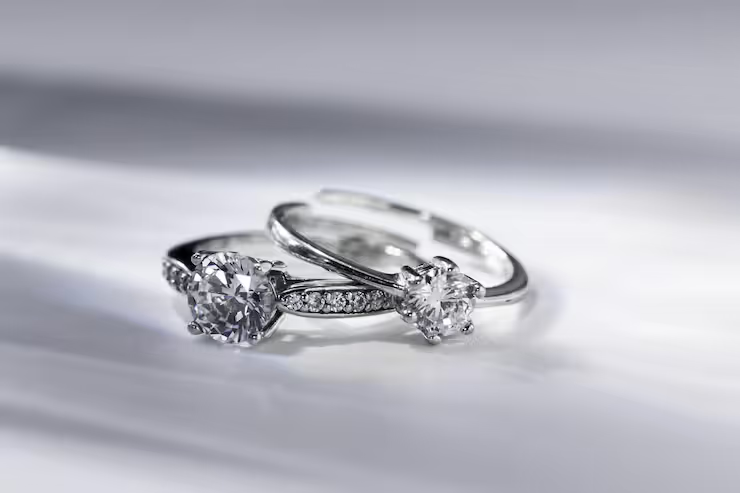
Jewelry design has developed across many cultures and historical periods. Ancient ornaments used materials such as shells, stones, metals, beads, and natural objects, while later techniques introduced more precise metalworking, gemstone cutting, engraving, and decorative settings. Modern jewelry continues to draw from traditional forms while incorporating computer-aided design, advanced cutting techniques, and contemporary styling.
Understanding shapes
A shape refers to the visible outline or geometric form of a gemstone, ornament, or jewelry piece. In gemstone jewelry, shape and cut are related but are not identical. Shape describes the outline, while cut describes how the material has been faceted, proportioned, and polished.
Common gemstone shapes include:
- Round
- Oval
- Cushion
- Princess
- Emerald
- Pear
- Marquise
- Radiant
- Asscher
- Heart
Each shape creates a different visual effect. Elongated shapes such as oval, pear, and marquise can create a lengthened appearance, while round and square-based shapes provide different forms of symmetry.
Understanding settings
A setting is the structure that holds a gemstone or decorative element in place. It is both a functional and visual part of jewelry design.
Common settings include prong, bezel, halo, channel, pavé, and tension-inspired designs. A prong setting uses small metal projections to hold a stone, while a bezel surrounds part or all of the stone with metal. A halo places smaller stones around a central gemstone.
The setting affects how much of a gemstone is visible, how the piece interacts with clothing and movement, and how the overall design appears from different angles.
Importance
Understanding shapes, settings, and key design details can make jewelry easier to evaluate and compare. These elements influence appearance, structure, proportions, maintenance requirements, and the way light interacts with gemstones.
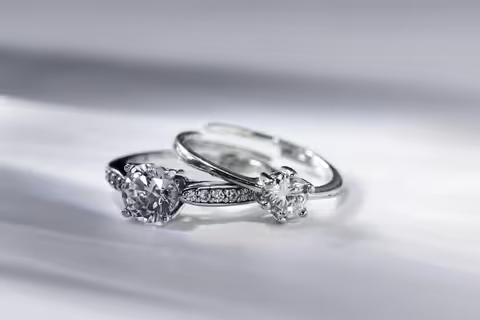
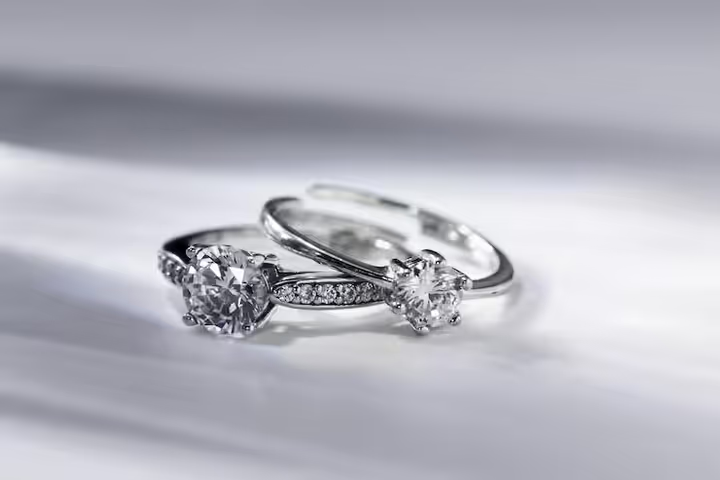
The subject is relevant to jewelry designers, students, collectors, researchers, craftspeople, and general readers interested in understanding how jewelry is constructed. It is also useful when interpreting jewelry photographs because an image may not show important details such as the underside of a setting, the thickness of a band, or the way a gemstone is secured.
How shape affects appearance
Gemstone shape influences the visual character of a piece. A round shape often creates a balanced geometric outline, while an oval combines curved edges with an elongated profile. Emerald shapes use rectangular outlines with clipped corners, creating a structured appearance.
Cushion shapes generally combine a square or rectangular outline with rounded corners. Pear shapes have a rounded end and a pointed end, while marquise shapes have pointed ends on both sides.
The following table provides a general comparison:
| Shape | General outline | Common design characteristic |
|---|---|---|
| Round | Circular | Symmetrical and balanced |
| Oval | Elongated circle | Lengthened visual profile |
| Cushion | Rounded square or rectangle | Soft geometric appearance |
| Emerald | Rectangle with clipped corners | Linear and structured |
| Pear | Rounded end with point | Asymmetrical directional form |
| Marquise | Elongated with two points | Narrow, elongated outline |
| Princess | Square | Angular geometric appearance |
| Heart | Heart-shaped | Distinctive symbolic outline |
The visual effect also depends on the proportions of the individual stone. Two gemstones with the same general shape may look different because their length-to-width ratios, facet arrangements, and dimensions vary.
How settings affect design
Settings influence both appearance and construction. A low-profile setting can position a gemstone closer to the finger or surface of the jewelry, while a raised setting creates more separation between the stone and surrounding structure.
Prong settings can leave more of a gemstone's sides visible, whereas bezel settings place metal around the perimeter. Channel settings arrange smaller stones within a channel of metal, creating a continuous visual pattern.
Settings also affect cleaning and inspection. Areas containing small stones, narrow spaces, or intricate metalwork can require more careful attention because particles and residue may accumulate in difficult-to-reach areas.
Proportion and balance
Proportion describes the relationship between different parts of a jewelry piece. A central gemstone, surrounding stones, band, prongs, shoulders, and decorative elements should be considered as parts of one overall design.
Balance does not necessarily mean that every component must be identical. A design can use deliberate asymmetry while maintaining visual stability. The relationship between the main element and supporting details is therefore an important part of jewelry design.
Recent Updates
Jewelry design continues to combine traditional craftsmanship with digital modeling, precision manufacturing, improved gemstone imaging, and changing aesthetic preferences. Developments from 2024 through 2026 have included greater use of digital design workflows and continued interest in distinctive shapes, personalized proportions, and detailed settings.
Computer-aided jewelry design
Computer-aided design allows jewelry models to be developed digitally before physical production. Designers can examine proportions, modify dimensions, test different setting structures, and create detailed representations of complex forms.
Three-dimensional modeling can also make it easier to study a design from several angles. This is particularly useful for pieces with intricate structures, multiple stones, unusual profiles, or detailed metalwork.
Three-dimensional printing
Three-dimensional printing is increasingly integrated into jewelry production workflows. Digital models can be converted into physical patterns or prototypes, allowing designers and craftspeople to examine proportions before final metalwork.
The technology does not replace traditional craftsmanship in every situation. Hand finishing, stone setting, polishing, engraving, and other techniques may still require specialized manual work.
Changing design preferences
Current jewelry design includes a wide range of shapes and settings rather than one uniform style. Some designs emphasize clean geometric forms, while others use vintage-inspired details, organic curves, mixed shapes, or multiple gemstone arrangements.
There is also continued interest in customization. Digital modeling allows designers to adjust dimensions, stone arrangements, proportions, and decorative details to create designs that differ from standard forms.
Sustainability considerations
Environmental considerations have also become more visible in jewelry discussions. Designers and manufacturers may examine material sourcing, metal recovery, production waste, durability, and the reuse of existing materials.
These considerations can affect design decisions, particularly when a piece is intended to remain usable for an extended period or incorporate previously owned materials.
Laws or Policies
Jewelry design and trade can be affected by consumer protection rules, hallmarking requirements, gemstone disclosure practices, intellectual property laws, and regulations concerning precious metals and imported materials. Requirements differ between countries and can also vary according to the type of jewelry and material involved.
Jewelry regulations in India
India has a formal hallmarking framework for specified precious-metal articles. The Bureau of Indian Standards administers the hallmarking system and provides information about hallmarking requirements, registration, and related procedures. Bureau of Indian Standards
For gold jewelry, hallmarking can provide information about purity and identification marks where applicable. The exact requirements depend on the relevant regulations and product category.
Gemstone and material information
Descriptions concerning gemstones can also be subject to consumer protection principles. Information about whether a stone is natural, laboratory-grown, treated, or imitation should be presented accurately when such characteristics are relevant.
International organizations and national authorities may have additional rules concerning the movement of precious stones and metals across borders. Jewelry containing protected materials, culturally significant objects, or restricted substances may be subject to additional requirements.
Design protection
Jewelry designs can also involve intellectual property considerations. Original decorative designs, technical features, brand identifiers, and artistic elements may receive different forms of legal protection depending on the jurisdiction.
For this reason, reproducing another designer's distinctive design can raise legal questions even when the underlying jewelry concept is common.
Tools and Resources
Several tools can help readers understand jewelry shapes, settings, proportions, and design construction.
Design software
Computer-aided design platforms allow users to create and examine three-dimensional jewelry models. These systems can display measurements, proportions, stone placements, and structural components.
Measurement tools
Jewelry professionals may use calipers, gauges, scales, loupe magnifiers, microscopes, and other measuring instruments. These tools help examine dimensions, gemstone proportions, metal thickness, setting details, and surface conditions.
Gemstone references
Gemological references can explain gemstone varieties, shapes, treatments, optical characteristics, hardness, and common identification methods. Educational resources from recognized gemological institutions can help readers understand technical terminology.
Hallmarking resources
For Indian jewelry, the Bureau of Indian Standards provides information about hallmarking, hallmark identification, and applicable requirements. Official government and standards websites are useful for checking current regulatory information because requirements can change.
Design templates
Sketches, proportion diagrams, CAD templates, measurement charts, and setting diagrams can help students and general readers understand how different components relate to one another. These resources are particularly useful when learning the terminology used in jewelry design.
FAQs
What are the main gemstone shapes used in jewelry design?
Common gemstone shapes include round, oval, cushion, princess, emerald, pear, marquise, radiant, Asscher, and heart. Each has a different outline and can produce a different visual effect within a jewelry design.
How do jewelry settings affect gemstone appearance?
Jewelry settings influence how much of a gemstone is visible, how it is positioned, and how the surrounding metal interacts with it. Prong, bezel, halo, channel, and pavé settings can create noticeably different appearances.
What are important jewelry design details to examine?
Important details include gemstone shape, dimensions, proportions, setting structure, metal type, band width, prong arrangement, surface finish, symmetry, and the relationship between the central and surrounding elements.
What is the difference between gemstone shape and cut?
Shape describes the outline of a gemstone, such as round, oval, or pear. Cut refers to the arrangement and proportions of facets and surfaces that determine how the gemstone is shaped and polished.
How is technology changing jewelry design?
Computer-aided design, three-dimensional modeling, digital imaging, and three-dimensional printing are changing how jewelry concepts are developed and examined. These technologies can assist with precision and visualization while traditional handcrafting techniques remain part of many designs.
Conclusion
Shapes, settings, proportions, materials, and decorative details all contribute to the appearance and structure of jewelry. Understanding these elements makes it easier to distinguish between different design approaches and recognize how individual components work together. Modern jewelry design combines established craftsmanship with digital modeling, precision tools, and evolving design preferences. Regulatory frameworks, material information, and hallmarking systems also form part of the broader context surrounding jewelry design.