Platinum Wedding Bands: Purity, Designs, Trends & Guide
Platinum wedding bands are rings made primarily from platinum and commonly chosen as symbols of marriage and long-term commitment.
Unlike gold, platinum is naturally white in appearance and is generally used in jewellery at a high level of purity.
In India, Pt950 platinum is an important term to understand. The “950” indicates that the metal contains 95% platinum, with the remaining portion made up of other alloying metals. Platinum Guild International has described Pt950 as a purity standard used within its platinum jewellery quality-assurance programme.
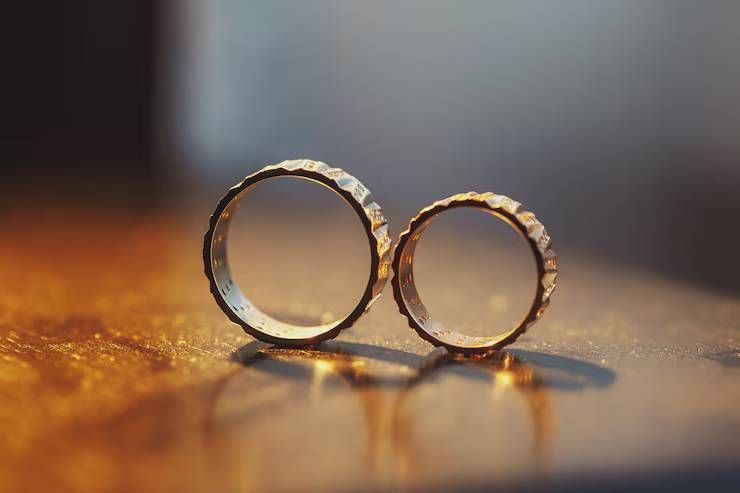
Wedding bands can have several forms, including:
- Plain polished bands
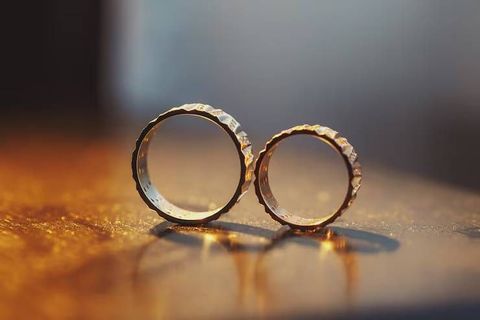
- Brushed or matte-finish bands
- Beaded or textured designs
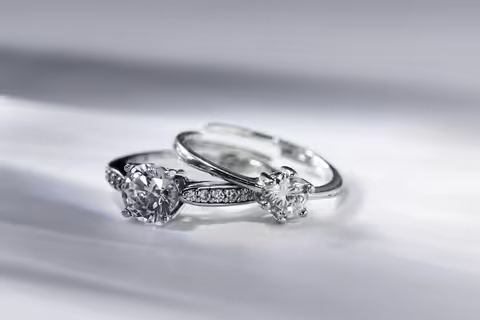
- Diamond-set bands
- Matching wedding-band sets
- Narrow and wide-profile rings
- Contemporary geometric designs
Platinum is dense and has a distinctive weight compared with many other jewellery metals. It also has a naturally white appearance, which means it does not depend on a surface coating to create its basic white colour.
Why Platinum Wedding Bands Matter
Wedding bands are worn frequently, so material characteristics such as durability, weight, appearance, maintenance, and skin compatibility can influence the choice of metal.
Platinum is particularly relevant for people who want a precious-metal ring with a naturally white appearance. Its high purity can also be an important consideration for people who prefer jewellery containing a high proportion of the primary metal.
The metal's characteristics make it relevant to several groups:
- Couples choosing wedding rings
- People comparing platinum and gold jewellery
- Jewellery designers and manufacturers
- Consumers researching precious-metal purity
- People interested in long-term jewellery care
- Researchers studying jewellery materials and trends
A platinum ring can gradually develop a patina as its surface changes through everyday wear. This is different from the metal being removed through ordinary surface abrasion. Some people prefer the original polished appearance, while others appreciate the softer appearance that develops over time.
Common Platinum Wedding Band Features
| Feature | Platinum Wedding Bands |
|---|---|
| Typical purity reference | Pt950 |
| Primary metal | Platinum |
| Natural colour | White to grey-white |
| Common finishes | Polished, matte, brushed |
| Typical uses | Wedding and commitment rings |
| Maintenance | Regular cleaning and inspection |
| Design range | Plain, textured, diamond-set and contemporary |
The width and profile of a band also influence how it feels when worn. A narrow ring may have a lighter visual appearance, while a wider band can create a stronger design presence.
Ring size should be considered carefully because finger dimensions can change with temperature, activity, and time of day. Professional measurement can help reduce sizing uncertainty.
Comparing Platinum With Other Wedding-Ring Metals
Platinum is frequently compared with white gold because both can have a white or silvery appearance. However, the metals differ in composition and surface characteristics.
| Characteristic | Platinum | White Gold |
|---|---|---|
| Natural colour | White-grey | Usually alloy-dependent |
| Common purity reference | Pt950 | Varies by karat |
| Density | Relatively high | Generally lower than platinum |
| Surface appearance | Can develop patina | May require periodic surface maintenance |
| Main consideration | High platinum content | Alloy composition and finish |
This comparison does not mean one metal is universally appropriate. The right choice depends on personal preferences, design requirements, wear patterns, and jewellery specifications.
Recent Developments and Trends
The Indian platinum jewellery market has continued to receive attention from industry organisations during 2025 and 2026.
In June 2025, Platinum Guild International India held its annual Platinum Buyer-Seller Meet in Kochi. The event brought together jewellery manufacturers and retail partners and included discussion of designs, manufacturing developments, and industry practices.
In July 2025, PGI India reported the conclusion of its Platinum Season of Love 2025 programme, which ran from April 25 to May 31, 2025. The initiative focused on platinum jewellery during the wedding and festive period.
PGI also maintains a Platinum Jewellery Business Review, with research covering markets including India, China, Japan, and the United States. Its 2026 publication and quarterly updates provide current industry information and consumer-market analysis.
Current design directions include:
- Minimalist wedding bands
- Low-profile rings
- Mixed textures
- Geometric patterns
- Contemporary men's platinum rings
- Diamond-accented bands
- Coordinated couple-ring designs
These developments indicate continued interest in platinum as both a traditional and contemporary jewellery material.
Laws, Hallmarking and Jewellery Rules in India
Understanding Indian hallmarking rules is important because platinum jewellery should not automatically be assumed to fall under the same BIS hallmarking system as gold or silver.
As of the latest BIS information available in 2026, India's BIS hallmarking framework covers gold and silver precious-metal articles. BIS states that these are currently the two precious metals brought under its hallmarking system.
Therefore, a platinum wedding band marked Pt950 should not be confused with a BIS gold or silver hallmark containing the BIS logo and HUID.
The BIS hallmarking framework is governed by the BIS Act, 2016 and the BIS (Hallmarking) Regulations, 2018, along with subsequent amendments.
Recent BIS updates in 2025 and 2026 mainly concern the existing gold and silver hallmarking framework. The BIS mandatory-hallmarking page lists amendments dated July 31, 2025, March 2, 2026, April 28, 2026, and August 3, 2026.
This distinction matters when researching platinum purity because consumers should identify the actual metal specification and any applicable manufacturer or industry quality-assurance documentation rather than assuming that every precious-metal marking represents a BIS hallmark.
Practical Checks When Researching Platinum Wedding Bands
A few simple checks can help people understand a platinum wedding band more clearly:
- Look for the stated metal purity, such as Pt950.
- Check whether the documentation identifies the metal and purity.
- Ask about the ring's alloy composition if it is not clearly stated.
- Confirm the ring size before finalising the design.
- Examine the inside and outside surfaces for markings.
- Keep documentation associated with the ring.
- Understand whether gemstones are included and how they are secured.
- Consider the band's width and profile for everyday comfort.
- Compare platinum specifications with those of alternative metals.
For a ring containing diamonds or other gemstones, additional information such as stone type, weight, dimensions, and grading documentation can also be relevant.
Helpful Tools and Resources
Several official and industry resources can help with research.
BIS Hallmarking Information: The Bureau of Indian Standards provides information about hallmarking regulations, standards, registered jewellers, and recognised Assaying and Hallmarking Centres.
BIS CARE App: The BIS CARE mobile application provides functions including HUID verification for applicable hallmarked jewellery. However, its HUID verification function should not be interpreted as a platinum verification system.
Platinum Jewellery Business Review: PGI's research publication provides market information covering India and other major platinum jewellery markets.
Ring Size Charts: Printable ring-size charts can help with preliminary measurements, although professional measurement is generally more reliable.
Metal Weight Calculators: Jewellery calculators can help explain how metal density, dimensions, and weight relate to one another. These tools are educational and should not replace verified product specifications.
Frequently Asked Questions
What does Pt950 mean on a platinum wedding band?
Pt950 generally indicates that the alloy contains 95% platinum. The remaining 5% consists of other metals used to create an appropriate jewellery alloy.
Are platinum wedding bands durable?
Platinum is a dense and durable jewellery metal suitable for regular wear. Its surface can develop a patina over time, and routine inspection can help identify loose stones, scratches, or other signs of wear.
Is Pt950 the same as a BIS hallmark in India?
No. Pt950 identifies platinum purity, while BIS hallmarking is a regulatory system that, according to current BIS information, covers gold and silver in India. A Pt950 marking should therefore not automatically be interpreted as a BIS hallmark.
Can platinum wedding bands contain gemstones?
Yes. Platinum bands can incorporate diamonds and other gemstones. The design may use settings such as prongs, bezels, or channel arrangements depending on the ring's construction.
How should a platinum wedding band be maintained?
Regular gentle cleaning can remove everyday residue. The ring should also be inspected periodically, particularly when it contains gemstones. Professional assessment may be appropriate when a stone appears loose or the band has sustained significant damage.
Conclusion
Platinum wedding bands combine a naturally white precious metal with high-purity platinum alloys commonly represented by the Pt950 designation. Their density, appearance, durability, and design flexibility make them an important category within wedding jewellery.
For people researching platinum wedding rings in India, understanding the difference between a platinum purity marking and a BIS hallmark is especially important. Current BIS information identifies gold and silver as the precious metals covered by its hallmarking system, while platinum jewellery may use industry or manufacturer purity markings such as Pt950.