Birthstone Rings: Discover Gemstone Colors, Meanings, and Personalized Designs
Birthstone rings combine gemstone colors and personal symbolism in designs linked to individual birth months. Different stones, metal choices, settings, and ring profiles create options ranging from subtle everyday pieces to more decorative styles.
Birthstone Rings: Discover Gemstone Colors, Meanings, and Personalized Designs
Context
Birthstone rings are jewellery pieces featuring gemstones traditionally associated with a particular month of the year. They combine gemstone colour, personal symbolism, and ring design, making them a popular format for personalized jewellery.
Birthstones vary considerably in colour, structure, and appearance. Some months are associated with more than one gemstone, giving individuals additional design possibilities. GIA describes birthstones as a colourful introduction to gemstones and notes that the traditions and lore surrounding them vary.
What Are Birthstone Rings?
A birthstone ring features one or more gemstones associated with a person's birth month. The stone can be used as the central feature or incorporated as a smaller accent alongside diamonds or other gemstones.
The ring can be designed for personal wear, family connections, relationship milestones, or commemorative occasions. The meaning assigned to a birthstone is influenced by cultural traditions, historical associations, and personal interpretation.
Birthstone Colors
Birthstones cover a broad range of colours. Garnet is commonly associated with deep red tones but can occur in orange, yellow, purple, and green varieties. Amethyst is typically purple, sapphire is widely recognized for blue varieties, ruby is known for rich red colour, and peridot commonly appears in green.
Other birthstones provide additional colour variation. October includes opal and tourmaline, November includes citrine and topaz, while December can include turquoise, tanzanite, and zircon depending on the birthstone tradition being followed.
Birthstone Ring Formats
Birthstone rings can use several design formats, including:
Solitaire gemstone rings
Birthstone and diamond combinations
Three-stone designs
Cluster rings
Halo-style rings
Stacking bands
Family birthstone rings
Multi-stone anniversary rings
Initial and birthstone combinations
Minimalist gemstone bands
The selected format influences how prominently the birthstone appears within the overall design.
Importance
Birthstone rings can have meaning because the gemstone is connected to a particular month, person, family member, or occasion. This personal association gives the jewellery a different character from a ring selected only for its colour or decorative appearance.
The symbolism of birthstones comes from a combination of historical traditions, cultural practices, folklore, and modern jewellery customs. GIA notes that many birthstones have associated myths and attributes, although these beliefs are part of tradition rather than established scientific properties.
January: Garnet
Garnet is the traditional January birthstone. Although red is a familiar garnet colour, the gemstone family includes a much broader range of colours, including orange, yellow, purple, and green varieties.
A January birthstone ring can therefore range from a classic deep-red appearance to a more unusual colour combination.
February: Amethyst
Amethyst is the purple variety of quartz and is associated with February. Its colour can range from lighter purple tones to deeper violet shades.
Amethyst works with both traditional and contemporary ring designs and can be paired with white, yellow, or rose-coloured metals.
March: Aquamarine
Aquamarine is commonly associated with March and is recognized for its blue to blue-green appearance. Its relatively soft visual colour can create a light and refined ring design.
The gemstone can be used as a central stone or combined with diamonds and other accents.
April: Diamond
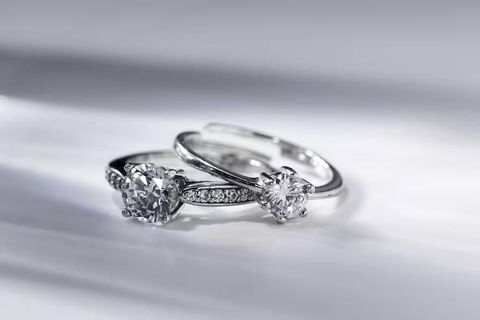
Diamond is traditionally associated with April. Its neutral appearance provides considerable flexibility for different ring styles, including solitaire, halo, three-stone, and eternity-inspired designs.
Diamonds can also be combined with coloured birthstones when a ring represents multiple family members.
May: Emerald
Emerald is associated with May and is recognized for its green colour. Its rich appearance can make it a strong focal gemstone in a birthstone ring.
Emerald can be incorporated into classic settings as well as contemporary geometric designs.
June: Pearl, Alexandrite, and Moonstone
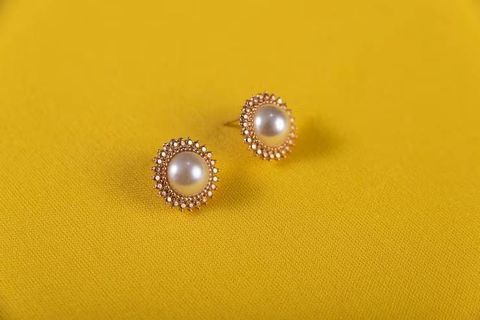
June is associated with several birthstone traditions, including pearl, alexandrite, and moonstone. GIA notes that alexandrite can show green to bluish-green colours in daylight and red to purplish-red colours under incandescent illumination.
This range gives June birthstone jewellery considerable visual variety.
July: Ruby
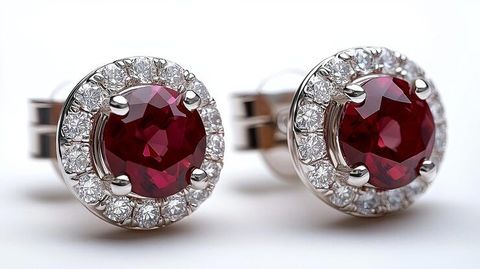
Ruby is the traditional July birthstone and is strongly associated with rich red colour. Historical traditions have connected ruby with qualities such as strength and courage.
Ruby birthstone rings can use the gemstone as a central stone or combine it with diamonds or other accent stones.
August: Peridot and Spinel
Peridot is a green gemstone associated with August. Spinel is also included in some modern birthstone traditions and occurs in a wide range of colours, including red, pink, purple, blue, and violet.
These options allow August birthstone rings to move beyond a single colour palette.
September: Sapphire
Sapphire is associated with September and occurs in many colours, although blue sapphire remains the most familiar variety. GIA also identifies the rare pink-orange padparadscha sapphire as a distinctive variety.
Blue sapphire works particularly well with both white and yellow-toned metals.
October: Opal and Tourmaline
October includes opal and tourmaline in common modern birthstone traditions. Opal can display a phenomenon known as play-of-color, while tourmaline occurs in numerous colours and can also show multiple colours within a single crystal.
This makes October particularly flexible for colourful ring designs.
November: Citrine and Topaz
Citrine is the golden-yellow variety of quartz and is associated with November. Topaz is another November birthstone and occurs in colours including blue, pink, and golden tones.
These stones can create both warm-toned and cooler contemporary ring styles.
December: Turquoise, Tanzanite, and Zircon
December is associated with several gemstones, including turquoise and tanzanite. Turquoise generally appears blue or greenish blue, while tanzanite is recognized for its distinctive purplish-blue appearance.
These gemstones provide different approaches to December ring design.
| Month | Common Birthstones | Typical Colour Range |
|---|---|---|
| January | Garnet | Red, orange, green, purple |
| February | Amethyst | Purple |
| March | Aquamarine | Blue to blue-green |
| April | Diamond | Colourless to varied fancy colours |
| May | Emerald | Green |
| June | Pearl, Alexandrite, Moonstone | White, green, blue, colour-changing |
| July | Ruby | Red |
| August | Peridot, Spinel | Green, red, pink, purple, blue |
| September | Sapphire | Blue and other colours |
| October | Opal, Tourmaline | Multicolour, white, black, pink, green |
| November | Citrine, Topaz | Yellow, golden, blue, pink |
| December | Turquoise, Tanzanite, Zircon | Blue, blue-green, purplish blue |
Recent Updates
Recent birthstone-ring design has increasingly focused on personalization, multi-stone arrangements, minimalist profiles, and combinations of traditional gemstones with contemporary jewellery styles.
Personalized Family Rings
Family birthstone rings can combine several gemstones representing different people. Each stone may correspond to a family member's birth month, creating a single piece with multiple personal references.
The stones can be arranged in a row, cluster, vertical layout, or circular pattern depending on the ring structure.
Birthstone and Diamond Combinations
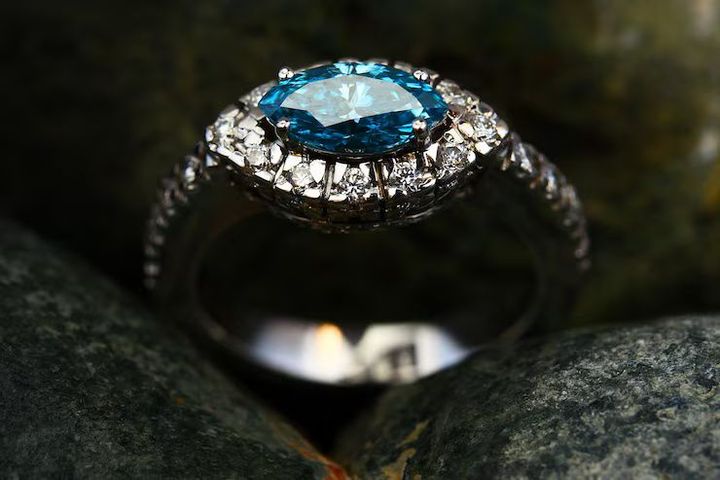
Combining a birthstone with diamonds creates contrast between colour and neutral brilliance. A coloured centre stone can be surrounded by smaller diamonds, while diamonds can also be positioned along the band.
The balance between coloured gemstones and diamonds can be adjusted according to the desired visual emphasis.
Minimalist Birthstone Bands
Minimalist rings often use a small gemstone set into a narrow metal band. This approach allows the birthstone to remain visible without creating an elaborate overall design.
Small gemstone bands can also work as stacking rings alongside other jewellery.
Contemporary Gemstone Shapes
Modern birthstone rings can use oval, pear, cushion, emerald, marquise, or geometric gemstone shapes rather than relying only on round stones.
The shape affects the appearance of the ring and can influence the amount of visible colour and surrounding metal.
Alternative Gemstone Choices
Some months have multiple recognized birthstones, allowing greater flexibility in design. June, August, October, November, and December are examples where multiple stones are commonly associated with the month.
This can be particularly useful when an individual prefers a different colour or gemstone appearance from the most familiar traditional option.
Laws or Policies
Jewellery requirements depend on the country where an item is manufactured, marked, imported, or distributed. In India, the Bureau of Indian Standards administers the hallmarking framework for specified precious-metal jewellery.
BIS currently states that gold and silver are the two precious metals brought under India's hallmarking framework. Therefore, hallmarking requirements for a birthstone ring depend on the metal used and whether the jewellery falls within the applicable framework.
Gold Birthstone Rings
For applicable hallmarked gold jewellery, BIS identifies three hallmark components: the BIS Standard Mark, purity expressed through caratage and fineness, and a six-digit Hallmark Unique Identification number. The HUID can be checked using the BIS Care application.
BIS's mandatory hallmarking order has also been amended during 2026, with listed amendments in March, April, and August. The current BIS page was updated in September 2026.
Silver Birthstone Rings
Silver is also covered by India's hallmarking framework. BIS's revised IS 2112:2025 introduced HUID-based hallmarking for silver jewellery and articles on a voluntary basis from September 2025.
Jewellery Documentation
For applicable hallmarked jewellery, consumers should retain authentic invoices and relevant jewellery documentation. BIS consumer guidance also emphasizes checking hallmark and fineness information on applicable articles.
Gemstone Information
Metal hallmarking does not by itself establish the characteristics of the gemstone. Gemstone identity, treatments, origin information where applicable, and other characteristics may require separate gemological documentation.
Tools and Resources
Several resources can help readers understand birthstone rings, gemstone characteristics, jewellery design, and applicable standards.
Birthstone References
GIA's birthstone resources provide information about gemstones associated with each month, including their colours, histories, and traditional associations.
Gemstone References
Gemological resources can explain gemstone colour, clarity, durability, treatments, cutting characteristics, and identification. These references can help readers understand why two stones of the same variety may have different appearances.
Ring Design References
Jewellery design references can help compare solitaire, halo, cluster, three-stone, stacking, and multi-gemstone ring structures.
Ring-Size Resources
Accurate ring sizing is important for everyday jewellery. Size references can help explain measurements and differences between regional sizing systems.
BIS Resources
For applicable gold and silver jewellery in India, BIS provides information on hallmarking, consumer guidance, Indian Standards, HUID verification, and current mandatory hallmarking orders.
FAQs
What are birthstone rings?
Birthstone rings are jewellery pieces featuring gemstones traditionally associated with a particular birth month. They can use one gemstone or combine multiple birthstones with diamonds or other decorative elements.
What colors do birthstones come in?
Birthstones cover a broad range of colours, including red garnet and ruby, purple amethyst, blue sapphire and aquamarine, green emerald and peridot, and multicoloured opal and tourmaline. Some gemstones also occur in colours beyond their most familiar varieties.
Can a birthstone ring have multiple gemstones?
Yes. A ring can combine multiple birthstones to represent family members, partners, children, or other meaningful connections. Different gemstones can be arranged in rows, clusters, or other patterns.
What metals are used for birthstone rings?
Common jewellery metals include gold, silver, and platinum. Gold and silver are currently within India's BIS hallmarking framework, while the applicable requirements depend on the metal and jewellery category.
What should be considered when choosing a birthstone ring?
Important considerations include the selected gemstone, colour, durability, setting, ring size, metal, design profile, personalization, gemstone documentation, and applicable jewellery standards.
Conclusion
Birthstone rings combine gemstone colour, traditional associations, and personalized jewellery design. The wide range of birthstones allows individuals to choose between classic colours, alternative gemstones, multi-stone arrangements, and contemporary settings. Family designs, diamond combinations, minimalist bands, and distinctive gemstone shapes provide additional ways to personalize a ring. For applicable gold and silver jewellery in India, current BIS hallmarking requirements and documentation should also be considered.