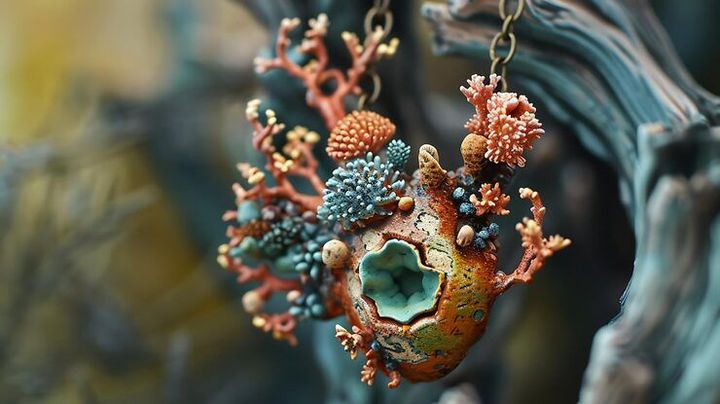
Bio-Material Jewelry Design: Guide to Materials, Styles, and Practical Insights
Bio-material jewelry design refers to creating jewelry pieces with materials that originate from biological sources or are designed to interact closely with biological systems. These materials can include plant fibers, wood, natural resins, shells, seeds, cellulose-based materials, algae-derived materials, and other renewable or bio-derived substances.
The concept combines jewelry design with material experimentation. Instead of relying only on conventional metals and gemstones, designers explore materials with different textures, colors, structures, and natural patterns.
Bio-material jewelry design can range from simple handmade accessories to contemporary pieces developed with advanced material-processing techniques. The final appearance depends on the source material, preparation method, finishing technique, and design approach.
Common Bio-Materials Used in Jewelry
Different bio-materials provide different physical and visual characteristics. Some are rigid and lightweight, while others can be flexible, translucent, textured, or naturally patterned.
| Bio-Material | Typical Characteristics | Common Jewelry Applications |
|---|---|---|
| Wood | Lightweight, warm texture, natural grain | Earrings, pendants, bracelets |
| Seeds and plant parts | Organic shapes and textures | Necklaces, earrings, decorative pieces |
| Shell | Hard surface, natural patterns | Pendants, beads, earrings |
| Cork | Lightweight, soft texture | Earrings, bracelets, beads |
| Natural fibers | Flexible and woven structure | Necklaces, bracelets |
| Cellulose-based materials | Can be molded or formed | Decorative components, beads |
| Natural resin | Can preserve organic elements | Pendants, rings, decorative pieces |
| Bio-derived polymers | Moldable and adaptable | Modern accessories and components |
Why Material Choice Matters
Material selection influences appearance, weight, durability, comfort, processing requirements, and maintenance. A designer creating earrings, for example, may prioritize lightweight materials, while a bracelet may require greater resistance to repeated movement.
The material also affects the visual identity of the finished piece. Natural grain, irregular shapes, small variations, and organic textures can become part of the design rather than being treated as imperfections.
Importance
Expanding Jewelry Design Possibilities
Bio-material jewelry design gives designers additional ways to experiment with form and texture. Materials that behave differently from traditional jewelry metals can create unusual shapes and surface effects.
For example, wood can be carved into geometric forms, while plant fibers can be woven into flexible structures. Shells and seeds can retain naturally occurring patterns that create distinctive visual details.
Lightweight Jewelry
Weight is an important consideration for wearable accessories. Several bio-materials have relatively low densities compared with conventional jewelry metals.
Lightweight materials can be particularly useful for larger earrings, layered necklaces, statement pendants, and decorative accessories where excessive weight could affect comfort.
Natural Visual Characteristics
Many bio-materials have characteristics that originate from nature. Grain patterns in wood, layered structures in shells, and variations in plant-based materials can provide visual details without requiring highly complex surface decoration.
These characteristics also make each material batch potentially different. Designers therefore need to account for natural variation during production.
Connection With Material Innovation
Modern material research has expanded the range of bio-derived materials available for creative applications. Researchers and manufacturers are investigating cellulose, algae-derived compounds, bio-based polymers, fungal materials, and other biological resources for applications across multiple industries.
For jewelry designers, these developments create opportunities to experiment with materials beyond conventional metal, stone, glass, and synthetic plastics.
Recent Updates
Growth of Bio-Based Material Research
Recent material research has increasingly examined renewable biological feedstocks for creating polymers, coatings, composites, and molded materials. These developments can influence future jewelry components by providing alternatives with different processing and performance characteristics.
However, a material being bio-based does not automatically mean that it is biodegradable or environmentally preferable in every situation. Its complete production process, additives, durability, and end-of-life pathway should also be considered.
Cellulose-Based Material Development
Cellulose is one of the most widely available natural polymers. Researchers have investigated cellulose fibers, nanocellulose, bacterial cellulose, and cellulose composites for applications requiring lightweight structures and distinctive surface characteristics.
In jewelry design, cellulose-based materials may be formed, layered, coated, or combined with other materials depending on their formulation.
Bio-Derived Polymers
Bio-derived polymers can be produced partly or entirely from renewable biological feedstocks. Examples include certain forms of polylactic acid and other bio-based polymer systems.
Their properties can vary significantly. Some formulations are designed for rigid structures, while others can provide flexibility or improved impact resistance.
Digital Fabrication
Computer-aided design and digital fabrication are also influencing experimental jewelry design. A designer can create a digital model and then use appropriate fabrication equipment to produce complex forms from compatible bio-based materials.
This approach can help create repeated geometric patterns, customized shapes, and lightweight structures while allowing designers to test different dimensions before physical production.
Improved Material Finishing
Surface treatments are important because many bio-materials can absorb moisture, react to ultraviolet exposure, or experience surface wear. Modern coatings and finishing techniques can improve appearance and provide additional protection, depending on the material.
The selected finish should remain compatible with skin contact and the intended wearing environment.
Laws or Policies
Material Safety
Jewelry materials intended for direct skin contact should be evaluated for potential irritation, sensitization, chemical migration, and other safety concerns. Requirements differ between countries and product categories.
Designers should identify the applicable regulations in the intended market and verify material documentation where necessary.
Nickel and Metal Components
Bio-material jewelry may still contain metal findings such as clasps, chains, hooks, pins, or rings. These components can introduce material-safety considerations even when the primary jewelry component is plant- or bio-derived.
Nickel release requirements are particularly relevant in several international markets for articles intended to come into direct and prolonged contact with skin.
Chemical and Coating Considerations
Adhesives, dyes, pigments, sealants, and protective coatings can change the safety characteristics of a jewelry piece. Designers should consider the chemical composition of these materials rather than focusing only on the primary bio-material.
Material documentation such as technical data sheets and safety information can help identify handling requirements and chemical characteristics.
Environmental Claims
Environmental statements should be specific and supported by evidence. Terms such as “bio-based,” “biodegradable,” “compostable,” and “renewable” describe different characteristics and should not be treated as interchangeable.
A bio-based material may contain renewable biological feedstock while remaining durable and non-biodegradable. Clear terminology helps consumers understand what the material actually represents.
Tools and Resources
Design Tools
Computer-aided design software can help designers create accurate jewelry forms and test dimensions before fabrication. Digital modeling is particularly useful when developing repeated patterns, interlocking components, or complex geometries.
Traditional sketching remains useful during the early concept stage because it allows designers to quickly explore shapes, proportions, and material combinations.
Cutting and Shaping Equipment
Depending on the material, designers may use:
Precision saws
Rotary tools
Small drills
Laser cutters
CNC equipment
Hand carving tools
Sanding equipment
Molding systems
Equipment selection should match the hardness, moisture sensitivity, thermal characteristics, and thickness of the material.
Forming and Molding
Some bio-based materials can be molded into beads, pendants, connectors, or decorative structures. Molds may be produced from silicone, metal, polymer, or other compatible materials depending on the manufacturing process.
Temperature and pressure need to be controlled carefully when working with materials that can deform or degrade under heat.
Finishing Tools
Common finishing tools include:
Fine abrasive papers
Polishing equipment
Brushes
Protective coatings
Sealants
Precision files
Buffing tools
Finishing can improve surface appearance while helping protect certain materials from moisture and everyday abrasion.
Material Testing
Basic testing can examine hardness, flexibility, moisture response, surface wear, and dimensional stability. More advanced laboratories can evaluate chemical composition, mechanical properties, thermal behavior, and environmental performance.
Testing becomes particularly important when a new material formulation is being developed for repeated skin contact.
FAQs
What materials are commonly used in bio-material jewelry design?
Common examples include wood, cork, shells, plant fibers, seeds, cellulose-based materials, natural resins, and selected bio-derived polymers. The suitable choice depends on the intended jewelry form and required physical properties.
Is bio-material jewelry durable?
Durability depends strongly on the material and its treatment. Some bio-materials can withstand regular wear, while others may be more sensitive to moisture, heat, impact, or ultraviolet exposure.
Can bio-material jewelry contain metal?
Yes. Bio-material components can be combined with metal chains, clasps, hooks, rings, pins, and other findings. The metal components should also be selected according to the intended wearing conditions and applicable safety requirements.
Is bio-based jewelry automatically biodegradable?
No. “Bio-based” generally refers to the origin of a material's feedstock, while biodegradability describes how the material breaks down under specific environmental conditions. These are separate characteristics.
How should bio-material jewelry be maintained?
Maintenance depends on the material. Keeping pieces away from excessive moisture, harsh chemicals, prolonged heat, and unnecessary impact can help preserve many bio-material components. Specific care instructions should be based on the material and protective finish.
Conclusion
Bio-material jewelry design combines traditional accessory creation with modern material experimentation. Wood, shells, plant fibers, cellulose-based materials, natural resins, and bio-derived polymers can provide different textures, weights, shapes, and visual characteristics.
Material selection should consider appearance, durability, comfort, processing requirements, maintenance, and skin-contact considerations. Environmental terminology should also be used accurately because bio-based, biodegradable, and compostable describe different material characteristics.
As material science and digital fabrication continue to develop, bio-material jewelry design can provide designers with additional approaches for creating distinctive wearable forms while exploring the relationship between biological resources, technology, and creative design.