AR Virtual Try-On Jewellery: Guide to Digital Shopping Experiences and Jewelry Technology
AR virtual try-on jewellery technology combines augmented reality, 3D visualization, camera tracking, and digital commerce to let users preview rings, earrings, necklaces, and bracelets virtually. Explore digital shopping experiences, AR technology, personalization, and current jewellery technology trends.
AR Virtual Try-On Jewellery: Guide to Digital Shopping Experiences and Jewelry Technology
Context
AR virtual try-on jewellery technology combines augmented reality, computer vision, 3D modelling, and digital shopping interfaces to help users visualize jewellery on themselves through a smartphone, tablet, or compatible device. Instead of relying only on static product photographs, users can view digital representations of jewellery over a live camera image.
Virtual try-on technology is being applied to rings, earrings, necklaces, bracelets, bangles, and other jewellery categories. Recent research and industry developments show that AR is becoming an increasingly visible part of digital jewellery experiences.
What Is AR Virtual Try-On Jewellery?
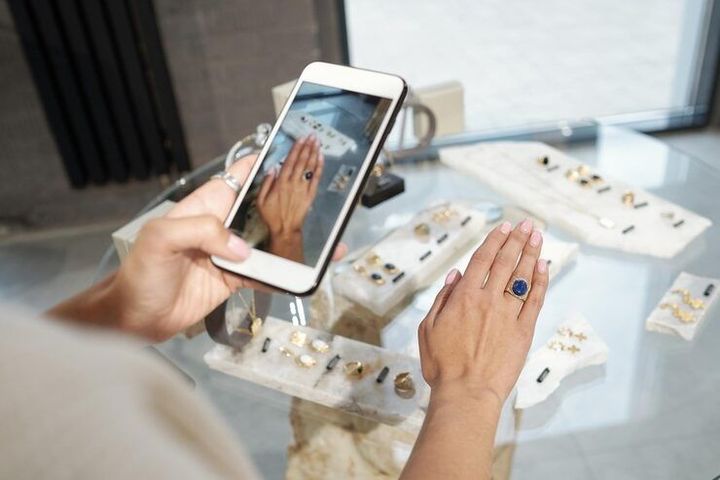
AR virtual try-on jewellery allows a digital representation of a jewellery piece to appear over a user's camera view. The system tracks a relevant body area, such as a finger, ear, wrist, or neckline, and positions the digital jewellery accordingly.
For rings, computer vision can track the hand and finger position. For earrings, facial and ear tracking can help position the jewellery. Necklaces and pendants can use face, neck, and upper-body tracking to establish an appropriate position.
Basic AR Try-On Process
A typical virtual try-on experience can follow several stages:
The user opens the jewellery visualization feature.
The device camera captures the relevant body area.
Computer-vision technology identifies the required tracking points.
A digital jewellery model is positioned over the camera image.
The system adjusts the jewellery according to movement and orientation.
The user can compare different designs or jewellery categories.
Images or visual references may be captured for later comparison.
The exact process depends on the platform, camera capabilities, tracking technology, and quality of the underlying jewellery model.
Main Technology Components
| Technology | Main Function |
|---|---|
| Augmented Reality | Places digital jewellery over a real camera view |
| Computer Vision | Detects hands, fingers, ears, face, or body areas |
| 3D Modelling | Creates digital representations of jewellery |
| Rendering | Produces realistic visual appearance |
| Camera Tracking | Maintains jewellery position during movement |
| AI Algorithms | Supports recognition, tracking, and visual processing |
| Mobile Interface | Provides the user-facing try-on experience |
| Product Database | Connects digital models with jewellery collections |
Importance
AR virtual try-on jewellery can address one of the major limitations of digital jewellery browsing: users cannot physically place a jewellery item on themselves before viewing it online.
By creating an interactive visual experience, AR can provide additional information about appearance, proportions, placement, and styling.
Ring Visualization
Rings are particularly suitable for AR try-on because the system can focus on the hand and fingers.
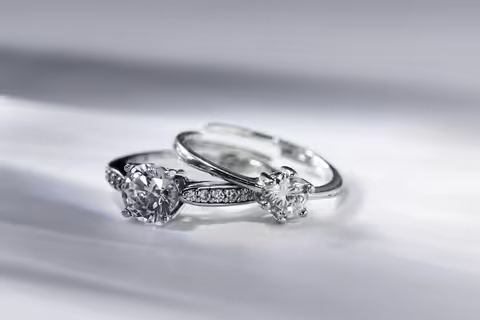
Users can compare different ring widths, stone sizes, settings, and design structures. This can make it easier to visualize how a particular ring style appears from different angles.
Earring Visualization
Earrings can be positioned using face and ear tracking.
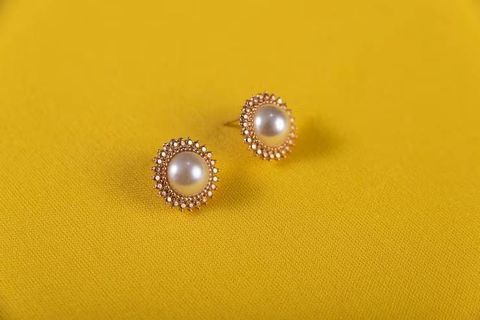
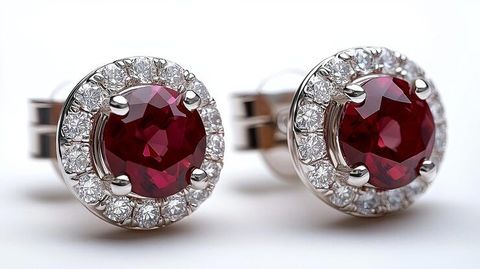
The technology can help users compare studs, hoops, drop earrings, and other designs while viewing the jewellery against their own facial features.
Necklace and Pendant Visualization
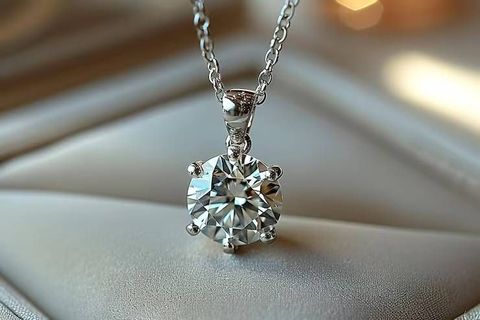
Necklace try-on can position a digital necklace around the neck and upper body. The system needs to account for head movement, neckline position, chain length, and pendant placement.
More advanced tracking can create a smoother relationship between the digital jewellery and the user's movement.
Bracelet and Bangle Visualization
Bracelets and bangles can be displayed around the wrist using hand and wrist tracking.
Rigid jewellery shapes such as bangles may be easier to represent digitally than flexible chains because their form remains relatively consistent.
Digital Product Visualization
AR can work alongside conventional product photography and 3D product viewers.
A jewellery page may combine photographs, videos, rotating 3D models, product specifications, and virtual try-on features to provide several ways of examining the same item.
Personalization
Virtual try-on can support personalized digital shopping experiences by allowing users to compare jewellery against their own appearance.
Users may experiment with different metal colours, diamond shapes, jewellery sizes, and design styles through an interactive interface.
A 2025 academic study examining AR virtual jewellery try-on found that virtual try-on environments can influence perceived self-product fit and product attitudes, highlighting the role of visualization in digital jewellery experiences.
Recent Updates
AR jewellery technology has continued to develop during 2024–2026, with improvements in tracking, 3D models, mobile interfaces, AI-assisted visualization, and integration with digital commerce platforms.
AI-Assisted Virtual Try-On
Artificial intelligence can support the recognition of facial features, hands, fingers, ears, and other areas required for virtual jewellery placement.
AI-based systems can also assist with image processing and digital visualization. This allows virtual jewellery to remain aligned with the user's movements as the camera position changes.
Improved 3D Jewellery Models
Accurate 3D models are important for convincing virtual try-on experiences.
A digital jewellery model needs appropriate proportions, dimensions, materials, gemstone appearance, and surface characteristics. Modern virtual try-on platforms can support both 2D and 3D jewellery representations depending on the implementation.
Web-Based AR Experiences
Web-based AR can allow users to access virtual try-on through a browser rather than requiring a dedicated application.
This can reduce technical barriers because users can access the experience directly through compatible mobile devices.
The availability of browser-based experiences depends on device capabilities, browser support, camera permissions, and the technology platform used.
Real-Time Tracking
Modern systems increasingly focus on smoother tracking and more stable jewellery positioning.
For rings, this can involve finger detection and hand tracking. For earrings, facial landmarks and ear positioning can be used. For necklaces, systems can identify the neck and upper-body region.
Accurate tracking is important because noticeable movement between the physical body and digital jewellery can reduce the realism of the experience.
AI-Generated Jewellery Visualization
AI-generated imagery is also becoming part of digital jewellery workflows.
Instead of creating a complete interactive AR model for every visual purpose, AI-assisted systems can create on-model jewellery imagery that shows how a particular piece may appear when worn. This approach can complement live AR try-on and conventional product photography.
Digital Jewellery in India
Indian jewellery technology is also incorporating AR-based visualization. Industry implementations include virtual try-on experiences for rings, necklaces, earrings, bangles, and other jewellery categories through mobile and web interfaces.
This reflects a broader shift toward combining traditional jewellery presentation with digital visualization tools.
AR and 3D Commerce
AR is increasingly being considered as part of a broader digital commerce environment rather than as an isolated feature.
A jewellery platform can combine AR try-on, 3D product models, product photography, digital catalogues, personalization tools, and other interactive elements.
Recent ecommerce research also identifies jewellery as a category where AR can help users visualize style and scale before making a purchasing decision.
Privacy and Camera Permissions
Virtual try-on systems typically require access to a device camera. This makes privacy controls, transparent permissions, secure data handling, and clear user communication important parts of the digital experience.
The exact data collected varies between platforms. Some systems may process camera information locally, while others may transmit information to external servers depending on their architecture.
Laws or Policies
AR virtual try-on jewellery involves digital technology, camera access, consumer information, online commerce, intellectual property, and jewellery disclosure requirements.
Data Privacy
A virtual try-on platform may process camera images or other visual information. Platforms should therefore provide appropriate privacy information and explain relevant permissions and data practices.
In India, digital platforms may need to consider applicable requirements under the Digital Personal Data Protection framework and other relevant information-technology rules.
The exact obligations depend on the type of data collected, how it is processed, the platform architecture, and the applicable legal framework.
Consumer Information
Digital jewellery presentations should accurately represent the characteristics of the physical jewellery.
An AR image is a visualization rather than a substitute for actual product specifications. Information relating to metal composition, gemstone characteristics, laboratory-grown diamonds, treatments, dimensions, and other relevant properties should be presented accurately.
Jewellery Hallmarking
In India, applicable BIS hallmarking requirements concern the purity and identification of certain precious-metal jewellery articles.
Virtual try-on does not replace physical hallmarking requirements. The digital presentation and the physical jewellery article remain separate compliance considerations.
Intellectual Property
Jewellery designs, digital models, photographs, software, interface elements, and other digital assets can involve intellectual-property considerations.
Designers and technology providers should consider ownership and permitted use when creating digital jewellery models or using reference material.
Platform Security
AR systems should also consider account security, camera permissions, data handling, software updates, and secure communication between users and digital platforms.
Security requirements vary according to the technology architecture and the type of information handled.
Tools and Resources
AR virtual try-on jewellery relies on a combination of software, hardware, digital models, tracking systems, and design resources.
AR Development Platforms
AR development frameworks provide capabilities for camera access, object tracking, facial recognition, hand tracking, and digital overlays.
The appropriate platform depends on whether the experience is designed for mobile applications, websites, or specialized retail environments.
3D Jewellery Modelling
3D modelling software is used to create digital versions of rings, earrings, necklaces, bracelets, and other jewellery.
Important modelling elements include:
Accurate dimensions
Stone placement
Metal surfaces
Gemstone proportions
Setting structure
Band geometry
Surface details
Computer Vision
Computer-vision systems identify visual features and maintain tracking during movement.
For jewellery applications, this can include hand tracking, finger detection, facial landmarks, ear detection, wrist tracking, and body-position recognition.
Rendering Systems
Rendering technology determines how digital jewellery appears in the camera environment.
Lighting, reflections, shadows, metal appearance, gemstone transparency, and surface characteristics can influence visual realism.
Mobile Cameras
Modern smartphones and tablets provide the camera hardware required for many AR experiences.
Camera resolution, frame rate, depth information, lighting conditions, and device processing capability can all affect tracking and rendering performance.
Jewellery CAD Systems
CAD software can provide accurate three-dimensional jewellery models that can later be used for visualization, prototyping, and manufacturing workflows.
Accurate CAD data can improve the relationship between the digital jewellery representation and the physical product.
Analytics and Monitoring
Digital platforms can collect technical information about AR feature usage, loading performance, device compatibility, and user interaction where appropriate and legally permitted.
Analytics can help developers identify technical problems and improve the overall interface.
FAQs
What is AR virtual try-on jewellery?
AR virtual try-on jewellery uses augmented reality and camera-based tracking to display digital jewellery on a user's hand, face, wrist, or neckline. It allows users to visualize jewellery without physically handling the item.
How does virtual jewellery try-on work?
The system uses a device camera and computer-vision technology to identify the relevant body area. A digital jewellery model is then positioned and adjusted according to the user's movement.
What jewellery can be used with AR virtual try-on?
Rings, earrings, necklaces, pendants, bracelets, and bangles can all be represented through virtual try-on systems. The quality of the experience depends on tracking technology and the digital model.
Is AR jewellery visualization accurate?
AR can provide useful visual information about placement, scale, and general appearance, but digital visualization may not perfectly reproduce every physical characteristic. Lighting, camera quality, screen characteristics, and model accuracy can affect the result.
What technologies are used in virtual jewellery try-on?
Common technologies include augmented reality, computer vision, AI-assisted tracking, 3D modelling, rendering, mobile cameras, and digital product databases.
Conclusion
AR virtual try-on jewellery combines augmented reality, computer vision, 3D modelling, and digital shopping technology to create interactive jewellery visualization experiences. Rings, earrings, necklaces, bracelets, and bangles can be represented through different tracking and rendering methods. Recent developments include AI-assisted tracking, improved 3D models, browser-based AR, digital jewellery visualization, and wider adoption across Indian and international digital jewellery environments. As jewellery shopping becomes increasingly connected with digital technology, AR can provide an additional way to examine style, placement, proportions, and visual appearance before evaluating the physical jewellery itself.