Three-Stone Engagement Rings: Insights Into Symbolic Designs and Diamond Arrangements
Three-stone engagement rings feature a center stone framed by two side stones. Explore diamond arrangements, symbolic interpretations, settings, metals, proportions, and current bridal jewelry trends.
Context
Understanding Three-Stone Engagement Rings
Three-stone engagement rings feature a central diamond or gemstone accompanied by two additional stones positioned on either side. The three stones create a balanced arrangement that places visual emphasis on the center while adding structure and detail to the ring.
The three stones can use identical shapes or different cuts. A round center diamond may be paired with round side stones, while an oval center can be combined with pear-shaped or tapered accent stones.
The arrangement can also vary in size. Some designs use a noticeably larger center stone, while others create a more balanced appearance with side stones that have stronger visual presence.
Symbolic Meaning
Three-stone engagement rings are often associated with the idea of past, present, and future. This interpretation has made the three-stone structure particularly relevant to couples who want symbolic meaning incorporated into their jewelry.
The symbolism is not a technical characteristic of the ring, and interpretations can differ between individuals and cultures. The three-stone arrangement can simply be appreciated as a balanced jewelry design.
Main Components
A typical three-stone ring includes:
One center diamond or gemstone
Two side diamonds or gemstones
A metal setting
Prongs, bezels, or other stone-holding structures
A ring band
Optional accent diamonds or decorative details
The relationship between these components determines the overall appearance and proportions of the finished ring.
Center Stone and Side Stones
The center stone normally acts as the primary focal point. Side stones frame it and create a horizontal visual arrangement across the top of the ring.
The side stones can match the center stone in shape, color, and material, or they can create contrast through different cuts and proportions.
Importance
Diamond Arrangement
The arrangement of the three stones is one of the defining characteristics of this ring style.
A traditional arrangement uses a larger center diamond with two smaller matching side diamonds. More contemporary designs may use different shapes, uneven proportions, or colored gemstones.
The selected arrangement should create visual balance while maintaining enough space for each stone to remain distinct.
Popular Stone Combinations
| Center Stone | Side Stones | General Appearance |
|---|---|---|
| Round | Round | Classic and symmetrical |
| Oval | Pear | Soft and elongated |
| Oval | Round | Refined and balanced |
| Cushion | Round | Soft and traditional |
| Emerald | Trapezoid | Geometric |
| Emerald | Baguette | Structured |
| Radiant | Trapezoid | Angular and balanced |
| Pear | Round | Curved and distinctive |
| Marquise | Pear | Elongated and expressive |
Proportion
The relative size of the three stones affects the visual character of the ring.
A large center stone with smaller side stones creates a clear focal point. Side stones that approach the center stone in size create a more evenly distributed appearance.
The height, width, and depth of each stone should also be considered because a three-stone ring has more components across the top than a simple single-stone design.
Diamond Shapes
Three-stone engagement rings can accommodate many diamond shapes.
Round diamonds create a symmetrical appearance. Oval diamonds introduce an elongated center profile, while emerald-cut diamonds emphasize step-cut geometry.
Pear and marquise shapes can add directional movement to the design. Radiant and cushion cuts can combine strong outlines with considerable faceting.
Matching vs Mixed Shapes
Matching shapes create visual consistency.
For example, a round center with two round side stones produces a traditional arrangement. A mixed-shape combination, such as an oval center with pear-shaped side stones, creates stronger contrast.
Mixed shapes can also make the ring more distinctive without requiring complicated decorative elements.
Metal Choices
Three-stone rings can be produced in platinum, white gold, yellow gold, rose gold, and other permitted jewelry metals.
White metals can create a continuous appearance around white diamonds. Yellow gold introduces warmer contrast and can complement vintage-inspired designs.
Rose gold can create a softer color relationship between the metal and the stones.
The selected metal should also be considered in relation to the wedding band and other jewelry worn alongside the engagement ring.
Setting Styles
The setting holds the three stones in position and influences the ring's appearance.
Common approaches include:
Prong settings
Bezel settings
Cathedral settings
Pavé bands
Shared-prong accent arrangements
Low-profile settings
Raised center settings
The center stone may be positioned slightly higher than the side stones, or all three may follow a similar height.
Side-Stone Shapes
Side stones do not have to be identical.
Tapered baguettes can create a structured appearance beside an emerald-cut center. Pear-shaped stones can create a softer transition around an oval center.
Trapezoid stones are also used in three-stone designs because their angled sides can visually connect the center stone with the band.
Recent Updates
More Personalized Arrangements
Current bridal jewelry trends increasingly emphasize individual design choices rather than one standardized ring shape. Recent jewelry coverage points toward distinctive stone combinations, sculptural forms, vintage influences, and unusual proportions.
Three-stone rings naturally support this direction because the center and side stones can be selected independently.
Elongated Center Stones
Oval, marquise, pear, and elongated cushion diamonds remain relevant to contemporary engagement-ring design.
An elongated center stone can be paired with side stones that follow its proportions, creating a longer horizontal silhouette. This can be particularly effective when the side stones are tapered or similarly elongated.
Geometric Arrangements
Geometric jewelry remains an important design direction for contemporary engagement rings.
Emerald-cut centers can be paired with baguette or trapezoid side stones to create strong linear relationships. These arrangements can also reference Art Deco-inspired jewelry without reproducing historical designs exactly.
Vintage Influences
Vintage-inspired engagement rings continue to influence modern designs.
Three-stone rings can incorporate antique-style diamond cuts, engraved bands, milgrain details, filigree structures, and warmer metals to create a historical visual character.
Current bridal coverage also points toward renewed interest in antique and distinctive diamond cuts as part of broader 2026 engagement-ring trends.
Colored Side Stones
Some contemporary three-stone designs replace one or both side diamonds with colored gemstones.
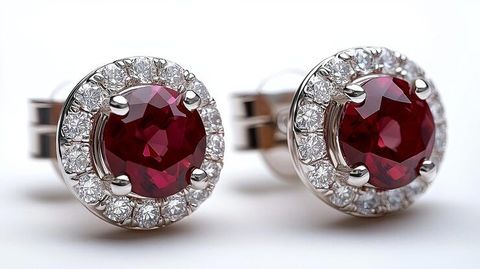
Sapphires, rubies, emeralds, and other gemstones can introduce color while keeping the center diamond as the primary focal point.
The gemstone choice can also create personal or symbolic associations.
Hidden Details
Designers may incorporate smaller accent stones beneath the center setting or along the gallery.
These details are not always visible from the top, allowing the ring to maintain a relatively clean appearance while adding additional visual interest from side angles.
Mixed Metals
Mixed-metal construction can create contrast between different sections of the ring.
For example, a white-metal setting around the diamonds can be paired with a yellow-gold band. This approach can combine traditional diamond presentation with a warmer metal appearance.
Laboratory-Grown Diamonds
Three-stone rings can use either mined diamonds or laboratory-grown diamonds when the selected design and specifications permit.
When jewelry descriptions identify laboratory-grown diamonds, the origin should be clearly stated. The U.S. Federal Trade Commission's Jewelry Guides emphasize accurate disclosure regarding laboratory-created and mined diamonds.
Laws or Policies
Diamond Disclosure
Jewelry descriptions should accurately identify the type and characteristics of the diamonds or gemstones used.
The FTC Jewelry Guides state that material information about jewelry, including diamond type, treatment, quality, and other characteristics, should be represented accurately.
For laboratory-grown diamonds, clear terminology should distinguish them from mined diamonds. The same principle applies to simulated or imitation stones.
Diamond Documentation
A diamond grading report can document characteristics such as carat weight, measurements, color, clarity, cut-related information, polish, symmetry, and other identifying details.
For a three-stone ring, the center diamond may have its own grading report, while side stones may have different documentation depending on their size and characteristics.
Gold Hallmarking in India
Gold used in three-stone engagement rings in India is subject to applicable BIS hallmarking requirements.
BIS explains that hallmarking records the proportion of precious metal in an article and provides an indication of purity or fineness. Gold and silver are currently within India's hallmarking framework.
BIS also identifies HUID as a unique six-character alphanumeric identification associated with hallmarked gold jewelry.
Current Hallmarking Updates
India's mandatory hallmarking framework continues to be updated through amendments and phased district coverage.
BIS's current mandatory hallmarking page lists amendments through August 2026, showing that the regulatory framework is subject to ongoing updates.
Metal Purity
Gold jewelry can be hallmarked at permitted fineness levels under the applicable Indian Standard.
BIS currently lists permitted gold grades including 14K, 18K, 20K, 22K, 23K, and 24KS under its hallmarking FAQ.
Diamond documentation and gold hallmarking provide different types of information: the former relates primarily to the gemstone, while the latter identifies precious-metal purity.
Tools and Resources
Diamond Grading Reports
A grading report can help document the characteristics of a diamond.
Useful details can include:
Carat weight
Color
Clarity
Cut information
Measurements
Polish
Symmetry
Fluorescence
Origin information where applicable
Report identification number
Diamond Shape Comparison
Comparing different center and side-stone shapes can help determine the visual structure of a three-stone ring.
Round and oval combinations generally create softer outlines, while emerald, baguette, and trapezoid combinations produce stronger geometric relationships.
Three-Stone Design Comparison
| Design Type | Center Stone | Side Stones | Visual Character |
|---|---|---|---|
| Classic | Round | Round | Symmetrical |
| Elongated | Oval | Pear | Soft and extended |
| Geometric | Emerald | Baguette | Structured |
| Architectural | Radiant | Trapezoid | Angular |
| Vintage | Cushion | Round | Traditional |
| Mixed Shape | Oval | Round | Contemporary |
| Color Accent | Diamond | Sapphire | Contrasting |
| Balanced Trio | Similar-size stones | Matching | Evenly distributed |
Ring Size
Ring size should be measured accurately because three-stone rings can have different proportions from simpler bands.
The width of the band, height of the setting, and overall structure can influence how the ring fits.
Wedding-Band Compatibility
The shape of the three-stone setting should be considered alongside a wedding band.
Some designs have a raised center and open space beneath the stones, while others have a lower or wider structure. A straight band, curved band, or contoured band may interact differently with each design.
Stone Security
Three-stone rings contain multiple individual stones, so the condition of each setting should be monitored.
Prongs, bezels, and other retaining structures can experience wear during regular use. Periodic professional inspection can help identify loose stones or worn components.
Care Resources
Cleaning methods should be appropriate for the specific metal, diamond treatments, gemstones, and setting construction.
Harsh chemicals, unsuitable mechanical cleaning, or incorrect handling can affect certain gemstones or delicate settings. Manufacturer or jewelry-care instructions should be followed when available.
Design Planning
A practical design sequence can include:
Select the center-stone shape.
Determine the side-stone arrangement.
Compare matching and mixed shapes.
Select stone proportions.
Choose the metal.
Review setting structures.
Consider wedding-band compatibility.
Review diamond documentation.
Confirm ring size.
Establish appropriate care and inspection practices.
FAQs
What are three-stone engagement rings?
Three-stone engagement rings feature a central diamond or gemstone with two additional stones positioned on either side. The arrangement creates a balanced three-stone structure.
What do three-stone engagement rings symbolize?
Three-stone engagement rings are commonly associated with the symbolic idea of past, present, and future. Individuals may also assign their own personal meaning to the three stones.
Which diamond shapes work with three-stone engagement rings?
Round, oval, cushion, emerald, radiant, pear, marquise, and other diamond shapes can be used. The center and side stones can either match or create contrast through different shapes.
Can three-stone engagement rings use colored gemstones?
Yes. Diamonds can be combined with gemstones such as sapphires, rubies, or emeralds. Colored side stones can create contrast while maintaining the three-stone structure.
What should be considered when choosing a three-stone engagement ring?
Important considerations include center-stone shape, side-stone proportions, setting structure, metal, diamond documentation, ring size, wedding-band compatibility, and ongoing care requirements.
Conclusion
Three-stone engagement rings combine a center diamond or gemstone with two side stones to create a balanced and symbolic jewelry arrangement. The design can range from traditional matching diamonds to contemporary combinations using different shapes, proportions, metals, and colored gemstones. Current bridal trends emphasize personalization, elongated stones, geometric arrangements, vintage references, mixed metals, and distinctive stone combinations. Accurate gemstone information, appropriate metal identification, documentation, and careful attention to proportions can help create a cohesive three-stone ring design.