Heirloom Diamond Rings: Learn About Heritage Designs, Jewelry History, and Care
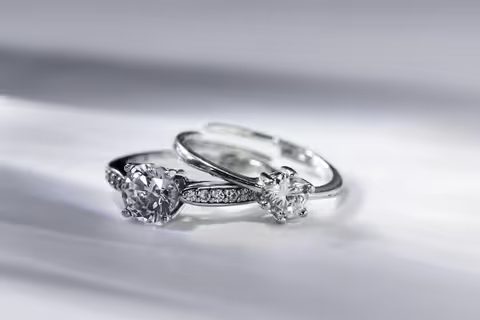
Heirloom diamond rings connect jewelry with family history, heritage design, and changing jewelry traditions. These rings may feature antique or vintage-inspired settings, older diamond cuts, distinctive metalwork, engraved details, or gemstones passed through generations.
Understanding an heirloom diamond ring involves looking beyond its appearance. Its construction, gemstone characteristics, setting condition, historical style, documentation, and care requirements can all help explain its significance and preserve its character over time.
Heirloom Diamond Rings: Learn About Heritage Designs, Jewelry History, and Care
Context
Heirloom diamond rings are pieces of jewelry associated with family history, heritage, or long-term ownership. They may be passed from one generation to another or selected for their historical character, distinctive craftsmanship, and connection to earlier jewelry traditions.
An heirloom ring can have an antique construction, a vintage design, or a more recent ring that has acquired family significance over time. Its appeal can come from the diamond itself, the setting, the metalwork, the documented history, or the memories connected with the piece.
What Are Heirloom Diamond Rings?
Heirloom diamond rings are diamond rings preserved or passed through families and personal collections. Some are genuine antique pieces, while others may be newer designs that have become meaningful family jewelry.
The term does not describe one specific diamond shape or setting. An heirloom ring can feature a solitaire, cluster, halo, three-stone, or other arrangement depending on when and where it was created.
Heritage Jewelry Designs
Historical jewelry styles can reflect the artistic preferences and technical capabilities of their period. Victorian, Edwardian, Art Deco, and later vintage designs can have noticeably different approaches to metalwork, gemstone arrangement, decoration, and geometry.
Older diamond cutting styles can also differ from contemporary cutting styles. Historical jewelry research has documented diamond-cutting developments across several centuries, providing context for the appearance of diamonds in older rings.
Why Diamond History Matters
Diamonds have a long history in jewelry, with India playing an important role in the early history of diamond use and trade. Historical sources describe Indian diamonds reaching European markets centuries ago, while later discoveries in Brazil and southern Africa influenced the global diamond trade.
This history helps explain why older diamond rings can contain cutting styles, proportions, and design features that differ from many contemporary pieces.
Importance
Heirloom diamond rings combine gemstone characteristics with craftsmanship and personal history. Preserving them requires attention to both their physical condition and their historical character.
Antique and Vintage Styles
Antique jewelry generally refers to older pieces, while vintage is commonly used for jewelry associated with an earlier period or design era. The exact terminology can vary among jewelry professionals and historical references.
Different periods are associated with distinctive design characteristics. Edwardian jewelry often emphasized delicate platinum work and decorative motifs, while Art Deco designs are recognized for geometric forms and strong visual structure.
Later vintage jewelry can feature different proportions, metals, gemstone arrangements, and decorative approaches.
Historical Diamond Cuts
Older rings may contain rose cuts, old mine cuts, old European cuts, or other historical diamond-cutting styles. These cuts were developed before modern cutting equipment and techniques became widespread.
Historical cuts can have individual proportions and visual characteristics. Their appearance should therefore be understood within the context of the period in which they were produced rather than judged only against contemporary cutting conventions.
Ring Settings
The setting is an important part of an heirloom ring because it secures the diamond and contributes to the overall appearance.
Common setting approaches include:
Prong settings
Bezel settings
Cluster settings
Halo arrangements
Pavé settings
Channel settings
Three-stone arrangements
Decorative gallery settings
Older settings may show signs of wear after decades of use. Prongs, bezels, channels, and other metal components should therefore be inspected carefully.
Metalwork and Craftsmanship
Heirloom rings can contain detailed metalwork that contributes to their historical identity. Engraving, milgrain decoration, filigree, pierced galleries, scrollwork, floral motifs, and geometric details may appear depending on the period.
The condition of these details can provide useful information about how the ring has been maintained and whether previous alterations have been made.
Family History and Documentation
The story associated with a ring can be an important part of its identity. Family records, photographs, inscriptions, original documentation, laboratory reports, or historical notes can help establish a timeline.
Even when formal documentation is unavailable, information from relatives or previous owners can add context to the piece.
Recent Updates
Interest in historical jewelry continues to influence contemporary jewelry design. Recent gemological research and publications have also expanded documentation of historical diamond cuts and jewelry traditions.
Renewed Interest in Historical Cuts
Historical diamond cuts continue to receive attention from collectors, researchers, and jewelry enthusiasts. Publications examining historic diamond cutting have added research and imagery covering jewelry from the medieval period through the early twentieth century.
This research provides additional context for understanding why older diamonds can look different from modern brilliant-cut stones.
Heritage-Inspired Contemporary Designs
Contemporary rings can incorporate details inspired by historical jewelry without reproducing an older piece exactly. Examples include milgrain borders, engraved shoulders, geometric motifs, antique-style diamond cuts, and vintage-inspired settings.
This approach allows historical design elements to appear in more contemporary ring structures.
Family Jewelry Preservation
Preservation has become an important consideration when working with older jewelry. A ring may require inspection, gentle cleaning, setting assessment, or careful restoration depending on its condition.
GIA notes that older jewelry and fragile settings require a gentle approach because vigorous cleaning can damage delicate components or affect loose stones.
Repurposing Heritage Jewelry
Some heirloom pieces are maintained in their original form, while others may be adapted into a different jewelry design. Repurposing can involve resetting a diamond, modifying a mounting, or incorporating an inherited gemstone into a new piece.
The appropriate approach depends on the condition, historical importance, gemstone characteristics, and family preference associated with the original jewelry.
Documentation and Identification
Gemological reports and professional examinations can help document gemstone characteristics and identify details that may not be visible to an untrained observer.
For older jewelry, documentation can be especially useful when a family wants to preserve information about the ring for future generations.
Laws or Policies
Jewelry in India can be subject to requirements relating to precious-metal purity, hallmarking, product descriptions, and applicable consumer information.
Precious-Metal Hallmarking
The Bureau of Indian Standards operates India's hallmarking framework for applicable precious-metal jewelry. Hallmarking provides information about metal purity under the applicable system.
For an heirloom ring, the presence, age, or format of a hallmark can sometimes provide useful information about the metal and period, although a hallmark alone may not establish the complete history of a piece.
Gemstone Documentation
Diamond documentation can provide information about characteristics such as weight, measurements, color, clarity, and other identification details depending on the report.
For an older ring, documentation should be considered alongside the mounting and the ring's broader history because the report may describe the diamond rather than the entire jewelry piece.
Historical and Estate Jewelry
Older jewelry can have unique construction and material characteristics. Before restoration, significant alterations, or resetting, the historical character of the piece should be considered.
Current BIS requirements and applicable jewelry regulations should be checked when dealing with precious-metal jewelry in India because regulatory provisions can change.
Tools and Resources
Several resources can help with the study, documentation, maintenance, and preservation of heirloom diamond rings.
Gemological Reports
A gemological report can document characteristics of a diamond or gemstone. This information can be useful when creating records for family jewelry.
Reports may include details such as measurements, carat weight, color, clarity, and other identification characteristics depending on the laboratory and report type.
Historical Jewelry References
Books, museum collections, gemological publications, and historical jewelry archives can help identify design periods and stylistic characteristics.
Comparing decorative motifs, diamond cuts, metalwork, and construction methods can provide clues about the period associated with a ring.
Jewelry Inspection
A professional inspection can examine:
Diamond security
Prong condition
Metal wear
Ring deformation
Surface condition
Previous repairs
Stone movement
Setting integrity
This is particularly relevant for older rings because decades of wear can affect small structural components.
Gentle Cleaning
Cleaning methods should match the materials and condition of the ring. Older settings may require more care than modern, robust constructions.
GIA advises caution with fragile settings and older jewelry and warns against harsh chemicals and abrasive cleaning methods.
Storage
Heirloom rings should be stored separately from pieces that could scratch or damage them. A clean, dry jewelry box or individual soft compartment can help reduce contact between pieces.
For rings with delicate settings, loose stones, or fragile decorative elements, careful storage is particularly important.
Maintenance Records
Maintaining a simple record can help preserve information for future generations. Useful details can include:
Ring history
Family ownership
Diamond characteristics
Metal type
Hallmark information
Previous repairs
Inspection records
Restoration work
Photographs
Gemological documentation
These records can become part of the heirloom's history.
FAQs
What are heirloom diamond rings?
Heirloom diamond rings are diamond rings associated with family history, heritage, or long-term ownership. They may be antique, vintage, or relatively modern pieces that have acquired family significance.
How can the history of an heirloom diamond ring be identified?
Identification can involve examining diamond cuts, setting construction, metalwork, hallmarks, inscriptions, documentation, photographs, and family records. A qualified gemological or jewelry examination can provide additional context.
What diamond cuts are found in heirloom rings?
Older rings can contain historical cuts such as rose cuts, old mine cuts, and old European cuts, as well as later brilliant-style cuts. The specific cutting style depends on the period and origin of the ring.
How should heirloom diamond rings be cleaned?
Cleaning should be appropriate for the ring's condition and materials. Older or fragile settings require gentle handling, and harsh chemicals, abrasive cleaners, and unsuitable cleaning equipment can damage jewelry components.
Can an heirloom diamond ring be redesigned?
Some heirloom rings can be restored, modified, or repurposed, but the appropriate approach depends on the condition, historical character, diamond characteristics, and family preferences. Preserving original components may be important when a piece has particular historical significance.
Conclusion
Heirloom diamond rings combine gemstones, craftsmanship, historical design, and family heritage. Their characteristics can reflect the jewelry traditions, diamond-cutting methods, metalwork, and decorative preferences associated with different periods. Careful inspection, appropriate cleaning, documentation, and storage can help preserve these pieces for continued family use. Understanding both the physical construction and the history of an heirloom ring provides a fuller view of its significance across generations.