Experiential Jewelry Design: Guide to Creative Concepts and Practical Insights
Experiential jewelry design focuses on creating jewelry that communicates an idea, emotion, story, movement, or sensory experience rather than relying only on conventional decorative elements. Designers may combine unusual forms, textures, materials, interactive features, and storytelling concepts to create pieces that feel distinctive when viewed or worn.
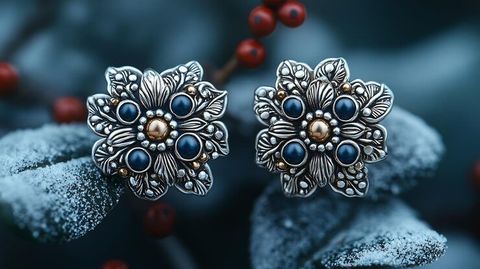
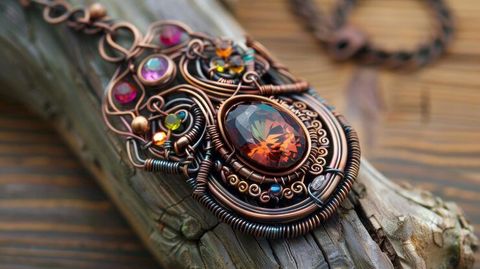
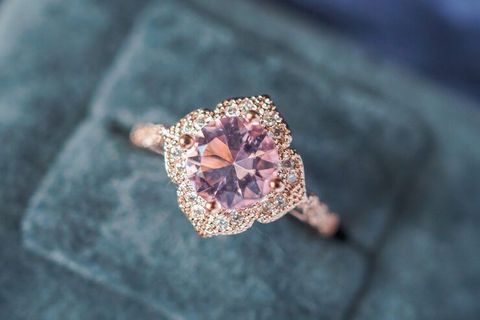
Experiential jewelry design can include rings, necklaces, earrings, bracelets, brooches, body adornments, and conceptual wearable pieces. Some designs respond to movement, while others use layered structures, tactile surfaces, transformable components, or symbolic details.
How the Concept Developed
Traditional jewelry has long carried cultural, personal, and symbolic meanings. Experiential approaches extend this idea by treating jewelry as a small-scale artistic environment that can communicate through shape, touch, movement, sound, light, or transformation.
Contemporary designers may draw inspiration from architecture, nature, technology, sculpture, fashion, cultural heritage, and human interaction. The result can range from highly wearable pieces to experimental objects intended primarily for exhibitions and artistic presentation.
Importance
Storytelling Through Jewelry
One important feature of experiential jewelry design is storytelling. A piece can represent a memory, landscape, cultural reference, personal experience, or abstract concept.
Designers often use recognizable visual elements to communicate an idea. For example, layered metal forms may represent geological formations, while flowing structures can suggest water, wind, or movement.
Interaction and Movement
Jewelry is worn on a moving body, which creates opportunities for interaction. Hinges, articulated links, sliding components, flexible structures, and detachable elements can change the appearance of a piece as the wearer moves.
| Design Element | Possible Experience | Example |
|---|---|---|
| Articulated sections | Movement | Multi-part pendant |
| Textured surfaces | Tactile interaction | Hammered metal bracelet |
| Transformable components | Visual change | Convertible brooch |
| Layered structures | Depth | Sculptural necklace |
| Reflective surfaces | Light interaction | Polished metal earrings |
| Mixed materials | Contrast | Metal and textile ornament |
Emotional and Sensory Qualities
Experiential jewelry can engage more than visual perception. Texture can influence how a piece feels against the skin, while movement can create changing silhouettes.
Materials also contribute to the experience. Smooth polished surfaces may create a different impression from rough metal, carved wood, woven fibers, ceramic, or translucent materials.
Creative Concepts
Nature-Inspired Concepts
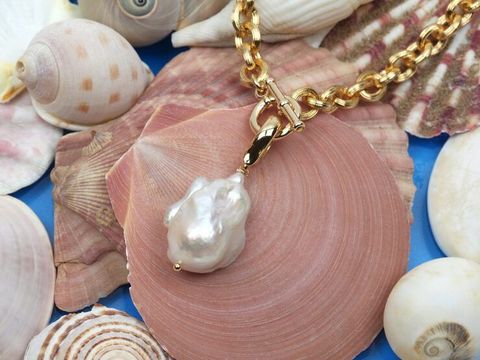
Nature provides many possibilities for experiential jewelry. Designers can interpret leaves, shells, flowers, insects, waves, stones, branches, clouds, or geological formations without directly copying their appearance.
Organic structures can be translated into repeating patterns, irregular surfaces, curved silhouettes, or layered forms.
Architectural Jewelry
Architecture can influence experiential jewelry through geometry, structure, proportion, and negative space. Buildings, bridges, domes, staircases, and structural frameworks can inspire jewelry with strong visual organization.
Architectural concepts are particularly useful when designers want to explore balance and spatial relationships within a small wearable object.
Transformable Jewelry
Transformable jewelry changes its configuration through movement or rearrangement. A necklace might become a brooch, a pendant might separate into multiple components, or an earring could have adjustable sections.
The transformation should remain understandable to the wearer. Moving components need sufficient strength, controlled movement, and secure connections.
Cultural and Historical References
Cultural references can provide rich creative foundations, including traditional patterns, historical ornaments, craft techniques, and regional artistic traditions.
Responsible interpretation is important. Designers should understand the cultural background of motifs and techniques before incorporating them into contemporary pieces.
Materials and Techniques
Metals
Gold, silver, platinum, titanium, stainless steel, copper, brass, and other alloys can be used depending on the design requirements.
Different metals provide different combinations of weight, hardness, color, surface appearance, and workability. Metal selection should therefore be connected to the intended structure and wearing conditions.
Gemstones and Alternative Materials
Gemstones can introduce color, transparency, reflection, and natural variation. Designers may also explore glass, ceramic, wood, textiles, resin, recycled materials, paper-based components, and engineered materials.
The choice depends on whether the design prioritizes durability, flexibility, texture, transparency, light interaction, or visual contrast.
Digital Design and Fabrication
Computer-aided design allows complex forms to be developed before physical production. Three-dimensional modeling can help designers examine proportions, connections, clearances, and movement.
Digital fabrication methods such as 3D printing, laser cutting, and computer-controlled machining can also support intricate structures that may be difficult to create manually.
Design Process
Concept Development
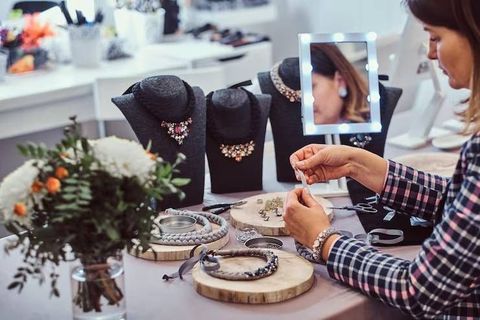
The process generally begins with an idea or experience. Designers may create mood boards, sketches, material studies, written concepts, or small physical experiments.
A useful concept should answer several questions:
What experience should the piece communicate?
How will the wearer interact with it?
Which materials support the concept?
How will the piece move or remain stable?
Is the design intended for everyday wear or artistic presentation?
Prototyping
A prototype allows designers to evaluate size, weight, movement, comfort, and structural behavior before final fabrication.
Low-fidelity prototypes can be produced from paper, wire, foam, modeling materials, or inexpensive test materials. More advanced prototypes may use digital fabrication techniques.
Surface Development
Surface treatment can dramatically change the character of jewelry. Common approaches include polishing, brushing, hammering, engraving, texturing, oxidizing, perforating, and controlled patination.
Texture can also help distinguish different areas of a complex design, making its structure easier to understand visually.
Practical Considerations
Wearability
A visually interesting design still needs to function as jewelry when it is intended for regular use. Weight distribution, edges, closures, attachment points, and contact with the skin all influence comfort.
Necklaces and earrings require particular attention to weight and balance because excessive weight can affect how comfortably they remain positioned.
Durability
Moving parts and small connections can experience repeated mechanical stress. Hinges, clasps, chains, joints, and attachment points should therefore be designed according to the expected frequency of use.
Material compatibility is also important. Different metals and materials can respond differently to moisture, chemicals, friction, and environmental exposure.
Safety
Jewelry should avoid unnecessarily sharp edges, insecure components, and structures that can easily catch on clothing. Pieces designed with moving or detachable components should be tested repeatedly before regular use.
For pieces containing stones or small decorative elements, secure mounting is particularly important.
Recent Updates
Digital Modeling
Digital modeling has become increasingly useful for experimental jewelry because designers can explore complex geometry, modify proportions, and create multiple design variations before fabrication.
Parametric modeling can also allow specific dimensions to be adjusted systematically, which is useful when developing collections with related forms.
Additive Manufacturing
Additive manufacturing continues to expand the design possibilities available to jewelry makers. Layer-by-layer fabrication can create internal structures, lattice forms, intricate patterns, and customized geometries.
The technology can also support rapid prototyping before a final material is selected.
Sustainable Material Exploration
Contemporary jewelry designers are increasingly exploring recycled metals, reclaimed materials, laboratory-created gemstones, recycled glass, plant-based materials, and other material alternatives.
Material transparency and responsible sourcing can become part of the story communicated by a jewelry collection.
Wearable Technology
Some experimental jewelry incorporates electronic components such as LEDs, sensors, small displays, or responsive materials. These concepts connect jewelry with wearable technology and interactive design.
However, electronic elements introduce additional considerations involving battery placement, durability, weight, maintenance, and user safety.
Laws or Policies
Material Disclosure
Jewelry regulations vary by jurisdiction. Requirements may cover metal purity, hallmarking, gemstone descriptions, material disclosure, labeling, and consumer protection.
Designers and manufacturers working across international markets should review the applicable rules for each destination rather than assuming that one regulatory framework applies globally.
Restricted Materials
Some materials used historically in decorative objects may be restricted or subject to special requirements because of environmental, health, wildlife, or cultural-heritage regulations.
Precious metals, gemstones, coral, ivory, exotic animal materials, and certain minerals can have specific sourcing or trade requirements depending on the jurisdiction.
Product Safety
Wearable products should be designed with foreseeable use in mind. Requirements can vary depending on the materials, intended users, market, and product category.
Documentation concerning material composition and production processes can help support regulatory compliance where required.
Tools and Resources
Design Tools
Useful tools for experiential jewelry design include:
Sketchbooks for early concept development
Digital drawing applications for visual exploration
CAD software for precise three-dimensional modeling
3D printers for prototype development
Jewelry saws and files for manual fabrication
Micromotor systems for detailed work
Soldering equipment for metal assembly
Polishing equipment for surface finishing
Measuring tools for accurate dimensions
Learning Resources
Designers can study jewelry through art and design schools, museum collections, professional publications, technical workshops, craft associations, and contemporary jewelry exhibitions.
Museum collections are particularly useful for understanding how historical jewelry used materials, symbolism, construction, and ornamentation.
FAQs
What is experiential jewelry design?
Experiential jewelry design creates wearable pieces that communicate ideas or experiences through form, movement, texture, materials, interaction, and storytelling.
How does experiential jewelry design differ from conventional jewelry?
Conventional jewelry may primarily emphasize ornamentation, gemstones, craftsmanship, or personal decoration. Experiential jewelry can place additional emphasis on interaction, transformation, sensory qualities, and conceptual storytelling.
What materials are used in experiential jewelry design?
Materials can include precious and non-precious metals, gemstones, glass, ceramics, wood, textiles, resin, recycled materials, and engineered materials.
Is experiential jewelry suitable for everyday wear?
Some designs are created for everyday use, while others are primarily artistic or exhibition pieces. Wearability depends on factors such as weight, durability, dimensions, moving components, and skin contact.
Can technology be incorporated into experiential jewelry design?
Yes. Designers can incorporate elements such as sensors, LEDs, small electronic components, responsive materials, and digital fabrication techniques when these elements support the intended concept.
Conclusion
Experiential jewelry design expands the role of jewelry from decoration toward storytelling, interaction, sensory exploration, and artistic expression. Designers can combine traditional craftsmanship with contemporary materials, digital modeling, transformable structures, and experimental concepts.
Successful designs balance creativity with practical considerations such as comfort, durability, safety, material compatibility, and structural stability. As digital fabrication and material innovation continue to develop, experiential jewelry provides an evolving space for designers to explore how wearable objects can communicate ideas and create memorable experiences.