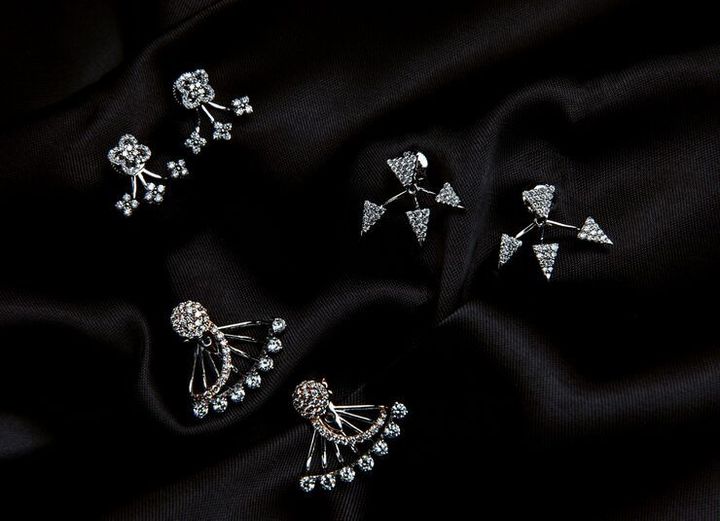
Architectural Silver Jewelry: Guide to Geometric Styles and Practical Insights
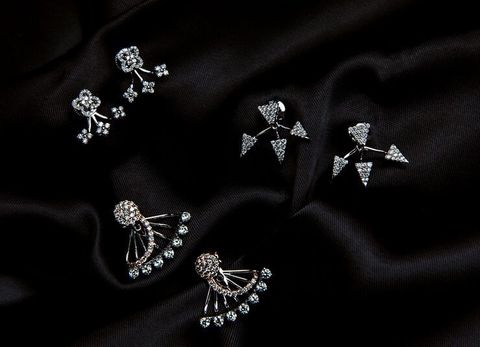
Architectural silver jewelry is jewelry designed around ideas commonly associated with architecture, such as geometry, structure, proportion, symmetry, planes, lines, negative space, and three-dimensional forms. Instead of relying mainly on traditional decorative motifs, these pieces often make the shape of the metal itself the central design element.
The style can range from simple geometric rings to sculptural earrings, structured pendants, angular bracelets, and pieces built from overlapping planes. Architectonic jewelry is commonly associated with linear forms, geometric elements, visible structures, and changes in depth that create a three-dimensional appearance.
How Architectural Silver Jewelry Developed
The relationship between architecture and jewelry has developed through modern art, industrial design, sculpture, and contemporary jewelry movements. Designers have explored how architectural principles can be reduced from buildings and structures into small objects that interact with the human body.
Silver is particularly suitable for this type of design because it can be shaped, textured, polished, cast, cut, and combined with other materials. A designer can therefore translate a building facade, geometric pattern, structural frame, staircase, window grid, or abstract shape into a wearable form.
Contemporary examples show this approach through rings built from cubes, frames, platforms, planes, discs, and other structural elements.
Main Geometric Styles
Architectural silver jewelry can use several recognizable design approaches.
Linear designs use straight bars, parallel lines, grids, or intersecting elements.
Angular designs use triangles, squares, rectangles, diamonds, and sharp changes in direction.
Circular designs use rings, discs, arcs, cylinders, and concentric forms.
Modular designs combine several repeated units into one structure.
Sculptural designs create volume through curved or folded silver surfaces.
Negative-space designs deliberately leave open areas between metal elements.
Symmetrical designs mirror shapes or distribute elements evenly around a central point.
Asymmetrical designs intentionally balance different shapes or volumes without mirroring them.
A simple example is a silver ring formed from two rectangular planes that cross above the finger. The piece does not imitate an entire building; instead, it uses structural ideas such as planes, balance, intersections, and depth on a much smaller scale.
Importance
Why Architectural Silver Jewelry Matters
Architectural silver jewelry demonstrates how functional design principles can become wearable objects. Geometry gives designers a framework for controlling proportion, balance, repetition, spacing, and visual weight.
The approach also gives wearers different ways to interact with jewelry. A flat geometric pendant may appear relatively simple from the front, while a three-dimensional piece can change its appearance as it moves with the body.
Architectural jewelry can therefore sit between traditional adornment, sculpture, and product design. Its importance is primarily connected with design exploration, craftsmanship, material behavior, and visual expression.
Where It Is Used
Architectural forms appear in rings, earrings, necklaces, bracelets, brooches, pendants, and experimental studio jewelry. Some pieces are designed for relatively subtle everyday styling, while others are created as sculptural objects with larger volumes or unusual structures.
The geometric approach is also visible in contemporary Art Deco-inspired jewelry. Recent fashion coverage has documented renewed interest in geometric Art Deco influences, including symmetry, architectural motifs, sculptural forms, and silver-based designs.
Important Design Elements
Several components influence how architectural silver jewelry looks and functions.
Proportion describes the relationship between the size of different parts.
Balance determines how visual weight is distributed across a piece.
Geometry controls the basic shapes and angles.
Negative space creates open areas that can make a design appear lighter.
Surface treatment changes how light interacts with the metal through polishing, brushing, hammering, oxidation, or texturing.
Structure determines how different sections connect and support one another.
Scale affects how strongly an architectural form translates to the human body.
A geometric design can appear very different when the same shape is enlarged, flattened, curved, or repeated. This makes proportion and scale important during both design development and production.
Silver Materials and Construction
Silver jewelry can be made using different material grades and construction methods. Fine silver contains a higher proportion of silver, while sterling silver generally contains silver combined with other metals to create an alloy with different physical properties.
The exact composition, hallmarking system, and legal definitions vary between jurisdictions. Some national systems use fineness marks to indicate precious-metal content, while additional maker or assay marks may also be required.
| Design Feature | Common Form | Main Visual Effect | Practical Consideration |
|---|---|---|---|
| Straight lines | Bars and frames | Structured appearance | Edges need careful finishing |
| Angles | Triangles and polygons | Strong geometric character | Sharp areas may need smoothing |
| Curves | Arcs and cylinders | Softer architectural effect | Requires controlled forming |
| Negative space | Open frames | Lighter visual appearance | Connections need adequate strength |
| Repetition | Grids and modules | Consistent rhythm | Alignment is important |
| Layering | Overlapping planes | Greater depth | Weight can increase |
| Surface texture | Brushed or patterned silver | Changes light reflection | Texture can affect maintenance |
Recent Updates
Renewed Interest in Geometric Design
Recent 2026 fashion coverage indicates renewed attention to geometric and architectural jewelry, including modern interpretations of Art Deco forms. Designers are using symmetry, angular shapes, unusual proportions, sculptural surfaces, and contrasting materials rather than simply reproducing historical designs.
This development is part of a wider movement toward jewelry that treats the object itself as a designed form. Contemporary collections can combine architectural structures with gemstones, textured surfaces, recycled metals, and experimental silhouettes.
Digital Design and 3D Production
Computer-aided design has changed how geometric jewelry can be developed. Designers can create digital models, adjust dimensions, test proportions, and inspect a piece from multiple angles before physical production.
Three-dimensional printing can also be used to create models or casting patterns. This is particularly useful for complex forms that would be difficult to construct directly by hand.
Digital manufacturing does not eliminate traditional craftsmanship. Filing, polishing, soldering, stone setting, surface finishing, and final inspection may still be required depending on the construction method.
Material and Surface Experimentation
Recent contemporary jewelry practices also include greater experimentation with recycled metals, mixed materials, unusual textures, and deliberately visible construction details. Current design coverage includes sculptural silver pieces and architectural forms that treat metal as both a structural material and an artistic surface.
The result is a broader range of architectural silver jewelry, from highly polished geometric pieces to rough-textured or intentionally irregular forms.
Digital Heritage and Ethical Considerations
When architectural jewelry draws from historical buildings, archaeological objects, or cultural motifs, designers and researchers may need to consider provenance and cultural context. The International Council of Museums adopted a revised Code of Ethics in June 2026, strengthening its international framework for responsible cultural-heritage management and addressing contemporary issues including digital technology and cultural heritage.
This framework primarily concerns museums and museum professionals rather than ordinary jewelry design, but its principles illustrate the wider importance of responsible research when historical cultural material is involved.
Laws or Policies
Silver Purity and Hallmarking
There is no single worldwide law governing silver jewelry. Precious-metal requirements are established through national or regional legislation, and rules can differ regarding purity marks, hallmarking, maker identification, imports, and consumer information.
A fineness mark generally communicates the proportion of precious metal in an alloy. However, the meaning, format, and legal requirements surrounding such marks depend on the jurisdiction.
For example, national assay systems can require precious-metal jewelry to carry specific fineness markings. The exact requirements should therefore be checked with the relevant national authority before manufacturing, importing, exporting, or commercially distributing jewelry.
Cultural Heritage Considerations
Jewelry inspired by archaeological artifacts or culturally significant objects can involve additional considerations. International heritage frameworks address issues such as illicit trafficking, cultural property, provenance, and protection of heritage.
ICOM's Code of Ethics provides professional guidance concerning acquisition, legal compliance, provenance, restitution, and protection against illicit traffic in cultural heritage. The revised 2026 code continues this international ethical framework.
These principles do not replace national law. Requirements can vary considerably between countries, particularly when historical objects, archaeological materials, protected cultural property, or museum collections are involved.
Consumer and Product Rules
Rules concerning precious-metal descriptions, hallmarking, product information, imports, and material claims vary by jurisdiction. Designers and businesses working internationally may therefore need to check the applicable rules in every market where jewelry is produced or distributed.
Tools and Resources
Computer-Aided Design Software
CAD software can help designers construct geometric jewelry digitally. Measurements, angles, thicknesses, clearances, and proportions can be adjusted before production.
For architectural designs, CAD is particularly useful because repeated shapes and precise relationships can be controlled more easily in a digital model.
3D Modeling and Printing
3D modeling allows designers to inspect a jewelry form from multiple directions. A 3D printer can then produce a prototype or casting pattern, depending on the material and manufacturing process.
This approach is useful for testing unusual shapes before producing the final metal piece.
Jewelry Measurement Tools
Digital calipers, ring gauges, mandrels, thickness gauges, scales, and angle-measuring tools can help maintain dimensional accuracy. These tools are especially relevant when geometric components must fit together precisely.
Hallmark and Assay Resources
National assay offices and official precious-metal authorities can provide information about silver fineness, hallmarking, registration, and legal requirements. Because these rules differ internationally, official government or assay resources should be used for jurisdiction-specific information.
Design References and Museum Databases
Museum collections, architectural archives, historical drawings, and digital heritage databases can provide references for geometric patterns and historical design movements. When historical objects are used as references, provenance and cultural context should be examined carefully.
FAQs
What is architectural silver jewelry?
Architectural silver jewelry is jewelry influenced by architecture and structural design. It commonly uses geometric shapes, straight lines, planes, symmetry, negative space, and three-dimensional forms.
What geometric shapes are common in architectural silver jewelry?
Common shapes include squares, rectangles, triangles, circles, hexagons, cubes, cylinders, grids, arcs, and intersecting lines. Designers can combine these shapes to create rings, earrings, pendants, bracelets, and other forms.
How is architectural silver jewelry made?
It can be produced through hand fabrication, casting, forming, soldering, machining, CAD modeling, and 3D printing-assisted processes. The exact process depends on the geometry, material, surface treatment, and construction method.
Is architectural silver jewelry inspired by Art Deco?
Some architectural silver jewelry uses Art Deco influences such as symmetry, geometric patterns, stepped forms, and strong lines. Contemporary designers may reinterpret these characteristics rather than reproduce historical designs directly.
What should be checked when researching architectural silver jewelry?
Important factors include silver purity, applicable hallmarking rules, construction quality, dimensions, surface treatment, historical references, and the cultural context of any motifs or objects used as inspiration.
Conclusion
Architectural silver jewelry transforms ideas from buildings, geometry, and structural design into wearable objects. Its major characteristics include geometric forms, proportion, symmetry, negative space, layered surfaces, and visible structural elements. Digital modeling, 3D production, material experimentation, and renewed interest in geometric jewelry are influencing contemporary designs. Understanding silver composition, local regulations, construction methods, and cultural context helps explain how these pieces are designed and interpreted.