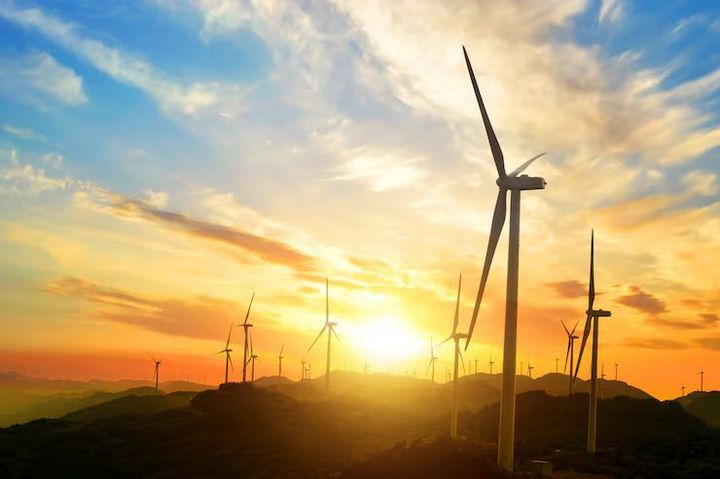
Wind Turbines: Explore Their Design and Working Principles
Wind turbines are machines that convert the kinetic energy of moving air into mechanical energy and then into electrical energy. They are used in wind power projects ranging from individual installations to large onshore and offshore wind farms.
A modern wind turbine combines aerodynamic blades, a rotor, drivetrain, generator, control system, tower, foundation, electrical equipment, and monitoring systems. The overall design depends on wind conditions, turbine capacity, site characteristics, grid requirements, and whether the turbine is installed onshore or offshore.
The basic principle is relatively simple: wind moves the blades, the rotating rotor transfers mechanical energy through the drivetrain, and the generator converts that mechanical energy into electricity.
Basic Wind Turbine Working Process
A typical electricity-producing wind turbine follows these stages:
- Wind flows across the turbine blades.
- Aerodynamic forces cause the rotor to rotate.
- The rotor transfers mechanical energy to the drivetrain.
- The shaft drives the generator directly or through a gearbox.
- The generator produces electrical power.
- Power-electronic equipment conditions the electricity.
- A transformer adjusts the voltage for the electrical network.
- Control and monitoring systems continuously assess turbine operation.
The turbine also uses yaw and pitch systems to maintain an appropriate operating position under changing wind conditions.
Main Types of Wind Turbines
| Turbine Type | Typical Application | Main Characteristic |
|---|---|---|
| Horizontal-axis wind turbine | Large onshore and offshore projects | Rotor axis generally parallel to wind direction |
| Vertical-axis wind turbine | Selected small-scale applications | Rotor axis is vertical |
| Onshore wind turbine | Land-based wind farms | Installed on land |
| Offshore wind turbine | Marine wind projects | Installed in coastal or offshore areas |
| Direct-drive turbine | Utility-scale applications | Generator connected without a conventional gearbox |
| Geared wind turbine | Many conventional systems | Gearbox increases generator rotational speed |
| Fixed-speed turbine | Older turbine designs | Limited speed variation |
| Variable-speed turbine | Modern wind systems | Speed changes according to operating conditions |
Importance
Wind turbines are important components of renewable electricity generation because they transform naturally occurring wind energy into electrical power without requiring fuel combustion during operation.
Renewable Electricity Generation
Wind turbines generate electricity from moving air. Their output varies with wind speed, air density, turbine characteristics, and operating conditions.
Wind resources are therefore assessed carefully before a project is developed. Wind measurements and site analysis help determine whether a location is technically suitable.
Aerodynamic Efficiency
The shape, length, pitch, and material of turbine blades influence how effectively wind energy is captured.
Modern blade designs use aerodynamic profiles to generate lift as air passes over the blade surface. Blade pitch can then be adjusted to control aerodynamic forces and rotor speed.
Variable-Speed Operation
Many modern wind turbines operate across a range of rotational speeds. Variable-speed operation allows the turbine control system to respond to changing wind conditions.
Power electronics help manage the electrical output produced by the generator and support grid-compatible power delivery.
Grid Integration
Large wind turbines are connected to electrical networks through transformers, switchgear, protection equipment, and control systems.
Modern turbine control systems can monitor voltage, frequency, active power, reactive power, and other electrical parameters depending on the turbine and grid connection requirements.
Remote Monitoring
Wind turbines use sensors and digital control systems to collect information about temperature, vibration, wind speed, rotor speed, generator conditions, electrical output, and other operating parameters.
SCADA systems can combine these measurements into a centralized monitoring platform for wind farms.
Recent Updates
Wind turbine technology continues to develop through larger turbine designs, improved blade technology, digital monitoring, grid integration, prototype testing, and offshore wind development.
Updated Prototype Turbine Guidelines
India's Ministry of New and Renewable Energy issued revised guidelines for the installation of prototype wind turbine models on 25 June 2026, followed by a clarification on 15 July 2026. These documents form part of the current framework governing prototype turbine installation and evaluation in India.
Prototype testing is important because new turbine models need to demonstrate technical performance and meet applicable requirements before wider deployment.
ALMM-Wind and Component Lists
MNRE maintains an Approved List of Models and Manufacturers for Wind (ALMM-Wind) and an Approved List of Models and Manufacturers for Wind Turbine Components (ALMM-WTC). In 2026, MNRE published updated wind and component lists and amendments to the applicable inclusion procedures.
This framework makes model documentation, technical assessment, and component information important considerations for wind-project development in India.
Digital Monitoring and SCADA
SCADA-based monitoring continues to be an important part of wind-farm operation. Turbine controllers and SCADA platforms can collect operating data and provide centralized visibility of multiple turbines.
MNRE's current wind guidelines also include a notice concerning delays in installation of SCADA-based remote-control systems at Indian Air Force airfields, showing the role of remote-control infrastructure in wind-project planning near aviation facilities.
Offshore Wind Development
Offshore wind remains an area of technological and policy development. Offshore turbines can use larger rotors and taller structures to access stronger and more consistent wind resources, but marine installation, foundations, subsea electrical systems, corrosion protection, and maintenance create additional engineering requirements.
India's MNRE wind framework includes a Viability Gap Funding scheme for offshore wind energy projects, issued in September 2024.
Advanced Wind Turbine Standards
Indian standards increasingly align with the IEC 61400 family of wind-energy standards. BIS material includes standards covering turbine blades, tower and foundation design, electrical characteristics, communications, availability, and power-performance measurement.
For example, IS/IEC 61400-12-1:2022 covers power-performance measurements for electricity-producing wind turbines, while IS/IEC 61400-6:2020 addresses tower and foundation design requirements.
Laws or Policies
Wind-energy projects in India are affected by national renewable-energy policies, turbine-model requirements, land and environmental considerations, grid requirements, aviation considerations, and applicable technical standards.
Onshore Wind Guidelines
MNRE maintains guidelines for the development of onshore wind power projects. The current wind-policy framework includes amendments and clarifications issued in 2024.
These guidelines provide a framework for project development and technical considerations for onshore wind installations.
Wind Turbine Model Approval
MNRE's current wind-manufacturing framework includes procedures for including and updating wind turbine models in the approved list.
The procedure was amended in February 2026, and MNRE also maintains current ALMM-Wind information.
For projects that fall under applicable MNRE requirements, developers and project participants need to consider the status of the relevant turbine model and manufacturer.
Wind Turbine Component Requirements
MNRE also maintains ALMM-WTC information for wind turbine components. The current component list was published in June 2026.
This provides a separate framework for identifying approved wind-turbine component models and manufacturers.
Technical Standards
Wind turbines are evaluated against technical standards covering areas such as structural design, blades, electrical performance, communications, power-performance measurement, and availability.
The BIS Know Your Standard platform provides access to Indian Standards, amendments, testing information, laboratory details, and related certification information.
Offshore Wind Policy
India's National Offshore Wind Energy Policy provides a framework for offshore wind development, while the VGF scheme introduced in 2024 is intended to support offshore wind projects.
Offshore projects also require consideration of marine conditions, seabed characteristics, port infrastructure, electrical transmission, environmental conditions, and specialized installation systems.
Tools and Resources
Wind turbine operation depends on several mechanical, electrical, electronic, and digital systems.
Rotor and Blades
The rotor consists of the hub and blades. The blades interact with moving air and transfer aerodynamic forces to the rotor.
Blade length, aerodynamic profile, pitch angle, material, and structural design all influence turbine performance.
Gearbox
A gearbox can increase the rotational speed between the rotor and generator. Not every turbine uses a gearbox; direct-drive designs connect the generator more directly to the rotor.
Generator
The generator converts mechanical rotation into electrical energy. Different generator architectures can be used depending on turbine design and power-conversion requirements.
Pitch Control
Pitch systems adjust the angle of the blades relative to the incoming wind.
Pitch control can be used to regulate rotor speed, manage power output, and reduce aerodynamic loading during strong winds.
Yaw System
The yaw system rotates the nacelle and rotor assembly so that the turbine can face an appropriate wind direction.
Wind-direction sensors provide information to the control system for yaw positioning.
Tower and Foundation
The tower supports the nacelle and rotor at an elevated height. The foundation transfers structural loads into the ground.
For offshore turbines, foundation arrangements can include fixed-bottom structures or floating platforms depending on water depth and site conditions.
Power Electronics
Power converters can regulate the electrical output of variable-speed turbines. They help manage voltage, frequency, active power, reactive power, and grid-interconnection functions according to the turbine architecture.
SCADA and Monitoring
SCADA systems collect information from turbines and associated equipment. Typical data can include:
- Wind speed
- Wind direction
- Rotor speed
- Generator temperature
- Gearbox temperature
- Bearing vibration
- Electrical output
- Power quality
- Turbine status
- Alarm conditions
Condition Monitoring
Vibration sensors, temperature sensors, oil monitoring, electrical measurements, and other diagnostic tools can support condition monitoring.
Data analysis can help identify changes in equipment behavior and support planned inspection and maintenance activities.
FAQs
What is a wind turbine?
A wind turbine is a machine that converts the kinetic energy of moving air into mechanical energy and then into electrical energy through a generator.
How does a wind turbine work?
Wind moves the blades and rotates the rotor. The rotor transfers mechanical energy to a generator, which produces electricity. Power electronics and electrical equipment then prepare the output for the intended electrical network.
What are the main components of a wind turbine?
Major components include blades, hub, rotor, main shaft, gearbox where applicable, generator, nacelle, pitch system, yaw system, tower, foundation, power electronics, transformer, control system, and monitoring equipment.
What is the difference between onshore and offshore wind turbines?
Onshore turbines are installed on land, while offshore turbines are installed in marine environments. Offshore systems require additional consideration of foundations, marine conditions, subsea cables, corrosion protection, and specialized installation methods.
What factors affect wind turbine design?
Important factors include wind speed, wind direction, turbulence, air density, rotor diameter, hub height, site conditions, structural loads, grid requirements, environmental conditions, and the intended turbine capacity.
Conclusion
Wind turbines combine aerodynamic, mechanical, electrical, structural, and digital technologies to convert wind energy into electricity. Their design includes components such as blades, rotors, generators, control systems, towers, foundations, and power-conversion equipment. Current developments in India include updated prototype-model guidelines, ALMM-Wind and component frameworks, digital monitoring, and continuing offshore wind development. Understanding these systems and the standards governing them provides a useful foundation for evaluating modern wind-energy technology.