Guillotine Shears: Guide to Types, Uses, Safety & Operation
Guillotine shears are industrial machines designed to cut sheet material along a straight line. They are commonly used for processing materials such as mild steel, stainless steel, aluminium, and other sheet metals.
The name comes from the basic cutting movement. A straight upper blade moves downward against a lower blade or cutting edge, creating a shearing action that separates the material.
Unlike processes such as sawing or milling, shearing generally separates material without producing a continuous cutting path through the sheet. This makes guillotine shears useful when manufacturers need repeated straight cuts before later forming, bending, welding, or assembly operations.
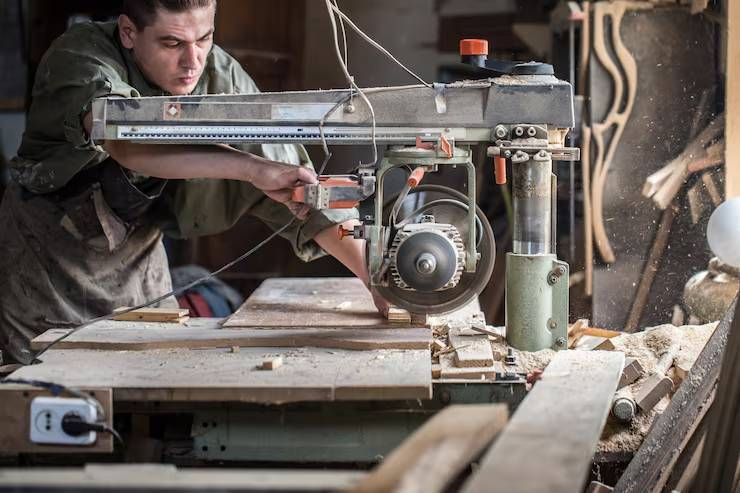
A typical guillotine shear machine contains several important components:
- Upper and lower blades
- Machine frame
- Hydraulic or mechanical drive system
- Worktable
- Back gauge
- Hold-down system
- Control panel
- Blade-gap adjustment
- Safety guards and emergency controls
Different machines use different operating systems. Mechanical models use mechanical power transmission, while hydraulic guillotine shears use hydraulic cylinders and fluid pressure to move the blade.
How Guillotine Shears Work
The cutting process begins when a sheet is positioned against the machine's reference points. The back gauge helps establish the required cutting dimension.
The hold-down system secures the material so it does not move excessively during cutting. The upper blade then moves through its cutting stroke while the lower blade remains stationary.
The cutting result depends on several factors, including:
- Sheet thickness
- Material type
- Blade sharpness
- Blade clearance
- Cutting angle
- Machine capacity
- Back-gauge accuracy
Correct blade clearance is particularly important. Excessive clearance can contribute to deformation and rough edges, while insufficient clearance can increase cutting forces and blade wear.
Common Types of Guillotine Shears
| Type | Main Operating Principle | Typical Application |
|---|---|---|
| Mechanical guillotine shear | Mechanical drive | Repetitive sheet cutting |
| Hydraulic guillotine shear | Hydraulic cylinders | Heavy sheet processing |
| CNC guillotine shear | Computer-controlled positioning | Repeated precision cutting |
| Swing-beam shear | Pivoting upper beam | General sheet-metal work |
| Power guillotine shear | Powered blade movement | Industrial production |
The appropriate machine configuration depends on material thickness, sheet dimensions, production requirements, accuracy expectations, and available automation.
Why Guillotine Shears Matter Today
Guillotine shears remain important because straight sheet cutting is an early stage in many metalworking processes. Fabrication plants may use them before press brake forming, welding, rolling, punching, or assembly.
They can affect downstream production because inaccurate dimensions at the cutting stage may create difficulties during later operations.
Industries that may use guillotine shear machines include:
- Sheet-metal fabrication
- Automotive component manufacturing
- Construction equipment production
- Electrical enclosure manufacturing
- HVAC fabrication
- Appliance manufacturing
- General engineering
- Metal processing
For operators and production planners, understanding sheet metal cutting machines can help with selecting appropriate machine settings and reducing avoidable processing problems.
Safety is another major reason the technology matters. A guillotine shear contains moving blades and powerful mechanical or hydraulic systems. Incorrect operation can result in serious hand, finger, or body injuries.
Factors That Influence Cutting Quality
Cutting quality is not determined by the machine alone. Material and operating conditions also matter.
Material thickness: Machines have defined thickness and width capabilities. Operating outside the manufacturer's specifications can damage components or produce poor cuts.
Blade condition: Dull, chipped, or improperly installed blades can affect edge quality and increase cutting forces.
Blade clearance: Clearance should correspond to the material being processed.
Back-gauge positioning: Accurate positioning helps maintain consistent dimensions between cuts.
Material support: Large sheets require appropriate support so their weight does not influence positioning during the cut.
These factors are relevant when evaluating a hydraulic shearing machine or planning a sheet-metal production process.
Recent Developments and Industry Trends
During 2025 and 2026, machinery safety and digital manufacturing continued to receive attention. One notable development in India is the continued implementation and standardization of machinery safety requirements through the Bureau of Indian Standards (BIS).
BIS maintains standards and certification information covering machinery safety. Its current Scheme-X information includes safety certification guidance for machinery and specific guidance for metal-cutting machines. The BIS portal was updated during 2026, providing access to standards, amendments, certification information, and related documents.
Modern guillotine shear systems are also increasingly associated with:
- CNC-controlled back gauges
- Programmable cutting sequences
- Digital machine controls
- Improved operator interfaces
- Automated material handling
- Energy-efficient hydraulic systems
- Condition monitoring
- Improved guarding and safety controls
The wider trend is toward integrating CNC guillotine shears with digitally managed production processes rather than operating each cutting cycle independently.
BIS also lists IS 2515:1978, Test chart for guillotine shears, which was reviewed in 2025.
For hydraulic machinery more broadly, BIS lists IS 17277 (Part 3):2021, based on ISO 16092-3:2017, covering safety requirements for hydraulic presses. It was reaffirmed in September 2025.
Laws, Policies, and Safety Requirements in India
In India, workplace machinery safety is affected by occupational safety legislation, applicable state rules, and relevant Indian Standards.
The Occupational Safety, Health and Working Conditions Code, 2020 includes provisions concerning safeguarding machinery. The legislation specifically addresses fencing of flywheels, moving parts of prime movers, transmission systems, and other machinery where necessary to protect workers.
Specific requirements can also depend on the type of workplace, machine, state rules, and applicable technical standards. Employers should therefore check the current requirements applicable to their facility rather than assuming that one rule covers every guillotine shear.
Indian safety guidance for guillotines and shears also describes protective arrangements around the blade area. Model factory rules include requirements concerning front barriers, rear guards, two-hand controls or automatic safeguarding for certain powered guillotine cutters, and emergency arrangements.
BIS provides a Know Your Standard portal that allows users to search Indian Standards by standard number or keyword and review related documents and information.
For international operations, requirements can differ. In the United States, OSHA's machine-guarding framework addresses hazards around machinery, while ANSI B11.4 is identified as a consensus standard relating specifically to shears. OSHA notes that ANSI standards provide guidance but are not themselves OSHA regulations.
Tools and Resources for Guillotine Shears
Several resources can help operators, engineers, students, and production planners understand machine operation and safety.
- BIS Know Your Standard: Useful for locating Indian Standards by keyword or IS number.
- BIS machinery safety information: Provides information on applicable machinery certification and safety guidance.
- Machine manuals: Manufacturer manuals provide machine-specific information on blade clearance, lubrication, operating limits, maintenance, and controls.
- Material thickness charts: Useful for comparing sheet thickness with machine capacity.
- Cutting allowance worksheets: Can help calculate required blank dimensions before subsequent forming operations.
- Maintenance checklists: Useful for recording blade condition, hydraulic components, lubrication, guards, and control-system inspections.
- Safety inspection forms: Help document periodic checks of guards, emergency controls, and other protective systems.
A useful basic planning checklist is:
- Confirm material type and thickness.
- Check the machine's rated capacity.
- Inspect blades and guards.
- Verify back-gauge settings.
- Confirm the sheet is properly supported.
- Keep hands away from the blade area.
- Follow the machine manufacturer's operating procedure.
- Isolate energy sources before maintenance.
Frequently Asked Questions
What are guillotine shears used for?
Guillotine shears are primarily used for making straight cuts in sheet materials. They are common in metal fabrication and manufacturing processes where sheets must be divided into specific dimensions.
What is a hydraulic guillotine shear?
A hydraulic guillotine shear uses hydraulic cylinders and pressurized hydraulic fluid to generate the force needed to move the cutting beam or blade. This configuration is commonly associated with industrial sheet-metal cutting applications.
What is the difference between guillotine shears and laser cutting?
Guillotine shears use mechanical shearing between cutting edges to create straight cuts. Laser cutting uses a concentrated beam of energy to separate material. Guillotine shears are particularly suited to straight-line cutting, while laser systems can produce more complex profiles.
How does a CNC guillotine shear work?
A CNC guillotine shear uses computer-controlled settings to position components such as the back gauge and coordinate cutting operations. This can help make repeated dimensions more consistent when the machine is correctly configured.
Are guillotine shears dangerous?
Yes. The blade and associated moving mechanisms can create serious crushing, cutting, and amputation hazards. Appropriate guards, controls, operating procedures, training, and maintenance are important. OSHA identifies the point of operation as a major hazard area for machinery performing shearing operations.
Conclusion
Guillotine shears are established industrial shearing machines used to make straight cuts in sheet materials. Their basic operation is straightforward: material is positioned, held securely, and separated through the controlled movement of a cutting blade.
Modern machines increasingly combine hydraulic power, CNC controls, digital positioning, improved guarding, and production monitoring. These developments can support consistent sheet processing while placing greater emphasis on machine safety and controlled operation.