Vertical Machining Centers: CNC Milling Guide, Uses & Trends
Industrial machinery refers to mechanical and automated equipment used for manufacturing, processing, handling, assembly, packaging, construction, energy production, and other industrial activities.
The term covers a broad range of equipment, including machine tools, conveyors, pumps, compressors, boilers, industrial robots, lifting equipment, packaging systems, and material-processing machines. These systems are used in factories, warehouses, construction projects, power facilities, food-processing plants, and many other workplaces.
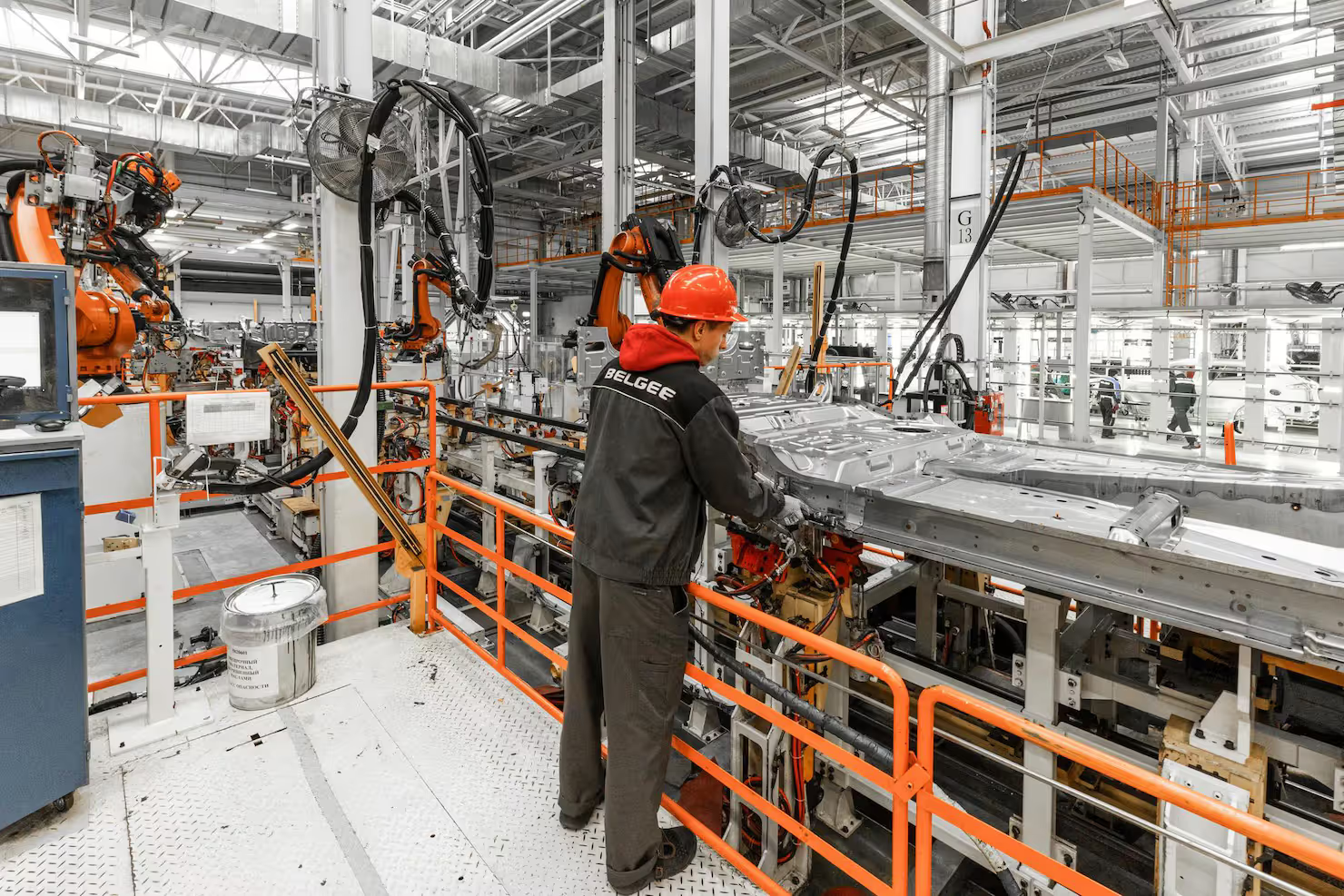
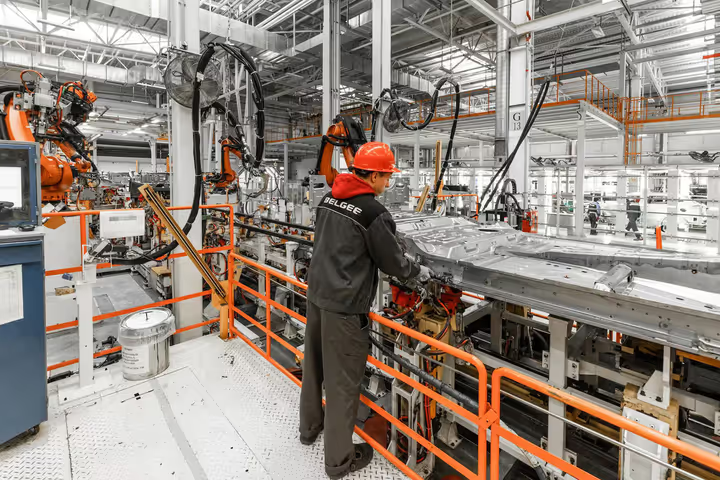
The development of industrial machinery is closely linked to the growth of organized manufacturing. Early industrial equipment relied mainly on mechanical power and relatively simple controls. Over time, steam power, electric motors, hydraulic systems, pneumatic systems, electronic controls, and computer technology expanded the capabilities of industrial equipment.
Modern industrial machinery can combine mechanical components with sensors, programmable controllers, software, and communication networks. Depending on the application, equipment may perform a single repetitive movement or coordinate several processes within an automated production line. The basic purpose remains the controlled movement, processing, transformation, or handling of materials.
Main Categories of Industrial Machinery
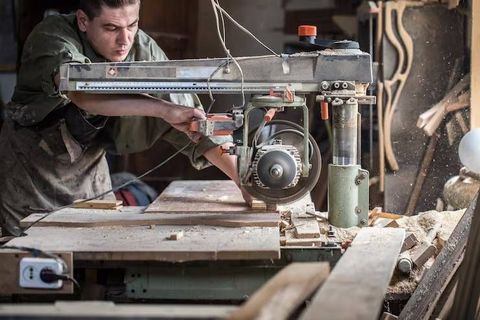
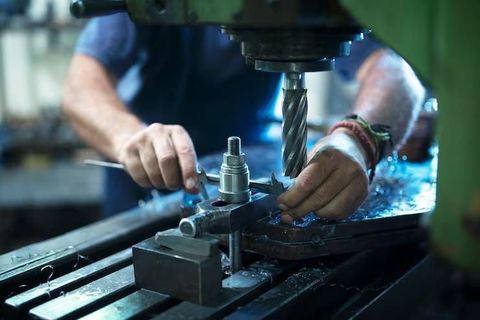
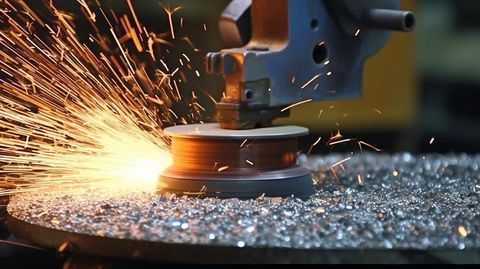
Industrial machinery can be grouped according to its function. Machine tools are used for operations such as cutting, drilling, turning, milling, grinding, and shaping. Material-handling equipment includes conveyors, cranes, hoists, forklifts, and automated transport systems.
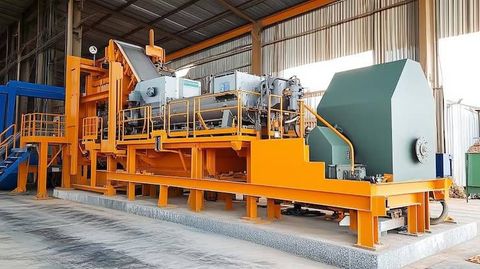
Processing machinery is designed for industries where raw materials undergo physical or chemical changes. Examples include mixing equipment, crushers, filtration systems, industrial ovens, furnaces, and separation equipment. Packaging machinery performs activities such as filling, sealing, wrapping, labeling, and sorting.
Other important categories include pumps and compressors for moving fluids and gases, boilers and thermal equipment for producing or transferring heat, and industrial robots for programmed movement and assembly tasks.
Importance
Industrial machinery matters because modern economies depend on the production and movement of large quantities of materials and goods. Many activities require repetitive movements, controlled temperatures, precise dimensions, heavy lifting, or continuous operation that would be difficult to manage manually at an industrial scale.
The effects can be seen in everyday products and infrastructure. Vehicles, appliances, construction materials, packaged food, electronics, textiles, furniture, and many other products pass through industrial processes involving specialized machinery.
Industrial Machinery Across Different Industries
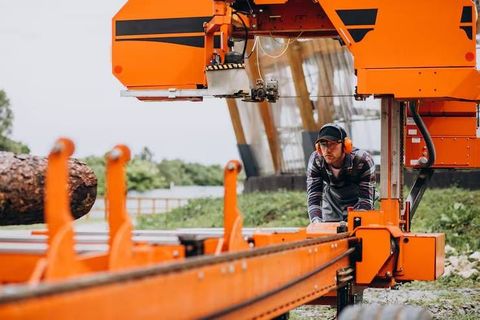
Manufacturing plants use machinery for forming, machining, welding, assembly, inspection, and packaging. Construction activities use equipment for excavation, drilling, lifting, concrete handling, and material movement.
Agricultural and food-processing facilities use machinery for cleaning, sorting, cutting, processing, refrigeration, and packaging. Warehouses use conveyors, storage systems, sorting equipment, and automated transport technologies to move materials between different areas.
Energy facilities also depend on industrial machinery. Pumps, turbines, compressors, generators, heat exchangers, valves, and control systems can work together to produce or manage energy and industrial processes.
Problems Addressed by Industrial Machinery
Industrial machinery addresses several practical production and handling requirements. It can:
- Move heavy or bulky materials through defined routes.
- Perform repetitive operations with programmed movements.
- Process materials under controlled temperature, pressure, or flow conditions.
- Produce components with defined dimensions and tolerances.
- Package products using consistent procedures.
- Collect operational information through sensors and monitoring systems.
At the same time, machinery introduces responsibilities related to safety, maintenance, energy use, noise, emissions, and environmental management. Equipment must be selected, installed, operated, and maintained according to its intended application and applicable requirements.
Common Industrial Machinery Examples
| Machinery Type | Primary Function | Typical Applications | Key Consideration |
|---|---|---|---|
| CNC machine tools | Cutting and shaping | Metalworking, manufacturing | Precision and programming |
| Conveyor systems | Material movement | Warehouses, factories | Load and movement speed |
| Industrial pumps | Fluid movement | Water, processing, energy | Flow and pressure |
| Air compressors | Compressed air generation | Manufacturing, workshops | Pressure and energy use |
| Packaging machines | Filling and packaging | Food, consumer products | Product format and throughput |
| Industrial boilers | Heat or steam generation | Processing, manufacturing | Pressure and thermal control |
| Cranes and hoists | Lifting materials | Construction, factories | Load capacity and protection |
| Industrial robots | Programmed movement | Assembly, manufacturing | Programming and guarding |
Recent Updates
Industrial machinery is changing as manufacturers and industrial facilities adopt connected controls, automation, energy monitoring, and data-based equipment management. Developments from 2024 through 2026 have generally focused on improving process visibility, operational flexibility, energy management, and equipment monitoring rather than relying only on mechanical improvements.
Digital Monitoring and Sensors
Sensors are increasingly integrated into industrial machinery to measure conditions such as temperature, pressure, vibration, speed, current, position, and energy consumption. Data from these sensors can be displayed through control systems or industrial monitoring platforms.
Condition monitoring uses this information to observe equipment behavior. Changes in vibration, temperature, pressure, or other measurements can indicate that an operating condition has changed. This allows technical teams to investigate equipment conditions using recorded information rather than relying solely on visual inspection.
Predictive Maintenance
Predictive maintenance is another area receiving attention in industrial environments. Instead of maintaining every machine according to a fixed schedule alone, organizations can use equipment data to assess operating conditions and determine when inspection may be appropriate.
Data analysis, machine learning, vibration monitoring, thermal measurements, and other techniques can support this approach. However, the accuracy of any monitoring system depends on sensor quality, data quality, equipment characteristics, and appropriate interpretation.
Automation and Robotics
Automation continues to expand across manufacturing and material-handling operations. Industrial robots, collaborative robots, machine vision systems, automated guided vehicles, and programmable control systems can perform or coordinate selected tasks.
Flexible automation is particularly relevant where production requirements change between product types. Programmable equipment can adjust operating sequences without requiring every mechanical component to be replaced, although physical setup changes may still be necessary.
Energy Management
Energy efficiency is also receiving greater attention. Industrial facilities may monitor electricity, compressed air, steam, fuel, or other energy inputs to understand how different machines affect overall consumption.
Equipment developments include variable-speed drives, improved motors, optimized control systems, heat recovery approaches, and more detailed energy monitoring. Actual energy performance depends on machine design, operating conditions, maintenance, load, and the surrounding production system.
Industrial Cybersecurity
Greater connectivity also creates cybersecurity considerations. Industrial machinery connected to internal networks or external monitoring platforms may involve programmable controllers, computers, sensors, and communication systems.
Organizations increasingly consider access management, network separation, authentication, software updates, backups, and monitoring as part of industrial system management. Cybersecurity requirements vary according to the equipment and the environment in which it operates.
Laws or Policies
Industrial machinery is subject to different legal requirements depending on the country, industry, equipment category, and workplace conditions. Regulations can address machine guarding, electrical systems, pressure equipment, workplace safety, emissions, noise, environmental protection, and operator training.
In India, industrial workplaces are affected by national and state-level laws and rules covering occupational safety, health, working conditions, electrical systems, environmental protection, and specific categories of equipment. The Occupational Safety, Health and Working Conditions Code provides a broader legislative framework for occupational safety and working conditions, while implementation and applicable requirements can depend on the relevant rules and authorities.
Certain industrial systems may also fall under specific requirements for pressure equipment, boilers, electrical installations, lifting equipment, or environmental emissions. State authorities can have additional responsibilities depending on the industrial activity and location.
International standards are also widely referenced when designing, purchasing, installing, or assessing machinery. ISO standards address areas such as machinery safety, quality management, and industrial processes, while IEC standards cover many electrical and electronic technologies.
Common areas addressed by industrial machinery safety requirements include:
- Physical guarding around hazardous moving parts
- Emergency stopping arrangements
- Electrical protection
- Safe operating procedures
- Operator instruction and training
- Equipment inspection and maintenance
- Pressure and thermal protection where applicable
- Noise and environmental controls
- Documentation and recordkeeping
Because requirements vary according to equipment and jurisdiction, the applicable rules should be checked for the specific industrial environment.
Tools and Resources
Several types of resources can help people understand industrial machinery. Government workplace-safety portals provide regulatory information, safety publications, guidance documents, and relevant legislation. Standards organizations provide technical standards covering machinery safety, electrical equipment, automation, and industrial processes.
Equipment manuals are another important resource. Operating manuals can explain machine functions, operating limits, safety procedures, inspection requirements, and maintenance intervals. Technical drawings and equipment specifications can provide additional information about dimensions, capacity, power requirements, and connection points.
Digital tools are increasingly used for industrial equipment management. These can include maintenance management software, equipment monitoring dashboards, energy calculators, production planning systems, vibration-analysis tools, and machine data platforms.
For general research, resources from organizations such as the International Organization for Standardization, International Electrotechnical Commission, government workplace regulators, national standards bodies, and engineering education institutions can provide background information. The appropriate resource depends on whether the reader needs general knowledge, technical specifications, safety information, or regulatory guidance.
FAQs
What is industrial machinery?
Industrial machinery is equipment used for manufacturing, processing, handling, assembly, packaging, construction, energy, and related industrial activities. It can range from mechanically operated equipment to computer-controlled automated systems.
What are the main types of industrial machinery?
Major categories include machine tools, conveyors, pumps, compressors, boilers, packaging machines, lifting equipment, processing systems, and industrial robots. Each category performs different mechanical, processing, or handling functions.
How does modern industrial machinery use automation?
Modern industrial machinery can use programmable controllers, sensors, robotics, machine vision, and software to control selected operations. Automation can coordinate repetitive movements, monitor operating conditions, and manage production sequences.
Why is predictive maintenance used with industrial machinery?
Predictive maintenance uses equipment data such as vibration, temperature, pressure, or operating history to identify changes in machine condition. It is intended to support maintenance planning based on observed equipment conditions.
What laws apply to industrial machinery in India?
Industrial machinery in India can be affected by workplace safety, electrical, environmental, pressure equipment, boiler, and other applicable regulations. Requirements depend on the machine, industry, workplace, and relevant central or state authorities.
Conclusion
Industrial machinery includes a wide range of equipment used to process materials, move goods, manufacture components, generate heat, package products, and perform other industrial operations. Modern machinery increasingly combines mechanical systems with automation, sensors, data monitoring, and digital controls. Safety, maintenance, energy management, cybersecurity, and regulatory compliance are important considerations when industrial equipment is used. The applicable requirements depend on the equipment, industry, workplace, and jurisdiction.