Slotting Machines: Guide to Types, Uses, Technology & Safety
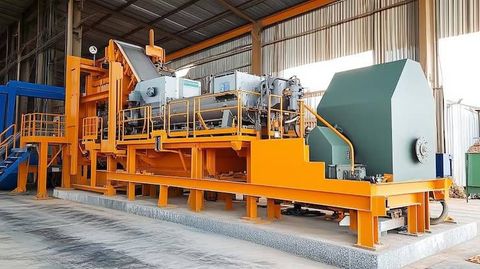
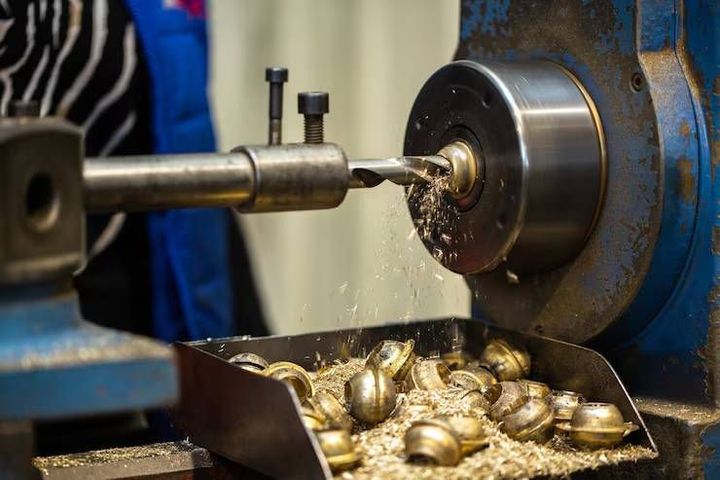
A slotting machine is a machine tool designed to cut, shape, or machine grooves, slots, keyways, internal surfaces, and other profiles in a workpiece
It generally uses a reciprocating cutting tool that moves vertically while the workpiece is held securely on a table.
The machine is closely related to shaping and metal-cutting equipment, but its vertical cutting action makes it particularly useful for machining internal features that may be difficult to produce with conventional horizontal equipment.
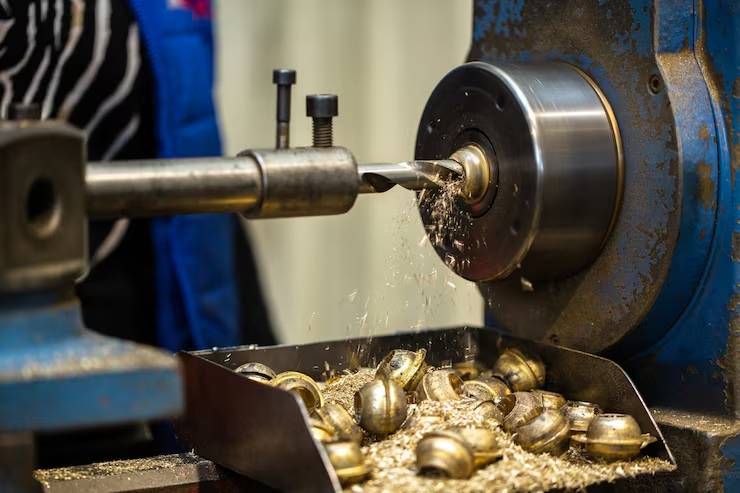
A typical slotting machine includes several important components:
- Base and column for structural support
- Vertical ram for tool movement
- Cutting tool or tool holder
- Worktable for holding the component
- Feed mechanism for controlled movement
- Drive and transmission system
- Clamping arrangements
- Control system for operating and adjusting the machine
Traditional slotting machines are commonly operated through mechanical drives and manually adjusted feeds. Modern versions can incorporate digital controls, improved drives, sensors, and computer numerical control (CNC) technology.
The basic cutting process involves moving the tool through a controlled reciprocating motion. During the cutting stroke, the tool removes material from the workpiece. The return stroke prepares the tool for the next cutting movement.
Why Slotting Machines Matter in Modern Manufacturing
Slotting machines remain relevant because many mechanical components contain internal keyways, narrow grooves, splines, and other features that require controlled internal machining.
Industries involved in precision machining, automotive components, industrial machinery, agricultural equipment, tooling, and general engineering can encounter applications where vertical reciprocating cutting is appropriate.
The technology can help address machining requirements such as:
- Producing internal keyways in hubs and gears
- Cutting narrow internal slots
- Creating internal profiles
- Machining small or irregular internal surfaces
- Preparing components for mechanical assemblies
- Producing repeatable dimensions in suitable production environments
The choice between a slotting machine, broaching machine, milling machine, shaping machine, or CNC machining center depends on factors such as component geometry, material, dimensional requirements, production volume, and available tooling.
| Factor | Slotting Machine | CNC Machining Center |
|---|---|---|
| Main movement | Usually vertical reciprocation | Multiple controlled axes |
| Typical work | Slots, keyways, internal profiles | Complex multi-feature machining |
| Programming | Manual or mechanical controls | Computer-controlled programs |
| Flexibility | Moderate | High |
| Typical application | Internal and specialized cutting | Complex precision machining |
Slotting machines can therefore be considered one part of the wider metal-cutting and precision-machining equipment category rather than a replacement for every modern machining technology.
Types of Slotting Machines
Slotting machines can be classified according to construction, drive arrangement, application, and control method.
Standard or mechanical slotting machines use mechanical mechanisms to create the reciprocating movement of the ram. They are comparatively straightforward and can be useful for conventional machining tasks.
Precision slotting machines are designed around more controlled movements and dimensional accuracy. They may incorporate improved feed mechanisms and rigid machine structures.
Production slotting machines are intended for repeated machining operations where consistent setups and cycle patterns are important.
CNC slotting machines use computer numerical control to regulate movements and machining parameters. Depending on the design, CNC systems can improve repeatability and integrate digital production workflows.
Heavy-duty slotting machines are built with stronger structures and drive systems for demanding machining applications involving larger or harder workpieces.
Important Technical Parameters
Selecting or evaluating a slotting machine requires attention to several technical parameters rather than relying on one specification.
Important factors include:
- Maximum stroke length
- Stroke rate
- Table dimensions
- Maximum workpiece size
- Ram capacity
- Feed range
- Spindle or drive characteristics where applicable
- Machine rigidity
- Tool compatibility
- Control system
- Positioning accuracy
- Electrical requirements
Material characteristics also influence machining conditions. Steel, cast iron, aluminum alloys, and other engineering materials can require different cutting tools, speeds, feeds, and machining approaches.
Recent Developments in Slotting and Machine-Tool Technology
The wider machine-tool sector has continued moving toward automation, digital manufacturing, advanced controls, and integrated production systems.
On 23 February 2026, the Office of the Principal Scientific Adviser and the Ministry of Heavy Industries held a stakeholder consultation at the Central Manufacturing Technology Institute in Bengaluru concerning a proposed Advanced Manufacturing Systems Mission. Discussions included CNC machine tools and controllers, advanced machines, testing and metrology infrastructure, robotics, robotic arms, and advanced additive manufacturing.
Although the consultation was broader than slotting machines specifically, its focus indicates continuing attention toward advanced machine tools, digital control systems, automation, and manufacturing infrastructure in India.
Another important development concerns machinery safety regulation. The Bureau of Indian Standards updated information relating to machine-safety certification and metal-cutting machines during 2025 and 2026. BIS lists metal-cutting machine tools within the machinery categories covered by its Scheme-X framework.
For slotting-machine users, these developments are relevant because future manufacturing environments increasingly connect machining equipment with CNC controls, inspection systems, automation, and documented safety practices.
Laws, Standards, and Policies in India
In India, slotting machines can be affected by workplace safety requirements, machinery standards, electrical safety requirements, and product conformity frameworks.
The Bureau of Indian Standards (BIS) identifies metal-cutting machine tools under its machinery safety framework. Its category-specific guidelines address areas such as technical documentation, machine requirements, labelling, marking, and certification processes.
BIS also identifies metal-cutting machines under headings 8456 to 8461 within its Scheme-X machinery categories.
The Occupational Safety, Health and Working Conditions Code, 2019 also establishes duties concerning the safety of articles and equipment used in factories. The legislation addresses responsibilities related to design, manufacture, installation, and safe use of equipment.
India's regulatory framework has also been developing through draft central rules. The Ministry of Labour and Employment lists draft 2025 central rules for the Occupational Safety, Health and Working Conditions Code among its labour-code materials.
For machine operators and manufacturing organizations, practical safety considerations include:
- Proper machine guarding
- Emergency stopping arrangements
- Safe workholding
- Appropriate cutting tools
- Electrical protection
- Operator training
- Lockout and isolation procedures
- Regular inspection
- Risk assessment
- Proper housekeeping around the machine
BIS guidance on machine safety references risk assessment and risk reduction principles, including IS 16819 based on ISO 12100.
Regulatory applicability can vary according to machine type, manufacturing activity, installation circumstances, and current notifications. Organizations should therefore verify the latest requirements through official government and standards sources.
Useful Tools and Resources for Slotting Machines
Several digital and technical resources can help students, engineers, operators, and manufacturing teams understand or plan machining work.
BIS Know Your Standard: The BIS portal allows users to search Indian Standards using an IS number or keyword and review associated documents, amendments, testing information, and related details.
BIS Machine Safety Resources: BIS publishes machine-safety guidance covering risk assessment, safety principles, and machinery categories. These documents can help with general safety research.
Machining calculators: Cutting-speed, feed-rate, stroke-rate, and machining-time calculators can help estimate operating parameters. Actual settings should always follow the machine manufacturer's technical documentation, tooling requirements, and material characteristics.
CAD/CAM software: Computer-aided design and manufacturing programs can assist with component geometry, toolpath planning, simulation, and production documentation, particularly when machining workflows are connected with CNC equipment.
Digital measurement tools: Vernier calipers, micrometers, height gauges, dial indicators, and coordinate measuring systems can help verify dimensions and alignment.
A basic technical workflow may look like this:
Component drawing → Material identification → Workholding → Tool selection → Machining parameters → Cutting operation → Dimensional inspection → Documentation
Frequently Asked Questions
What is a slotting machine used for?
A slotting machine is mainly used for vertical cutting operations such as producing internal keyways, slots, grooves, and profiles. It can be useful when the geometry of a component makes other machining methods less suitable.
How does a slotting machine differ from a shaping machine?
Both machines use reciprocating cutting movements, but their cutting arrangements differ. A slotting machine normally uses a vertical ram and is particularly suited to internal surfaces and vertical cutting operations. A shaping machine generally uses a horizontal reciprocating ram and is commonly used for external flat surfaces.
Can slotting machines be CNC controlled?
Yes. CNC technology can be incorporated into certain slotting-machine designs. CNC control can regulate programmed movements and machining sequences, potentially improving repeatability and integration with digital manufacturing systems.
What materials can be machined on a slotting machine?
Suitable materials depend on the machine, cutting tool, workholding system, and machining parameters. Engineering materials such as various steels, cast irons, and aluminum alloys can be machined when appropriate tooling and operating conditions are used.
What are the main safety concerns when operating a slotting machine?
Important risks include moving components, cutting tools, workpiece movement, chips, electrical hazards, and unexpected machine motion. Appropriate guarding, secure workholding, operator training, personal protective equipment, machine isolation procedures, and documented risk assessment are important parts of safe operation.
Conclusion
Slotting machines are specialized metal-cutting machine tools that remain useful for producing internal keyways, slots, grooves, and profiles. Their vertical reciprocating cutting action gives them capabilities that can complement milling, broaching, shaping, and CNC machining technologies.
Modern manufacturing is increasingly combining traditional machine tools with digital controls, automation, inspection technology, and connected production systems. Recent Indian manufacturing initiatives have also placed attention on CNC machine tools, advanced manufacturing systems, robotics, and metrology.
For organizations and individuals working with slotting machines, understanding machine construction, cutting principles, tooling, operating parameters, inspection methods, and workplace safety is essential. Indian standards and regulatory requirements should also be checked regularly because machinery safety frameworks can change over time.