Plate Rolling Machines: Guide to Types, Uses and Technology
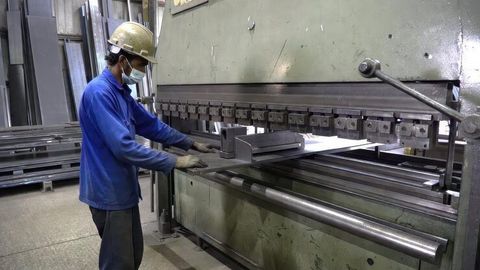
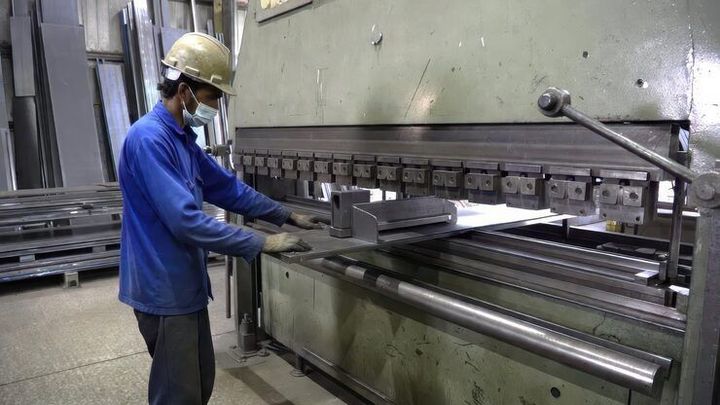
A plate rolling machine is industrial equipment used to bend flat metal plates into curved, cylindrical, conical, or other controlled shapes.
The process is commonly called plate rolling or plate bending. It is widely used when flat steel or other metals need to become components for tanks, pipes, structural parts, pressure vessels, towers, and other fabricated products.
The machine normally uses several rollers positioned around a metal plate. As the rollers rotate and apply controlled pressure, the plate gradually changes shape. The final geometry depends on factors such as plate thickness, material strength, roller diameter, machine configuration, and the required bending radius.
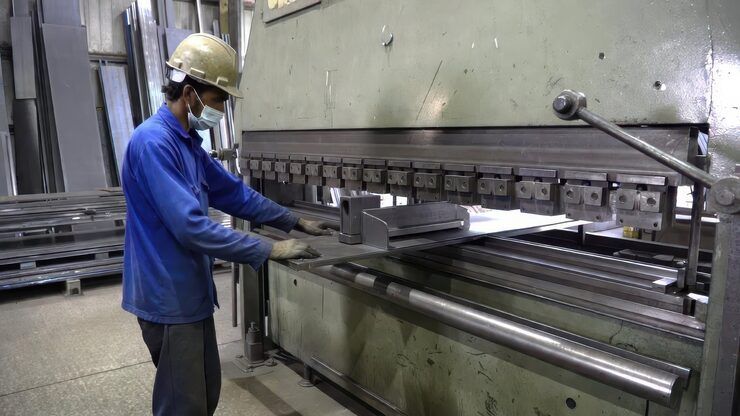
Plate rolling machines exist in several configurations. Common types include three-roll and four-roll machines, with four-roll systems providing greater control over plate positioning and bending sequences.
A typical plate rolling process includes:
- Preparing and positioning the metal plate
- Setting the required rolling parameters
- Feeding the plate between the rollers
- Applying controlled pressure
- Performing pre-bending when required
- Rolling the plate toward the desired radius
- Checking dimensions and shape
- Removing and inspecting the formed component
Modern CNC plate rolling machines add digital controls to this process. Depending on the machine design, CNC systems can help operators program rolling sequences, control roller positions, and repeat established production parameters.
Why Plate Rolling Matters in Modern Manufacturing
Plate rolling is important because many industrial structures cannot be produced efficiently from flat metal alone. Curved sections are required in industries such as construction, energy, transportation, shipbuilding, storage, and heavy fabrication.
A metal plate rolling machine can help transform relatively large flat plates into controlled curved sections without relying entirely on manual forming methods.
The technology is particularly relevant to:
- Steel fabrication companies
- Pressure-vessel manufacturers
- Storage-tank producers
- Shipbuilding facilities
- Structural steel manufacturers
- Energy equipment manufacturers
- Heavy engineering industries
- Industrial equipment producers
One important issue is dimensional consistency. If the radius varies significantly between components, later assembly can become more difficult. Controlled roller movement and digital measurement can therefore play an important role in repeatable metal forming.
Another consideration is material behavior. Metals experience elastic recovery, commonly called springback, after forming pressure is removed. Operators must account for this behavior when establishing rolling parameters.
The choice between a hydraulic plate rolling machine, mechanical system, three-roll design, or four-roll configuration depends on the material and production requirements.
| Machine characteristic | Main consideration | Typical relevance |
|---|---|---|
| Three-roll design | Flexible rolling arrangement | General plate forming |
| Four-roll design | Greater positioning control | Repetitive cylindrical forming |
| Hydraulic operation | Controlled roller movement | Heavy plate applications |
| CNC control | Programmable operation | Repeatable production |
| Digital measurement | Dimensional verification | Precision-oriented fabrication |
Recent Developments in Plate Rolling Technology
Plate rolling technology has been moving toward automation, digital control, electrification, and improved measurement.
In January 2026, an industry report from India highlighted developments in fully electric plate rolling technology and AI-assisted measurement. The technologies discussed included electric drives and digital control systems intended to improve repeatability and reduce dependence on manual measurement.
Another 2026 market analysis identified a continuing shift toward larger automated four-roll CNC systems, particularly for applications connected with energy infrastructure and pressure-vessel manufacturing.
The wider manufacturing sector is also adopting more connected CNC technologies. In January 2026, industry analysis identified artificial intelligence, production data, automation, and digital integration as important developments influencing precision manufacturing.
India's broader steel-processing sector has also seen automation investments. On 13 August 2025, Primetals Technologies announced an automation upgrade for Jindal Steel and Power's 5-meter plate mill in Angul, Odisha, with commissioning planned for the first quarter of 2026.
These developments point toward several continuing technology directions:
- CNC-controlled roller positioning
- Automated bending sequences
- Digital radius measurement
- Electric drive systems
- Production data monitoring
- Improved operator interfaces
- Integration with broader factory automation
These technologies do not eliminate the need for trained operators. Material properties, plate condition, tooling limitations, and machine setup still require technical judgment.
Indian Laws, Standards, and Policies
Plate rolling machines used in India are affected by workplace safety requirements, machinery standards, electrical requirements, and applicable industrial regulations. The exact requirements depend on the machine category, workplace, manufacturing activity, and applicable notifications.
A significant recent development occurred on 16 January 2026, when the Ministry of Heavy Industries rescinded the 2024 Machinery and Electrical Equipment Safety (Omnibus Technical Regulation) Order. Therefore, older information describing that 2024 order as currently applicable should be checked against the latest government notifications.
The Bureau of Indian Standards (BIS) continues to provide machinery safety certification frameworks and technical guidance. BIS states that compulsory certification applies to products specifically covered by government notifications or Quality Control Orders; certification is otherwise generally voluntary.
BIS also maintains machine-safety guidance under Scheme-X and provides category-specific documentation for certain machinery. The applicable requirement for a particular plate rolling machine should therefore be verified rather than assumed.
Workplace safety is another important area. India's four Labour Codes, including the Occupational Safety, Health and Working Conditions Code, became effective on 21 November 2025, according to the Ministry of Labour and Employment.
The OSH framework addresses matters including machinery fencing, work around moving machinery, lifting equipment, revolving machinery, workplace safety, and accident-related requirements.
For businesses using plate rolling equipment, practical compliance should therefore include:
- Appropriate machine guarding
- Emergency stopping arrangements
- Safe material handling
- Operator training
- Electrical safety
- Preventive inspection
- Safe access around moving components
- Documentation of applicable standards
- Periodic review of government notifications
Helpful Tools and Resources
Several official and technical resources can help users understand plate rolling machines and related requirements.
BIS Know Your Standard: BIS provides a searchable platform where users can look up Indian Standards by standard number or keyword. It can also provide related amendments, notifications, laboratories, and certification information.
BIS Certification Resources: The BIS certification portal provides information about applicable standards, conformity assessment procedures, and machine-safety documentation.
Ministry of Labour and Employment: Government publications provide information about the Occupational Safety, Health and Working Conditions Code and related rules. The ministry published draft central rules and supporting information during 2025–2026.
MSME Technology Centres: India's MSME Technology Centre network provides access to technical facilities, training, machinery-related knowledge, and manufacturing support. The government reported continued development of Technology Centres and Extension Centres during 2026.
Rolling calculations: Engineers may also use plate-bending calculation tools or manufacturer-provided technical calculators to estimate bending parameters. Such calculations should be checked against actual material specifications and machine limitations before production.
Frequently Asked Questions
What is a plate rolling machine used for?
A plate rolling machine bends flat metal plates into cylindrical, conical, or curved forms. Common applications include tanks, pressure vessels, structural components, towers, pipes, and fabricated industrial equipment.
What is the difference between three-roll and four-roll machines?
Both use rollers to form metal plates, but their roller arrangements differ. Four-roll machines generally provide greater control over plate positioning and can support efficient pre-bending and rolling sequences. The appropriate configuration depends on the material and forming requirements.
What does a CNC plate rolling machine do?
A CNC plate rolling machine uses computerized controls to manage selected machine movements and programmed forming sequences. Depending on its design, it can improve repeatability and reduce manual parameter adjustment.
What factors affect plate rolling accuracy?
Important factors include material grade, plate thickness, width, yield strength, roller diameter, roller alignment, bending radius, springback, machine rigidity, and operator setup.
Are plate rolling machines regulated in India?
They can be affected by machinery standards, workplace safety rules, electrical requirements, and specific government notifications. However, requirements vary according to machine classification and application. Users should verify current BIS and government requirements rather than relying on older regulatory information.
Conclusion
Plate rolling machines are important metal-forming systems used to transform flat plates into curved and cylindrical components. Their applications extend across steel fabrication, energy equipment, shipbuilding, pressure vessels, construction, and other industrial fields.
Technology is increasingly moving toward CNC plate rolling machines, automated roller positioning, digital measurement, electric drives, and connected manufacturing systems. Developments reported during 2025 and 2026 indicate that automation and digital control are becoming increasingly important areas of plate-forming technology.