Vegetable Cutting Machines: Discover Cutting Systems and Important Applications
Vegetable Cutting Machines are mechanical or automated systems designed to cut, slice, dice, shred, julienne, chop, strip, or portion vegetables into consistent shapes and sizes. They are used across food-processing facilities, commercial kitchens, catering operations, prepared-food production, restaurants, institutional kitchens, and other food-handling environments.
A vegetable cutting machine can range from a compact countertop unit to a large automated processing system connected with washing, sorting, conveying, weighing, packaging, and refrigeration equipment.
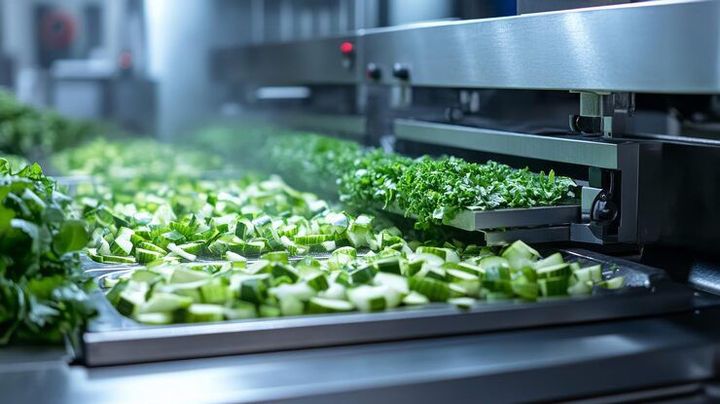
The basic purpose is straightforward: vegetables enter the machine, a cutting mechanism processes them according to a selected configuration, and the prepared pieces leave through an outlet or conveyor.
How Vegetable Cutting Machines Work
Most systems follow a sequence of feeding, positioning, cutting, and discharge.
Vegetables may first be inspected and washed before entering the cutting stage. Depending on the equipment, operators may manually place vegetables into a hopper, while larger systems can use conveyors or automated feeding mechanisms.
Inside the machine, rotating knives, slicing blades, grids, discs, drums, or other cutting assemblies perform the required operation. The design of these components determines the resulting shape and dimensions.
After cutting, the pieces can move toward collection containers, conveyors, additional processing equipment, or packaging lines.
Major Types of Cutting Systems
Slicing machines produce thin or thicker slices from vegetables such as potatoes, carrots, cucumbers, onions, and similar products.
Dicing machines cut vegetables into cube-like pieces. They are commonly used for prepared foods, frozen vegetables, soups, sauces, salads, and other food products.
Julienne machines create narrow, elongated strips. This format is commonly associated with carrots, potatoes, peppers, and other vegetables.
Shredding machines produce thin strips or shredded material and can be used for cabbage, carrots, cheese, and similar ingredients depending on the machine configuration.
Chopping machines divide vegetables into smaller pieces through controlled cutting or chopping mechanisms.
Strip-cutting systems produce rectangular or elongated pieces and can be configured for different dimensions.
Multi-function vegetable cutters use interchangeable blades or cutting assemblies to perform several operations with one machine.
Importance
Consistent Cutting
One major purpose of Vegetable Cutting Machines is to create more consistent dimensions. Uniform pieces can contribute to more predictable cooking, freezing, drying, frying, or other downstream processes.
For example, if potato pieces have significantly different dimensions, smaller pieces may cook faster than larger ones. Consistent cutting can therefore help manufacturers maintain more predictable processing conditions.
Higher Processing Capacity
Manual cutting can become difficult when large quantities of vegetables must be prepared within a limited production period. Mechanical systems can process repeated batches with controlled feeding and cutting movements.
The appropriate machine depends on throughput requirements, vegetable type, cutting pattern, available space, and production arrangement.
Reducing Manual Repetition
Cutting vegetables repeatedly can involve repetitive hand movements. Mechanical equipment can perform the repetitive cutting stage while workers concentrate on preparation, inspection, machine monitoring, sanitation, and other activities.
The degree of automation varies widely between equipment models and processing facilities.
Supporting Food Production
Vegetable cutting systems can be used in numerous food categories. Examples include:
Frozen vegetable production
Fresh-cut vegetables
Ready-to-cook foods
Soups and sauces
Salads
Pickled vegetables
Dehydrated vegetables
Canned food production
Potato products
Restaurant food preparation
Institutional kitchens
Catering operations
Cutting Requirements by Product
| Vegetable | Common Cutting Format | Typical Application |
|---|---|---|
| Potato | Slices, cubes, strips | Frozen foods and prepared dishes |
| Carrot | Slices, cubes, strips | Salads, soups, mixed vegetables |
| Onion | Rings, slices, dices | Sauces, prepared foods |
| Cabbage | Shreds, strips | Salads and prepared foods |
| Cucumber | Slices, cubes | Salads and fresh-cut foods |
| Bell pepper | Strips, dices | Frozen and prepared foods |
| Tomato | Slices, wedges, dices | Salads and food preparation |
| Beetroot | Slices, cubes, strips | Prepared and preserved foods |
Recent Updates
Greater Automation
Vegetable processing lines are increasingly incorporating automated feeding, conveyor movement, cutting, inspection, weighing, and packaging stages.
Instead of operating each machine independently, larger facilities can connect multiple stages into a continuous production line. This can improve process coordination and reduce unnecessary manual transfer between stages.
Machine Vision
Machine vision systems use cameras and image-processing technologies to examine products. In vegetable processing, vision can assist with identifying shape, size, color, surface characteristics, foreign material, or product positioning.
Vision technology can also support automated sorting before or after cutting when integrated into an appropriate processing line.
Flexible Cutting Systems
Modern cutting equipment increasingly supports multiple cutting formats through interchangeable knives, grids, discs, or cutting heads.
This flexibility is useful for facilities handling several vegetable products. A single production line may need to produce slices during one production period and diced or shredded material during another.
Hygienic Equipment Design
Food-processing equipment is increasingly designed around cleanability and contamination control. Food-contact components should be accessible for inspection and cleaning, while equipment construction needs to suit the operating environment.
Codex guidance emphasizes hygienic equipment design, including construction that minimizes contamination risks and allows equipment to be thoroughly cleaned and disinfected.
Automation and Digital Monitoring
Industrial food-processing equipment can incorporate sensors, programmable controls, production monitoring, and machine-condition information.
Digital monitoring can help operators observe operating parameters and identify abnormal machine conditions. Larger processing lines may connect equipment with centralized control platforms.
Energy and Water Awareness
Vegetable processing involves several resource-intensive stages, including washing, cutting, cooling, refrigeration, and cleaning. Equipment designers and processing facilities increasingly consider water use, energy consumption, waste reduction, and efficient process layouts.
These considerations are particularly relevant when cutting machines are integrated into complete processing lines rather than used as independent units.
Improved Product Handling
Modern systems can combine gentle product movement with controlled cutting. This is important for vegetables that can bruise, deform, or lose quality when handled roughly.
Feed systems, conveyor speeds, blade configuration, and cutting pressure can all influence the final product.
Laws or Policies
Global Food-Safety Frameworks
Vegetable cutting equipment operates within broader food-safety requirements rather than having one universal global regulation. Requirements vary according to the country, product category, processing environment, and intended market.
Internationally, the Codex Alimentarius framework provides widely used food-safety and hygiene references. Codex lists the Code of Hygienic Practice for Fresh Fruits and Vegetables among its international food-hygiene texts.
Hygienic Manufacturing
Food-contact equipment should be constructed from appropriate materials and maintained in a clean condition. Equipment design should also allow inspection and sanitation.
These principles are important because cutting machines can have direct contact with vegetables and may contain blades, shafts, housings, conveyors, and other areas where food particles can accumulate.
India
For businesses operating in India, FSSAI requirements apply to food businesses covered by the Food Safety and Standards framework. FSSAI states that food businesses must follow applicable licensing or registration requirements and comply with relevant hygiene requirements.
FSSAI's guidance for processed fruits and vegetables covers receiving, processing, handling, storage, transport, and distribution and emphasizes good manufacturing and hygiene practices.
Equipment and Contamination Control
FSSAI guidance identifies the need for systems that prevent contamination from foreign bodies, including metal fragments that could originate from machinery. It also addresses monitoring of critical processing conditions where applicable.
This makes machine condition, cleaning, inspection, and preventive maintenance important parts of food-processing operations.
Other International Markets
Facilities operating in regions such as the European Union, North America, Asia-Pacific, the Middle East, and Africa must follow the food-safety, machinery, electrical, workplace, and sanitation requirements applicable to their jurisdiction.
Export-oriented manufacturers may also need to consider requirements in destination markets in addition to rules in the country where processing occurs.
Tools and Resources
Cutting-Size Guides
Cutting-size references can help production teams define the required dimensions for slices, cubes, strips, or shredded products. Standardized specifications are useful when the cut must remain consistent across batches.
Machine-Capacity Calculations
Processing planners can estimate required throughput by considering:
Quantity of vegetables entering the machine per hour
Average vegetable size
Cutting pattern
Feeding method
Machine cycle rate
Product changeover requirements
Expected operating interruptions
These factors provide a more useful picture than machine capacity figures alone.
Blade and Cutting-Head Selection
Blade geometry strongly influences the final product. Different vegetables may require different cutting configurations because of variations in hardness, moisture, size, shape, and structure.
Interchangeable cutting assemblies can allow one machine to produce multiple formats.
Inspection and Measurement Tools
Calipers, weighing equipment, gauges, vision systems, and sample inspection procedures can be used to check whether cut dimensions remain within specified limits.
Regular inspection can identify changes in blade condition, feeding behavior, or machine alignment.
Cleaning and Sanitation Resources
Cleaning procedures should address food-contact surfaces, removable components, conveyors, cutting heads, housings, and areas where vegetable particles can accumulate.
FSSAI guidance recommends appropriate food-safety management systems and good manufacturing and hygiene practices for covered food businesses.
Production-Line Planning
Process-flow diagrams can help determine where washing, sorting, cutting, inspection, weighing, cooling, and packaging stages should be positioned.
A well-planned sequence can reduce unnecessary product movement and support hygienic separation between different processing stages.
FAQs
What are Vegetable Cutting Machines?
Vegetable Cutting Machines are mechanical or automated systems used to slice, dice, chop, shred, julienne, or strip vegetables into specified shapes and dimensions.
How do Vegetable Cutting Machines work?
Vegetables are fed into the machine, positioned or guided toward a cutting mechanism, processed by blades or cutting assemblies, and then discharged for collection or further processing.
What vegetables can be processed by cutting machines?
Depending on the machine design, vegetables such as potatoes, carrots, onions, cabbage, cucumbers, peppers, tomatoes, and beetroot can be processed. The appropriate cutting system depends on product characteristics and the required cut.
What are the main types of Vegetable Cutting Machines?
Common categories include slicing machines, dicing machines, julienne cutters, shredders, chopping machines, strip cutters, and multi-function systems with interchangeable cutting assemblies.
Where are Vegetable Cutting Machines used?
They are used in food-processing plants, fresh-cut operations, frozen-food production, commercial kitchens, restaurants, catering facilities, institutional kitchens, and other food-preparation environments.
Conclusion
Vegetable Cutting Machines are important components of modern food preparation and vegetable-processing operations worldwide. They can produce consistent slices, cubes, strips, shreds, and other formats while supporting different production capacities and workflow designs. Recent developments include automation, machine vision, flexible cutting systems, digital monitoring, hygienic equipment design, and improved product handling. Food-safety requirements remain an important consideration, with international guidance and national regulations shaping equipment design, sanitation, processing, and operational practices.