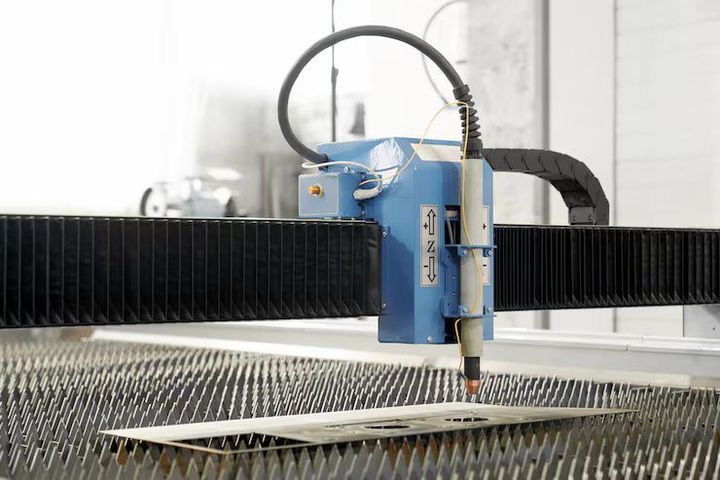
Ultrasonic Plastic Welders: Insights Into Ultrasonic Technology
What Are Ultrasonic Plastic Welders? Ultrasonic plastic welders are machines that join compatible thermoplastic components by using high-frequency mechanical vibrations. Instead of relying primarily on conventional heating elements, the equipment converts electrical energy into mechanical vibration and applies it to the joint area under controlled pressure.
The vibration generates localized heat at the interface between plastic parts. As the material softens, the components are pressed together, allowing the joint to form as the material cools and solidifies.
This process is widely associated with plastic components that require repeatable and relatively clean joining. Applications can be found in automotive components, consumer products, electrical assemblies, packaging, medical-related products, and various industrial parts.
How Ultrasonic Plastic Welding Works
The process generally begins by positioning two compatible thermoplastic parts in a fixture. The parts need to be aligned correctly so that the intended joint receives the required vibration and pressure.
The machine then moves the horn toward the components. High-frequency vibration is transferred through the horn to the joint area while a controlled force holds the components together.
Friction and material deformation at the interface generate localized heat. The plastic softens at the joint, and the continued pressure allows the surfaces to form a bond.
After the programmed vibration period, the ultrasonic energy stops while pressure can remain for a short holding period. The joint then cools and stabilizes.
A typical cycle consists of:
- Component positioning
- Fixture clamping
- Horn movement
- Pressure application
- Ultrasonic vibration
- Localized material softening
- Holding and cooling
- Horn retraction
- Finished-part inspection
Main Components
An ultrasonic plastic welding system generally includes several coordinated components:
- Power supply or generator
- Converter or transducer
- Booster
- Ultrasonic horn
- Actuator
- Welding fixture
- Control system
- Pressure mechanism
- Sensors
- Emergency-stop system
The generator supplies electrical energy at the required ultrasonic frequency. The transducer converts electrical energy into mechanical vibration, while the booster can modify vibration amplitude before it reaches the horn.
The horn transfers the vibration to the workpiece. Its geometry is particularly important because it needs to match the shape and joint requirements of the component.
Importance
Fast Joining Cycles
Ultrasonic welding can complete many joining cycles within a short period because the heat is generated primarily at the joint rather than throughout the entire component.
This characteristic can be useful in automated production environments where repeatable cycle control is required.
Localized Heating
One important characteristic of ultrasonic plastic welding is localized energy application. The process concentrates mechanical vibration and resulting heat near the intended joint.
This can reduce unnecessary thermal exposure to surrounding areas compared with processes that heat a larger portion of the assembly.
Consistent Joint Formation
When component geometry, material selection, fixture alignment, pressure, vibration amplitude, and process time are appropriately controlled, ultrasonic welding can provide consistent joint formation.
Modern equipment can record process parameters such as weld time, pressure, amplitude, energy, and displacement. These records can support production monitoring and quality evaluation.
Reduced Additional Materials
Ultrasonic welding generally joins thermoplastic components without requiring a separate adhesive layer at the joint. This can simplify some assembly arrangements and reduce the number of process materials involved.
However, the suitability of ultrasonic welding depends on the plastic material, component geometry, joint design, and required mechanical performance.
Automation
Ultrasonic plastic welders can be integrated with automated handling equipment, fixtures, sensors, programmable controllers, and production monitoring systems.
Automated systems can control component positioning, welding parameters, cycle timing, inspection steps, and data recording.
Recent Updates
Modern Machine Safety
Machine safety continues to be an important area for plastics-processing equipment in India. BIS identifies IS 16819:2018, corresponding to ISO 12100:2010, as the general framework for machinery safety, including risk assessment and risk reduction.
This approach considers hazards associated with machine movement, crushing, electrical systems, unexpected operation, maintenance, and other operating conditions.
BIS's current machinery certification information also includes category-specific guidance for machinery for working rubber and plastics.
Improved Process Monitoring
Modern ultrasonic welders increasingly use digital controls and sensors to monitor process variables. Operators can configure parameters such as amplitude, weld time, trigger force, holding time, and energy limits depending on the equipment and application.
More advanced systems can compare measured process values with predefined limits. This can help identify variations between cycles and support production records.
Servo-Controlled Systems
Servo-driven actuators are increasingly used where precise movement and force control are important. Compared with simpler pneumatic arrangements, servo systems can provide more detailed control over horn movement, position, and applied force.
This can be useful when welding components with narrow process windows or complex joint geometries.
Advanced Ultrasonic Generators
Digital ultrasonic generators can automatically regulate electrical power and monitor operating conditions during a welding cycle.
Some systems can adapt energy delivery according to changing material or joint conditions. This supports more controlled operation and can reduce unnecessary energy application.
Developments in Plastics Machinery Standards
BIS published a 2025 draft Indian Standard concerning safety requirements for magnetic clamping systems used with plastics and rubber machinery. The draft adopts ISO 23582-1:2023 and references IS 16819:2018 for general machinery safety principles.
Although this particular document concerns clamping systems rather than ultrasonic welding specifically, it illustrates the continuing development of machinery-safety standards for plastics-processing equipment.
Digital Quality Records
Production monitoring is increasingly connected with digital manufacturing systems. Ultrasonic welders can record cycle parameters and provide information that may be used for process verification.
Important data can include welding time, energy, amplitude, pressure, displacement, trigger conditions, and cycle results. The exact parameters depend on the machine architecture and application.
Laws or Policies
Machinery Safety Framework
BIS states that its certification system is generally voluntary, while certain products become subject to compulsory compliance when the Central Government issues a relevant Quality Control Order or other legal requirement.
Therefore, an ultrasonic plastic welder should not automatically be described as requiring mandatory BIS certification solely because it is plastics-processing machinery. The applicable standard, legal notification, product category, and current regulatory status need to be checked for the specific equipment.
BIS's Know Your Standard platform allows users to search by Indian Standard number or product keyword and access standards, amendments, testing information, laboratories, and certification-related information.
Machinery Risk Assessment
IS 16819:2018 provides general principles for machinery safety, including risk assessment and risk reduction. This is relevant when considering mechanical movement, electrical hazards, guarding, controls, maintenance, and foreseeable operating conditions.
Machine designers and users should also consider applicable electrical, control-system, emergency-stop, guarding, and workplace-safety requirements.
Plastic Waste Management Rules
Ultrasonic plastic welders are processing machines rather than waste-management regulations themselves. However, industries using plastic components can also fall within the broader framework of India's Plastic Waste Management Rules when their activities involve plastic packaging or regulated plastic waste.
The Central Pollution Control Board's current national plastic-waste portal lists the Plastic Waste Management Rules and amendments through 2026, including amendments issued in 2024, 2025, and 2026.
Extended Producer Responsibility
Plastic packaging activities may also be affected by Extended Producer Responsibility requirements. CPCB maintains a centralized EPR portal for plastic packaging and provides registration and reporting mechanisms for relevant stakeholders.
The exact applicability depends on the role of the organization and the type of plastic product or packaging involved.
Workplace Safety
Operators working with ultrasonic plastic welders should receive appropriate training concerning machine controls, fixtures, moving components, electrical systems, emergency stops, material handling, and maintenance procedures.
Noise, vibration, hot surfaces, sharp tooling, and unexpected machine movement should also be considered during workplace risk assessment.
Tools and Resources
Welding Parameters
Important ultrasonic welding parameters may include:
| Parameter | General Role |
|---|---|
| Frequency | Determines ultrasonic vibration frequency |
| Amplitude | Controls vibration displacement |
| Weld time | Determines vibration duration |
| Trigger force | Starts the welding cycle at a defined force |
| Hold time | Maintains pressure after vibration |
| Welding pressure | Controls force applied to components |
| Energy limit | Helps control total energy delivered |
| Downspeed | Controls horn movement |
| Collapse distance | Measures material displacement during welding |
The appropriate combination varies with material, component geometry, joint design, horn configuration, and machine capability.
Joint Design
Joint geometry strongly influences welding performance. Common design approaches include energy directors, shear joints, stepped joints, and other mechanically engineered interfaces.
An energy director concentrates vibration at a small area so that controlled material softening can occur. Proper dimensional tolerances and alignment are important for repeatable results.
Horn and Fixture Design
The ultrasonic horn needs to transfer vibration efficiently to the intended area. Its shape and contact surface should correspond to the component being welded.
The fixture supports the lower component and helps prevent unwanted movement during the welding cycle. Poor fixture alignment can produce inconsistent joints or component deformation.
Quality Inspection
Finished assemblies can be evaluated using visual inspection, dimensional checks, leak testing, pull or tensile testing, destructive joint analysis, and other application-specific methods.
Monitoring process parameters can complement physical testing by identifying cycles that fall outside predefined limits.
Reference Resources
Useful resources include:
- BIS Know Your Standard
- BIS machinery-safety publications
- BIS machinery certification information
- CPCB Plastic Waste Management portal
- CPCB plastic-packaging EPR portal
- Applicable state pollution-control requirements
- Equipment technical manuals
- Workplace machinery-risk assessment documents
BIS's current machinery-safety information provides access to relevant certification categories and guidance, while the CPCB portal provides current information on India's plastic-waste framework.
FAQs
What are ultrasonic plastic welders used for?
Ultrasonic plastic welders are used to join compatible thermoplastic components through high-frequency mechanical vibration, controlled pressure, and localized heating.
How do ultrasonic plastic welders work?
Ultrasonic plastic welders convert electrical energy into mechanical vibration. The vibration is transferred through a horn to the joint while pressure is applied, causing localized material softening and joint formation.
Which plastics can be joined using ultrasonic welding?
Ultrasonic welding is generally suited to compatible thermoplastic materials. The exact suitability depends on material type, component geometry, joint design, fillers, and the required joint characteristics.
What are the main parts of an ultrasonic plastic welder?
Important components include the ultrasonic generator, transducer, booster, horn, actuator, fixture, controls, sensors, and safety systems.
Are ultrasonic plastic welders covered by Indian machinery standards?
Indian machinery safety standards can apply depending on the machine and its configuration. IS 16819:2018 provides general machinery-safety principles, while BIS also maintains category-specific guidance for machinery for working rubber and plastics. The current legal applicability should be checked for the specific machine and regulatory category.
Conclusion
Ultrasonic plastic welders use high-frequency mechanical vibration to create localized heat and join compatible thermoplastic components. Their performance depends on material selection, joint design, horn geometry, fixture accuracy, pressure, amplitude, welding time, and process monitoring. Modern systems increasingly combine digital controls, sensors, automated actuators, and production data recording. In India, machinery safety standards and plastic-waste regulations provide relevant regulatory context, while their exact applicability depends on the equipment and business activity.