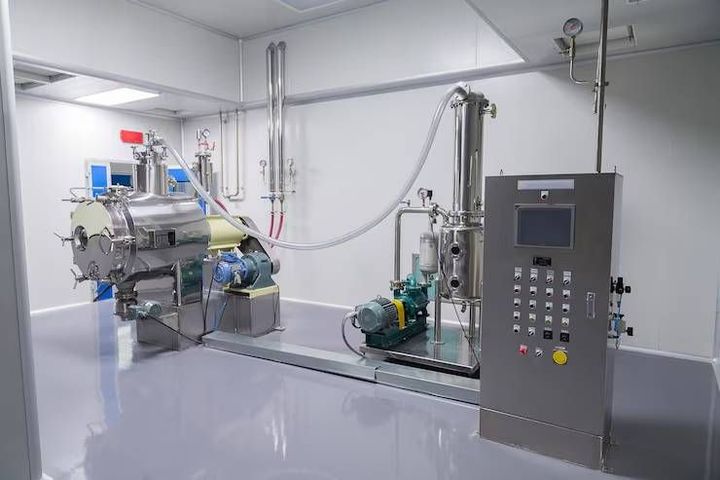
Ultrafiltration Systems: Guide to Membrane Technology and Water Treatment
Ultrafiltration Systems are membrane-based water treatment systems that use pressure to move water through a very fine porous membrane. The membrane acts as a physical barrier, allowing water and some small dissolved substances to pass while retaining suspended particles, colloids, microorganisms, and larger organic molecules.
Ultrafiltration, commonly abbreviated as UF, is one part of the membrane filtration family. Microfiltration, ultrafiltration, nanofiltration, and reverse osmosis use membranes with progressively tighter separation characteristics. WHO describes ultrafiltration as a lower-pressure membrane process compared with reverse osmosis, with typical membrane pore sizes in the approximate range of 0.002–0.03 micrometres.
The technology can be used for drinking-water treatment, wastewater treatment, industrial process water, water reuse, pretreatment before reverse osmosis, and selected pharmaceutical and food-processing applications.
How Ultrafiltration Works
A basic UF system contains several important components:
Feed pump: Moves incoming water toward the membrane.
Pretreatment stage: Removes larger particles or substances that could rapidly foul the membrane.
Membrane module: Contains the porous membrane through which water passes.
Permeate stream: The water that passes through the membrane.
Concentrate stream: Material retained by the membrane and carried away from the filtration process.
Cleaning system: Helps remove accumulated material from membrane surfaces.
Control system: Monitors pressure, flow, filtration cycles, and other operating conditions.
The water may flow across the membrane surface in a crossflow arrangement or pass through the membrane in a dead-end configuration. The exact arrangement depends on the system design and water characteristics.
What Does Ultrafiltration Remove?
Ultrafiltration primarily separates substances according to size. It can retain suspended solids, colloids, bacteria, protozoa, and many larger organic molecules. WHO notes that microbial removal depends on membrane pore size, membrane integrity, seals, flow conditions, and other factors.
UF is not designed to remove every dissolved substance. Salts, many small ions, and some low-molecular-weight compounds can pass through the membrane. For applications requiring substantial removal of dissolved salts, nanofiltration or reverse osmosis may be considered instead.
Importance
Producing Cleaner Water
Ultrafiltration Systems can provide a physical barrier between contaminants and treated water. This makes UF useful where suspended particles and microorganisms need to be reduced as part of a broader treatment process.
The actual treatment result depends on the incoming water, membrane characteristics, operating conditions, and system integrity.
Drinking-Water Treatment
UF can be incorporated into drinking-water treatment plants as one stage within a multiple-barrier approach. WHO identifies membrane filtration as an important treatment category and emphasizes risk-based water safety management from the water source through consumption.
UF may be particularly useful where conventional filtration needs additional particle and microbial separation.
Wastewater and Water Reuse
Ultrafiltration can also be used to separate suspended solids and microorganisms from treated wastewater. It is commonly associated with membrane bioreactor systems, where biological treatment is combined with UF for solids separation.
The US EPA's industrial wastewater technology database describes membrane bioreactors as systems combining biological treatment with ultrafiltration, with applications involving reduction of suspended solids and selected organic and nutrient parameters.
Pretreatment for Reverse Osmosis
UF can act as a pretreatment stage before reverse osmosis. By reducing suspended particles and microorganisms before the tighter RO membrane, the overall treatment arrangement can be designed around more controlled feed-water conditions.
This combination is particularly relevant in water reuse, industrial water treatment, and some desalination-related applications.
Main Characteristics
| Feature | Ultrafiltration Systems | Typical Significance |
|---|---|---|
| Separation principle | Physical membrane barrier | Size-based separation |
| Operating pressure | Relatively low | Lower than many RO applications |
| Main targets | Particles, colloids, microorganisms | Water clarification and microbial reduction |
| Membrane type | Porous membrane | Provides filtration barrier |
| Output | Permeate and concentrate | Separate treated and retained streams |
| Common arrangement | Hollow-fiber or similar modules | Compact membrane configuration |
| Cleaning | Physical and/or chemical methods | Helps manage fouling |
| Common combination | UF + RO | Broader water treatment |
Recent Updates
Updated Global Drinking-Water Guidance
A major recent development is the World Health Organization's 2026 fourth edition of the Guidelines for Drinking-water Quality incorporating the first, second, and third addenda. Published in June 2026, the updated guidance reflects new evidence and implementation experience and provides a framework for managing drinking-water risks.
The guidance does not establish one universal treatment design for every country. Instead, it supports health-based targets, risk management, monitoring, and nationally appropriate regulations.
Greater Interest in Membrane-Based Water Reuse
Water reuse is increasing attention across regions facing water-quality and water-availability challenges. Membrane filtration can form part of treatment trains used to reclaim water for appropriate applications.
ISO 20468-5:2021 provides guidelines for evaluating membrane filtration technologies used in water reclamation systems, including treated-water quality and performance evaluation.
Compact and Modular Treatment
Recent water-treatment development increasingly emphasizes compact and modular systems that can be expanded or configured according to local requirements.
WHO's 2025 compendium on drinking-water systems describes technology selection as dependent on source conditions, risks, resources, regulation, and the complete water-supply system.
Membrane systems can fit this approach because membrane modules can be arranged in different configurations according to required treatment capacity.
Better Monitoring and Process Control
Modern UF installations increasingly use sensors and automated controls to track parameters such as:
Transmembrane pressure
Feed pressure
Permeate flow
Water temperature
Turbidity
Conductivity
Filtration-cycle duration
Cleaning intervals
Monitoring these parameters can help operators identify membrane fouling, pressure changes, or declining filtration performance.
New Approaches to Fouling Control
Membrane fouling remains one of the central engineering challenges in UF. Researchers and system designers continue to examine pretreatment, membrane materials, cleaning approaches, flow patterns, and technologies intended to reduce material accumulation on membrane surfaces.
A 2026 ISO standard on fine-bubble technology provides a test method for evaluating antifouling performance in crossflow membrane filtration systems, including ultrafiltration, nanofiltration, and reverse osmosis.
Laws or Policies
Regulations Vary by Country
There is no single worldwide law governing Ultrafiltration Systems. Drinking-water requirements, wastewater discharge rules, water-reuse regulations, and industrial treatment requirements are established by individual countries, regions, states, or local authorities.
The treatment technology therefore needs to be evaluated against the water-quality targets and regulatory requirements applicable to its intended use.
WHO Drinking-Water Framework
WHO's drinking-water guidelines are widely used as a technical reference when countries develop or revise national drinking-water regulations. The 2026 edition emphasizes health-based targets, risk management, and independent surveillance.
For UF systems, this means membrane performance should be considered as part of the complete water-safety framework rather than as an isolated treatment step.
United States
In the United States, the Environmental Protection Agency regulates public drinking-water systems under federal drinking-water legislation and provides technical guidance for membrane filtration.
EPA's membrane filtration guidance identifies microfiltration, ultrafiltration, nanofiltration, and reverse osmosis as membrane processes used in drinking-water treatment. The guidance also addresses membrane integrity testing for applicable systems.
EPA also provides technology information explaining that treatment selection depends on factors such as source-water chemistry and turbidity.
European Union
The European Union has regulations covering drinking-water quality and water reuse. For agricultural water reuse, Regulation 2020/741 establishes minimum requirements, while European Commission guidance supports its application.
A UF installation used within the EU therefore needs to be considered in relation to the specific application, national implementation measures, water-quality requirements, and intended reuse purpose.
International Standards
ISO standards can provide technical frameworks for evaluating membrane treatment and water-reuse systems. ISO 20468-5 addresses performance evaluation of membrane filtration technologies used in water reclamation.
For pharmaceutical applications, ISO 22519:2023 provides a benchmark for membrane-based generation of water for injection, including design, operation, maintenance, and parameter control.
Tools and Resources
Membrane Performance Monitoring
Operators can monitor pressure, flow, turbidity, temperature, and other water-quality parameters to understand how an Ultrafiltration System is performing.
Transmembrane pressure is particularly useful because increasing pressure requirements can indicate that the membrane is becoming fouled or that operating conditions have changed.
Water-Quality Testing
Laboratory and field testing can measure parameters such as:
Turbidity
Total suspended solids
Microbial indicators
Conductivity
pH
Organic matter
Specific dissolved contaminants
Testing helps determine whether UF is appropriate for the incoming water and whether additional treatment stages are required.
Pretreatment Equipment
Pretreatment can include screens, strainers, sedimentation, media filtration, coagulation, or other processes. The appropriate arrangement depends on the characteristics of the feed water.
Good pretreatment can reduce the amount of material reaching the membrane and help manage fouling.
Cleaning Systems
UF membranes require periodic cleaning because retained material can accumulate on or within membrane surfaces.
Cleaning may involve backwashing, air scouring, chemically enhanced cleaning, or other procedures depending on membrane material and system design.
Digital Monitoring Platforms
Automated control platforms can collect operating information and display pressure, flow, alarms, cleaning cycles, and other parameters.
Historical data can help operators identify gradual changes in membrane performance and investigate unusual operating conditions.
Technical Reference Resources
Useful international resources include:
WHO Guidelines for Drinking-water Quality: Provides a global framework for drinking-water safety and risk management.
WHO Water Technology Compendium: Provides information about drinking-water technologies from source to consumer.
US EPA membrane guidance: Provides technical information concerning membrane filtration in drinking-water treatment.
ISO 20468-5: Provides guidance for performance evaluation of membrane filtration in water reuse.
FAQs
What are Ultrafiltration Systems?
Ultrafiltration Systems are membrane-based treatment systems that use pressure to pass water through very small pores while retaining many suspended particles, colloids, microorganisms, and larger molecules.
How do Ultrafiltration Systems work?
Water is pushed toward a porous membrane. Water and sufficiently small substances pass through as permeate, while larger retained material remains on the feed side and is removed through the concentrate stream or cleaning process.
What contaminants can ultrafiltration remove?
Ultrafiltration can reduce suspended solids, colloids, bacteria, protozoa, and many larger organic molecules. Its ability to remove viruses and other microorganisms depends on membrane characteristics and integrity.
Is ultrafiltration the same as reverse osmosis?
No. Ultrafiltration uses a more open membrane and generally operates at lower pressure. Reverse osmosis uses a much tighter membrane and is designed to remove substantial amounts of dissolved salts and other small dissolved substances.
Where are Ultrafiltration Systems used?
They are used in drinking-water treatment, wastewater treatment, water reuse, industrial process-water treatment, membrane bioreactors, and as pretreatment for reverse osmosis.
Conclusion
Ultrafiltration Systems use porous membranes to separate water from suspended particles, colloids, microorganisms, and larger molecules. The technology can be integrated into drinking-water treatment, wastewater treatment, water reuse, industrial processes, and reverse-osmosis pretreatment. Recent developments emphasize improved monitoring, modular treatment, fouling control, water reuse, and stronger risk-based water-quality management. Because regulations differ worldwide, UF installations need to be evaluated according to the intended application, source-water characteristics, treatment objectives, and applicable national or regional requirements.