Tube Filling Machines: Guide to Working Principles and Key Components
Tube Filling Machines are automated or semi-automated packaging systems designed to place a measured quantity of a product into collapsible tubes and then close the open end. They are widely used for creams, ointments, gels, pastes, lotions, toothpaste, adhesives, cosmetic formulations, and selected food products.
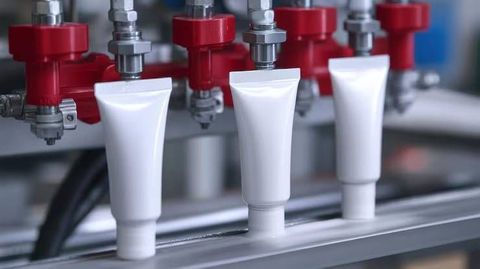
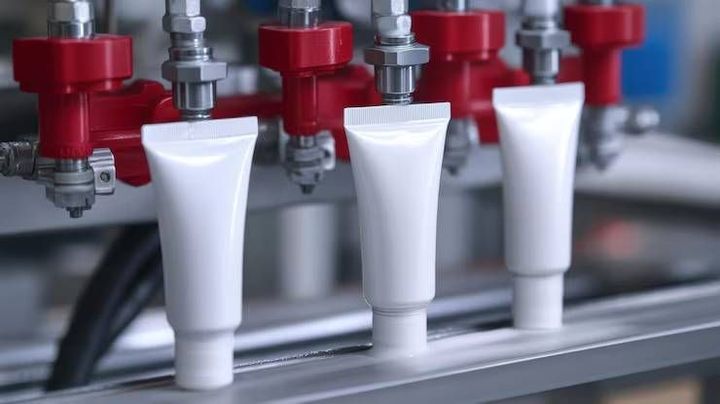
A typical tube enters the machine empty, with one end already formed around the cap and the opposite end open. The machine positions the tube, identifies its orientation, introduces the product through a filling nozzle, and closes the open end through heat sealing, ultrasonic sealing, folding, or crimping, depending on the tube material.
Why Tube Filling Is Different
Tube packaging requires several operations to happen in a controlled sequence. The machine must hold the flexible container securely while dispensing the correct quantity without damaging the tube or contaminating the sealing area.
Plastic, laminate, and aluminum tubes can require different closing methods. Plastic and many laminate tubes can be heat or ultrasonic sealed, while aluminum tubes are commonly folded or crimped.
Common Products
Tube Filling Machines are found across several industries.
Pharmaceutical products: Creams, ointments, gels, and topical formulations.
Cosmetics: Lotions, creams, facial products, hair products, and similar formulations.
Personal care: Toothpaste and other semi-solid preparations.
Food products: Selected sauces, pastes, and concentrated food formulations.
Industrial products: Adhesives, sealants, lubricants, and specialized compounds.
The machine configuration depends heavily on product viscosity, tube material, fill quantity, production volume, hygiene requirements, and sealing method.
Importance
Accurate Product Dosing
One of the main functions of Tube Filling Machines is controlled product dosing. A piston, pump, or another metering mechanism transfers a defined quantity from the product tank to the tube.
For viscous products such as creams and pastes, piston-based systems are commonly used. Other configurations can use peristaltic or other pumping arrangements depending on the product characteristics and process requirements.
Consistent Tube Sealing
The second major function is closing the tube after filling. A properly controlled sealing process creates a consistent tube end and helps protect the contents from external exposure.
The sealing method depends on the tube construction. Heat sealing is commonly associated with plastic and laminate tubes, while aluminum tubes can use mechanical folding and crimping.
Hygienic Processing
Hygiene becomes particularly important when tubes contain pharmaceutical, cosmetic, food, or personal-care formulations. Product-contact components may therefore use materials and designs appropriate for the formulation and cleaning requirements.
For medicinal products, packaging and closure systems are subject to specific quality considerations. FDA regulations, for example, require drug-product containers and closures to provide appropriate protection against foreseeable factors that could cause deterioration or contamination.
Production Flexibility
Modern machines can accommodate different tube dimensions, filling quantities, products, and sealing arrangements through adjustable settings and change parts.
A production line may also incorporate coding, inspection, trimming, and tube discharge within the same sequence. This allows several packaging operations to be coordinated through one control system.
Main Machine Functions
| Machine Function | Main Purpose | Typical Equipment |
|---|---|---|
| Tube feeding | Introduces empty tubes | Hopper, magazine, feeder |
| Orientation | Positions the tube correctly | Sensor, orienting mechanism |
| Filling | Dispenses the product | Piston, pump, nozzle |
| Sealing | Closes the tube | Heater, ultrasonic unit, crimping tool |
| Coding | Adds identification information | Inkjet or laser coder |
| Trimming | Shapes the sealed end | Cutting or trimming unit |
| Inspection | Checks selected parameters | Sensors or vision system |
| Discharge | Removes finished tubes | Conveyor or collection system |
Recent Updates
More Integrated Automation
Current Tube Filling Machines increasingly combine feeding, orientation, filling, sealing, coding, trimming, and inspection into coordinated automated sequences.
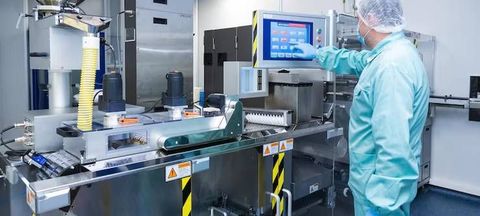
PLC-based controls and human-machine interfaces allow operators to monitor machine conditions and adjust selected production parameters. Recipe-based controls can also help maintain consistent settings when changing between approved product configurations.
Servo-Based Motion Control
Servo motors are increasingly used for controlled movement in filling and indexing systems. Servo technology allows programmable movement profiles and precise synchronization between stations.
This can be particularly useful when filling quantities, tube dimensions, or production speeds vary across different applications.
Improved Product Handling
Product behavior is an important consideration in modern tube-filling design. Creams, gels, ointments, pastes, and other semi-solid formulations can behave differently during pumping and dispensing.
Nozzle design, filling speed, pressure, product temperature, and metering technology may therefore be adjusted according to the formulation. Bottom-up filling can also help reduce air pockets in selected applications.
Vision and Inspection Systems
Machine vision can be integrated into packaging lines to inspect tube orientation, printed information, seal appearance, fill-related characteristics, or other selected features.
Sensors can also detect the presence or absence of a tube before filling. This prevents the filling mechanism from dispensing product into an empty holder.
Digital Monitoring
Modern machines can collect information about production cycles, machine status, alarms, rejected units, and selected process parameters.
Digital monitoring can support traceability and production analysis, particularly in regulated manufacturing environments where records and process controls are important.
Sustainability and Material Development
Tube manufacturers are developing different plastic structures, laminate constructions, and material combinations to address packaging performance and environmental considerations.
Machine manufacturers must adapt filling and sealing systems to the physical characteristics of these materials. Changes in tube thickness, multilayer construction, seal behavior, or recycled-content composition can affect machine settings and sealing performance.
Pharmaceutical Packaging Controls
International pharmaceutical packaging requirements continue to emphasize container integrity, contamination control, documented processes, and appropriate packaging materials.
In 2026, the U.S. FDA published a draft guidance concerning container-closure systems for human drugs and biological products. The document is currently a draft and is not intended for implementation, but it reflects continuing regulatory attention to container-closure quality and integrity.
Laws or Policies
Global Regulatory Framework
There is no single worldwide law governing every Tube Filling Machine. Requirements depend on the product, destination market, industry, tube material, and manufacturing environment.
Pharmaceutical applications generally face more extensive controls than ordinary industrial products because the packaging can directly affect product quality and protection.
United States
In the United States, pharmaceutical manufacturers must consider FDA requirements covering drug containers, closures, packaging operations, and manufacturing controls.
Under 21 CFR 211.94, drug-product containers and closures must be suitable for their intended use and provide appropriate protection against external factors that could cause deterioration or contamination. Packaging and labeling operations are also covered within the broader current good manufacturing practice framework.
European Union
European pharmaceutical manufacturing follows EU Good Manufacturing Practice requirements. EU GMP Chapter 5 addresses packaging materials and packaging operations, including controls intended to reduce risks involving contamination, mix-ups, and substitutions.
The framework also emphasizes appropriate control of primary and printed packaging materials.
ISO 15378
ISO 15378:2017 is an international standard specifically addressing primary packaging materials for medicinal products and incorporates GMP-related requirements into a quality management framework.
The standard was confirmed in 2023 and remains current. Its 2024 amendment introduced climate-action-related changes.
Validation and Quality Control
Pharmaceutical packaging operations may require documented validation, equipment qualification, process controls, cleaning procedures, inspection methods, and records.
The exact requirements depend on the product category and jurisdiction. A Tube Filling Machine intended for pharmaceutical manufacturing therefore needs to be considered as part of the complete production and quality system rather than as an isolated machine.
Tools and Resources
Product Tanks and Hoppers
A product tank or hopper holds the formulation before it reaches the filling mechanism. Some systems incorporate agitation or temperature control when the product requires controlled conditions.
Filling Nozzles
The nozzle delivers product into the tube. Its diameter, shape, movement, and shut-off arrangement can influence filling behavior.
For viscous products, nozzle design is particularly important because the product may stretch, drip, or leave residue if the dispensing sequence is not properly matched to its physical characteristics.
Piston Filling Systems
A piston draws product into a cylinder and then pushes it through the filling nozzle. The piston movement determines the dispensed quantity.
This arrangement is widely associated with creams, ointments, gels, and other viscous formulations.
Peristaltic Pump Systems
A peristaltic system moves product by compressing a flexible tube with rotating rollers. This approach can be useful in selected applications where product-contact arrangements and controlled fluid movement are important.
Tube Holders and Indexing Systems
Tube holders keep individual tubes in a stable position during filling and sealing. Rotary machines may use multiple holders positioned around an indexing table.
The indexing mechanism moves tubes from one station to another in a defined sequence.
Sealing Units
Plastic and laminate tubes can use controlled heat or ultrasonic energy for sealing. Aluminum tubes can use folding and crimping mechanisms.
The sealing unit must be matched to tube construction and product requirements to achieve consistent closure characteristics.
Coding and Inspection Equipment
Inkjet or laser systems can add batch information, product identification, dates, or other required markings.
Vision cameras and sensors can then inspect selected characteristics before finished tubes leave the machine.
FAQs
What are Tube Filling Machines?
Tube Filling Machines are packaging systems that measure and dispense products into collapsible tubes and then close the open end using a suitable sealing or crimping method.
How do Tube Filling Machines work?
Tube Filling Machines generally load and orient an empty tube, position it in a holder, dispense the product through a nozzle, seal or crimp the open end, apply required markings, and discharge the finished tube.
What products can Tube Filling Machines handle?
They can handle many creams, ointments, gels, pastes, toothpaste, lotions, adhesives, sealants, and other products with suitable flow characteristics. The machine configuration must match the product formulation.
What are the main components of Tube Filling Machines?
Important components include the tube feeder, tube holders, orientation system, product tank, dosing mechanism, filling nozzle, sealing unit, control system, coding equipment, inspection sensors, and discharge mechanism.
Which industries use Tube Filling Machines?
Pharmaceutical, cosmetic, personal-care, food, chemical, and selected industrial manufacturers use tube-filling technology. The exact machine design varies according to product and packaging requirements.
Conclusion
Tube Filling Machines combine tube handling, product dosing, sealing, coding, and inspection into a coordinated packaging process. Their working principles depend on accurate tube positioning, controlled filling, and a sealing method appropriate for the tube material. Modern systems increasingly use servo motion, sensors, vision inspection, digital controls, and integrated production monitoring. International pharmaceutical frameworks also place significant emphasis on packaging integrity, quality controls, and appropriate container-closure systems.