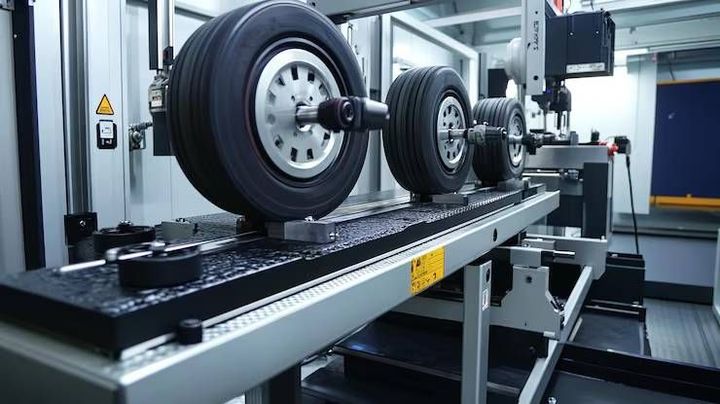
Tire Manufacturing Machines: Explore Types, Processes, and Key Information
Tire Manufacturing Machines are industrial machines used to transform rubber, steel, textile cord, chemicals, and other materials into finished tires. Tire production is a multi-stage process involving material preparation, rubber processing, component production, tire building, curing, inspection, and testing.
A modern tire factory does not rely on one machine. Instead, it uses a connected production system in which different machines perform specific operations. Rubber mixing equipment prepares compounds, extrusion machines shape rubber components, calendering equipment coats reinforcing materials, tire-building machines assemble components, and curing presses create the final tire shape and tread pattern.
How Tire Manufacturing Works
The manufacturing sequence can vary according to tire type, but a typical process includes:
Raw material preparation: Rubber and other ingredients are prepared according to a selected compound.
Mixing: Internal mixers combine rubber with chemicals, carbon black, silica, oils, and other ingredients.
Extrusion: Rubber is pushed through shaped dies to create components such as tread and sidewall sections.
Calendering: Rubber is applied to textile or steel reinforcement materials in controlled layers.
Bead production: Steel wires are formed into circular bead structures that help connect the tire to the wheel rim.
Tire building: Different semi-finished components are assembled into an uncured structure known as a green tire.
Curing: Heat and pressure are applied inside a mold to create the final shape, tread pattern, and rubber properties.
Inspection and testing: Finished tires undergo visual, dimensional, uniformity, and other applicable checks.
Main Types of Tire Manufacturing Machines
Internal mixers blend rubber and other ingredients into a consistent compound. Mixing conditions such as temperature, time, and mechanical energy influence the resulting material.
Rubber extruders shape rubber into continuous profiles. Different dies can produce tread strips, sidewalls, and other rubber components.
Rubber calendering machines form thin rubber sheets and can embed rubber around textile or steel cords. These reinforced sheets become important structural components of a tire.
Bead winding machines create circular steel-wire bead assemblies. The bead helps anchor the tire to the wheel rim.
Tire-building machines combine the prepared components into a green tire. Automated systems can control component positioning, dimensions, and assembly sequences.
Tire curing presses apply controlled heat and pressure to the green tire. The mold contains the tread design and sidewall markings, giving the tire its final physical form.
Importance
Supporting Consistent Tire Production
Tire Manufacturing Machines help maintain repeatable production conditions. Rubber compounds, reinforcement layers, tread dimensions, bead structures, and curing conditions all need controlled processing.
Consistency is important because a tire contains multiple materials that work together under changing loads, temperatures, speeds, and road conditions.
Producing Different Tire Designs
Manufacturing equipment can be configured for different tire categories, including passenger-car tires, commercial-vehicle tires, motorcycle tires, agricultural tires, and specialized off-road products.
Machine settings, molds, component dimensions, reinforcement arrangements, and rubber compounds can change according to the intended application.
Supporting Production Efficiency
Automated material handling, computerized controls, sensors, and integrated production systems can reduce unnecessary manual movement and help maintain repeatable process conditions.
Digital monitoring can also provide information about temperature, pressure, speed, material flow, machine status, and production parameters.
Quality and Safety
Tires are critical vehicle components because they provide contact with the road, transmit braking and driving forces, and support vehicle loads. Manufacturing controls therefore play an important role in producing tires that meet applicable technical requirements.
Testing can examine characteristics such as dimensions, load and speed performance, endurance, strength, bead behavior, and other properties depending on the applicable standard. BIS documentation for passenger-car tires, for example, identifies tests covering dimensions, endurance, load/speed performance, bead unseating resistance, and tire strength.
Major Machines at a Glance
| Machine | Main Function | Production Stage |
|---|---|---|
| Internal Mixer | Blends rubber compounds | Material preparation |
| Rubber Extruder | Forms rubber profiles | Component production |
| Calender | Coats reinforcement materials | Component production |
| Bead Winder | Forms steel bead assemblies | Component production |
| Tire Builder | Assembles tire components | Tire building |
| Curing Press | Shapes and cures green tires | Curing |
| Uniformity Machine | Checks tire uniformity | Inspection |
| X-Ray System | Examines internal structure | Quality inspection |
Recent Updates
Greater Automation
Modern tire factories increasingly connect production machines with computerized controls, sensors, automated material movement, and centralized monitoring.
Automation can be applied to rubber preparation, component handling, tire building, curing, inspection, and material tracking. The degree of automation differs between factories and production lines.
Digital Process Monitoring
Sensors can monitor important parameters such as temperature, pressure, speed, vibration, material flow, and machine operating conditions.
Production data can then be collected in digital systems for process monitoring and analysis. This approach can help engineers identify deviations from defined production conditions.
Machine Vision
Camera-based inspection systems are increasingly relevant to tire production. Machine vision can examine selected surface characteristics, markings, dimensions, and manufacturing conditions.
Computer-based image analysis can process large numbers of images and identify patterns that may require additional inspection.
Advanced Tire Testing
Tire manufacturers use increasingly sophisticated testing systems to evaluate performance characteristics under controlled conditions. Testing can include uniformity, endurance, load, speed, dimensions, strength, and other application-specific characteristics.
International regulatory work also continues to address tire performance. In 2026, UNECE published a proposal concerning further amendments to UN Regulation No. 117, which covers tire rolling resistance, rolling noise, and wet grip.
Electrification and Connected Factories
Manufacturing plants are increasingly integrating electric drives, programmable controllers, industrial networks, sensors, and data systems.
Connected equipment can allow production teams to observe multiple machines through centralized dashboards. Such systems can also support condition monitoring and production-history records.
Material Development
Tire manufacturing is also influenced by developments in rubber compounds, reinforcement materials, silica technology, bio-based materials, recycled content, and other material research.
These developments can require changes in mixing, extrusion, calendering, curing, and testing equipment because new materials may behave differently during processing.
Laws or Policies
Global Regulatory Frameworks
Tire manufacturing is governed by different technical and regulatory frameworks depending on the country or market where tires are produced or used.
One important international framework is the United Nations Economic Commission for Europe vehicle-regulation system. UN Regulation No. 117 addresses tire characteristics including rolling resistance, rolling noise, and wet grip for applicable categories.
Other UN regulations address particular tire categories and installation requirements. Manufacturers supplying multiple markets may therefore need to consider several regulatory frameworks simultaneously.
European Requirements
European markets apply regulatory requirements covering vehicle components and tire performance. Depending on tire category and application, requirements can address dimensions, load and speed capability, wet grip, rolling resistance, noise, markings, and other characteristics.
The specific requirements depend on the tire category and applicable legislation.
United States Requirements
In the United States, federal motor-vehicle safety requirements include provisions concerning pneumatic tires, tire identification, labeling, testing, and related vehicle requirements. Manufacturers must identify the requirements applicable to the specific tire category and market.
Indian Standards
India uses Bureau of Indian Standards requirements for several categories of pneumatic tires. The BIS 2025 compendium identifies standards covering tires and tubes for passenger cars, commercial vehicles, two- and three-wheelers, agricultural applications, and other vehicle categories.
For example, IS 15633:2022 covers pneumatic tires for passenger cars, including diagonal and radial-ply designs. BIS documentation also identifies testing and inspection requirements associated with this standard.
Quality and Conformity Assessment
Manufacturers may need to demonstrate conformity through applicable certification, testing, inspection, marking, and documentation procedures.
BIS explains that its product-certification process can involve assessment of manufacturing infrastructure, process controls, quality-control arrangements, and testing capabilities.
Because requirements differ by country, manufacturers should identify the regulations and standards applicable to each intended market.
Tools and Resources
Rubber Mixing Systems
Internal mixers and laboratory mixing equipment are used to develop and process rubber compounds. Laboratory systems can help engineers evaluate material formulations before larger production runs.
Process-Control Systems
Programmable controllers, industrial computers, sensors, and production-monitoring platforms can collect information from manufacturing equipment.
These systems can monitor parameters such as temperature, pressure, speed, cycle time, and machine status.
Tire Uniformity Testing
Uniformity machines rotate finished tires and measure selected variations in forces, dimensions, or geometry. Such testing helps identify characteristics that may influence vehicle behavior.
X-Ray Inspection
X-ray systems can examine selected internal tire structures without cutting the tire open. They may help identify irregularities involving reinforcement components or internal construction.
Laser and Vision Measurement
Laser measurement systems can evaluate dimensions and profiles, while machine-vision systems can inspect surfaces, markings, and selected production characteristics.
Standards Databases
Regulatory and standards databases are important resources for manufacturers working across international markets. UNECE provides access to its vehicle regulations, while BIS provides its Know Your Standard platform for searching Indian Standards by standard number or product keyword.
Production Simulation and Data Analysis
Digital simulation and data-analysis tools can help engineers examine machine layouts, production sequences, material movement, and equipment performance before making physical changes.
These tools can be particularly useful in large factories containing multiple connected production stages.
FAQs
What are Tire Manufacturing Machines?
Tire Manufacturing Machines are industrial machines used to mix rubber, produce tire components, assemble green tires, cure them, and inspect finished tires.
What machines are used to make tires?
Common machines include internal mixers, rubber extruders, calenders, bead winding machines, tire-building machines, curing presses, uniformity testers, and inspection systems.
How does a tire-building machine work?
A tire-building machine assembles components such as the inner liner, textile or steel reinforcement, beads, sidewalls, and tread-related components into a green tire before curing.
What does a tire curing machine do?
A tire curing machine applies controlled heat and pressure to a green tire inside a mold. This creates the final tire shape, tread pattern, and cured rubber structure.
Why are testing machines important in tire manufacturing?
Testing machines help evaluate characteristics such as dimensions, endurance, load and speed performance, strength, uniformity, and other properties required by applicable standards.
Conclusion
Tire Manufacturing Machines form an interconnected production system that converts rubber, steel, textile reinforcement, and other materials into finished tires. Major equipment includes mixers, extruders, calenders, bead machines, tire builders, curing presses, and inspection systems. Current manufacturing trends include automation, digital monitoring, machine vision, advanced testing, connected production systems, and continued material development. International frameworks such as UNECE regulations and national standards such as BIS requirements help define technical and performance expectations for tires in different markets.