Steam Turbines: Guide to Power Generation Technology, Components, and Industrial Applications
Steam Turbines are important power generation machines that convert steam energy into mechanical rotation and electricity. This article covers steam turbine components, operating principles, turbine types, power generation stages, industrial applications, recent technology developments, safety considerations, and supporting equipment used in modern energy systems.
Steam Turbines: Guide to Power Generation Technology, Components, and Industrial Applications
Context
Steam Turbines are rotating machines that convert the energy of high-pressure steam into mechanical energy. The rotating shaft can then drive an electrical generator or other equipment used in industrial operations.
Steam turbine technology has been used in power generation and industrial facilities for many years. Modern systems combine mechanical components, steam control equipment, monitoring systems, and safety arrangements to support controlled operation.
A steam turbine generally works through a sequence of energy conversion stages. Steam enters the turbine at an appropriate pressure and temperature, passes through stationary and rotating components, and transfers energy to the turbine shaft.
The rotating shaft can be connected directly or indirectly to equipment that requires mechanical power. In electricity generation, the shaft commonly drives a generator that converts mechanical rotation into electrical energy.
Basic Operating Process
The general steam turbine process includes several stages:
Steam is generated or supplied from a steam-producing system.
Control equipment regulates the steam entering the turbine.
Steam passes through stationary passages or nozzles.
The moving steam transfers energy to rotating blades.
The turbine shaft rotates as steam energy is converted into mechanical energy.
The shaft drives a generator or industrial machine.
Exhaust steam is directed toward a condenser, process system, or other downstream equipment.
The actual arrangement depends on the turbine design and the application.
Main Components
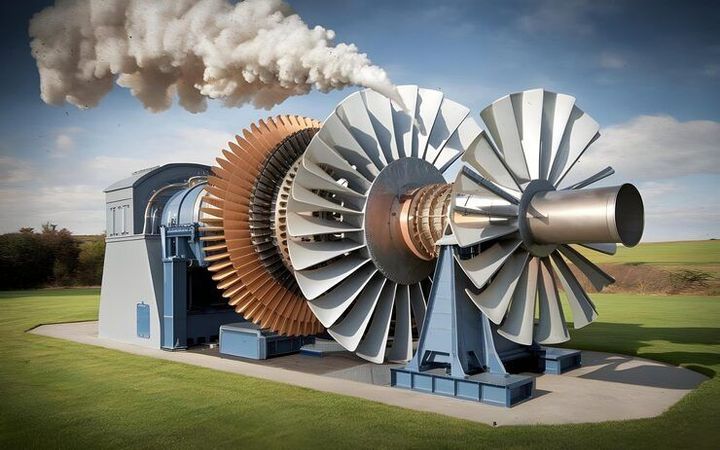
A steam turbine contains several components that work together to manage steam flow and convert its energy into rotation.
| Component | Main Function |
|---|---|
| Rotor | Transfers rotational energy through the turbine shaft |
| Blades | Receive energy from moving steam |
| Nozzles | Direct and accelerate steam flow |
| Casing | Encloses internal turbine components |
| Shaft | Transfers mechanical rotation to driven equipment |
| Bearings | Support rotating components |
| Seals | Help control steam leakage |
| Control valves | Regulate steam flow |
| Governor | Helps control turbine speed |
| Exhaust section | Directs steam toward the next process stage |
Types of Steam Turbines
Steam turbines can be classified according to their operating principle, steam flow arrangement, pressure stages, and application.
Impulse turbines use steam jets directed at moving blades, while reaction turbines rely on pressure changes as steam passes through both stationary and rotating blade passages.
Other classifications include condensing turbines, back-pressure turbines, extraction turbines, and extraction-condensing turbines.
The appropriate design depends on whether the turbine is intended mainly for electricity generation, industrial process steam, combined power and heat production, or another application.
Importance
Steam turbine technology remains important because it can convert thermal energy into mechanical power on a large scale. It is used in power stations as well as many industrial facilities where steam is already part of the production process.
Electricity Generation
In conventional thermal power plants, steam turbines are a central part of the electricity generation system. Steam produced by a boiler or another heat source enters the turbine and drives the generator.
The generator then converts the turbine's mechanical rotation into electrical power. Supporting systems manage steam production, condensation, water circulation, lubrication, and control.
Industrial Power
Industrial facilities may use steam turbines to provide mechanical power for generators, pumps, compressors, and other equipment.
In some facilities, steam is required for manufacturing processes. A turbine system can be arranged so that useful steam is extracted or discharged at conditions appropriate for downstream operations.
Combined Heat and Power
Steam turbines can also form part of combined heat and power systems. In these arrangements, electricity generation and useful thermal energy are produced from the same overall energy system.
This approach can support facilities where both electrical power and process heat are required.
Large-Scale Energy Systems
Steam turbines are suitable for applications involving substantial steam flow and continuous operation. Their design can be adapted to different pressure levels and operating requirements.
Turbine performance depends on factors such as steam conditions, turbine configuration, operating load, component condition, and supporting equipment.
Operational Control
Accurate control of steam flow and turbine speed is important for stable operation. Governors, control valves, sensors, and monitoring systems work together to maintain operating conditions within appropriate ranges.
Modern digital controls can provide operators with additional information about turbine conditions and operating performance.
Recent Updates
Recent developments in Steam Turbines have focused on digital monitoring, automation, efficiency improvements, flexible operation, materials, and maintenance practices.
Digital Monitoring
Modern turbine systems increasingly use sensors and digital monitoring platforms to track operating conditions. Measurements may include vibration, temperature, pressure, rotational speed, steam conditions, and bearing conditions.
Monitoring this information can help operators identify changes in turbine behavior and support maintenance planning.
Automated Controls
Digital control systems can coordinate steam valves, speed regulation, protection systems, and other operating functions.
Automation can reduce the need for continuous manual adjustment while allowing operators to supervise important operating parameters.
Improved Materials
Turbine components operate under demanding temperature, pressure, and mechanical conditions. Advances in materials and manufacturing methods continue to support the development of components designed for these environments.
Material selection is particularly important for blades, rotors, casings, seals, and other components exposed to demanding operating conditions.
Flexible Operation
Power generation systems may need to respond to changing electricity demand and changing operating conditions. Modern turbine systems can incorporate control approaches designed to support different operating loads.
The appropriate operating range depends on turbine design, steam conditions, equipment configuration, and manufacturer specifications.
Condition Monitoring
Condition monitoring is becoming increasingly important for large rotating equipment. Vibration measurements, temperature monitoring, lubrication checks, and other indicators can provide information about equipment condition.
Data from monitoring systems can support maintenance decisions and help identify unusual operating patterns before they develop into larger equipment problems.
Energy Management
Modern steam turbine systems can be integrated with broader plant energy management systems. These systems can monitor steam production, turbine operation, electricity generation, and heat utilization.
Better coordination between these systems can support more controlled plant operation.
Laws or Policies
Steam turbine facilities are subject to safety, pressure equipment, electrical, environmental, workplace, and operational requirements. The exact requirements vary according to country, industry, plant configuration, and turbine application.
Pressure Safety
Steam systems operate under elevated pressure and temperature. Boilers, steam lines, valves, turbine casings, and related pressure-containing equipment therefore require appropriate inspection and safety controls.
Pressure relief arrangements and inspection programs should follow applicable regulations and technical requirements.
Workplace Safety
Rotating machinery can present mechanical hazards. Operators and maintenance personnel need suitable guarding, access controls, emergency procedures, and operating practices.
Hot surfaces, pressurized steam, electrical equipment, and lubrication systems also require appropriate workplace precautions.
Electrical Requirements
When a steam turbine drives an electrical generator, the complete generating system is subject to electrical safety requirements. Generator connections, switchgear, control systems, grounding, and protective equipment should comply with applicable standards and regulations.
Environmental Considerations
Steam turbine facilities may be part of larger thermal energy systems that are subject to environmental requirements. Depending on the heat source, these requirements may address emissions, water use, wastewater, fuel systems, and other environmental factors.
Maintenance and Inspection
Regular inspection and maintenance are important for turbine safety and reliability. Maintenance programs can include examination of blades, bearings, seals, valves, lubrication systems, control equipment, and other critical components.
Technical documentation and applicable regulatory requirements should guide inspection intervals and maintenance procedures.
Tools and Resources
Steam turbine operation depends on a range of supporting equipment and technical resources.
Boilers and Steam Generators
Steam turbines require an appropriate steam source. Boilers, heat recovery steam generators, and other steam-producing systems can supply steam according to the requirements of the turbine.
The steam generation system and turbine must be considered together because changes in steam conditions can affect turbine operation.
Condensers
Condensing turbine systems commonly use condensers to reduce exhaust steam into water. The recovered water can then be returned to the wider steam cycle.
Condenser performance can influence the operating conditions of the turbine and associated systems.
Lubrication Systems
Bearings and other moving components require suitable lubrication. Lubrication systems may include pumps, filters, coolers, reservoirs, monitoring equipment, and associated piping.
Regular monitoring helps maintain appropriate lubrication conditions.
Instrumentation
Pressure gauges, temperature sensors, vibration monitoring equipment, speed sensors, flow measurement devices, and control instruments provide information about turbine operation.
Modern systems can combine these measurements within centralized control and monitoring platforms.
Maintenance Resources
Maintenance teams use technical manuals, inspection procedures, vibration analysis tools, measurement equipment, alignment systems, and specialized maintenance tools.
Proper documentation is important because turbine components often require precise inspection and alignment procedures.
Water and Steam Treatment
Steam cycles require appropriate water quality management. Treatment systems can help control impurities and maintain suitable conditions for boilers, steam generators, condensers, and associated equipment.
Water chemistry management can help reduce unwanted deposits and corrosion within the steam cycle.
FAQs
What are Steam Turbines used for?
Steam Turbines are primarily used to convert steam energy into mechanical rotation. They can drive electrical generators or other industrial equipment and are widely used in power generation and process industries.
How do Steam Turbines generate electricity?
Steam enters the turbine and transfers energy to rotating blades. The turbine shaft then rotates an electrical generator, which converts the mechanical energy into electrical power.
What are the main components of Steam Turbines?
Important components include the rotor, shaft, blades, casing, nozzles, bearings, seals, control valves, governor, and exhaust section. Supporting systems include lubrication, cooling, instrumentation, and steam control equipment.
What are the main types of Steam Turbines?
Common types include impulse, reaction, condensing, back-pressure, extraction, and extraction-condensing turbines. Their configurations differ according to steam flow and application requirements.
What recent technologies are used with Steam Turbines?
Recent systems increasingly use digital controls, sensors, condition monitoring, automated operation, advanced materials, and data-based maintenance approaches to monitor and manage turbine performance.
Conclusion
Steam Turbines remain an important technology for converting steam energy into mechanical and electrical power. Their applications range from large power generation facilities to industrial systems that require electricity, mechanical power, or process steam. Modern developments are increasingly focused on digital monitoring, automated controls, flexible operation, materials, and condition-based maintenance. Safe operation depends on suitable equipment design, pressure management, electrical protection, inspection, and compliance with applicable requirements.