Solar Panels Installation: A Comprehensive Guide to Planning, Process, and Key Considerations for Homeowners and Businesses
Solar panels installation has become an important part of the transition toward renewable electricity for homeowners, businesses, farms, public buildings, and industrial facilities. A solar photovoltaic (PV) system converts sunlight directly into electricity through semiconductor cells installed in solar modules.
The installation process involves much more than placing panels on a roof: it includes site assessment, system design, equipment selection, electrical planning, structural checks, permits, installation, testing, and grid connection.
Solar panels installation can be designed for homes, commercial buildings, industrial facilities, or off-grid locations. The appropriate configuration depends on electricity demand, available roof or land area, sunlight conditions, local regulations, grid requirements, and whether battery storage is included. Understanding these stages helps property owners evaluate a solar project and understand the technical decisions involved.
Context
What Solar Panels Installation Means
Solar panels installation is the process of designing and installing a photovoltaic system that converts sunlight into usable electrical power. A typical system includes solar panels, mounting structures, an inverter, electrical protection equipment, cables, monitoring equipment, and sometimes a battery.
Solar cells inside each panel generate direct current (DC) electricity when exposed to sunlight. The inverter converts DC electricity into alternating current (AC), which can be used by appliances and electrical equipment.
A grid-connected system can use solar electricity when it is available and obtain additional electricity from the utility grid when production is insufficient. Depending on local rules, surplus electricity may also be exported to the grid.
Main Types of Solar PV Systems
There are three common system configurations:
Grid-connected systems: These are connected to the local electricity network and generally do not require batteries.
Hybrid systems: These combine solar panels, grid connection, and battery storage.
Off-grid systems: These operate independently from the utility grid and normally require batteries or another form of energy storage.
Solar systems can also be classified by installation location. Rooftop systems use existing buildings, ground-mounted systems use dedicated structures on land, and larger utility-scale systems can cover extensive areas.
Site Assessment and Feasibility
Before solar panels installation begins, the property needs to be assessed. Important factors include roof orientation, roof angle, shading, available area, structural condition, local weather, and expected electricity consumption.
Shading from trees, neighboring buildings, chimneys, or other structures can reduce electricity generation. A structural assessment is also important because mounting equipment and panels add weight and must remain secure during wind and other weather conditions.
Main Installation Stages
The process normally follows several stages:
Site assessment: The installer evaluates sunlight exposure, roof or land conditions, electrical requirements, and structural suitability.
Energy analysis: Historical electricity use is reviewed to estimate an appropriate PV system size.
System design: Panel layout, inverter configuration, wiring, mounting structures, protection equipment, and monitoring are planned.
Equipment selection: Panels, inverters, mounting systems, cables, isolators, and other components are selected according to the design.
Permissions and approvals: Local planning, building, electrical, and grid requirements are checked.
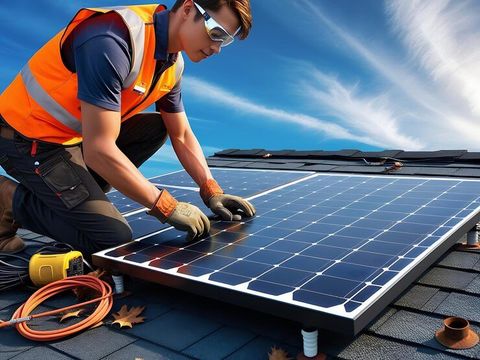
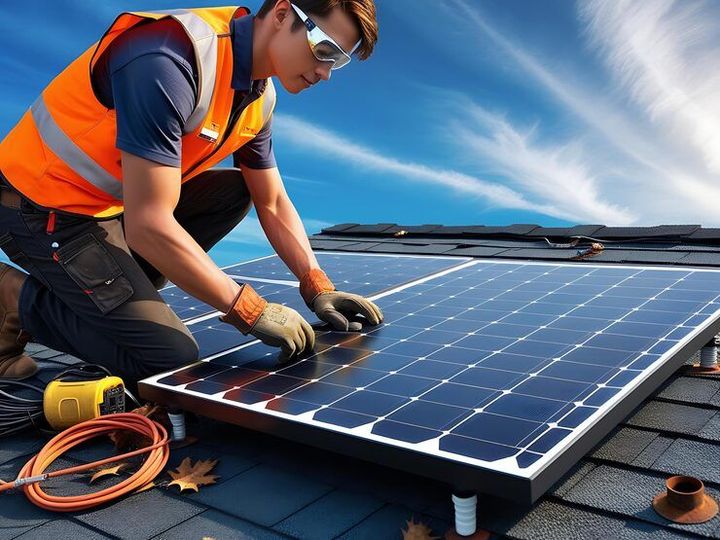
Physical installation: Mounting structures, panels, electrical equipment, and wiring are installed.
Testing and commissioning: The system is inspected and tested before operation.
Grid connection: Grid-connected systems are connected according to the applicable utility and electrical requirements.
Importance
Why Solar Panels Installation Matters
Solar PV has become a major part of worldwide electricity expansion. According to the International Energy Agency, solar PV accounted for more than three-quarters of new renewable power capacity added globally in 2025, with solar additions exceeding 600 GW during the year.
Solar panels installation can help households and organizations generate part of their electricity locally rather than relying entirely on electricity supplied through the grid. It can also be combined with batteries, energy management systems, electric vehicle charging, and other electrical technologies.
Residential Applications
Homes commonly use rooftop solar systems to generate electricity for lighting, appliances, cooling, heating, and other household loads. Battery storage can be added where backup power or greater use of locally generated electricity is required.
The appropriate system size depends on electricity consumption, available roof space, sunlight conditions, local electricity rules, and the desired operating configuration.
Commercial and Industrial Applications
Businesses can install solar PV on office buildings, warehouses, factories, retail facilities, agricultural buildings, and other properties with suitable roof or land areas.
Commercial and industrial systems may have larger electrical loads and can require more detailed engineering, structural analysis, protection equipment, and grid studies. Energy monitoring can also help organizations compare solar production with electricity consumption throughout the day.
Important System Components
| Component | Main Function | Typical Location |
|---|---|---|
| Solar panels | Convert sunlight into DC electricity | Roof or ground structure |
| Inverter | Converts DC into AC electricity | Near panels or electrical equipment |
| Mounting system | Secures panels to the building or ground | Roof or ground |
| DC and AC protection | Helps protect electrical circuits | Electrical equipment areas |
| Monitoring system | Tracks system performance | Inverter or digital platform |
| Battery | Stores electricity for later use | Indoor or outdoor protected location |
| Metering equipment | Measures electricity flow | Electrical connection point |
Main Advantages and Limitations
Solar panels installation can provide on-site electricity generation and can reduce dependence on grid electricity during periods of solar production. It can also support renewable-energy targets and integrate with battery storage and energy management technologies.
However, solar systems have limitations. Electricity production changes with sunlight, shading can reduce output, roofs may require structural upgrades, and grid connection requirements vary by location. Batteries add additional equipment and require appropriate installation, protection, and management.
Recent Updates
Rapid Growth of Solar PV
The latest global data shows continued expansion of solar PV. The IEA reports that solar PV generation increased by about 600 TWh in 2025, the largest annual increase recorded for any electricity generation technology. Solar PV generation reached nearly 2,700 TWh worldwide during the year.
The IEA's 2025 renewable-energy outlook also projects strong solar PV expansion through 2030, with distributed systems representing a substantial portion of expected renewable capacity growth.
Battery Storage Integration
Battery storage is becoming increasingly connected with solar PV installations. The IEA reports that around 108 GW of new battery storage capacity was deployed worldwide in 2025, approximately 40% more than in 2024. Lithium iron phosphate, or LFP, batteries accounted for around 90% of new deployments.
For homeowners and businesses, battery storage can shift some solar electricity from daytime to evening use. At larger grid scales, batteries can also help manage changes between electricity production and demand.
New Solar Cell Technologies
Solar manufacturing continues to develop through technologies such as TOPCon, heterojunction, back-contact cells, and perovskite-based research. Perovskite technology remains an area of research because researchers are working to improve efficiency, durability, stability, and large-scale manufacturing. NREL identifies stability and environmental compatibility as important challenges before wider deployment.
Digital monitoring is also becoming more common. Modern systems can provide production data, fault notifications, inverter information, and historical performance through digital interfaces.
Laws or Policies
International Frameworks
There is no single worldwide law governing every solar panels installation. Requirements depend on the country, municipality, electricity network, building type, and system size.
Electrical safety, structural integrity, fire protection, grid connection, equipment certification, and building regulations can all affect a project. Installers and property owners therefore need to check the requirements applicable to their location.
IEC Standards
The International Electrotechnical Commission develops standards used in many countries for photovoltaic equipment and electrical systems.
IEC 62548-1 covers design requirements for PV arrays, including DC wiring, electrical protection, switching, and earthing provisions. Its consolidated 2025 edition incorporates an amendment and addresses updated requirements for PV array design.
Other IEC standards cover areas such as PV module performance, inverter requirements, electrical safety, testing, and grid interaction. The exact standards required depend on the equipment and jurisdiction.
Regional Requirements
Requirements differ between regions. In the United States, local authorities, utilities, electrical codes, and state or federal programs can influence installation and grid interconnection. In the European Union and individual European countries, electrical, building, energy, and product requirements can apply at different levels.
The UK has its own planning, building, electrical, and grid-connection framework, while other countries use their own national codes and utility procedures. Planning permission may not always be required for a small rooftop system, but this depends on local rules, protected buildings, conservation areas, system design, and location.
Tools and Resources
Solar Design Software
Solar design software can be used to estimate panel layouts, shading, annual electricity production, inverter configuration, and system capacity. These tools can combine roof dimensions with solar-resource information to support preliminary system planning.
Solar Resource Databases
Solar resource databases provide information about sunlight levels and historical solar conditions. They can help estimate potential electricity generation before detailed engineering begins.
Performance Monitoring Platforms
Monitoring systems track electricity production from panels and inverter operation. Some systems provide daily, monthly, and annual production data, while others can identify equipment alerts or abnormal performance.
Standards and Regulatory Resources
Useful resources include national electrical authorities, local building departments, utility interconnection portals, the International Electrotechnical Commission, and energy agencies.
For global renewable-energy information, the IEA publishes data and analysis covering solar PV deployment, renewable electricity, battery storage, and energy-system developments.
Energy Assessment Tools
Electricity bills, smart-meter data, solar irradiation information, roof measurements, shading assessments, and load profiles can help determine an appropriate system design. For businesses, interval electricity data can be particularly useful when evaluating solar generation alongside daytime demand.
FAQs
How does solar panels installation work?
Solar panels installation normally begins with a site assessment and energy analysis, followed by system design, equipment selection, approvals, physical installation, electrical testing, commissioning, and grid connection where applicable.
How long does solar panels installation take?
The physical installation can sometimes be completed within a few days for a straightforward rooftop system. The complete project may take considerably longer because design, permits, utility approval, equipment delivery, inspections, and grid connection can add additional time.
Do solar panels work on cloudy days?
Yes. Solar panels can generate electricity under cloudy conditions because some sunlight still reaches the panels. However, electricity production is generally lower than during periods of stronger direct sunlight.
Do solar panels need batteries?
No. A grid-connected solar PV system can operate without batteries. Batteries become useful when a property needs energy storage, greater use of solar electricity after sunset, or backup capability, subject to the system design and local electrical requirements.
Is planning permission required for solar panels installation?
Not always. Requirements vary by country and local authority, and some rooftop systems may fall under simplified or permitted-development rules. Protected buildings, conservation areas, unusual structures, and certain ground-mounted systems may have additional requirements.
Conclusion
Solar panels installation is a multi-stage process involving site assessment, system design, equipment selection, electrical planning, approvals, installation, testing, and commissioning. Solar PV continues to expand globally, while battery storage, digital monitoring, and new solar-cell technologies are changing how systems are designed and operated. International standards such as IEC 62548-1 provide technical guidance for PV array design, while local authorities and electricity networks determine many practical requirements. A properly planned system should account for the property's energy needs, physical conditions, electrical safety, local regulations, and future energy requirements.