Snack Frying Machines: Guide to Types, Functions, and Practical Insights
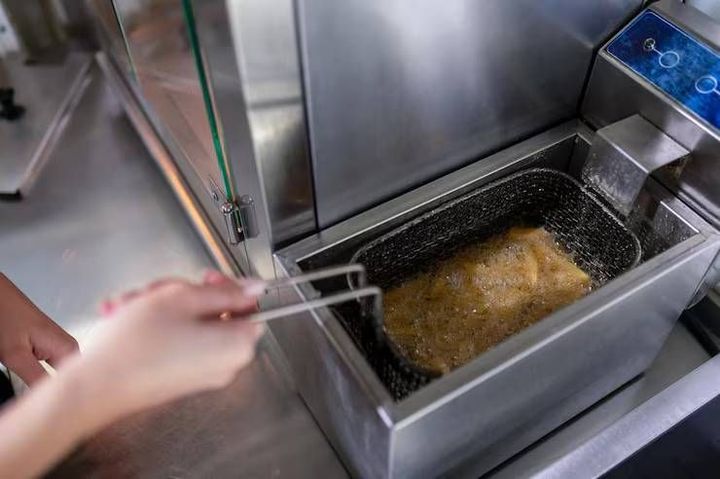
Snack Frying Machines are food-processing systems designed to cook snack products in heated edible oil or fat. They are used for products such as potato chips, extruded snacks, pellets, tortilla chips, nuts, crackers, fried dough products, and various regional snack foods.
The basic principle is straightforward. Prepared food pieces enter a controlled frying area where heated oil transfers heat to the product. Moisture inside the food turns into steam, while the surface develops the desired texture, color, and flavor characteristics.
Industrial frying systems expand this basic process through controlled temperature, oil circulation, product movement, filtration, and monitoring. The equipment configuration varies according to the snack material, production volume, frying method, and desired product characteristics.
How Snack Frying Works
A typical frying process involves several stages:
Product preparation: Ingredients are mixed, shaped, sliced, extruded, or otherwise prepared.
Feeding: Prepared pieces are transferred into the frying system at a controlled rate.
Frying: Products move through heated oil for a defined period.
Oil circulation: Pumps and heat-transfer systems maintain suitable oil movement and temperature.
Filtration: Food particles can be removed from the frying oil.
Oil management: Oil quality is monitored and managed during operation.
De-oiling: Excess surface oil can be removed through draining, vibration, air movement, or centrifugal equipment.
Cooling: Fried snacks are cooled before seasoning, inspection, or packaging.
The exact sequence depends on the snack being produced.
Where These Machines Are Used
Snack Frying Machines are found in small-scale food-processing facilities, medium-sized production plants, large industrial snack factories, and specialized food-production operations.
They can process different product categories, including:
Potato and vegetable chips
Corn and tortilla snacks
Extruded cereal snacks
Pellet-based snacks
Fried nuts and seeds
Crackers
Fried dough products
Savory coated snacks
Selected meat or seafood snack products
Each product may require different frying temperatures, residence times, oil characteristics, and equipment arrangements.
Importance
Consistent Cooking
One important function of a frying machine is maintaining relatively consistent cooking conditions. Product temperature, oil temperature, residence time, feed rate, and oil movement can all influence the final result.
Industrial systems use temperature sensors, controllers, pumps, conveyors, and other components to maintain process conditions within defined operating ranges.
Managing Oil Conditions
Oil is a central part of the frying process. During repeated heating, oil undergoes physical and chemical changes. Food particles, moisture, oxygen, heat, and repeated frying cycles can influence oil quality.
Modern frying systems can incorporate filtration and oil-management equipment to remove particles and help monitor operating conditions.
FSSAI notes that repeated frying can lead to the formation of Total Polar Compounds and states that food businesses in India must monitor frying-oil quality, with a specified limit of 25 percent for these compounds.
Supporting Large-Scale Production
Continuous frying systems can move products through a frying zone without requiring each batch to be manually loaded and removed.
This approach is particularly relevant when production involves large quantities of similar products and a continuous upstream and downstream process.
Controlling Product Characteristics
Frying conditions influence characteristics such as surface color, crispness, moisture level, texture, and oil uptake.
Different snacks respond differently to the same frying conditions. Therefore, machine settings generally need to be established according to the product formulation and physical characteristics.
Main Machine Components
| Component | Main Function | Typical Role |
|---|---|---|
| Frying tank | Holds heated oil | Cooking |
| Conveyor | Moves product | Continuous processing |
| Heater | Transfers heat to oil | Temperature control |
| Pump | Circulates oil | Oil movement |
| Filter | Removes particles | Oil management |
| Temperature sensor | Measures oil temperature | Process monitoring |
| Control panel | Manages settings | Process control |
| De-oiling unit | Removes surface oil | Product finishing |
| Exhaust system | Handles vapors | Workplace control |
Recent Updates
Continuous Frying Systems
Continuous frying technology remains important for large-scale snack production. Products can enter the fryer at a controlled rate, travel through heated oil, and exit toward subsequent processing stages.
Modern designs can use adjustable conveyor speeds and controlled oil circulation to influence frying time and product movement.
Improved Oil Filtration
Oil filtration has become an important part of industrial frying systems. Fine food particles can accelerate oil degradation when they remain in heated oil for extended periods.
Frying equipment can therefore incorporate filtration systems that continuously or periodically remove suspended particles. The filtration method depends on the product, oil system, and production design.
Automated Temperature Control
Electronic temperature controllers and sensors allow frying systems to monitor oil temperature continuously.
Automatic controls can adjust heating systems according to programmed operating conditions. This can help reduce large temperature fluctuations during production.
Heat-Recovery Technology
Some industrial food-processing systems are being designed with greater attention to energy management. Heat recovery can capture selected thermal energy from exhaust air, heated oil, or other process streams for potential reuse within a facility.
The actual energy savings depend on fryer design, insulation, operating conditions, heat-recovery equipment, and plant configuration.
Digital Monitoring
Modern food-processing equipment can incorporate digital sensors, programmable controllers, data logging, and industrial communication systems.
Operators may monitor variables such as:
Oil temperature
Conveyor speed
Frying time
Oil level
Pump operation
Filter condition
Heating-system status
Production throughput
Connected monitoring can also help identify changes in process conditions that require investigation.
Flexible Production
Snack producers may process several products using related equipment. Modern frying systems can therefore incorporate adjustable conveyor speeds, oil circulation controls, temperature settings, and product-feeding arrangements.
However, changing products can require cleaning, process validation, equipment adjustment, and appropriate food-safety controls.
Focus on Food Safety and Oil Quality
International food-safety principles place considerable importance on hygiene, temperature control, equipment cleanliness, and prevention of contamination. The Codex Alimentarius General Principles of Food Hygiene provides an internationally recognized framework for hygienic food handling and processing.
Food-processing equipment therefore increasingly incorporates hygienic design features, accessible cleaning areas, controlled product flow, and monitoring systems.
Laws or Policies
International Food-Safety Frameworks
Snack-processing facilities operate under the food-safety laws of the countries where their products are produced and distributed. Requirements can cover ingredients, processing conditions, hygiene, packaging, labeling, contaminants, additives, and traceability.
The Codex Alimentarius framework developed by FAO and WHO provides internationally recognized food standards and guidance that can support national food-control systems.
Codex standards do not replace national legislation. Individual countries and regions can apply their own mandatory requirements.
Food Hygiene
Food-processing equipment should be designed and operated in ways that reduce contamination risks. Areas that contact food generally require suitable materials, cleaning procedures, and hygienic handling.
The Codex General Principles of Food Hygiene provides guidance covering hygiene practices and hazard-control approaches throughout food production.
Frying Oil Controls
Oil quality is an important consideration because repeated heating changes the chemical characteristics of edible oils.
Regulatory approaches vary around the world. Some jurisdictions establish specific limits or monitoring requirements, while others rely on broader food-safety rules and industry controls.
For example, FSSAI has established a Total Polar Compounds limit of 25 percent for frying oils and requires food businesses in India to monitor frying-oil quality.
Food-Processing Registration and Compliance
Requirements for operating a food-processing facility vary by country. They may involve food-business registration, manufacturing authorization, hygiene controls, inspection, product standards, environmental requirements, and labeling regulations.
In India, FSSAI states that food businesses must be licensed or registered under the Food Safety and Standards Act framework, with the applicable category depending on the nature and scale of the operation.
Other countries have their own regulatory authorities and registration systems.
Equipment and Workplace Safety
Frying equipment combines high temperatures, moving mechanical components, electrical systems, heated oil, and sometimes pressurized or thermal systems.
Machine design can therefore include guards, emergency-stop controls, temperature monitoring, insulation, access controls, and appropriate ventilation. Applicable machinery and workplace-safety requirements depend on the country and equipment configuration.
Tools and Resources
Temperature Monitoring Instruments
Temperature sensors and digital monitoring systems help measure frying-oil conditions. Accurate measurement is important because oil temperature influences cooking time, product characteristics, and oil degradation.
Oil-Quality Testing
Oil-quality testing instruments can measure selected indicators associated with frying-oil condition. Some facilities also use visual inspection and laboratory analysis.
Testing procedures should follow the requirements applicable to the facility and food category.
Filtration Equipment
Filtration systems remove suspended food particles from frying oil. Designs can include screen filters, paper-based filtration, centrifugal systems, or other specialized arrangements.
The appropriate filtration method depends on particle size, oil characteristics, product type, and fryer design.
Conveyor Systems
Conveyors control product movement through continuous fryers. Their speed influences residence time, which is the period during which the food remains inside the frying zone.
Adjustable conveyor speed can therefore be an important process-control feature.
De-Oiling Equipment
After frying, snacks can retain oil on their surfaces. Mechanical vibration, air systems, centrifugal equipment, or draining arrangements can be used to remove some surface oil before seasoning and packaging.
Cleaning and Sanitation Equipment
Frying systems require regular cleaning to remove food residues and accumulated material. Equipment design can influence how easily operators can access tanks, conveyors, filters, and other components.
FSSAI guidance emphasizes cleaning and sanitation of food-processing equipment and appropriate control of food-processing conditions.
Process-Control Systems
Programmable controllers and digital interfaces can monitor temperature, conveyor movement, heating, pumps, alarms, and other operating variables.
Advanced systems can store process information for quality monitoring and troubleshooting.
FAQs
What are Snack Frying Machines?
Snack Frying Machines are food-processing systems used to cook snack products in heated edible oil or fat. They can be designed for batch or continuous production.
How do Snack Frying Machines work?
Snack Frying Machines feed prepared food into heated oil for a controlled period. Heat transfers from the oil to the product while moisture leaves the food, producing the required texture and cooking characteristics.
What types of snacks can be processed in frying machines?
Depending on the machine configuration, products can include potato chips, corn snacks, extruded products, pellets, nuts, crackers, vegetable snacks, and various fried dough products.
What is the difference between batch and continuous frying?
Batch fryers process a defined quantity of product during each cycle, while continuous fryers continuously move products through the frying zone. Continuous systems are generally associated with larger, consistent production flows.
Why is oil filtration important in Snack Frying Machines?
Oil filtration removes food particles that remain suspended in the frying oil. Managing these particles can support oil-quality control and help maintain consistent processing conditions.
Conclusion
Snack Frying Machines combine heating, oil circulation, product movement, filtration, monitoring, and control technologies to process a wide range of fried foods. Batch and continuous systems can be configured for different production requirements, while modern equipment increasingly incorporates automation, digital monitoring, improved filtration, and energy-management features. Food-safety requirements vary internationally, but hygiene, oil quality, temperature control, equipment cleanliness, and appropriate process monitoring remain important considerations. Understanding these components and operating principles provides a practical foundation for evaluating industrial snack-frying technology.