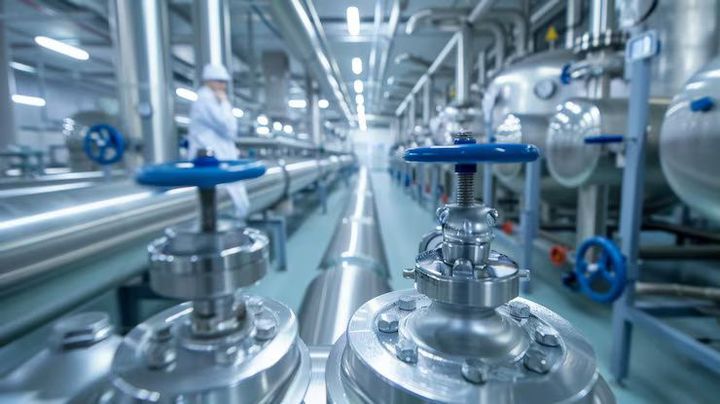
Reverse Osmosis Plants: Guide to Water Purification Processes
Reverse osmosis plants are water-treatment systems designed to reduce dissolved salts, minerals, selected contaminants, and other impurities from water. The process uses pressure to move water through a semipermeable membrane while many dissolved substances remain in the concentrated stream.
RO technology is used in industrial water treatment, drinking-water purification, process-water production, boiler feed-water preparation, wastewater treatment, desalination, food processing, pharmaceutical manufacturing, electronics production, and other applications.
A complete RO plant normally includes pretreatment equipment, high-pressure pumping equipment, membrane vessels, control instruments, chemical-dosing systems where required, product-water storage, and concentrate-management arrangements.
Main Components of an RO Plant
| Component | Main Function |
|---|---|
| Raw Water Tank | Stores incoming water before treatment |
| Feed Pump | Moves water through the pretreatment system |
| Multimedia Filter | Reduces suspended particles and turbidity |
| Activated Carbon Filter | Reduces selected organic compounds, chlorine, and taste-related substances |
| Cartridge Filter | Provides fine particulate protection before membranes |
| Chemical Dosing System | Adds treatment chemicals where required |
| High-Pressure Pump | Provides pressure needed for membrane separation |
| RO Membrane | Separates water from many dissolved substances |
| Membrane Pressure Vessel | Holds the RO membrane elements |
| Flow Meter | Measures feed, permeate, and concentrate flows |
| Pressure Gauge | Monitors operating pressure |
| Conductivity or TDS Meter | Monitors water quality |
| Control Panel | Coordinates pumps, valves, alarms, and operating sequences |
| Product Water Tank | Stores treated water |
| CIP System | Supports membrane cleaning operations |
| Reject or Concentrate System | Manages the concentrated water stream |
How a Reverse Osmosis Plant Works
The process generally begins with raw water entering a storage or feed system. Pretreatment is then used to reduce suspended solids, turbidity, chlorine, hardness-related scaling potential, or other substances that could affect membrane performance.
After pretreatment, a high-pressure pump raises the feed-water pressure. The pressurized water enters the RO membrane vessels.
The membrane allows a portion of the water to pass through while retaining many dissolved salts and other substances. The water that passes through the membrane is called permeate or product water.
The remaining stream contains a higher concentration of retained substances and is known as concentrate, reject, or brine.
The permeate may then pass through additional treatment or enter a storage tank depending on the intended application.
Basic RO Process Flow
Raw Water → Pretreatment → Cartridge Filtration → High-Pressure Pump → RO Membrane → Permeate → Post-Treatment → Product Water
A parallel stream follows:
RO Membrane → Concentrate → Recovery, Reuse, Treatment, or Appropriate Disposal
The exact configuration depends on raw-water quality, required product-water characteristics, plant capacity, recovery target, and application.
Importance
Reverse osmosis plants are important where water quality must be controlled for industrial, commercial, or drinking-water applications.
Industrial Process Water
Many industries require water with controlled levels of dissolved solids and other impurities.
RO systems can be integrated into process-water treatment trains for applications such as:
- Food processing
- Beverage production
- Pharmaceutical manufacturing
- Electronics manufacturing
- Chemical processing
- Textile processing
- Metal finishing
- Boiler feed-water preparation
- Cooling-water treatment
- Laboratory water preparation
Drinking-Water Treatment
RO technology can be incorporated into drinking-water purification systems where the source-water characteristics make membrane treatment appropriate.
BIS's current IS 16240:2023 standard covers RO-based point-of-use water-treatment systems for drinking purposes. The standard specifies requirements including recovery, production rate, TDS reduction, selected chemical parameters, microbiological parameters, pressure testing, and electrical safety.
Desalination
RO is widely used for reducing dissolved salts in saline and brackish water.
Desalination plants can use multiple membrane stages and energy-recovery arrangements to improve overall process performance.
Boiler Feed-Water Preparation
Boilers can be sensitive to dissolved solids and mineral accumulation. RO can form part of a larger water-treatment train designed to produce suitable feed water.
Depending on the application, RO may be followed by processes such as ion exchange, electrodeionization, or other polishing technologies.
Process Consistency
A properly controlled RO system can produce water with relatively stable characteristics even when raw-water composition changes within the design range.
Monitoring feed conductivity, permeate conductivity, pressure, flow, temperature, and recovery helps operators assess plant performance.
Recent Updates
Modern RO technology is increasingly focused on membrane performance, energy efficiency, automation, digital monitoring, water recovery, and improved concentrate management.
Energy-Efficient RO Systems
High-pressure pumping is a major energy-consuming part of many RO plants.
Modern systems can incorporate high-efficiency pumps, variable-speed drives, optimized membrane staging, and energy-recovery devices where appropriate.
Energy-recovery systems can transfer energy from the high-pressure concentrate stream back into the feed-water process, particularly in larger desalination installations.
Advanced Membrane Technology
Membrane development continues to focus on improved permeability, salt rejection, fouling resistance, chemical stability, and longer operating life.
Different membrane materials and configurations can be selected according to feed-water composition and application requirements.
Automated Monitoring
Modern RO plants can continuously monitor:
- Feed-water pressure
- Feed-water flow
- Permeate flow
- Concentrate flow
- Feed conductivity
- Permeate conductivity
- Temperature
- Differential pressure
- Pump status
- Membrane performance
- Tank levels
Digital control systems can use these measurements for alarms, automatic shutdowns, process sequencing, and historical data analysis.
Membrane Fouling Management
Membrane fouling can reduce water production and increase pressure requirements.
Modern systems therefore place greater emphasis on pretreatment, differential-pressure monitoring, cleaning procedures, filtration, scaling control, and operating-condition management.
Higher Water Recovery
Plant designers increasingly examine recovery ratios to reduce the volume of concentrate generated.
However, higher recovery can increase the concentration of dissolved substances in the concentrate stream and may increase scaling or fouling risks. Recovery therefore needs to be balanced against feed-water chemistry and membrane operating limits.
Digital Water Treatment
Industrial RO plants can be connected to supervisory control systems and plant data platforms.
Historical information can help identify changes in membrane performance, pump operation, conductivity, pressure, and water recovery.
This supports condition assessment and process optimization.
Laws or Policies
RO plants in India can be influenced by drinking-water standards, BIS requirements, environmental regulations, groundwater provisions, industrial effluent requirements, and application-specific regulations.
BIS Standard for RO Water-Treatment Systems
BIS currently lists IS 16240:2023 — Reverse Osmosis RO Based Point-of-Use POU Water Treatment System for Drinking Purposes — Specification as the first revision of the earlier 2015 standard. BIS lists the standard as mandatory certification and records a first amendment from 2025.
The standard includes requirements related to water recovery, production rate, TDS reduction, selected chemical and microbiological parameters, pressure testing, leakage, and electrical safety.
Drinking-Water Quality
RO equipment used for drinking-water applications should be evaluated together with applicable drinking-water quality requirements.
BIS testing information for IS 16240 references IS 10500 for several water-quality parameters, including microbiological and chemical testing.
Water and Environmental Regulations
Industrial RO plants generate a concentrate stream containing elevated concentrations of substances retained by the membrane.
The management of this stream depends on the source water, industry, plant location, applicable environmental requirements, and approved discharge or reuse arrangement.
CPCB effluent standards and applicable State Pollution Control Board requirements should therefore be reviewed when an industrial RO plant forms part of a wastewater-treatment or water-reuse system.
Groundwater Considerations
Where groundwater is used as the RO feed source, applicable groundwater-extraction requirements should also be considered.
The regulatory position can depend on the location, category of area, type of use, quantity extracted, and applicable Central or State requirements.
Jal Jeevan Mission
For rural drinking-water programmes, the Jal Jeevan Mission provides operational and water-quality guidance. The Government's current website lists Operational Guidelines of Jal Jeevan Mission 2.0, published in May 2026.
RO should be considered as one treatment option within a broader source-water and water-quality assessment rather than as a universal treatment requirement.
Tools and Resources
RO plant design and operation require water-quality testing, membrane-analysis tools, pressure and flow instruments, control systems, and maintenance equipment.
Water-Quality Testing
Important raw-water parameters can include:
- Total dissolved solids
- Electrical conductivity
- pH
- Turbidity
- Hardness
- Alkalinity
- Chloride
- Sulphate
- Silica
- Iron
- Manganese
- Fluoride
- Nitrate
- Organic matter
- Microbiological parameters
The required testing programme depends on the water source and intended application.
Membrane Performance Monitoring
Important operating indicators include:
- Feed pressure
- Concentrate pressure
- Permeate pressure
- Feed flow
- Permeate flow
- Concentrate flow
- Feed conductivity
- Permeate conductivity
- Temperature
- Differential pressure
- Recovery percentage
Tracking these values over time can help identify changes in membrane performance.
Cleaning Systems
RO plants may include a clean-in-place system for membrane cleaning.
A typical CIP arrangement can contain:
- Cleaning tank
- Cleaning pump
- Cartridge filter
- Chemical-dosing arrangement
- Valves
- Recirculation piping
- Temperature monitoring
- Pressure monitoring
Cleaning chemistry should be selected according to membrane-material compatibility and the type of fouling or scaling present.
Instrumentation
Common instruments include:
- Pressure transmitters
- Flow meters
- Conductivity meters
- TDS meters
- pH meters
- Temperature sensors
- Level sensors
- Differential-pressure sensors
- Online water-quality analysers
Automation Systems
PLC and HMI systems can coordinate:
- Pump operation
- Valve sequencing
- Pretreatment backwash
- High-pressure pump operation
- Membrane flushing
- Tank-level control
- Conductivity alarms
- Pressure alarms
- Automatic shutdowns
- CIP sequences
Design and Analysis Tools
RO plant design may involve membrane projection software, water-analysis spreadsheets, hydraulic calculations, pump-selection tools, and energy-analysis software.
Important design inputs include feed-water chemistry, flow requirement, temperature, membrane type, recovery target, operating pressure, and required product-water quality.
FAQs
1. What is a reverse osmosis plant?
A reverse osmosis plant is a water-treatment system that uses pressure and semipermeable membranes to separate water from many dissolved salts and other contaminants.
2. How does a reverse osmosis plant work?
Raw water first passes through pretreatment and filtration. A high-pressure pump then sends the water through RO membranes, producing a permeate stream and a concentrated reject stream.
3. What are the main components of an RO plant?
Common components include feed pumps, pretreatment filters, cartridge filters, high-pressure pumps, membrane vessels, RO membranes, flow meters, pressure instruments, conductivity meters, control systems, product-water tanks, and concentrate-management equipment.
4. What is RO plant recovery?
RO recovery is the proportion of feed water converted into permeate or product water. The remaining portion becomes the concentrate stream. The appropriate recovery level depends on feed-water chemistry, membrane characteristics, and plant design.
5. What is the difference between RO permeate and RO reject water?
RO permeate is the water that passes through the membrane, while RO reject or concentrate contains a higher proportion of substances retained by the membrane.
Conclusion
Reverse osmosis plants use pressure-driven membrane separation to produce water with reduced concentrations of dissolved salts and selected contaminants. Their performance depends on pretreatment, membrane selection, pressure, recovery, water chemistry, monitoring, and concentrate management. Modern RO systems increasingly use energy-efficient pumping, advanced membranes, automated controls, digital monitoring, and improved water-recovery strategies. In India, applicable BIS standards, drinking-water requirements, environmental provisions, groundwater rules, and project-specific regulations should be reviewed when designing or operating an RO plant.