Pulverizers for Material Size Reduction: Guide to Working Principles and Applications
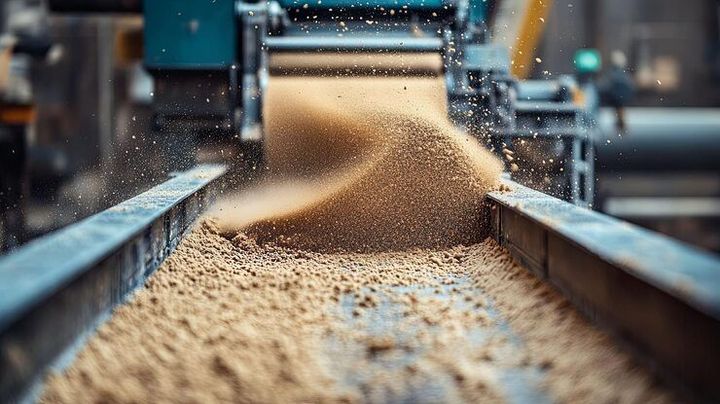
Pulverizers are machines used to reduce solid materials into smaller particles or fine powders. They are widely used in industries where the physical size of a material needs to be reduced before processing, mixing, heating, forming, or further separation.
The term can describe several types of size-reduction equipment. Depending on their design, pulverizers may use impact, compression, shearing, attrition, or a combination of these forces to break down materials.
Materials processed by pulverizers can include minerals, coal, chemicals, plastics, agricultural products, food ingredients, pharmaceutical materials, and various industrial compounds. The appropriate machine depends on the material's hardness, moisture, desired particle size, throughput, and processing conditions.
How Pulverizers Work
A typical pulverizer receives material through an inlet and directs it toward a grinding or crushing mechanism.
Inside the machine, rotating components, grinding surfaces, hammers, blades, rollers, or other mechanisms apply mechanical forces to the material. Larger particles are gradually reduced until they reach a selected size range.
A simplified process includes:
Feeding: Raw material enters through a controlled feed system.
Size reduction: Mechanical forces break, crush, shear, or grind the material.
Particle movement: Reduced material moves through the internal chamber.
Classification: Some systems separate particles according to size.
Discharge: Material meeting the required specification leaves the machine.
Collection: Fine particles may be collected through ducts, filters, cyclones, or other systems.
The exact sequence depends on the pulverizer design and the material being processed.
Main Types of Pulverizers
Hammer pulverizers use rapidly rotating hammers to strike and break material. They are commonly used for materials that can be reduced through impact.
Disc pulverizers use rotating discs or grinding plates to apply pressure and shearing forces. They can be used for selected industrial and agricultural materials.
Roller pulverizers use rollers that apply compression to material passing through a controlled gap. They are widely associated with mineral, chemical, and energy-related applications.
Impact pulverizers reduce material primarily through high-speed impact. They can produce relatively fine particles when appropriately configured.
Cryogenic pulverizers use very low temperatures to make selected materials more brittle before size reduction. This approach can be useful for materials that become difficult to grind because of heat or elasticity.
Laboratory pulverizers are smaller systems designed for sample preparation, testing, research, and quality-control activities.
Importance
Controlling Particle Size
Particle size can influence how a material behaves during later processing. Smaller particles may provide greater surface area, alter mixing behavior, or improve the consistency of certain processes.
For example, a mineral may need to be reduced before separation, while a polymer may require controlled particle dimensions before another manufacturing stage.
Preparing Materials for Further Processing
Pulverization is often an intermediate step rather than the final process. A material may pass through a pulverizer before mixing, extraction, combustion, molding, chemical processing, or classification.
The required particle size therefore depends on what happens next.
Improving Material Uniformity
Reducing large pieces into smaller particles can help create a more consistent material distribution. This can be particularly relevant when a material needs to be mixed with another substance.
However, excessive grinding can create unwanted fines, increase energy use, or affect the characteristics of the processed material.
Supporting Industrial Processing
Pulverizers are used across numerous sectors because many manufacturing processes require controlled particle sizes.
Common applications include:
Mineral and ore processing
Coal preparation
Chemical processing
Plastic recycling
Food processing
Agricultural material preparation
Pharmaceutical manufacturing
Ceramic production
Rubber processing
Powder production
Laboratory sample preparation
Important Operating Factors
| Factor | Meaning | Effect on Operation |
|---|---|---|
| Feed size | Size of incoming material | Determines initial reduction requirement |
| Final particle size | Desired output dimensions | Influences machine configuration |
| Hardness | Resistance to mechanical breakdown | Affects grinding mechanism |
| Moisture | Water content in material | Can influence flow and grinding |
| Throughput | Material processed per unit of time | Affects machine capacity |
| Temperature | Heat generated during operation | Can affect sensitive materials |
| Energy demand | Power required for processing | Influences operating requirements |
| Wear | Material loss from internal parts | Influences maintenance intervals |
Recent Updates
More Precise Particle-Size Control
Modern pulverizing systems increasingly incorporate classification mechanisms that help control the size distribution of output material.
Air classifiers, screens, adjustable grinding gaps, and controlled operating speeds can be combined with the main grinding mechanism. This allows processing systems to target narrower particle-size ranges for specific applications.
Automation and Process Monitoring
Industrial size-reduction equipment is increasingly connected with electronic controls and monitoring systems.
Sensors can track variables such as motor load, temperature, vibration, pressure, feed rate, and operating speed. These measurements can help operators identify changes in machine behavior.
Automated controls can also adjust selected operating parameters according to predefined process conditions.
Energy-Efficient Size Reduction
Energy consumption is an important consideration because mechanical size reduction can require substantial power, particularly when processing hard materials.
Equipment development therefore includes improvements in grinding chamber design, drive systems, classification, feed control, and process integration. The actual energy requirement varies significantly with material characteristics and target particle size.
Digital Monitoring and Predictive Maintenance
Condition-monitoring technologies are increasingly used with industrial grinding and pulverizing equipment.
Vibration sensors, temperature monitoring, motor-current analysis, and other measurements can provide information about equipment condition. Data from these systems can support maintenance planning and help identify abnormal operating patterns.
Improved Dust Management
Fine particles generated during pulverization can become airborne. Modern systems can therefore incorporate enclosed chambers, dust collectors, filters, cyclones, extraction systems, and pressure-control arrangements.
The appropriate approach depends on the material and its hazards. Combustible or hazardous powders require additional engineering controls based on the specific material and operating environment.
Recycling and Circular Material Processing
Pulverizers are increasingly relevant to recycling because many recovered materials must be reduced to controlled sizes before sorting, separation, remanufacturing, or compounding.
Plastic, rubber, construction materials, agricultural residues, and selected industrial waste streams can undergo size reduction as part of larger material-recovery processes.
Advanced Control Technologies
Digital control systems can combine machine measurements with production information to monitor process conditions. In larger industrial plants, pulverizers may be integrated with conveyors, feeders, classifiers, dust-collection systems, and downstream processing equipment.
This creates a more connected material-processing line rather than treating the pulverizer as an isolated machine.
Laws or Policies
International Machinery Safety
Pulverizer installations are subject to machinery-safety requirements that vary by country and application. These requirements commonly address machine guarding, emergency stopping, electrical safety, maintenance access, operator protection, and risk assessment.
In Europe, machinery placed on the market is subject to applicable European machinery legislation and related harmonized standards. Other regions have their own regulatory systems.
ISO Machinery Safety
ISO 12100 provides principles for machinery safety and risk assessment, including hazard identification, risk estimation, risk reduction, and protective measures.
This type of framework can be relevant when designing or integrating pulverizing equipment because hazards can arise from rotating components, stored energy, hot surfaces, electrical systems, and material discharge.
Occupational Safety
Workplace requirements can address exposure to dust, noise, moving machinery, electrical equipment, maintenance activities, and other hazards.
The exact rules depend on the country and industry. Organizations may need to consider occupational-safety authorities, environmental agencies, electrical regulations, and sector-specific requirements.
Dust and Combustible Materials
Some powders can create fire or explosion hazards when dispersed in air. Industries processing combustible dust may therefore need specialized engineering controls, ventilation, housekeeping procedures, ignition-source management, and equipment designed for the relevant hazard.
Standards and regulations can vary according to material properties and jurisdiction. A material's safety data and hazard classification should be considered during equipment selection and plant design.
Environmental Requirements
Pulverizing operations can generate dust, noise, and energy demand. Industrial facilities may therefore be subject to environmental requirements governing emissions, waste handling, noise, and resource consumption.
The requirements depend on the location, material, scale of operation, and surrounding environment.
Tools and Resources
Particle-Size Analysis
Particle-size analyzers help determine the distribution of material leaving a pulverizer. Techniques can include sieving, laser diffraction, image analysis, and other laboratory methods.
The appropriate method depends on particle size, material characteristics, and required measurement precision.
Material Testing
Laboratory testing can evaluate hardness, moisture, abrasiveness, thermal sensitivity, and other characteristics before selecting a size-reduction system.
Testing can help determine whether impact, compression, shear, or another mechanism is appropriate.
Process Monitoring Systems
Sensors and control platforms can monitor temperature, vibration, motor load, pressure, feed rate, and other operating parameters.
These measurements can provide information about equipment performance and process stability.
Dust Collection Systems
Dust collectors, filters, cyclones, and extraction systems can capture particles generated during size reduction.
The system must be selected according to particle characteristics, airflow requirements, material hazards, and applicable workplace and environmental requirements.
Laboratory Pulverizers
Laboratory-scale equipment is used when only small quantities of material need to be prepared for testing or analysis.
These machines can help researchers evaluate how a material responds to different grinding conditions before larger-scale processing is considered.
Maintenance and Inspection Tools
Vibration measurement equipment, thermal cameras, electrical testing instruments, lubrication equipment, and inspection checklists can support equipment maintenance.
Wear components such as hammers, liners, screens, grinding surfaces, bearings, and seals should be inspected according to the equipment design and operating conditions.
FAQs
What are pulverizers used for?
Pulverizers are used to reduce solid materials into smaller particles or powders. Applications include mineral processing, chemical production, recycling, food processing, agriculture, plastics, ceramics, and laboratory work.
How do pulverizers reduce material size?
Pulverizers use mechanical forces such as impact, compression, shear, and attrition. The selected mechanism depends on the material and the required output particle size.
What materials can pulverizers process?
Pulverizers can process many materials, including minerals, coal, plastics, agricultural materials, chemicals, food ingredients, ceramics, and selected industrial materials. The machine must be matched to the material's physical and safety characteristics.
What determines pulverizer particle size?
Particle size can be influenced by feed size, rotor or roller speed, grinding-gap settings, screen dimensions, classifier settings, material properties, and processing conditions.
Are pulverizers used in recycling?
Yes. Pulverizers can reduce selected plastics, rubber, construction materials, and other recovered materials into smaller particles for subsequent sorting, separation, compounding, or processing.
Conclusion
Pulverizers for Material Size Reduction are important machines for reducing solid materials into controlled particle sizes across many industrial sectors. Different designs use impact, compression, shear, or other mechanical forces depending on the material and required output. Modern systems increasingly incorporate automation, particle classification, condition monitoring, dust management, and digital controls. Safe operation requires appropriate machine design, risk assessment, guarding, dust control, maintenance, and compliance with the requirements applicable to the specific country and industry.