Paper Cup Forming Machines: Guide to Production Processes and Practical Insights
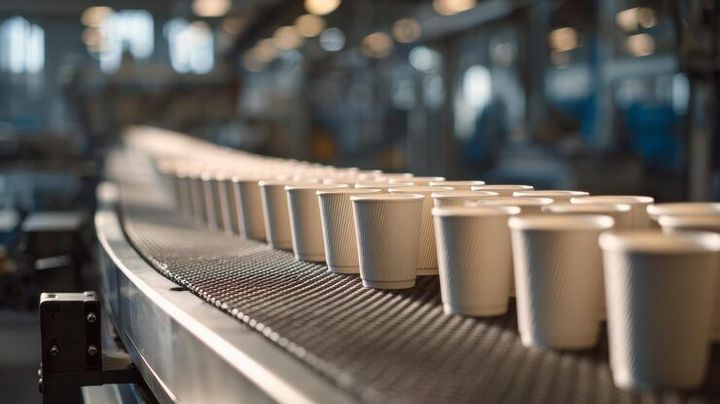
Paper Cup Forming Machines are industrial machines designed to transform prepared paper cup blanks into finished paper cups through a sequence of forming, heating, sealing, bottom attachment, knurling, and rim-curling operations.
The process normally begins with a fan-shaped paper blank. The machine wraps this blank around a forming tool to create the cup wall, joins the overlapping side edge, attaches a circular bottom piece, shapes the lower section, and curls the upper edge into a finished rim. Modern equipment can perform these stages automatically within one continuous production cycle.
Paper cup production is generally divided into upstream preparation and final forming. Paper rolls may first be coated or laminated for liquid resistance, printed with graphics, and cut into cup-wall blanks before entering the forming machine.
How the Production System Works
A typical paper cup production sequence includes several connected stages:
Paper preparation: Suitable food-contact paperboard is prepared with the required coating or barrier.
Printing: Graphics, text, or patterns can be applied to the paper roll.
Blanking: A die-cutting machine converts the printed paper into fan-shaped cup-wall blanks.
Blank feeding: Prepared blanks are automatically supplied to the forming machine.
Side sealing: The blank is wrapped around a forming mandrel and its overlapping edge is joined.
Bottom preparation: Circular bottom pieces are cut from a separate paper roll.
Bottom insertion: The circular piece is positioned inside the lower portion of the cup body.
Heating and knurling: Controlled heat and mechanical pressure form the bottom connection.
Rim curling: The upper edge is rolled into a rounded and rigid rim.
Inspection and discharge: Completed cups can be checked and transferred for counting and packing.
The exact sequence varies according to machine design, cup dimensions, paper structure, coating system, and production requirements.
Main Machine Components
A Paper Cup Forming Machine contains several coordinated mechanical and electrical systems.
Blank-feeding system separates and transfers cup blanks into the forming area.
Forming mandrel provides the shape around which the flat blank is wrapped.
Heating system supplies controlled heat where thermoplastic coatings or other approved bonding systems are used.
Side-sealing mechanism presses the overlapping edges together to create the cup wall.
Bottom-feeding system supplies circular bottom pieces.
Bottom-forming and knurling system folds and presses the lower section to create a secure connection.
Rim-curling mechanism rolls the upper edge into a smooth circular shape.
Drive and control system coordinates movement, timing, temperature, sensors, motors, and machine alarms.
Importance
Producing Consistent Cup Shapes
Paper cup forming requires controlled movement because the cup wall, bottom, and rim must align correctly. Small variations in paper feeding, temperature, pressure, or forming position can affect the final shape.
Automated forming equipment coordinates these operations through mechanical drives, electronic controls, sensors, and programmable settings.
Creating Reliable Seals
A paper cup needs effective side and bottom sealing to hold liquids without leakage. During forming, the machine applies controlled pressure and heat according to the paper and coating system.
The bottom connection is particularly important because it combines the cup wall and bottom disc. Heating, folding, and knurling are used to create the required structure.
Supporting Different Cup Formats
Paper Cup Forming Machines can be configured for different cup diameters, heights, capacities, and paper specifications.
Common applications include:
Hot beverage cups
Cold beverage cups
Water cups
Dessert containers
Food portions
Promotional paper cups
Specialty beverage containers
Changing between formats may require appropriate forming tools, mandrels, bottom dimensions, programming settings, and other machine adjustments.
Improving Production Automation
Automatic forming systems reduce the amount of manual handling required between individual forming operations. Feeding, sealing, bottom forming, curling, and discharge can occur in a coordinated sequence.
This makes it possible to connect forming equipment with upstream printing and punching systems and downstream counting or packing equipment.
Important Production Parameters
| Parameter | Role in Production | Possible Effect |
|---|---|---|
| Paper thickness | Determines forming behavior | Cup rigidity |
| Paper coating | Provides liquid barrier or bonding characteristics | Leakage resistance |
| Cup diameter | Determines forming dimensions | Final capacity |
| Heating temperature | Controls bonding conditions | Seal quality |
| Forming pressure | Shapes and joins components | Structural consistency |
| Knurling | Presses the bottom connection | Bottom sealing |
| Rim curling | Shapes the upper edge | Rim strength |
| Machine speed | Determines production cycle | Output rate |
Recent Updates
Greater Automation
Recent Paper Cup Forming Machines increasingly combine automatic feeding, electronic controls, programmable settings, sensors, and fault monitoring.
Some current machine designs use PLC-based controls and independent motor control to coordinate different forming stations. Touchscreen interfaces can display alarms associated with paper shortages, jams, or other operating conditions.
Servo and Electronic Motion Control
Electronic motion control can provide more precise coordination between different machine stations. Servo-driven mechanisms may be used where accurate positioning and repeatable movement are important.
The technology can help synchronize blank transfer, forming, bottom insertion, curling, and other operations.
Ultrasonic Side Sealing
Some machines use ultrasonic technology as an alternative or supplementary method for joining the cup side seam.
Ultrasonic systems use high-frequency mechanical vibration to generate localized heat at the joining area. The appropriate technology depends on the paper structure, coating, cup design, and machine configuration.
Automated Inspection
Vision-based inspection is becoming more relevant in automated paper cup production. Optical systems can examine selected characteristics such as rim shape, printing defects, dark spots, deformation, or visible sealing problems.
Automated inspection can help identify defective cups without requiring every item to be visually examined manually.
Alternative Barrier Materials
Paper cups require a barrier because ordinary paper absorbs liquid. Conventional products have commonly used polyethylene-based coatings, while other barrier systems include aqueous coatings and bio-based materials such as polylactic acid in selected applications.
Material selection is increasingly connected with food-contact requirements and environmental considerations. A coating suitable for one market or application may not automatically meet the requirements of another.
PFAS Considerations
Food-contact packaging regulations are increasingly focused on substances that can migrate from packaging into food.
In the United States, the FDA announced that PFAS-containing grease-proofing substances were no longer being sold for food-contact use on paper and paperboard packaging, and in January 2025 it determined that 35 related food-contact notifications were no longer effective.
This development illustrates why paper-cup manufacturers need to understand the chemical composition and regulatory status of coatings and other food-contact materials used in their products.
Laws or Policies
Food-Contact Requirements Worldwide
Paper cups are food-contact articles, so their materials and manufacturing processes can be subject to food-safety requirements in the destination market.
Requirements differ between countries and regions. A cup manufactured for one market may require additional documentation, testing, labeling, or material verification before being placed on another market.
European Union
The European Union regulates food-contact materials through a framework that includes Regulation (EC) No 1935/2004. Food-contact materials must not transfer substances into food at levels that could endanger health or cause unacceptable changes to food composition, taste, or smell.
EU requirements also include Good Manufacturing Practice rules under Regulation (EC) No 2023/2006. These rules cover controlled production conditions, quality systems, and suitable starting materials for food-contact articles.
United States
In the United States, materials that contact food can fall under FDA food-contact regulations and authorization systems. Manufacturers need to consider the specific substances, intended use, migration characteristics, and applicable FDA requirements.
The FDA's recent action concerning PFAS grease-proofing substances demonstrates that food-contact material requirements can change as scientific assessments and regulatory decisions develop.
Other Global Markets
Countries in Asia, North America, Europe, the Middle East, Africa, and Latin America can have their own food-contact requirements.
Manufacturers supplying international markets commonly need to examine:
Paper and coating composition
Food-contact declarations
Migration testing
Manufacturing controls
Traceability records
Printing-ink suitability
Adhesive or bonding material requirements
Labeling requirements
Recycling or packaging rules
The applicable requirements should always be checked against the destination country's current regulations.
Tools and Resources
Paper Cup Design Software
Computer-aided design tools can help engineers create cup dimensions, wall profiles, bottom shapes, and production drawings.
Digital models can also help evaluate whether a particular cup geometry is compatible with available forming equipment.
Die-Cutting Systems
Die-cutting equipment converts printed paperboard into fan-shaped sidewall blanks and circular bottom pieces. Accurate cutting is important because blank dimensions directly influence forming performance.
Machine Control Panels
Modern control panels allow operators to monitor machine settings, production conditions, alarms, and selected operating parameters.
Programmable controls can also store or manage production settings for different cup formats.
Vision Inspection Systems
Camera-based inspection systems can examine cups as they leave the forming stations. Depending on the setup, these systems may identify visual defects involving shape, printing, rim formation, or sealing areas.
Quality Testing Equipment
Paper cup production can use several types of testing equipment, including:
Leak testing: Checks whether liquid escapes from the cup.
Dimensional measurement: Verifies cup height, diameter, and other dimensions.
Paper thickness measurement: Checks the consistency of the paperboard.
Seal inspection: Examines side and bottom joining areas.
Compression testing: Evaluates structural behavior under selected loads.
Visual inspection: Identifies surface and forming defects.
Regulatory Resources
For international production, regulatory databases and official food-safety authorities are important resources. The European Commission provides information about food-contact materials and applicable legislation, while the FDA publishes current information about food-contact substances and regulatory actions.
FAQs
What are Paper Cup Forming Machines?
Paper Cup Forming Machines are automated industrial machines that convert prepared paper cup blanks into finished cups through forming, side sealing, bottom attachment, knurling, heating, and rim curling.
How does a Paper Cup Forming Machine work?
A Paper Cup Forming Machine feeds a paper blank, wraps it around a forming tool, joins the side seam, inserts a circular bottom piece, forms and seals the bottom, curls the rim, and then discharges the finished cup.
What materials are used for paper cup production?
Paper cups generally use food-contact paperboard combined with a liquid-resistant barrier or coating. The exact material can vary according to the beverage, cup design, manufacturing method, and regulations of the destination market.
What is knurling in paper cup manufacturing?
Knurling is a mechanical pressing operation used around the lower part of the cup. It helps shape and secure the connection between the cup wall and bottom piece during the forming process.
What quality checks are used for paper cups?
Common checks include dimensions, appearance, rim shape, side and bottom sealing, paper properties, and leak performance. The exact testing program depends on the cup design, material specification, production process, and destination-market requirements.
Conclusion
Paper Cup Forming Machines convert prepared paper blanks into functional cups through coordinated forming, sealing, heating, bottom attachment, knurling, and rim-curling operations. Modern equipment increasingly combines automated controls, electronic motion systems, inspection technology, and flexible production settings. Food-contact material requirements are also becoming an important part of international paper-cup manufacturing, particularly as regulations concerning packaging chemicals and manufacturing controls continue to develop. Understanding the machine stages, material requirements, quality checks, and regional regulations provides a practical foundation for understanding modern paper cup production.