Know When Crane Rental Is the Best Option: A Practical Guide
Crane rental is commonly considered when a construction, infrastructure, industrial, energy, or installation project requires lifting capacity, reach, or mobility that existing equipment cannot provide. Instead of maintaining a crane fleet for occasional work, a project team can arrange access to suitable lifting equipment for a defined period.
The decision depends on more than load weight. Lift height, working radius, ground conditions, access, available space, lifting frequency, project duration, and crane configuration all influence whether crane rental is appropriate.
When Crane Rental Becomes Practical
Crane rental becomes practical when a project has a temporary or specialized lifting requirement. Heavy structural components, generators, transformers, steel assemblies, machinery, concrete elements, and other large loads may require equipment beyond the capability of forklifts or standard material-handling machinery.
Short project phases are another common reason. If a crane is needed for several lifts or a limited construction phase, temporary equipment access can avoid the long-term responsibilities associated with owning and maintaining a crane.
Signs a Project May Need a Crane
Several conditions can indicate that a crane assessment is appropriate:
Heavy or oversized loads: Large machinery, steel structures, transformers, generators, and precast components may require significant lifting capacity.
Difficult lifting locations: Loads may need to pass over structures, equipment, barriers, or other obstacles.
Limited site access: Narrow entrances, uneven terrain, restricted work areas, and confined spaces can affect crane selection.
Short-term specialized work: A project may require substantial lifting capacity only during installation, maintenance, or construction phases.
Existing equipment limitations: Forklifts, telehandlers, hoists, or other machinery may not provide the required capacity, reach, or lifting geometry.
Simple Example
Consider a factory installation where a large piece of production equipment must be positioned inside a building. The load may be too heavy for a forklift, while the available access route may prevent conventional handling equipment from reaching the installation point.
A suitable mobile crane, planned around the building layout and required lifting radius, may provide a practical temporary solution.
Importance
Why Crane Rental Matters
Crane rental can provide access to specialized lifting equipment without requiring permanent ownership. This can be relevant to contractors and facility operators whose lifting requirements change between projects.
The main functional advantage is equipment flexibility. A project can be planned around the crane capacity, boom configuration, working radius, terrain, and height required for a specific lift.
However, rental is not automatically appropriate for every project. A facility that performs frequent repetitive lifting may already have an overhead crane or another permanent lifting system. Smaller loads may also be handled with other material-handling equipment.
Who Uses Crane Rental
Construction contractors may use cranes for structural erection, precast placement, equipment installation, roofing work, and site development. Industrial facilities can require cranes for machinery installation, maintenance, plant modifications, and equipment replacement.
Infrastructure projects can involve bridges, utilities, transportation structures, and large components. Energy and marine projects may require specialized lifting configurations suited to their operating environments.
Main Crane Types
Different crane configurations address different combinations of capacity, mobility, terrain, height, and working radius.
Mobile cranes: These cranes can be transported between locations and are used for many temporary lifting tasks.
Rough-terrain cranes: RT cranes are designed for construction and industrial environments where uneven ground and off-road movement can be important.
All-terrain cranes: These machines combine road mobility with capabilities intended for varied site conditions.
Crawler cranes: Crawler cranes travel on tracks and can be configured for substantial lifting operations, depending on the model.
Tower cranes: These cranes are commonly used where substantial height and working radius are required, particularly on large building projects.
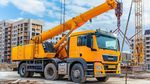
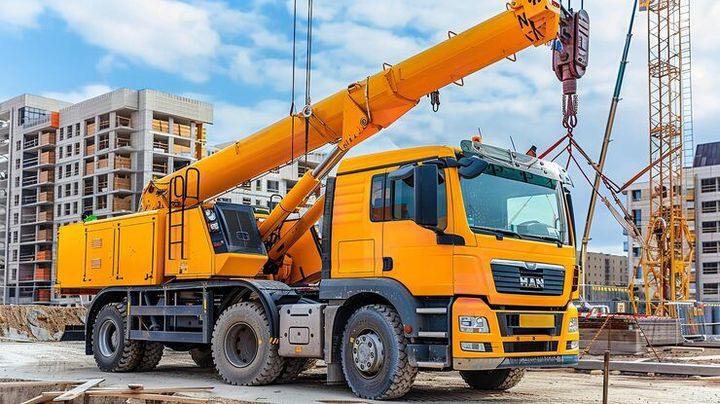
Truck-mounted cranes: These cranes combine a carrier vehicle with a crane and can be useful when transportation between locations is important.
Portable gantry cranes: These systems can support controlled lifting in workshops, facilities, and other environments where a large mobile crane may not be practical.
Comparing Crane Types
| Crane Type | Typical Application | Main Consideration | Mobility |
|---|---|---|---|
| Mobile crane | Temporary construction and installation lifts | Capacity and working radius | High |
| Rough-terrain crane | Uneven construction sites | Ground conditions and access | High on suitable terrain |
| All-terrain crane | Mixed road and site work | Setup and transport requirements | High |
| Crawler crane | Heavy lifting on prepared sites | Ground preparation and transport | Site-dependent |
| Tower crane | High-rise and large building work | Height, radius, and installation | Fixed during operation |
| Truck-mounted crane | Transportable lifting work | Road access and setup | High |
| Portable gantry crane | Controlled indoor lifting | Floor condition and load path | Relocatable |
Factors That Affect the Decision
Load weight is only one part of crane selection. The load's dimensions, center of gravity, lifting points, required hook height, horizontal radius, and final placement position all matter.
Site conditions are equally important. Ground bearing capacity, overhead obstructions, power lines, nearby structures, excavation areas, access roads, and space for outriggers or counterweights can affect whether a particular crane configuration is suitable.
Project duration also matters. A single lift, several days of installation, and a long construction phase can lead to different equipment planning requirements.
Challenges and Limitations
Crane operations require detailed planning because lifting equipment operates under defined capacity and configuration limits. A crane that can lift a particular load at one radius may have a lower rated capacity at a greater radius.
Transportation, setup, dismantling, site preparation, permits, operator requirements, rigging, and standby periods can also affect the overall project budget. Local regulations and site conditions may add further planning requirements.
Recent Updates
Digital Lift Planning
During 2024–2026, digital planning has continued to become more common across construction and industrial lifting activities. Three-dimensional site models can help teams visualize crane positioning, load paths, clearances, access routes, and nearby structures before equipment arrives.
Digital planning can also help teams examine different crane configurations before selecting equipment. This can reduce uncertainty during site preparation and make communication between planners, operators, engineers, and site teams clearer.
Telematics and Equipment Monitoring
Modern cranes can incorporate telematics systems that collect information such as machine location, operating hours, equipment status, and fault notifications. Depending on the manufacturer and model, these systems can support equipment monitoring and maintenance planning.
Digital records can also help project teams understand equipment utilization and coordinate multiple lifting machines across larger projects.
Automation and Operator Assistance
Crane manufacturers continue to develop electronic control systems and operator-assistance features. These can include load monitoring, rated-capacity indicators, anti-collision functions, remote monitoring, and digital displays.
Such technologies support the operator and planning team but do not remove the need for qualified personnel, suitable lift planning, inspection, and compliance with local requirements.
Electrification and Lower-Emission Equipment
Electric and hybrid lifting equipment is developing for applications where reduced local emissions and lower noise are important. Availability varies by crane category, manufacturer, region, and project requirements.
These technologies are particularly relevant to enclosed facilities, urban construction areas, and projects with specific environmental requirements. Their suitability still depends on lifting capacity, operating duration, charging infrastructure, and site conditions.
Laws or Policies
International Frameworks
There is no single worldwide crane-rental law. Requirements depend on the country, jurisdiction, crane type, work environment, and project conditions.
International standards can provide technical frameworks, while national and local authorities establish enforceable requirements. Organizations involved in crane operations should identify the rules applicable to the specific worksite.
ISO Standards
ISO crane standards cover areas such as classification, terminology, design principles, and technical requirements. The applicable standard depends on crane type, design, operating conditions, and intended use.
ISO standards do not automatically replace national legal requirements. Project teams should determine which standards and editions are recognized within their jurisdiction.
United States
In the United States, OSHA regulations include requirements for cranes and derricks used in construction. OSHA 29 CFR Part 1926 Subpart CC covers areas including ground conditions, assembly and disassembly, inspections, power-line safety, signals, operator qualification, tower cranes, and other crane-related activities.
Ground conditions are specifically addressed because crane stability depends on adequate support. Requirements can also apply to work near electrical lines and to keeping personnel clear of suspended loads.
European Union
European workplaces are subject to applicable EU legislation together with national implementation. Machinery-related requirements and workplace lifting rules can depend on the equipment, date of placement on the market, intended use, and national framework.
United Kingdom and Other Regions
The UK has its own workplace lifting requirements, including the Lifting Operations and Lifting Equipment Regulations 1998 for relevant lifting equipment and operations. Other countries have their own legislation, inspection systems, operator requirements, and certification arrangements.
Because requirements vary, a project should verify applicable national and local rules before a crane is mobilized.
Tools and Resources
Load Charts
A crane load chart shows how lifting capacity changes according to configuration, boom length, radius, counterweight, and other conditions. It is one of the core documents used during crane selection and lift planning.
Maximum rated capacity alone does not describe what a crane can lift under every operating condition. The planned radius and actual configuration must be checked against the appropriate load chart.
Lift-Planning Software
Specialized planning software can model crane position, boom geometry, load paths, clearances, and site obstacles. Some systems can import digital site drawings or three-dimensional models.
These tools can be useful for complex lifts where several structures, cranes, or restricted areas must be considered together.
Site Survey Equipment
Surveying tools can help establish crane position, ground levels, building dimensions, overhead clearances, and load placement areas. Accurate site information supports equipment selection and lift planning.
Digital Monitoring Systems
Telematics and crane-monitoring platforms can provide operating data, equipment status, inspection information, and utilization records, depending on the crane and monitoring system.
Standards and Regulatory Resources
Useful resources include OSHA for U.S. construction requirements, ISO for international standards, relevant European institutions for EU requirements, and national workplace-safety or lifting-equipment authorities in other jurisdictions.
Rental Planning Information
When requesting a project-specific crane rental quotation, useful information can include load weight, dimensions, lift height, working radius, site location, access conditions, expected duration, ground conditions, and whether an operator is required.
Providing accurate information helps equipment planners identify a suitable crane configuration for the planned lift.
FAQs
When is crane rental a practical option?
Crane rental is practical when a project needs lifting capacity, reach, or mobility that existing equipment cannot provide, particularly for temporary construction, installation, maintenance, or infrastructure work.
How do I choose a crane rental for a heavy load?
Start with the load weight, dimensions, center of gravity, required lifting height, working radius, ground conditions, and final placement. Then compare these requirements with the crane's load chart and configuration.
What affects crane rental price?
Crane rental price can vary according to crane type, capacity, rental duration, location, transportation, setup, operator requirements, permits, rigging, fuel, and site conditions. A project-specific quotation is generally more useful than a general rate.
Is a rough-terrain crane suitable for every construction site?
No. Rough-terrain cranes are designed for particular terrain and operating conditions, but suitability depends on ground conditions, access, load requirements, working radius, and the manufacturer's specifications.
What should be checked before crane rental?
Check the load data, lift radius, required hook height, site access, ground conditions, overhead hazards, crane configuration, applicable regulations, operator requirements, and the complete project schedule.
Conclusion
Crane rental can be a practical approach when temporary or specialized lifting requirements exceed the capabilities of existing equipment. Selecting a crane requires consideration of load characteristics, working radius, height, terrain, access, duration, and configuration rather than capacity alone. Digital lift planning, telematics, operator-assistance systems, and lower-emission equipment are adding new capabilities to modern crane operations. Applicable safety laws and standards also vary by jurisdiction, making project-specific planning and regulatory review important.