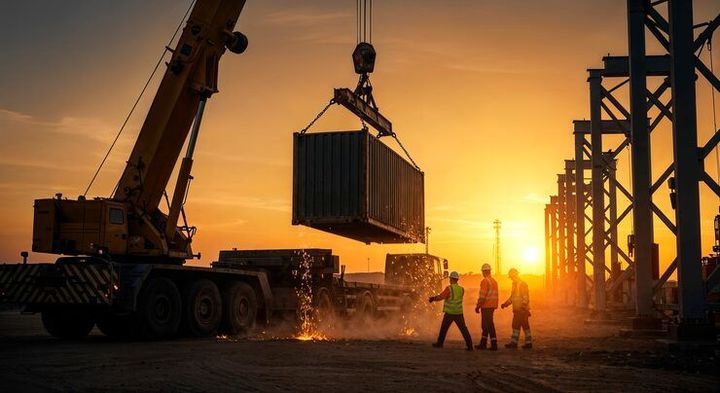
Industrial Lifting Equipment: Guide to Types, Systems, and Applications
Industrial lifting equipment is used to raise, lower, position, and move heavy materials in factories, warehouses, construction sites, ports, power plants, shipyards, mines, and other industrial environments.
These systems range from simple manual hoists and lifting slings to large overhead cranes, gantry cranes, mobile cranes, and automated lifting systems.
The right equipment depends on the load weight, lifting height, movement required, working environment, frequency of operation, and applicable safety requirements. Understanding the main types, components, applications, and standards helps businesses and technical teams plan material-handling operations more effectively.
Context
What Is Industrial Lifting Equipment?
Industrial lifting equipment refers to mechanical or powered equipment designed to move loads vertically or, in many cases, horizontally. A crane, for example, can lift a load and move it across a defined working area. A hoist primarily provides the lifting motion, while accessories such as slings, hooks, shackles, and spreader beams connect the load to the lifting machine.
The equipment may operate manually, electrically, hydraulically, pneumatically, or through a combination of mechanical systems. Modern installations can also include sensors, remote controls, monitoring systems, and automated movement controls.
Main Types of Industrial Lifting Equipment
Industrial lifting equipment can be grouped according to its design and operating environment.
Overhead Cranes
Overhead cranes operate on elevated runways and are widely used inside manufacturing plants, workshops, warehouses, and industrial facilities. A bridge travels along the runway while a trolley moves across the bridge, allowing the hoist to position loads within the working area.
Common configurations include single-girder and double-girder overhead cranes. The selection depends on load requirements, span, lifting height, operating frequency, and building structure.
Gantry Cranes
Gantry cranes use legs or supporting structures that run along ground-level rails or other travel surfaces. They are commonly used in yards, fabrication facilities, ports, shipbuilding areas, and locations where a permanent overhead runway is not practical.
Some gantry cranes can cover very large working areas and may be designed for heavy industrial loads.
Jib Cranes
Jib cranes have a horizontal or angled arm, known as a jib, attached to a vertical mast or another supporting structure. The lifting mechanism can travel along the jib, providing movement within a defined circular or rectangular area.
They are commonly used for workstation lifting, machine loading, maintenance activities, and material movement between nearby production areas.
Mobile Cranes
Mobile cranes are mounted on wheeled or crawler carriers and can be moved between work locations. They are frequently used in construction, infrastructure projects, industrial maintenance, energy facilities, and equipment installation.
Their lifting capacity depends on factors such as boom configuration, radius, ground conditions, counterweight, and operating setup.
Hoists
A hoist is a lifting mechanism used to raise and lower loads. Hoists can be electric, manual, pneumatic, or hydraulic.
Electric chain hoists and wire-rope hoists are common in industrial environments. The appropriate design depends on load capacity, lifting height, operating frequency, speed, and environmental conditions.
Forklifts and Lifting Platforms
Forklifts are designed primarily for lifting and transporting palletized or packaged materials. Scissor lifts and aerial work platforms are instead designed to raise personnel or equipment to elevated working positions under specific operating requirements.
These machines have different safety requirements from cranes and should not be treated as interchangeable equipment.
Main Components of a Lifting System
A typical industrial lifting system can contain several components:
Hoist: Produces the vertical lifting and lowering movement.
Trolley: Carries the hoist across a crane bridge or supporting beam.
Bridge: Provides the main horizontal structure of an overhead crane.
Runway: Supports and guides crane travel.
Hook: Connects the lifting mechanism to suitable load-handling equipment.
Wire rope or chain: Transfers lifting force between the hoist and load.
Sling: Connects a load to the hook or another lifting point.
Shackle: Provides a removable connection between lifting components.
Spreader beam: Distributes lifting forces across multiple attachment points.
Control system: Allows an operator or automated system to control movement.
How Industrial Lifting Systems Work
A basic lifting cycle begins with connecting the load to an approved lifting point or lifting accessory. The operator then raises the load using the hoist or lifting mechanism while controlling vertical and horizontal movement as required.
Before movement, the load weight, center of gravity, attachment method, lifting path, and surrounding hazards need to be considered. Once the load reaches its destination, it is lowered into a stable position and disconnected from the lifting equipment.
For example, an overhead crane inside a manufacturing plant may lift a heavy motor from a delivery area, move it horizontally along the crane runway, position it above a machine foundation, and lower it into place.
Importance
Industrial Manufacturing
Manufacturing facilities use lifting equipment to move machinery, raw materials, components, molds, steel products, engines, and finished assemblies.
Overhead cranes are particularly useful where heavy loads need to move repeatedly through production areas. Their elevated travel path can also keep floor space available for other activities.
Warehousing and Logistics
Warehouses may use forklifts, hoists, stackers, cranes, and lifting platforms to move materials between storage and handling areas.
The equipment selected depends on pallet dimensions, load weight, aisle width, lifting height, and the type of storage system.
Construction and Infrastructure
Construction projects frequently use mobile cranes, tower cranes, crawler cranes, hoists, and lifting accessories. These systems can move structural steel, concrete components, machinery, pipes, and construction materials.
The lifting plan becomes especially important when loads are heavy, suspended at significant heights, or moved near buildings, power lines, roads, or workers.
Ports and Shipbuilding
Ports and shipyards use large cranes and specialized lifting systems to move containers, ship components, steel sections, engines, and other heavy materials.
These environments can require equipment designed for high load cycles, outdoor exposure, wind conditions, corrosion, and large working areas.
Energy and Heavy Industry
Power plants, oil and gas facilities, steel plants, mining operations, and other heavy industries use lifting equipment for equipment installation, maintenance, component replacement, and material handling.
In these environments, equipment may need to operate under heat, dust, moisture, corrosive conditions, or other demanding environmental factors.
Comparison of Industrial Lifting Equipment
| Equipment Type | Main Movement | Common Application | Typical Installation |
|---|---|---|---|
| Overhead crane | Vertical and horizontal | Manufacturing and workshops | Elevated runway |
| Gantry crane | Vertical and horizontal | Yards and fabrication | Ground rails or tracks |
| Jib crane | Vertical and radial | Workstations and maintenance | Floor or wall mounted |
| Mobile crane | Vertical and horizontal | Construction and field work | Wheeled or crawler carrier |
| Electric hoist | Mainly vertical | Workshops and production | Beam or crane mounted |
| Wire-rope hoist | Vertical with trolley travel | Heavy industrial lifting | Crane bridge or structure |
| Forklift | Vertical and short-distance travel | Warehouses and logistics | Mobile floor equipment |
Common Challenges
Industrial lifting systems must handle significant mechanical forces. Incorrect load selection, unsuitable lifting accessories, poor attachment, inadequate inspection, or unstable ground conditions can create serious hazards.
Other challenges include equipment wear, corrosion, electrical faults, limited working space, overhead obstructions, wind, poor visibility, and insufficient operator training.
Load capacity should never be determined only by the equipment's appearance. Rated capacity, load configuration, lifting radius, accessory capacity, and operating conditions all need to be considered.
Recent Updates
Updated Crane Classification Standards
International crane classification continues to develop. ISO 4301-5:2025, published in January 2025, establishes a classification system for bridge and gantry cranes based on service conditions, including the number of operating cycles, load spectrum, and average load movement.
ISO 4301-2:2020 for mobile cranes was reviewed and confirmed in 2026, meaning that edition remains current according to ISO.
These classifications help engineers consider how frequently equipment will operate and the types of loads it will handle rather than evaluating lifting capacity alone.
Sensors and Digital Monitoring
Modern lifting systems increasingly incorporate sensors and digital monitoring. Depending on the equipment, sensors can monitor parameters such as load, operating cycles, motor condition, temperature, position, and movement.
Digital monitoring can help maintenance teams identify abnormal operating conditions and maintain records of equipment usage. Such systems do not replace physical inspection or qualified personnel.
Remote and Automated Operation
Remote controls are increasingly used where operators need improved visibility or separation from certain working areas. Automated cranes can also move loads according to programmed sequences in controlled environments such as warehouses and production facilities.
Automation can reduce some repetitive manual movements, but automated lifting systems still require appropriate risk assessment, guarding, control systems, emergency functions, and human oversight.
Electrification and Energy Management
Electric lifting equipment continues to expand in industrial applications. Electric drives can provide controlled movement and can be integrated with digital monitoring systems.
Battery-powered equipment is also developing in some material-handling applications. The suitability of battery systems depends on operating duration, load requirements, charging infrastructure, environmental conditions, and equipment design.
Laws or Policies
International Standards
There is no single global law covering every type of industrial lifting equipment. Requirements depend on the equipment, workplace, country, industry, and intended application.
ISO 4301-1:2016 provides a general classification approach for cranes based on service conditions such as working cycles, load spectrum, and average displacement.
Other ISO standards address specific crane categories, while national standards and regulations can establish additional requirements for design, inspection, operation, and maintenance.
United States Requirements
In the United States, OSHA regulations address specific categories of lifting equipment. OSHA 1910.179 covers overhead and gantry cranes and includes requirements related to construction, installation, rated-load markings, clearances, inspection, and operation.
Other OSHA rules apply to different lifting machines and industries. Employers therefore need to identify the regulation applicable to the particular equipment and workplace.
European Union Machinery Regulation
The European Union Machinery Regulation (EU) 2023/1230 covers machinery and related products, including lifting accessories, chains, ropes, webbing, and certain safety components. The regulation is scheduled to apply from 20 January 2027, replacing the Machinery Directive framework for products within its scope.
The regulation includes requirements intended to address health and safety during the design and construction of machinery. Manufacturers and organizations placing equipment on the EU market need to consider the applicable conformity requirements.
Local Requirements
Countries outside the EU and United States have their own workplace, electrical, machinery, building, and inspection requirements. Additional rules can apply to lifting accessories, operator qualifications, periodic examinations, load testing, and documentation.
Because requirements differ between jurisdictions, organizations should consult the applicable national authority, workplace regulator, equipment documentation, and recognized standards.
Tools and Resources
Load Calculation Tools
Load charts, rated-capacity tables, lifting calculators, and engineering software can help determine whether equipment is suitable for a planned lift. Mobile crane load charts are particularly important because capacity can change substantially with boom length, radius, configuration, and ground conditions.
Crane Monitoring Systems
Load monitoring equipment can measure suspended loads and provide information to operators. Some systems also record operating cycles and other equipment data.
Inspection Tools
Visual inspection remains important for identifying damaged hooks, chains, wire ropes, slings, bolts, brakes, electrical components, and structural parts. Depending on the equipment, specialized non-destructive testing methods may also be used to identify hidden defects.
Digital Maintenance Platforms
Computerized maintenance systems can record inspections, repairs, operating hours, equipment identification, and scheduled maintenance activities. These records can help organizations maintain traceability and identify recurring equipment issues.
Standards and Regulatory Databases
Useful resources include:
ISO standards databases for international crane and machinery standards.
OSHA regulations for applicable workplaces in the United States.
National workplace safety authorities in individual countries.
European Commission and EUR-Lex resources for EU machinery legislation.
Equipment manufacturer technical manuals and rated-load documentation.
Local inspection and certification requirements for lifting equipment.
FAQs
What is industrial lifting equipment?
Industrial lifting equipment includes cranes, hoists, lifting platforms, forklifts, slings, shackles, spreader beams, and related systems used to raise, lower, position, or move materials and equipment.
What are the main types of industrial lifting equipment?
Major categories include overhead cranes, gantry cranes, jib cranes, mobile cranes, tower cranes, electric hoists, wire-rope hoists, forklifts, and specialized lifting systems. The appropriate type depends on load requirements, movement, environment, and operating conditions.
How is industrial lifting equipment classified?
Cranes can be classified according to factors such as working cycles, load spectrum, average movement, and operating conditions. ISO 4301 standards provide classification approaches for several crane categories.
What safety factors should be considered when using lifting equipment?
Important considerations include rated load, load weight, center of gravity, lifting accessories, equipment condition, ground stability, clearance, weather, operator competence, inspection requirements, and the planned lifting path.
What are the latest developments in industrial lifting equipment?
Recent developments include digital monitoring, sensor-based condition tracking, remote operation, automated material movement, electric drives, and updated crane classification standards. ISO 4301-5:2025 is one recent international development covering bridge and gantry crane classification.
Conclusion
Industrial lifting equipment provides the mechanical capability to move heavy materials and machinery across manufacturing, construction, logistics, energy, mining, ports, and other industrial environments. Overhead cranes, gantry cranes, mobile cranes, jib cranes, hoists, and lifting accessories each serve different operating requirements. Recent developments include digital monitoring, automation, electrification, and updated international classification standards. Safe operation depends on appropriate equipment selection, rated capacities, suitable lifting accessories, inspection, competent operation, and compliance with the regulations applicable to the specific location and industry.