Industrial Exhaust Fans: Explore Ventilation Technology, Airflow, and Facility Applications
Industrial Exhaust Fans are mechanical ventilation devices designed to remove hot, humid, dusty, contaminated, or stale air from industrial and commercial facilities. They help maintain airflow and support suitable indoor working conditions in factories, warehouses, workshops, processing areas, and utility spaces. This article explores exhaust fan technology, airflow principles, system types, applications, recent developments, and installation considerations.
Industrial Exhaust Fans: Explore Ventilation Technology, Airflow, and Facility Applications
Industrial Exhaust Fans are important components of ventilation systems used to move unwanted air out of buildings and enclosed work areas. They are designed to handle larger air volumes and more demanding environments than many residential ventilation products.
Factories, warehouses, workshops, processing facilities, agricultural buildings, utility rooms, and commercial spaces can experience heat, moisture, dust, fumes, odors, or other airborne contaminants. A properly planned exhaust system helps remove unwanted air and supports the movement of fresh replacement air into the facility.
The performance of an exhaust fan depends on several factors, including airflow volume, static pressure, fan design, motor characteristics, duct arrangement, installation location, and the conditions of the environment where the equipment operates.
Context
Industrial exhaust ventilation works by creating a controlled movement of air. The exhaust fan draws air from a designated area and discharges it outside the building or into an appropriate exhaust system.
Replacement air must enter the building through planned openings, air inlets, doors, louvers, or mechanical ventilation equipment. Without adequate replacement air, airflow can become restricted and fan performance may differ from the intended design.
Main Types
Different Industrial Exhaust Fans are used according to building layout, airflow requirements, pressure conditions, and environmental factors.
| Fan Type | Typical Application |
|---|---|
| Axial exhaust fan | Large-volume general ventilation |
| Centrifugal fan | Higher-pressure ducted ventilation |
| Roof exhaust fan | Removal of warm air from building interiors |
| Wall-mounted exhaust fan | Direct exhaust through exterior walls |
| Tube axial fan | Ducted industrial ventilation |
| Mixed-flow fan | Applications requiring balanced airflow and pressure |
| Explosion-resistant configuration | Certain controlled environments with specific hazards |
The appropriate fan type depends on the complete ventilation design rather than airflow volume alone.
Airflow and Pressure
Airflow is commonly expressed as a volume of air moved over a given period. Static pressure represents resistance that the fan must overcome as air passes through ducts, filters, dampers, grilles, bends, and other components.
A fan that moves air effectively in an open installation may behave differently when connected to a long or restrictive duct system.
For this reason, fan selection normally considers both required airflow and system resistance.
Key Components
A typical industrial exhaust fan may contain several important components:
Fan blades or impeller
Electric motor
Fan housing
Shaft or direct-drive arrangement
Bearings
Protective guards
Mounting structure
Dampers or shutters
Electrical controls
Vibration isolation components
The configuration varies according to the fan design and intended environment.
Importance
Industrial Exhaust Fans help facilities manage air movement where natural ventilation alone may not provide sufficient airflow.
Heat Removal
Industrial processes and machinery can generate significant heat. Exhaust fans can remove accumulated warm air and encourage replacement air to enter the building.
This approach is commonly used in workshops, manufacturing areas, warehouses, and other large spaces.
Moisture Management
High humidity can occur in areas involving washing, steam, processing, or temperature changes. Exhaust ventilation can help move moisture-laden air away from selected areas.
The ventilation arrangement must be designed appropriately for the source of moisture and the surrounding building conditions.
Air Contaminant Control
Some industrial activities generate dust, fumes, vapors, smoke, or other airborne substances. Local exhaust ventilation can capture contaminants near their source before they spread through a larger occupied area.
General exhaust fans and dedicated local extraction systems serve different purposes. A general exhaust fan should not automatically be treated as a substitute for a specifically designed contaminant-control system.
Odor Management
Exhaust ventilation can help remove unwanted odors from areas such as processing rooms, waste-handling spaces, agricultural facilities, and utility areas.
The effectiveness depends on fan placement, airflow direction, air replacement, and the characteristics of the source.
Airflow Distribution
The location of exhaust points influences the overall airflow pattern. Proper placement can help move air from cleaner areas toward areas where unwanted heat, moisture, or contaminants are generated.
Poorly positioned exhaust points can result in short-circuiting, stagnant zones, or inefficient airflow.
Recent Updates
From 2024 through 2026, industrial ventilation technology has continued to develop around motor efficiency, variable-speed operation, monitoring, automation, and improved system integration.
Variable-Speed Motors
Variable-frequency drives can allow compatible fan motors to operate at different speeds. Instead of maintaining one fixed airflow under every operating condition, the ventilation system can adjust fan operation according to demand.
This can be useful when building conditions change throughout the day or when different production areas require different ventilation levels.
Smart Monitoring
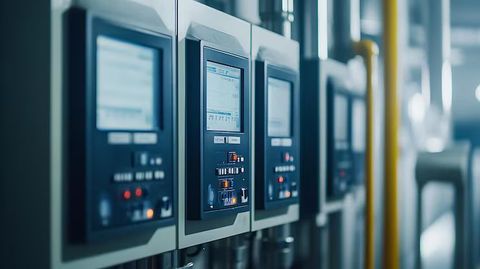
Sensors can monitor parameters such as temperature, pressure, humidity, airflow, motor condition, and vibration. These measurements can be connected to control systems for operational monitoring.
Data from sensors can also help identify changes in fan performance or unusual operating conditions.
Automated Controls
Modern ventilation systems can incorporate programmable controllers, thermostats, pressure controls, timers, occupancy sensors, and building automation platforms.
For example, a fan may operate according to temperature thresholds, production schedules, occupancy levels, or signals from another piece of equipment.
Improved Motor Technology
Industrial fan systems increasingly use electronically controlled and higher-efficiency motor technologies where appropriate. These developments can provide more flexible speed control and support more precise ventilation management.
The suitability of a motor depends on the fan design, electrical supply, operating environment, and control requirements.
Noise and Vibration Management
Fan manufacturers and system designers continue to address acoustic performance and vibration through improved blade designs, housing arrangements, balancing, isolation mounts, and control strategies.
Noise considerations are particularly important when ventilation equipment is located near occupied work areas or neighboring buildings.
Laws or Policies
Industrial ventilation systems may be subject to building, mechanical, electrical, environmental, workplace safety, and fire-related requirements.
The exact requirements depend on the facility, country, industry, materials handled, fan configuration, and surrounding environment.
Workplace Ventilation
Workplace requirements may establish expectations for adequate ventilation and control of airborne hazards. Facilities handling dust, fumes, vapors, or other contaminants may require more specialized ventilation arrangements.
A general exhaust fan should not be selected without considering the specific hazards present in the facility.
Electrical Safety
Motors, switches, control panels, wiring, disconnects, grounding, and protective devices must comply with applicable electrical requirements.
The fan's electrical configuration should match the available power supply and the environmental conditions at the installation location.
Fire and Smoke Considerations
Certain buildings require ventilation equipment to interact with fire and smoke-control systems. Fans, dampers, controls, and shutdown sequences may therefore need to follow the building's fire protection design.
Where flammable materials or potentially hazardous atmospheres are present, equipment selection requires additional consideration.
Environmental Requirements
Facilities that discharge dust, fumes, vapors, or other emissions may be subject to environmental requirements. Exhaust systems may need filtration, treatment, containment, or other controls before air is discharged.
Applicable requirements vary considerably by process and jurisdiction.
Tools and Resources
Selecting, installing, and maintaining Industrial Exhaust Fans involves several supporting tools and resources.
Airflow Measurement
Airflow measurement equipment can be used during commissioning and inspection. Instruments may include anemometers, airflow hoods, differential-pressure instruments, and other appropriate measurement devices.
These tools help verify whether the ventilation system is moving air as intended.
Electrical Testing
Electrical testing may include voltage measurements, current measurements, insulation checks, and motor-related inspections. Appropriate instruments should be selected according to the electrical system and safety requirements.
Vibration Monitoring
Vibration measurements can provide useful information about fan and motor operation. Changes in vibration may indicate imbalance, misalignment, bearing issues, mounting problems, or other mechanical conditions.
Maintenance
Routine maintenance may include:
Cleaning fan blades and housings
Inspecting guards
Checking mounting hardware
Examining belts where used
Inspecting bearings
Checking electrical connections
Reviewing motor operation
Cleaning nearby air inlets
Inspecting dampers
Checking vibration levels
Maintenance frequency depends on operating hours, environmental conditions, dust exposure, fan design, and manufacturer instructions.
System Documentation
Useful documentation includes fan specifications, airflow requirements, electrical diagrams, installation instructions, maintenance schedules, control sequences, and ventilation drawings.
Keeping these records organized can make future inspection, troubleshooting, and system modifications easier.
FAQs
What are Industrial Exhaust Fans?
Industrial Exhaust Fans are ventilation devices designed to remove air from industrial and commercial spaces. They are commonly used to move heat, moisture, odors, dust, fumes, or stale air away from designated areas.
Where are Industrial Exhaust Fans used?
Industrial Exhaust Fans are used in factories, warehouses, workshops, processing facilities, agricultural buildings, utility rooms, commercial buildings, and other areas requiring mechanical air movement.
What determines Industrial Exhaust Fan performance?
Performance depends on airflow capacity, static pressure, fan design, motor characteristics, duct resistance, installation arrangement, and the surrounding operating conditions.
What is the difference between axial and centrifugal exhaust fans?
Axial fans generally move air parallel to the fan shaft and are commonly associated with high-volume ventilation. Centrifugal fans redirect air through the impeller and can be suitable for systems requiring greater pressure against duct resistance.
Can Industrial Exhaust Fans be automatically controlled?
Yes. Industrial Exhaust Fans can be connected to controllers, temperature sensors, pressure sensors, timers, occupancy sensors, variable-frequency drives, and building automation systems when compatible with the equipment and ventilation design.
Conclusion
Industrial Exhaust Fans provide controlled air movement for facilities where heat, moisture, odors, dust, fumes, or stale air need to be removed. Their performance depends on appropriate fan selection, airflow planning, pressure requirements, installation arrangement, and adequate replacement air.
Recent developments include variable-speed operation, sensor-based monitoring, automated controls, improved motor technology, and greater attention to noise and vibration. Proper ventilation design must also consider electrical safety, workplace requirements, fire protection, environmental rules, and the specific conditions of the facility.