Flexographic Printing Machines: Insights Into Flexographic Technology
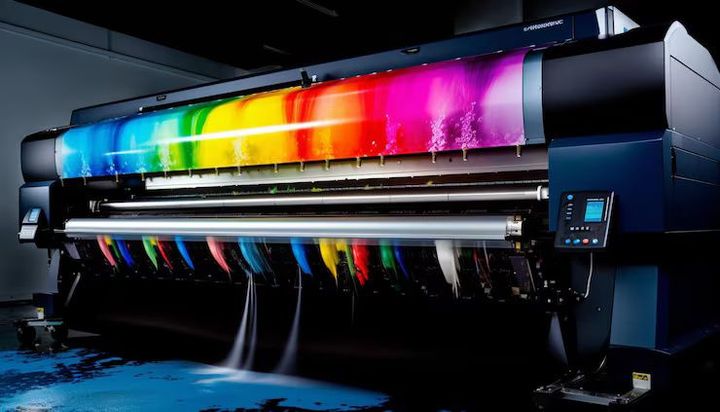
Flexographic printing machines are rotary printing systems that use flexible relief plates to transfer ink onto paper, films, foil, corrugated board, labels, and other substrates. The printing plate carries raised image areas that receive ink and transfer it to the selected material.
Flexography is widely associated with packaging and label production because the process can handle many types of flexible and web-fed materials. Modern machines can combine printing with drying, coating, laminating, slitting, inspection, and rewinding.
A typical flexographic printing line uses anilox rollers, printing cylinders or sleeves, impression cylinders, ink systems, substrate-handling equipment, and control systems. Depending on the machine design, printing units can be arranged in central-impression, inline, or stack configurations.
How Flexographic Printing Machines Work
The basic flexographic process can be divided into several stages:
- Artwork preparation – The required text, graphics, images, and other elements are prepared digitally.
- Plate preparation – A flexible relief plate is prepared from the printing artwork.
- Ink delivery – Ink is transferred to an anilox roller or another metering system.
- Plate inking – The raised areas of the printing plate receive a controlled ink layer.
- Image transfer – The plate transfers the image onto the substrate.
- Drying – Hot-air, UV, or another suitable drying or curing method may be used.
- Additional printing units – Different colours or coatings can be applied through additional units.
- Inspection and finishing – The printed web can be inspected, slit, laminated, coated, or rewound.
The exact configuration depends on the substrate, ink technology, number of colours, printing speed, and finishing requirements.
Main Types of Flexographic Printing Machines
| Machine Type | Configuration | Common Applications |
|---|---|---|
| Central Impression Press | Printing units arranged around a central impression cylinder | Flexible packaging and films |
| Inline Flexographic Press | Printing units arranged sequentially | Labels, packaging, cartons |
| Stack Flexographic Press | Printing units arranged vertically | Bags, films, paper and specialty substrates |
| Narrow-Web Flexographic Press | Designed for relatively narrow material widths | Labels and specialty packaging |
| Wide-Web Flexographic Press | Designed for wider rolls | Flexible packaging and industrial printing |
| CI Flexographic Press | Uses central-drum web transport | Film and flexible packaging |
| Hybrid Flexographic Press | Combines flexography with digital or other processes | Variable and multi-process label work |
Main Components
A flexographic printing machine commonly includes:
- Unwinding unit
- Web-guiding system
- Ink reservoir
- Ink pump or circulation system
- Anilox roller
- Doctor blade system
- Printing cylinder or sleeve
- Flexible printing plate
- Impression cylinder
- Drying or curing unit
- Registration controls
- Inspection system
- Slitting unit
- Rewinding unit
- Control panel
Each component contributes to ink control, image transfer, substrate movement, registration, or finishing.
Importance
Flexographic printing is important because it can print on many substrates while supporting multi-colour production and integrated converting processes.
Flexible Packaging Applications
Flexographic presses are widely used for packaging materials such as films, paper, foil, and laminated structures. The process can print graphics, product information, symbols, and other packaging elements.
Packaging applications can include:
- Flexible pouches
- Wrappers
- Bags
- Paper packaging
- Film packaging
- Labels
- Corrugated packaging
- Industrial packaging materials
The appropriate ink, plate, drying method, and substrate depend on the intended packaging application.
Label Printing
Flexography is suitable for label production because narrow-web presses can combine printing with coating, laminating, die-cutting, and rewinding.
A label line can therefore perform several operations within one connected workflow:
Unwinding → Printing → Drying → Coating → Die Cutting → Slitting → Rewinding
This reduces the need to transfer partially processed web material between separate stages.
Corrugated Board Printing
Flexographic printing is also used for corrugated-board applications. The process can apply graphics and information to corrugated surfaces while accommodating the characteristics of the board.
Printing configuration, ink selection, plate design, impression pressure, and substrate handling all influence the final result.
High-Volume Web Printing
Because flexographic printing is a rotary web process, it can support continuous material movement. This makes it suitable for applications where long rolls of material need repeated graphics or multi-colour designs.
Integrated Converting
Modern flexographic machines can combine printing with processes such as:
- Coating
- Laminating
- Slitting
- Die cutting
- Embossing
- Rewinding
- Inspection
The degree of integration depends on the machine configuration and production requirements.
Recent Updates
Recent developments in flexographic printing have focused on automation, registration control, improved plate technology, efficient ink transfer, inspection, digital workflow integration, and machinery safety.
Automated Registration Control
Registration refers to the accurate alignment of different colours or printing elements. Modern presses can use sensors and cameras to monitor registration and make adjustments during production.
Automated controls can compensate for some changes in web movement, tension, temperature, and other process conditions.
Advanced Anilox and Ink Control
The anilox roller is an important part of flexographic printing because it meters ink before the ink reaches the printing plate.
Modern systems use controlled cell volumes, precision manufacturing, doctor-blade arrangements, and improved ink circulation to manage ink transfer.
Consistent ink metering is important for colour density, print uniformity, and repeatability.
Improved Plate Technology
Photopolymer and digital plate-making technologies have improved the ability to reproduce fine details and small text. Plate characteristics influence dot formation, ink transfer, image sharpness, and print consistency.
Plate preparation has therefore become an important part of the overall flexographic workflow.
Automated Inspection
Camera-based inspection systems can monitor printed webs for:
- Missing print
- Colour variation
- Registration errors
- Spots
- Streaks
- Smudging
- Barcode defects
- Repeated image problems
Inspection systems can compare production output with reference images and provide alerts when predefined variations are detected.
Digital Workflow Integration
Modern flexographic presses can connect prepress software, plate preparation, colour management, press controls, inspection, and production data.
A connected workflow may look like:
Digital Artwork → Prepress → Plate Preparation → Press Setup → Printing → Inspection → Finishing
This allows information to move more efficiently between different stages of production.
Hybrid Printing
Some modern printing lines combine flexographic units with digital printing or other technologies. A hybrid configuration can combine conventional high-volume graphics with digitally variable information.
This approach is particularly relevant to label and packaging applications where a common base design may need changing data, codes, or multiple versions.
Current Indian Machinery Safety Framework
India's machinery-safety framework has been developing through BIS technical regulations and standards. BIS maintains graphic-technology safety standards, including IS/ISO 12643 (Part 4):2023, covering safety requirements for graphic-technology converting equipment and systems. The standard was reviewed in 2025.
BIS also lists IS 16812:2026, based on ISO 14119:2024, addressing interlocking devices associated with machinery guards. These standards are relevant when considering safeguarding and access control on automated printing and converting equipment.
Laws or Policies
Flexographic printing machines are influenced by machinery safety requirements, printing standards, environmental considerations, and regulations associated with the material being printed.
BIS Standards
BIS provides standards for printing machinery and graphic-technology equipment. The relevant standard depends on the specific machine configuration, safety functions, and intended application.
IS/ISO 12643 (Part 4):2023 covers safety requirements for graphic-technology converting equipment and systems and is classified under printing machinery.
BIS's Know Your Standard portal allows users to search Indian Standards by IS number or keyword and review related documents, amendments, testing information, laboratories, and committee details.
Machinery Safety
Flexographic presses contain rotating cylinders, rollers, moving webs, gears, pumps, drying equipment, electrical systems, and automated mechanisms.
Important safety considerations may include:
- Fixed and movable guards
- Emergency-stop systems
- Interlocking devices
- Safe access to printing units
- Electrical protection
- Web-break protection
- Guarding around rollers and cylinders
- Safe maintenance procedures
- Lockout or isolation procedures
The exact requirements depend on machine design and applicable regulations.
Food Packaging
When flexographic printing is used for food packaging, the printing process must be considered together with food-contact packaging requirements.
FSSAI maintains the Food Safety and Standards (Packaging) Regulations, 2018 and related amendments. Its current regulations portal lists the Packaging Regulations and their associated amendments.
FSSAI has also issued directions concerning printing inks used on food packages and references applicable Indian Standards for such inks.
Therefore, the suitability of a flexographic ink depends on the intended packaging arrangement, substrate, printed surface, migration considerations, and applicable food-safety requirements.
Food Labelling
Where flexographic printing is used to produce food labels, the printed information must comply with applicable FSSAI labelling requirements.
FSSAI's current Labelling and Display page lists five amendments to the 2020 regulations, with the latest amendment dated 24 March 2026.
This means packaging artwork and printing workflows should be checked against the latest applicable regulatory requirements rather than relying only on older label templates.
Environmental Considerations
Flexographic printing can involve inks, solvents, cleaning materials, coatings, and other process chemicals depending on the machine configuration.
Water-based, solvent-based, UV-curable, and other ink systems have different process characteristics. Ventilation, emissions control, waste handling, and chemical-management requirements should therefore be evaluated according to the specific process and applicable environmental rules.
Tools and Resources
Several tools help operators and engineers understand, control, and evaluate flexographic printing.
Anilox Roller Inspection
Anilox rollers require regular inspection and cleaning because blocked or damaged cells can affect ink transfer. Microscopic inspection and volume measurement can help evaluate anilox condition.
Colour Measurement Equipment
Spectrophotometers can measure printed colour characteristics and compare output against established targets. They are useful for monitoring consistency between production runs.
Print Registration Systems
Registration sensors and cameras monitor the alignment of different colours. Automated registration systems can make adjustments when deviations are detected.
Plate Inspection
Plate inspection equipment can help identify damage, contamination, incorrect mounting, or defects before the plate is installed on the press.
Web Tension Monitoring
Stable web tension is important for maintaining registration and preventing wrinkles or material movement. Sensors and control systems can monitor and adjust tension during production.
Barcode Verification
Where packaging or labels contain barcodes, verification equipment can assess printed-code readability and quality.
Vision Inspection
Camera-based inspection can identify repeated defects across a moving web. This is especially useful when high volumes of printed material are processed continuously.
Colour Management Software
Colour-management systems help coordinate artwork, proofing, ink characteristics, substrates, and printing conditions. They can support more consistent colour reproduction.
BIS Resources
BIS's Know Your Standard portal provides a searchable reference for Indian Standards. Users can search by product name, machine category, or IS number and review available technical information.
FSSAI Resources
For food packaging and food labels, FSSAI's regulations and notifications should be checked regularly. Its website currently maintains separate sections for Packaging Regulations and Labelling and Display Regulations.
FAQs
What are flexographic printing machines?
Flexographic printing machines are rotary presses that use flexible relief plates to transfer ink onto substrates such as films, paper, foil, labels, and corrugated board.
How does a flexographic printing machine work?
Ink is metered through an ink-delivery system, transferred to a flexible printing plate, and then transferred from the plate onto the moving substrate. Drying or curing takes place between or after printing stages depending on the machine design.
What are the main types of flexographic printing machines?
Common configurations include central-impression, inline, stack, narrow-web, wide-web, and hybrid flexographic presses.
What is an anilox roller used for in flexographic printing?
An anilox roller meters a controlled quantity of ink and transfers it toward the printing plate. Its cell structure and volume influence ink transfer and print consistency.
Where are flexographic printing machines used?
They are widely used for flexible packaging, labels, paper products, corrugated materials, bags, wrappers, films, and other web-fed printing applications.
Conclusion
Flexographic printing machines use flexible relief plates and controlled ink transfer to print on a broad range of packaging and industrial substrates. Their major components include anilox rollers, printing plates, impression cylinders, ink systems, drying units, web-handling equipment, and automated controls. Modern developments emphasize registration control, improved plate and ink technology, automated inspection, digital workflow integration, and hybrid printing. In India, machinery safety standards and application-specific packaging and food-labelling requirements should be considered when planning a flexographic printing process.