Fiber Opening Machines: Guide to Processing, Components, and Key Details
Fiber Opening Machines are textile-processing machines used to loosen compressed fiber material and separate it into smaller tufts or individual fibers. They are commonly used at the beginning of textile spinning, nonwoven production, and fiber-recycling processes.
Raw fibers often arrive in compressed bales or compacted bundles. Before fibers can move through later stages such as cleaning, carding, blending, or web formation, they need to be opened into a more manageable form.
The opening process is therefore an important part of fiber preparation. The machine applies controlled mechanical action to break apart compact material while attempting to limit unnecessary fiber damage.
Fiber opening equipment can process cotton, synthetic fibers, wool, reclaimed textile fibers, and selected blended materials. The exact machine design depends on fiber type, bale density, contamination level, fiber length, and the intended downstream process.
How Fiber Opening Works
The basic process can be understood through several stages:
Feeding: Compressed fiber material enters the machine through a controlled feeding arrangement.
Opening: Rollers, drums, pins, teeth, or other mechanical elements separate compact fiber tufts.
Material transfer: Opened material moves through the machine using mechanical movement or controlled airflow.
Cleaning: Some machines remove selected dust, trash, or foreign particles during opening.
Blending: In integrated systems, fibers from different sources may be combined to create a more consistent feed.
Delivery: The opened material moves toward cleaning, carding, blending, or another downstream process.
The objective is not simply to make fibers smaller. Controlled opening aims to create sufficiently separated fiber material while preserving useful fiber characteristics.
Where Fiber Opening Machines Are Used
Fiber opening equipment is found in several textile sectors.
Cotton spinning uses opening as an early preparation stage before cleaning and carding.
Synthetic fiber processing may involve opening compressed staple fibers before blending and further processing.
Nonwoven manufacturing can use opening and blending systems before carding or web formation.
Textile recycling uses opening and tearing technologies to transform textile waste into loose fiber material suitable for further processing.
Recent recycling research shows that the degree of opening can influence the quality of recovered fiber material and subsequent yarn processing.
Importance
Preparing Fibers for Later Processing
Fiber opening creates a more uniform feed for subsequent textile processes. If compacted fiber material enters later machinery without sufficient opening, downstream processing can become more difficult.
Opening is therefore connected with carding, cleaning, blending, and spinning performance.
Protecting Fiber Quality
Excessive mechanical action can damage fibers or create unwanted short fibers. Insufficient opening, on the other hand, can leave large tufts or compact pieces.
The machine must therefore balance opening intensity with fiber preservation. Settings can depend on fiber characteristics and the required downstream process.
Handling Different Raw Materials
Modern textile production uses a wide variety of raw materials. These can include virgin cotton, man-made staple fibers, wool, recycled cotton, polyester, and mixed textile waste.
Different materials respond differently to mechanical opening. Recycled textiles can be particularly challenging because their fiber length, composition, construction, dyes, finishes, and contamination levels may vary.
Supporting Consistent Processing
Uniform feed material can help later machines operate under more stable conditions. Opening machines may therefore work together with automatic feeding, blending, cleaning, contamination detection, and process-monitoring equipment.
In modern blowroom systems, opening and cleaning functions are increasingly integrated into connected production lines.
Main Machine Components
| Component | Main Function | Typical Role |
|---|---|---|
| Feed system | Moves raw material into the machine | Controlled feeding |
| Feed rollers | Regulate material flow | Uniform feeding |
| Opening roller | Separates compressed tufts | Fiber opening |
| Opening drum | Applies mechanical action | Tuft separation |
| Pins or teeth | Engage fiber material | Mechanical opening |
| Grid or screen | Allows selected particles to separate | Cleaning |
| Air system | Moves lightweight fiber material | Material transport |
| Sensors | Monitor selected conditions | Process control |
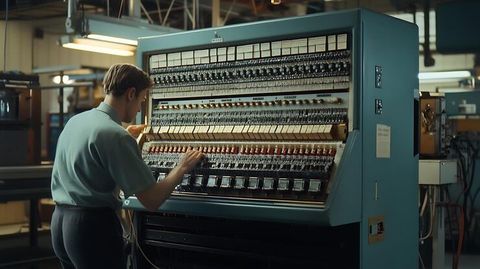
| Control panel | Adjusts machine settings | Operation |
| Delivery system | Transfers processed fibers | Downstream feeding |
Recent Updates
Automation and Process Monitoring
Modern fiber-processing lines increasingly use sensors, electronic controls, automated feeding systems, and monitoring technologies.
These systems can help maintain more consistent material flow and identify changes in operating conditions. Automation can also connect individual machines into a broader blowroom or fiber-preparation line.
The development of networked textile machinery is part of a wider movement toward digitally connected textile factories. Recent industry developments have included machine data platforms designed to track material movement and production information across multiple stages.
Intelligent Contamination Detection
Foreign-material detection has become increasingly important in cotton processing and recycled-fiber preparation.
Recent implementations of automated contamination detection use optical technologies to identify selected foreign materials before they create problems further along the textile process. Developments reported in India include systems designed to detect colored contaminants, plastics, and other unwanted material in blowroom processing.
This type of technology can complement mechanical cleaning and manual inspection.
Fiber Recycling
Textile recycling is creating new requirements for opening machinery. Recycled textiles may contain shorter fibers, blended materials, seams, dyes, coatings, and other elements that behave differently from virgin fibers.
Recent research has examined how different tearing and opening configurations affect fiber length, short-fiber content, waste, neps, and subsequent spinning performance.
Manufacturers are consequently developing systems that combine gentle opening, contaminant removal, classification, and controlled material flow.
Measuring the Degree of Opening
New analytical approaches are also being developed to measure how effectively recycled materials have been opened.
In 2026, Uster introduced a Recycling Opening Index as part of its AFIS 6 recycling module. The measurement is intended to quantify the proportion of opened fibers compared with remaining yarn pieces in recycled material.
Such measurements can provide more detailed information than visual inspection alone.
Energy and Resource Efficiency
Energy consumption is another focus in modern textile machinery development. Manufacturers are working on equipment configurations, airflow management, motor controls, and automated process adjustments intended to improve resource use.
The broader textile-machinery sector is also developing equipment for more efficient fiber processing and recycling. Recent international exhibitions have highlighted automation, energy management, digital controls, and recycling technologies across textile production.
Integration With Downstream Machinery
Opening machines are increasingly designed as part of complete processing systems rather than isolated units.
For example, an opening line may connect with cleaning machines, automatic blending systems, cards, draw frames, and quality-monitoring equipment. Recent developments in short-fiber processing demonstrate how integrated preparation systems can combine carding and drawing stages while managing fiber characteristics.
Laws or Policies
International Textile Machinery Standards
Fiber-processing equipment can involve rotating components, electrical systems, mechanical hazards, dust, noise, and automated movement. Machinery manufacturers and textile plants therefore need to consider applicable occupational safety and machinery requirements in their operating region.
International standards can provide technical references for machine safety, electrical systems, guarding, risk assessment, and equipment design. The specific requirements vary according to the country, machine configuration, workplace, and intended application.
European Requirements
Machinery used within the European market may need to comply with applicable European machinery-safety legislation and conformity requirements. Manufacturers and operators need to identify which legal framework applies to the machine and its installation.
Requirements can include risk assessment, protective measures, technical documentation, instructions, and conformity procedures.
United States Requirements
In the United States, textile and manufacturing workplaces can be subject to Occupational Safety and Health Administration requirements. Employers may need to address machine guarding, electrical hazards, workplace conditions, and other occupational safety considerations according to the equipment and working environment.
India and Other Textile-Producing Regions
Countries with large textile industries can maintain their own machinery, workplace safety, electrical, environmental, and textile-sector requirements.
India's Ministry of Textiles has also identified modernization and domestic development of textile machinery as areas of strategic importance. Its planning documents have highlighted technology gaps in textile machinery and components and initiatives connected with textile-industry modernization.
Dust and Workplace Safety
Fiber processing can generate airborne dust and lint. Proper ventilation, dust extraction, machine guarding, electrical protection, housekeeping, and workplace monitoring can therefore be important considerations.
The appropriate controls depend on the fiber material, machine configuration, plant layout, and applicable occupational safety rules.
Tools and Resources
Fiber Testing Instruments
Fiber-testing equipment can measure characteristics such as fiber length, length distribution, short-fiber content, fineness, maturity, trash, and neps.
These measurements can help textile processors understand how raw material behaves during opening and subsequent processing.
AFIS-Type Fiber Analysis
Advanced fiber analysis systems can provide detailed information about individual fiber characteristics and processing quality. Recent recycling-focused analysis tools also provide measurements specifically related to the degree of opening of recovered material.
Moisture Measurement
Moisture measurement can help monitor fiber conditions before and during processing. Fiber moisture can influence handling, static behavior, opening performance, and downstream processing.
Dust Monitoring
Dust-monitoring equipment can help assess airborne particulate conditions in textile production areas. Appropriate ventilation and extraction systems should be considered alongside monitoring.
Machine Control Systems
Modern control panels and automation platforms can provide information about machine speed, feeding conditions, alarms, production parameters, and selected sensor readings.
Connected control systems can also allow multiple machines within a preparation line to exchange process information.
Manufacturer Technical Documentation
Machine manuals, maintenance instructions, technical specifications, component drawings, and safety documentation are important resources when operating or studying fiber opening equipment.
These materials provide information about machine settings, maintenance intervals, compatible materials, operating limits, and safety procedures.
FAQs
What are Fiber Opening Machines?
Fiber Opening Machines are textile machines that loosen compressed or compacted fiber material into smaller tufts or separated fibers. They are commonly used before cleaning, carding, blending, and other downstream processes.
How do Fiber Opening Machines work?
Fiber Opening Machines generally use feed mechanisms, rollers, drums, pins, teeth, airflow, or combinations of these components to separate compacted fiber material. Machine settings are adjusted according to the material and processing requirements.
What fibers can Fiber Opening Machines process?
Depending on their design, Fiber Opening Machines can process cotton, synthetic staple fibers, wool, recycled fibers, and selected blended materials. Recycling applications may require specialized opening or tearing equipment.
Why is fiber opening important in textile production?
Fiber opening helps prepare compacted raw material for later processes such as cleaning, carding, blending, and spinning. Controlled opening can also influence fiber uniformity and downstream process stability.
Are Fiber Opening Machines used for textile recycling?
Yes. Specialized opening and tearing equipment is increasingly used to transform post-industrial and post-consumer textile materials into loose fiber material. The processing configuration depends on textile construction, fiber composition, contamination, and desired recovered-fiber quality.
Conclusion
Fiber Opening Machines are an important part of textile preparation because they transform compressed fiber material into a form that can move through subsequent processing stages. Their main components include feeding systems, opening rollers or drums, pins or teeth, screens, airflow systems, sensors, and control equipment. Worldwide developments are increasingly focused on automation, contamination detection, recycling, fiber-quality measurement, and connected production systems. Understanding these machines provides useful insight into how raw and recovered fibers are prepared for spinning, nonwoven production, and other textile applications.