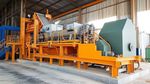
Dough Kneading Machines: Guide to Commercial Baking Technology and Production Processes
Dough kneading machines are commercial baking systems designed to mix and develop dough ingredients consistently. This article covers dough kneader types, components, operating processes, automation, hygiene, production applications, maintenance considerations, and relevant equipment standards.
Dough Kneading Machines: Guide to Commercial Baking Technology and Production Processes
Context
What Are Dough Kneading Machines?
Dough kneading machines are commercial food-processing systems designed to combine ingredients and develop dough to the required consistency. They are widely used in bakeries, food-processing facilities, restaurants, hotels, and industrial baking operations.
Compared with manual kneading, mechanical equipment can provide controlled mixing action, repeatable operating conditions, and the ability to process defined quantities of dough. Machine configuration depends on dough type, batch size, production requirements, ingredient characteristics, and desired processing results.
Main Components of a Dough Kneading Machine
A commercial dough kneader generally includes several mechanical and control components.
| Component | Main Function |
|---|---|
| Mixing Bowl | Holds ingredients during kneading |
| Kneading Tool | Develops and mixes the dough |
| Drive Motor | Provides mechanical power |
| Gearbox | Transfers torque at the required speed |
| Control Panel | Controls machine operation |
| Speed Control | Adjusts kneading speed where applicable |
| Bowl Drive | Rotates the bowl in selected machine designs |
| Safety Guard | Helps protect operators from moving parts |
| Timer | Controls or monitors processing duration |
| Discharge System | Assists removal of finished dough |
| Frame | Supports the machine assembly |
| Sensors | Monitor selected operating conditions |
The exact arrangement differs between spiral, planetary, horizontal, fork, and other dough-kneading systems.
How Dough Kneading Machines Work
The process begins by loading ingredients such as flour, water, yeast, salt, fats, sugars, or other formulation components into the mixing bowl.
The kneading mechanism then rotates through the mixture. Mechanical movement distributes the ingredients and develops the dough structure through controlled mixing and kneading action.
Speed, duration, ingredient temperature, hydration, and batch size can influence the resulting dough. After the required processing stage is completed, the dough is removed for proofing, dividing, shaping, baking, or another downstream operation.
Ingredient Loading → Initial Mixing → Kneading → Dough Development → Process Check → Discharge → Next Baking Stage
Importance
Consistent Dough Preparation
Dough preparation is an important stage in bakery production. Variations in mixing time, speed, temperature, or ingredient distribution can influence dough handling and subsequent processing.
Mechanical kneading equipment helps establish controlled processing conditions for repeated batches.
Commercial Baking Applications
Dough kneading machines are used for a wide range of bakery products.
Applications can include:
Bread
Buns
Rolls
Pizza dough
Pastry products
Flatbreads
Cookies
Dough-based snacks
Specialty bakery products
Frozen dough products
Different formulations can require different mixing actions and machine configurations.
Batch Capacity
Machine capacity is an important consideration in commercial baking. Smaller mixers may process relatively small batches, while industrial systems can handle substantially larger quantities.
The usable dough capacity should be considered together with ingredient density, dough hydration, mixing-tool design, motor power, and manufacturer operating limits.
Dough Characteristics
Different doughs behave differently during mechanical processing. Hydration, gluten development, fat content, sugar concentration, temperature, and ingredient particle characteristics can influence mixing behaviour.
For example, a high-hydration dough can behave differently from a relatively firm dough, requiring different mixing conditions.
Production Integration
Modern bakery production often connects dough kneading equipment with weighing systems, ingredient handling, dough dividing, rounding, proofing, moulding, and baking equipment.
This integration can reduce manual transfers and help coordinate production stages.
Recent Updates
Automated Kneading Controls
Modern dough kneading machines increasingly use digital control systems to manage speed, processing time, operating sequences, and machine status.
Programmable logic controllers and human-machine interfaces can provide operators with control over defined process parameters.
Recipe-based controls can also allow different production settings to be associated with particular dough formulations where the equipment supports such functionality.
Variable-Speed Operation
Variable-speed drives allow the kneading mechanism to operate at different speeds.
A process may use a lower speed during initial ingredient mixing and a higher speed during later dough development, depending on the machine and formulation.
Speed control can also help operators adapt the machine to different dough characteristics.
Automated Ingredient Handling
Commercial bakery lines can connect dough mixers with weighing and dosing equipment.
Automated ingredient handling can help control quantities before ingredients enter the mixing chamber. Integration with production records can also provide information about individual batches.
Digital Monitoring
Sensors and control systems can monitor selected parameters such as:
Mixing speed
Motor load
Dough temperature
Processing time
Bowl position
Equipment status
Alarm conditions
Batch identification
Monitoring can help operators identify unusual operating conditions and maintain production records.
Hygienic Equipment Design
Food-processing equipment increasingly emphasizes cleanable surfaces, suitable food-contact materials, accessible components, and contamination-control considerations.
Dough kneading equipment should be cleaned according to procedures appropriate to the dough formulation, machine design, and food-safety requirements.
Energy Monitoring
Large bakery facilities can monitor the electrical consumption of mixing equipment and other production systems.
Energy data can help identify the contribution of motors, conveyors, proofing systems, ovens, cooling equipment, and auxiliary systems to overall production energy use.
Integrated Bakery Automation
Dough preparation can be connected to downstream production systems through conveyors and automated handling equipment.
A coordinated line may connect ingredient dosing, mixing, dough dividing, rounding, proofing, forming, baking, cooling, and packaging operations.
Laws or Policies
Dough kneading machines used in India can be affected by food-safety requirements, machinery safety provisions, electrical requirements, workplace safety rules, and applicable equipment standards.
Food Safety Requirements
The Food Safety and Standards Authority of India establishes requirements relevant to food manufacturing and processing.
Food businesses should follow applicable provisions under the Food Safety and Standards Act and associated regulations. Equipment used for food production should be maintained in a manner consistent with the hygiene requirements applicable to the facility.
Food-Contact Surfaces
Parts that come into contact with dough should be constructed from materials appropriate for food-processing applications.
Equipment selection should consider corrosion resistance, cleanability, temperature conditions, mechanical durability, and compatibility with the ingredients being processed.
Machinery Safety
Dough kneading machines contain moving components that can create mechanical hazards.
Appropriate guarding, emergency stopping arrangements, safe access, electrical protection, maintenance procedures, and operator training are important considerations.
Electrical Safety
The electrical systems incorporated into industrial bakery equipment should comply with applicable electrical-safety requirements.
Control panels, motors, wiring, protective devices, grounding arrangements, and emergency circuits should be designed and maintained according to applicable requirements.
Standards Verification
Applicable BIS standards and regulatory requirements should be checked according to the specific machine, installation, and food-processing application.
Because standards and regulations can change, current information from FSSAI, BIS, and relevant authorities should be reviewed when establishing or modifying a commercial bakery operation.
Tools and Resources
Dough Kneader Types
Several types of machines are used for dough preparation.
Spiral mixers use a spiral-shaped tool and are commonly associated with bread and pizza dough.
Planetary mixers use a tool that moves around the bowl while rotating. Different attachments can provide mixing, whipping, or other processing functions.
Horizontal mixers use horizontally arranged mixing tools and can be suitable for larger production environments.
Fork mixers use fork-shaped tools and are used for selected dough formulations where controlled mixing action is required.
Measurement Equipment
Production teams can use measurement instruments such as:
Digital thermometers
Weighing systems
Load cells
Moisture measurement equipment
Power meters
Timer systems
Speed sensors
Temperature data loggers
These tools can support process monitoring and production consistency.
Cleaning Equipment
Dough mixers require controlled cleaning because residual flour, dough, fats, sugars, or other ingredients can accumulate on contact surfaces and machine components.
Cleaning procedures should consider the product, machine construction, cleaning agents, sanitation schedule, and applicable food-safety requirements.
Quality Testing
Dough and finished bakery products can be assessed using product-specific methods.
Possible measurements include:
Dough temperature
Dough weight
Dough consistency
Moisture
Texture
Fermentation characteristics
Product dimensions
Finished-product quality
The appropriate tests depend on the formulation and final product.
Maintenance Records
Maintenance documentation can include:
Operating hours
Lubrication records
Inspection dates
Drive-system checks
Belt or coupling inspections
Safety-device checks
Electrical inspections
Cleaning records
Replacement components
Fault history
Regular inspection helps identify equipment conditions that could affect production.
FAQs
What are dough kneading machines?
Dough kneading machines are commercial food-processing systems that mechanically mix and develop dough ingredients. They are used in bakeries, restaurants, hotels, and industrial food-production facilities.
How do dough kneading machines work?
Ingredients are loaded into a mixing bowl, where a rotating kneading tool combines and develops the dough. Controlled speed and processing time help establish the required mixing conditions.
What types of dough kneading machines are used in commercial baking?
Common types include spiral mixers, planetary mixers, horizontal mixers, and fork mixers. The appropriate machine depends on the dough formulation, batch capacity, and production process.
What factors affect dough kneading performance?
Important factors include ingredient quantities, dough hydration, ingredient temperature, mixing speed, processing time, batch size, kneading-tool design, and dough formulation.
Are dough kneading machines used in industrial bakeries?
Yes. Industrial bakeries can use larger dough mixing and kneading systems as part of integrated production lines. These systems may connect with ingredient handling, dividing, proofing, forming, baking, cooling, and other stages.
Conclusion
Dough kneading machines provide controlled mechanical mixing and dough development for commercial and industrial baking operations. Their performance depends on machine design, dough formulation, batch size, speed, processing time, temperature, and ingredient characteristics. Modern equipment increasingly incorporates variable-speed drives, digital controls, automated ingredient handling, process monitoring, hygienic design, and integrated bakery automation. In India, commercial baking operations should consider applicable FSSAI requirements, machinery safety provisions, electrical standards, and relevant equipment requirements.