Cold Storage: Guide to Refrigeration Systems and Practical Insights
Cold storage refers to controlled-temperature facilities used to preserve products that can deteriorate when exposed to heat. These facilities are widely used for food, beverages, pharmaceuticals, chemicals, flowers, agricultural products, and other temperature-sensitive materials.
A cold storage facility uses insulated rooms and refrigeration equipment to remove heat and maintain a selected temperature range. Depending on the product, the facility may operate at chilled, frozen, or deep-freezing temperatures.
The basic process is straightforward: refrigeration equipment removes heat from the storage room, transfers that heat outside the building, and continuously maintains the required internal temperature. Sensors and control systems monitor conditions so that refrigeration equipment can respond when temperatures change.
How a Cold Storage Refrigeration System Works
A typical refrigeration system operates through four major stages:
- Compression: The compressor raises the pressure and temperature of the refrigerant gas.
- Condensation: The condenser releases heat from the refrigerant, causing it to change into a liquid.
- Expansion: An expansion device reduces refrigerant pressure and temperature.
- Evaporation: The cold refrigerant absorbs heat from the storage room through the evaporator.
The refrigerant then returns to the compressor and the cycle continues.
In simple terms, the system does not create cold directly. Instead, it moves heat from inside the storage room to the outside environment.
Main Types of Cold Storage
Cold storage facilities can be classified according to temperature requirements and application.
- Chilled storage: Used for products that need controlled temperatures above freezing, such as many fresh foods and beverages.
- Frozen storage: Maintains temperatures below the freezing point for products such as frozen foods.
- Deep-freeze storage: Uses much lower temperatures for products requiring extended frozen preservation.
- Blast freezing: Rapidly lowers product temperature to help preserve quality before long-term frozen storage.
- Controlled-atmosphere storage: Adjusts gases such as oxygen and carbon dioxide in addition to temperature and humidity, particularly for certain fruits and vegetables.
- Pharmaceutical cold storage: Maintains tightly controlled conditions for medicines, vaccines, biological materials, and other temperature-sensitive products.
Main Components
A cold storage refrigeration system generally contains several connected components.
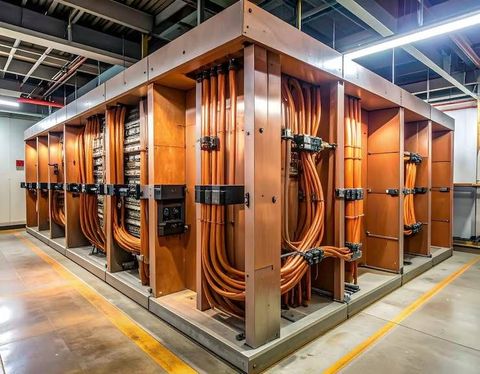
The compressor circulates refrigerant through the system. The condenser releases heat, while the evaporator absorbs heat from the storage space. Expansion valves or other metering devices control refrigerant flow.
The facility itself is also an important part of the system. Insulated wall panels, floors, ceilings, doors, vapor barriers, temperature sensors, lighting, and air circulation equipment all influence refrigeration performance.
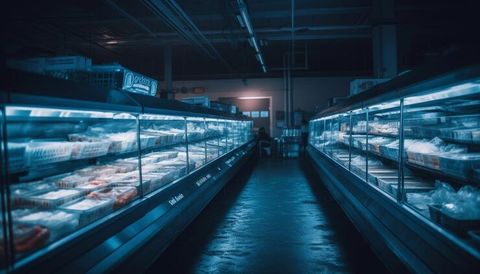
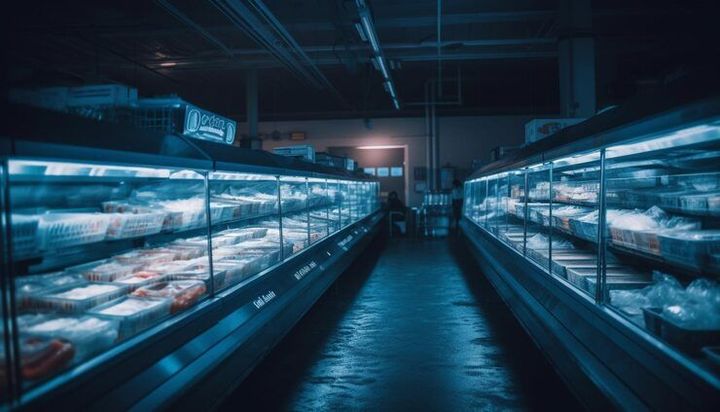
A simple example is a frozen-food warehouse. Products arrive at the facility, are placed in a temperature-controlled room, and remain there until they are moved to refrigerated transport. The refrigeration system continuously removes heat entering through doors, walls, products, lighting, and other sources.
Importance
Why Cold Storage Matters
Cold storage is an important part of modern cold-chain systems. Food, medicines, agricultural products, and other temperature-sensitive goods may need controlled conditions between production and final use.
UNEP describes cold storage warehouses as facilities that hold food after production and before transportation or distribution. These facilities can maintain products in chilled or frozen conditions for periods ranging from hours or days to several months, depending on the product.
Temperature control helps slow biological, chemical, and physical changes that can reduce product quality. For some products, humidity and atmospheric conditions are also important.
Food and Agricultural Applications
Cold storage is widely used for fruits, vegetables, meat, seafood, dairy products, frozen foods, and processed food.
Different products require different temperature and humidity conditions. For example, storing fresh produce at an unsuitable temperature can accelerate deterioration, while freezing products at inappropriate conditions can affect texture and quality.
UNEP notes that refrigeration is used throughout the agri-food sector for raw-material storage, food processing, and finished-product preservation.
Pharmaceutical Applications
Pharmaceutical cold storage requires careful temperature management because some medicines and biological products can be affected by temperature excursions.
Facilities may use continuous monitoring, alarms, backup power, calibrated sensors, and documented operating procedures. The exact requirements depend on the product, manufacturer specifications, and applicable national regulations.
Industrial Applications
Industrial cold storage can support meat processing, seafood processing, dairy production, beverage manufacturing, chemical handling, and other temperature-sensitive processes.
Large facilities often use centralized refrigeration plants with multiple compressors, evaporators, condensers, pumps, controls, and safety systems.
Important Types and Features
| Cold Storage Type | Typical Application | Main Control Requirement | Common Refrigeration Approach |
|---|---|---|---|
| Chilled room | Fresh food and beverages | Temperature and humidity | Direct expansion or centralized system |
| Frozen room | Frozen food | Low temperature | Low-temperature refrigeration |
| Deep-freeze room | Long-term frozen products | Very low temperature | Low-temperature or cascade systems |
| Blast freezer | Rapid product freezing | Fast heat removal | High-capacity refrigeration |
| Produce storage | Fruits and vegetables | Temperature, humidity, gases | Refrigeration with ventilation or atmosphere control |
| Pharmaceutical storage | Temperature-sensitive medicines | Precise monitoring | Controlled refrigeration with alarms |
Energy and Operational Challenges
Cold storage facilities can consume substantial amounts of electricity because refrigeration equipment operates continuously or for extended periods. UNEP identifies energy use as an important consideration for cold-storage operators.
Heat entering through doors, poor insulation, excessive door opening, unsuitable refrigerant selection, dirty heat exchangers, and inefficient equipment can increase refrigeration demand.
Other challenges include refrigerant leakage, equipment failure, temperature fluctuations, ice accumulation, humidity control, and maintaining reliable operation during electricity interruptions.
Recent Updates
Low-GWP Refrigerants
Refrigeration technology is increasingly moving toward refrigerants with lower global warming potential (GWP). GWP is a measure used to compare the climate-warming effect of a substance with carbon dioxide.
UNEP identifies ammonia, carbon dioxide, hydrocarbons, HFOs, and other lower-GWP alternatives as important options for refrigeration applications. Each refrigerant has different characteristics relating to pressure, flammability, toxicity, energy performance, availability, and system design.
The choice of refrigerant therefore requires more than simply selecting the option with the lowest GWP. System design, safety requirements, climate, equipment availability, and local regulations must also be considered.
Ammonia and Carbon Dioxide Systems
Ammonia, commonly identified as R-717, and carbon dioxide, commonly identified as R-744, remain important refrigerants in industrial refrigeration.
The 2025 UNEP Technology and Economic Assessment Panel progress report notes continued use of ammonia, carbon dioxide, and hydrocarbons in industrial refrigeration, along with development of systems designed to reduce refrigerant charge and improve safety.
Cascade systems are another development used in some low-temperature applications. A cascade system uses two refrigeration circuits operating with different refrigerants or temperature levels to achieve conditions that may be difficult for a single circuit.
Digital Monitoring and Controls
Digital controls are becoming increasingly important in cold storage. Modern monitoring systems can record temperature, humidity, equipment status, energy consumption, alarms, and historical operating information.
UNEP also identifies digital tools for monitoring and optimization as part of emerging cooling technologies.
Automated alarms can notify operators when temperatures move outside defined limits. Data logging can also help identify recurring temperature fluctuations or equipment performance changes.
Natural Refrigerant Training
As refrigeration systems increasingly use natural refrigerants, technician competence and safety training remain important. In November 2025, UNEP OzonAction conducted an international training workshop in China focused on cold storage applications and safe handling of natural refrigerants.
This reflects a broader transition in which refrigerant selection, equipment design, safe handling, recovery, and technician competence are considered together.
Laws or Policies
International Refrigerant Framework
Cold storage refrigeration is affected by international environmental agreements as well as national and regional regulations.
The Montreal Protocol has played a major role in reducing substances that damage the ozone layer. UNEP explains that HCFCs are being phased down under the Montreal Protocol while lower-GWP alternatives are being introduced in refrigeration and air-conditioning applications.
The Kigali Amendment also established a global framework for reducing HFC consumption because many HFC refrigerants have high global warming potential.
ISO 5149
ISO 5149 provides an international framework covering safety and environmental requirements for refrigerating systems and heat pumps.
ISO 5149:2014 covers classification and selection criteria, while related parts address design, construction, testing, installation sites, operation, maintenance, and other safety considerations.
In 2026, new editions of ISO 5149 parts are progressing through publication. ISO identifies the new Part 1 and Part 2 editions as replacements for the corresponding 2014 documents.
Personnel Competence
ISO 22712:2023 establishes competence criteria for people carrying out activities associated with refrigerating systems. It covers refrigeration-related activities under the ISO 5149 framework while excluding electrical activities.
National laws can add requirements concerning refrigerant handling, pressure equipment, electrical installations, fire protection, worker safety, building construction, and environmental reporting.
Requirements therefore vary between countries. A cold storage facility should be designed and operated according to the regulations applicable to its location and the products being stored.
Tools and Resources
Temperature Monitoring Systems
Digital temperature sensors and data loggers continuously measure conditions inside storage rooms. Alarm systems can notify operators when temperatures exceed defined limits.
For sensitive products, continuous monitoring can provide a record of storage conditions and help identify temperature excursions.
Refrigeration Control Systems
Programmable controllers can manage compressors, fans, valves, defrost cycles, evaporators, and other equipment. Automated control helps maintain stable operating conditions while adjusting equipment operation according to demand.
Energy Monitoring
Electricity meters and energy-monitoring software can track refrigeration consumption. Comparing energy use with storage temperature, product throughput, and operating schedules can help identify unusual consumption patterns.
Leak Detection Equipment
Refrigerant leak detectors can identify the presence of specific refrigerants. Fixed detection systems may be used in facilities where refrigerant concentration presents a safety concern.
Standards and Technical Resources
Useful technical resources include:
- International Organization for Standardization (ISO)
- International Electrotechnical Commission (IEC)
- United Nations Environment Programme (UNEP)
- Montreal Protocol resources
- National environmental authorities
- Local building and electrical authorities
- Refrigeration equipment technical documentation
These resources can help facility operators understand applicable safety, environmental, and equipment requirements.
FAQs
What is cold storage and how does it work?
Cold storage is a temperature-controlled facility used to preserve products such as food, medicines, beverages, and agricultural goods. Refrigeration equipment removes heat from the storage area and transfers it outside through a refrigeration cycle.
What refrigeration system is used in cold storage?
Cold storage can use several refrigeration configurations, including direct-expansion systems, centralized ammonia systems, carbon dioxide systems, cascade systems, and other refrigerant technologies. The appropriate configuration depends on temperature requirements, facility size, safety considerations, and local regulations.
What temperature is required for cold storage?
There is no single temperature for every cold storage facility. Chilled products generally require temperatures above freezing, while frozen and deep-frozen products require progressively lower temperatures. Product specifications should determine the appropriate storage range.
Why are ammonia and CO2 used in cold storage refrigeration?
Ammonia and carbon dioxide are widely used because they have low global warming potential compared with many traditional high-GWP refrigerants. However, they have different operating pressures, safety characteristics, and equipment requirements, so system design must account for those factors.
How can cold storage energy use be monitored?
Energy meters, refrigeration controllers, temperature sensors, and digital monitoring platforms can record electricity consumption and equipment performance. Combining energy data with temperature and operating information can help identify unusual system behavior.
Conclusion
Cold storage combines insulated facilities, refrigeration equipment, temperature monitoring, controls, and appropriate operating procedures to preserve temperature-sensitive products. Refrigerant selection is evolving toward lower-GWP options such as ammonia, carbon dioxide, hydrocarbons, and other alternatives, while digital monitoring is becoming increasingly important. International frameworks such as the Montreal Protocol and ISO 5149 influence environmental and safety considerations, although specific requirements vary by country. Effective cold storage design therefore depends on product requirements, temperature conditions, equipment selection, energy performance, safety, and applicable regulations.