Cementing Units for Well Construction: Guide to Equipment and Practical Insights
Cementing Units for Well Construction are specialized equipment systems used to mix, condition, measure, and pump cement slurry into oil, gas, geothermal, and other wells. The cement is placed around casing or in selected sections of the well to provide zonal isolation, structural support, and part of the overall well-barrier system.
A cementing unit generally combines high-pressure pumps, mixing equipment, tanks, valves, manifolds, measurement instruments, control systems, and monitoring equipment. The exact configuration depends on the well depth, pressure, temperature, casing design, cement volume, and whether the operation takes place on land, offshore, or in deepwater conditions.
During a typical operation, dry cement and water are combined with selected additives to produce a slurry with specific properties. The slurry is then pumped through the casing and placed in the planned annular space outside the casing. After placement, the cement develops strength and forms a barrier between selected geological formations and the wellbore.
How a Cementing Unit Works
The process can be understood through several connected stages.
Material preparation: Cement, mix water, and chemical additives are prepared according to the planned slurry formulation.
Mixing: Dry cement and liquids are combined to create a consistent slurry.
Density control: Instruments monitor slurry density or solids concentration during mixing.
High-pressure pumping: Positive-displacement pumps move the slurry into the well.
Displacement: Fluids are pumped behind the cement to move it to the intended position.
Placement monitoring: Pressure, rate, volume, density, and other parameters are recorded during the operation.
Pressure testing and evaluation: The cemented system can undergo appropriate testing or evaluation to determine whether the intended barrier has been established.
Modern units can automate several of these functions while allowing operators to monitor the process through electronic control systems.
Main Equipment in a Cementing Unit
Cement mixing system combines cement and liquid components. Continuous mixers and batch mixers are used according to the operation and slurry requirements.
High-pressure pumps generate the pressure required to move cement slurry through surface lines, casing, and into the planned placement zone.
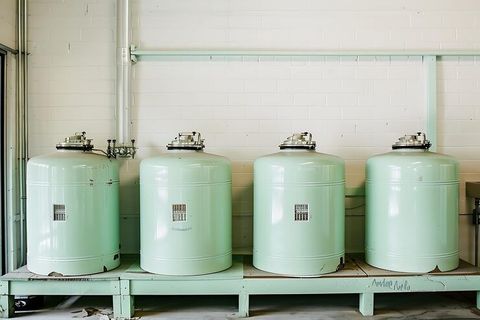
Batch tanks hold measured quantities of slurry or other fluids. Modern systems can use multiple tanks for separate mixing and recirculation.
Centrifugal pumps can transfer water and other fluids, support mixing operations, and circulate slurry through the system.
Liquid additive systems accurately introduce chemical additives into the mix-water stream.
Densitometers and flowmeters measure important slurry and pumping parameters.
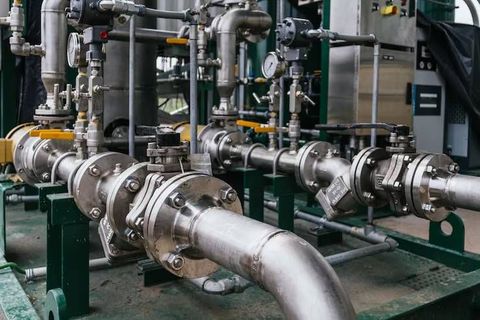
Manifolds and high-pressure lines direct fluids between tanks, pumps, surface piping, and the well.
Control and data-acquisition systems record operating information and allow operators to monitor pressure, rate, density, volume, and other variables.
Importance
Supporting Well Integrity
Cement is an important component of a well's barrier system. It can isolate different formations, prevent unwanted fluid movement, support casing, and help protect groundwater or other formations from communication with the wellbore.
BSEE describes cement as a primary barrier and structural component of a well-barrier envelope in its offshore well-construction guidance. It also notes that inadequate cementing has contributed to well-control incidents.
Maintaining Controlled Cement Placement
A cementing operation requires accurate control of slurry properties and pumping conditions. If density, volume, pressure, or placement differs significantly from the design, the final cement barrier may not perform as intended.
Cementing units therefore combine mechanical equipment with measurement and control systems rather than relying only on pumping capacity.
Supporting Different Well Designs
Land wells, offshore wells, deepwater wells, high-pressure/high-temperature wells, geothermal wells, and other applications can require different cementing configurations.
Deepwater systems may require high pumping rates, high working pressures, advanced mixing equipment, and extensive monitoring. Some modern offshore pumping skids are designed for pressures reaching 15,000 psi, with specialized configurations for high-rate cement placement.
Improving Process Monitoring
Digital measurement systems can provide a continuous record of pumping pressure, slurry density, flow rate, and pumped volume.
Modern intelligent cementing platforms can combine surface measurements with simulations and placement calculations. These capabilities can help operators compare actual conditions with the planned cementing program during an operation.
Major Equipment Categories
| Equipment | Main Function | Typical Application |
|---|---|---|
| Mixing system | Produces cement slurry | Land and offshore wells |
| Batch tanks | Holds measured fluids or slurry | Large-volume operations |
| Triplex pumps | Provides high-pressure pumping | Cement placement |
| Centrifugal pumps | Transfers and circulates fluids | Mixing and fluid handling |
| Additive system | Meters chemical additives | Slurry formulation |
| Densitometer | Measures slurry density | Quality and process control |
| Flowmeter | Measures fluid movement | Pumping monitoring |
| Manifold | Directs fluid flow | High-pressure circulation |
| Control system | Monitors and controls equipment | Automated operations |
Recent Updates
More Automated Cementing Systems
Automation is becoming increasingly important in cementing equipment. Modern systems can combine programmable controls, automated density management, electronic data acquisition, and alarm functions.
Manufacturers are also developing systems that allow operators to monitor cementing operations from separated control areas. Offshore equipment has particularly emphasized remote monitoring because of the challenging environment and limited physical access around high-pressure equipment.
Real-Time Cementing Data
Real-time monitoring is increasingly used to track pumping pressure, slurry density, flow rate, volume, and related variables.
These measurements can provide an operational picture while cement is being pumped. Some newer platforms also incorporate simulation capabilities to compare downhole conditions with the cementing design.
Electric and Rig-Integrated Systems
Electric cementing systems are being integrated more closely with drilling rigs. One recent approach uses an electric mixing skid installed at the rig location to mix and transfer slurry to rig pumps.
Such systems can combine mixing, additive metering, density measurement, and computerized data acquisition in a compact configuration.
High-Pressure and Deepwater Equipment
Deepwater and ultra-deepwater wells create demanding requirements for cementing equipment because of long casing strings, narrow pressure margins, high pumping requirements, and challenging temperature conditions.
Current equipment designs include high-capacity electric or diesel-driven pumps, multiple mixing systems, redundant control systems, solids monitoring, and specialized fluid-handling arrangements.
Development of Cement Standards
International standards for well cement materials continue to evolve. ISO 10426-1:2009 remains current after confirmation in 2022, while ISO/DIS 10426-1 is currently under development as a proposed replacement.
The draft addresses specifications for well-cement materials and is part of ongoing international standardization work for the oil and gas sector.
Data-Based Equipment Monitoring
Cementing equipment increasingly incorporates sensors and digital controls that can capture equipment condition and operating information.
This approach can support equipment diagnostics, process monitoring, historical analysis, and maintenance planning. The growing use of electronic monitoring also increases the importance of reliable instrumentation and control-system design.
Laws or Policies
International Standards
Cementing operations are influenced by international standards developed by organizations such as ISO and the American Petroleum Institute.
API's upstream standards committee for well cementing covers areas including well cements, casing centralizers, and cement float equipment. Its standards portfolio includes specifications and recommended practices covering cement materials, testing, deepwater cement formulations, foamed cement, and centralizer-related equipment.
These standards provide technical references, while individual countries and regulators may establish additional legal requirements.
United States Offshore Requirements
In the United States, offshore oil and gas operations on the Outer Continental Shelf are regulated by the Bureau of Safety and Environmental Enforcement.
BSEE incorporates numerous technical standards into its regulatory framework and specifically identifies cementing among the areas covered by its standards-development activities. Its regulatory framework includes requirements concerning well design, casing, cementing, well control, equipment testing, and documentation.
Well-Barrier Requirements
Cement is commonly considered one component of a broader well-barrier system. Regulations and technical standards can require operators to demonstrate that casing and cementing systems provide appropriate isolation and integrity.
The exact requirements differ according to jurisdiction, well type, offshore or onshore location, and stage of the well lifecycle.
Offshore Environmental Protection
Offshore cementing also operates within broader environmental and well-control frameworks. Regulators may consider the potential consequences of loss of well control, uncontrolled fluid movement, and inadequate barrier performance.
BSEE's regulatory program combines equipment requirements, operational controls, technical standards, inspections, and environmental protection measures for offshore operations.
International Regulatory Differences
There is no single worldwide law governing all cementing operations. Countries establish their own petroleum, environmental, occupational-safety, and well-integrity requirements.
Operators working internationally therefore need to consider local regulations together with applicable ISO, API, national, and project-specific requirements.
Tools and Resources
Cementing Design Software
Specialized software can model slurry behavior, pressure changes, displacement volumes, and placement conditions before an operation begins.
These programs can help engineers evaluate different cement formulations and pumping schedules under expected well conditions.
Density Monitoring Systems
Densitometers provide measurements that help determine whether the cement slurry remains within the planned density range.
Nonradioactive density-monitoring technologies are increasingly incorporated into modern cementing units.
Flow and Pressure Sensors
Flowmeters and pressure sensors provide information about the movement of fluids through the cementing system. Operators can compare these measurements with planned pumping parameters.
Data-Acquisition Systems
Electronic data-acquisition systems collect information from multiple sensors and display it through control interfaces. Historical records can also support post-operation analysis.
Cement Testing Equipment
Laboratory equipment can evaluate cement properties such as thickening time, compressive strength, rheology, fluid loss, and other characteristics relevant to the well environment.
ISO 10426 standards provide internationally recognized references for testing and specification of well-cement materials.
Regulatory and Standards Resources
Useful technical references include ISO publications, API standards, national petroleum regulators, offshore regulatory agencies, and equipment documentation.
For international projects, checking the applicable jurisdiction before planning an operation is important because technical requirements can vary substantially between regions.
FAQs
What are Cementing Units for Well Construction?
Cementing Units for Well Construction are integrated systems used to mix, measure, control, and pump cement slurry into a well during casing, isolation, remedial, or related well-construction operations.
How does a well cementing unit work?
A cementing unit prepares the slurry, controls its density and composition, pumps it at high pressure, and monitors parameters such as pressure, flow rate, volume, and density during placement.
What equipment is included in Cementing Units for Well Construction?
Typical equipment includes mixing systems, batch tanks, high-pressure pumps, centrifugal pumps, additive-metering systems, densitometers, flowmeters, manifolds, valves, high-pressure lines, and electronic control systems.
Why is cementing important in well construction?
Cementing helps provide zonal isolation, casing support, and part of the well-barrier system. Proper cement placement is therefore an important element of well integrity.
What standards apply to well cementing worldwide?
International references include ISO 10426 and API cementing standards. Individual countries can also impose additional regulatory requirements for well construction, safety, environmental protection, and offshore operations.
Conclusion
Cementing Units for Well Construction combine mixing, pumping, measurement, control, and monitoring equipment to place cement slurry accurately within a well. Modern systems are becoming more automated and digitally connected, with increasing use of real-time data, electric equipment, remote monitoring, and high-pressure pumping technology. International standards from ISO and API provide important technical references, while national regulators establish requirements for specific jurisdictions. Understanding the equipment and its role in the cementing process helps explain how cement barriers are created and monitored during modern well construction.