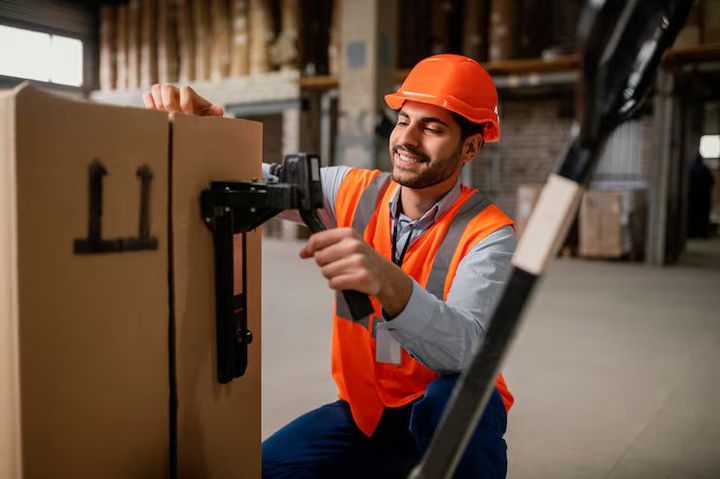
Case Packers: Insights Into Modern Case Packing Technology
Case packers are end-of-line packaging machines that arrange products into shipping cases, cartons, or trays. They are used after primary or secondary packaging stages to organize products into larger transport units.
A case-packing system may handle bottles, cans, jars, pouches, cartons, bags, trays, or other packaged products. Depending on the application, products can be loaded into cases through pick-and-place systems, robotic handling, drop packing, wraparound case formation, or other mechanical arrangements.
Modern case-packing systems can combine conveyors, sensors, servo drives, robotic arms, machine vision, programmable logic controllers (PLCs), and human-machine interfaces (HMIs). Some robotic systems also use adaptable grippers and recipe-based controls to handle different product configurations.
Basic Case Packing Process
A typical case-packing process can include:
- Product infeed
- Product spacing and orientation
- Product grouping
- Case formation or case preparation
- Product loading
- Product arrangement inside the case
- Case closing
- Case sealing
- Code or label verification
- Case discharge
The exact sequence depends on the product, case style, packing pattern, and machine configuration.
Main Types of Case Packers
Pick-and-place case packers use mechanical or robotic arms to transfer products into cases.
Drop case packers arrange products above an open case and lower or release them into the case.
Wraparound case packers form a corrugated blank around the grouped products, creating the shipping case during the packing process.
Top-load case packers place products into cases from above and can be suitable for products that are difficult to load from the side.
Side-load case packers introduce products horizontally into prepared cases.
Robotic case packers use programmable robots and application-specific grippers to handle different product shapes and packing patterns.
Importance
Understanding case-packing technology helps explain how products are grouped, oriented, loaded, and prepared for downstream handling.
Product Infeed
Products normally arrive from an upstream packaging machine through a conveyor.
The infeed system controls product spacing and movement so that the case-packing system receives the required number of products in the correct sequence.
Sensors and encoders can monitor product position and synchronize conveyor movement with the packing cycle.
Product Grouping
Before products enter a case, they often need to be arranged into a predefined pattern.
For example, a case may contain multiple rows and columns of bottles, cartons, cans, or pouches.
Grouping mechanisms can include:
- Lane dividers
- Timing belts
- Servo-driven pushers
- Collating conveyors
- Guide rails
- Robotic positioning
- Pocket conveyors
The required arrangement depends on the case dimensions and product geometry.
Case Preparation
Some systems receive already-formed cases, while others begin with flat corrugated blanks.
A case erector can open flat blanks and prepare them for loading. The case may then move into the packing station through a conveyor.
Wraparound systems can form the case around the grouped products rather than using a separately erected box.
Product Loading
The loading mechanism transfers the grouped products into the case.
Mechanical pushers may be appropriate for consistent product arrangements, while robotic systems can handle more varied configurations.
Robotic case packers can use vacuum, mechanical, pneumatic, or hybrid grippers depending on the product characteristics. Some systems are designed around adaptable grippers and matrix arrangements to accommodate different product shapes and packing patterns.
Case Closing
After loading, the case flaps are folded into their intended positions.
Closing systems can use:
- Tuck-in flaps
- Adhesive
- Pressure-sensitive tape
- Hot-melt adhesive
- Mechanical locking
- Combination systems
The appropriate closure method depends on the case design and packaging requirements.
Case Sealing
A case sealer applies the selected closure method to produce a closed transport case.
For adhesive-based systems, controlled application of adhesive is important. For tape-based systems, tape position and pressure should be controlled to create a consistent closure.
Case Discharge
After sealing, the completed case moves to the next stage.
This can include:
- Case labelling
- Weight verification
- Code inspection
- Palletizing
- Stretch wrapping
- Conveyor transfer
- Warehouse handling
Case packers are therefore often integrated into broader end-of-line packaging systems.
Key Components
Product Infeed Conveyor
The infeed conveyor transfers products from the upstream process.
Its speed, spacing, and product orientation need to remain synchronized with the case-packing cycle.
Collation System
The collation system groups products into the required packing pattern.
Servo-driven systems can provide controlled movement for different product formats.
Case Erector
A case erector converts flat corrugated blanks into open cases where the packaging system requires preformed cases.
It may include blank feeding, opening, flap folding, and bottom sealing stages.
Robotic Arm
Robotic case packers use articulated, gantry, SCARA, or other suitable robotic configurations depending on the application.
The robot's movement is coordinated with product arrival, case position, and packing pattern.
End-of-Arm Tooling
The end-of-arm tool, commonly called EOAT, is the part that directly handles the product.
Possible gripping technologies include:
- Vacuum cups
- Mechanical fingers
- Parallel grippers
- Custom gripping plates
- Magnetic systems for suitable products
- Combination grippers
Gripper design must account for product weight, surface characteristics, dimensions, orientation, and packaging arrangement.
Case Conveyor
Case conveyors move empty and loaded cases between different stations.
They can also provide controlled positioning for loading, sealing, inspection, and palletizing.
Sensors
Sensors can detect:
- Product presence
- Case presence
- Product position
- Case position
- Gripper position
- Case flap position
- Conveyor movement
- Packaging faults
Sensor feedback allows the control system to coordinate different machine operations.
PLC and HMI
A PLC coordinates the sequence of machine functions, while the HMI provides an operator interface.
Common functions include:
- Speed adjustment
- Recipe selection
- Product configuration
- Packing-pattern selection
- Alarm display
- Production counting
- Sensor monitoring
- Machine diagnostics
Some modern systems also incorporate Ethernet connectivity, remote monitoring, recipe functions, and electronic data exchange.
Recent Updates
Modern case-packing technology is developing around robotics, machine vision, flexible automation, digital controls, and integration with complete end-of-line packaging systems.
Robotic Case Packing
Robotic systems are increasingly used where products have multiple orientations, variable formats, or complex loading requirements.
Current robotic case-packing systems can use application-specific grippers and programmable packing patterns. This allows one system to accommodate different product shapes or configurations when the machine is appropriately designed.
Vision-Guided Handling
Machine vision can provide information about product position, orientation, and presence.
Vision-guided robotics can be useful when incoming products are not always presented in an identical position. This technology can connect product detection with robotic picking and case loading.
Flexible Format Management
Modern systems increasingly use stored recipes and electronically controlled adjustments.
Recipe management allows operators to select predefined configurations for different products or case patterns. This can reduce the amount of manual parameter entry during product changes.
Servo Motion
Servo drives can control conveyors, product grouping systems, case movement, and other mechanisms.
Electronic synchronization allows machine movements to be coordinated through the control system rather than relying only on mechanical timing.
Digital Connectivity
Industrial Ethernet and other communication systems can connect case packers with upstream and downstream equipment.
Data can include production counts, alarms, machine status, selected recipes, and process information.
Integration With End-of-Line Automation
Case packers can be integrated with case erectors, case sealers, checkweighers, label systems, palletizers, and stretch-wrapping systems.
This creates a connected end-of-line packaging sequence rather than treating case packing as an isolated operation.
Laws or Policies
Case-packing equipment is influenced by machinery-safety requirements, packaging regulations, and product-specific rules.
Machinery Safety Requirements in India
India's machinery regulatory framework is undergoing significant development. The Machinery and Electrical Equipment Safety (Omnibus Technical Regulation) Order, 2024 includes requirements based on machinery-safety standards, including risk assessment and risk reduction principles. A government update states that compliance for machines and electrical equipment listed in the first schedule is to commence from 1 September 2026, with BIS identified as the certification and enforcement authority.
Because implementation and scope can depend on the exact machinery category and applicable notifications, manufacturers and users should check the current BIS requirements for their specific equipment.
BIS Conformity Assessment
BIS maintains conformity-assessment procedures and machinery-specific information. Its current machinery information includes product-specific guidelines for machinery categories and associated goods.
The BIS framework includes the BIS Act, 2016, BIS Rules, and conformity-assessment regulations, with amendments issued in 2024 and 2026.
Packaging Requirements
The case itself may be subject to requirements based on the packaged product and intended market.
For packaged commodities in India, applicable requirements can include declarations relating to product identity, quantity, manufacturer or packer information, and other prescribed information. Government services information identifies registration provisions for manufacturers and packers under the Legal Metrology framework.
Therefore, case-packing operations should consider both machinery-safety requirements and product-specific packaging regulations.
Tools and Resources
Several tools help evaluate and monitor modern case-packing systems.
Product Inspection
Inspection systems can check:
- Product presence
- Product orientation
- Product count
- Case loading pattern
- Damaged packaging
- Incorrect product combinations
Machine vision can provide automated inspection information before or after case loading.
Case Inspection
Case inspection can include:
- Case dimensions
- Flap position
- Closure condition
- Seal placement
- Case label
- Barcode or code readability
These checks can help identify packaging deviations before cases move further into the distribution process.
Weight Verification
Checkweighing systems can verify the approximate contents of a completed case.
Weight deviations may indicate missing products, incorrect quantities, or packaging variations.
Robot Monitoring
Robotic systems can monitor:
- Robot position
- Cycle status
- Gripper condition
- Product detection
- Safety interlocks
- Fault conditions
Monitoring information can help identify interruptions in the robotic packing sequence.
Machine Documentation
Technical documentation should cover:
- Product dimensions
- Case dimensions
- Packing patterns
- Machine capacity
- Electrical requirements
- Pneumatic requirements
- Gripper specifications
- Safety functions
- Changeover procedures
- Maintenance requirements
Such information helps determine whether a case-packing system is appropriate for a particular production line.
FAQs
What is a case packer?
A case packer is an automated packaging machine that groups products and loads them into shipping cases, cartons, or trays.
How does a case-packing machine work?
A typical case packer receives products, spaces and groups them into a predefined pattern, prepares or receives a case, loads the products, closes or seals the case, and transfers it to the next packaging stage.
What are the main types of case packers?
Common configurations include pick-and-place, robotic, drop, top-load, side-load, and wraparound case packers.
What products can case packers handle?
Depending on the machine configuration, case packers can handle bottles, cans, jars, cartons, pouches, bags, trays, and other packaged products. Modern robotic systems can be configured for multiple product shapes and packing arrangements.
What are the important features of modern case-packing technology?
Important features include automated product grouping, servo motion, robotic handling, adaptable grippers, machine vision, PLC control, recipe management, case inspection, and integration with other end-of-line packaging equipment.
Conclusion
Case packers organize products into larger shipping cases as part of the end-of-line packaging process. Their main functions include product grouping, case preparation, product loading, case closing, sealing, inspection, and discharge. Modern systems increasingly combine robotics, vision, servo motion, digital controls, and flexible recipe management to handle varied packaging requirements. Understanding these technologies provides a useful foundation for evaluating case-packing systems and their role in automated packaging lines.