Bolt Making Machines: Guide to Manufacturing Processes and Production Equipment
Bolt Making Machines are industrial machines used to transform metal wire or rod into finished bolts with specific shapes, dimensions, threads, and mechanical properties. Bolts are threaded fasteners used to join components in construction, machinery, transportation, energy systems, manufacturing equipment, and many other applications.
A typical bolt contains a head, shank, and threaded section. Depending on the design, it may also include features such as a flange, special head shape, reduced shank, or specific thread geometry.
Modern bolt production generally combines several machines rather than relying on one piece of equipment. Cold heading machines can form the bolt head, thread rolling machines can create threads, heat-treatment equipment can modify mechanical properties, and inspection systems can check dimensions and surface conditions.
How Bolt Manufacturing Works
The manufacturing sequence depends on the bolt design, material, diameter, production volume, and required mechanical properties. A simplified process can include:
Material preparation: Steel wire or rod is prepared in the required diameter and condition.
Wire drawing: Material can be drawn through dies when tighter dimensional control or a smaller diameter is required.
Cold heading: A forming machine shapes the head and shank by applying controlled pressure to the metal.
Trimming: Excess material can be removed to produce the required head geometry.
Thread forming: Threads are commonly produced through thread rolling or, for selected applications, thread cutting.
Heat treatment: Selected bolts undergo processes such as hardening and tempering to obtain specified mechanical properties.
Surface treatment: Coatings or other finishing processes may be applied according to the intended environment.
Inspection: Dimensions, threads, hardness, strength-related properties, and surface conditions can be checked.
Packaging and identification: Finished fasteners are separated, counted, marked, and prepared for their next stage of distribution or assembly.
Main Types of Bolt Making Machines
Cold heading machines form bolt blanks by forcing wire into dies. Multi-station machines can perform several forming operations in sequence.
Thread rolling machines create external threads by pressing the bolt blank between hardened dies. The material is displaced rather than removed in the same manner as conventional cutting.
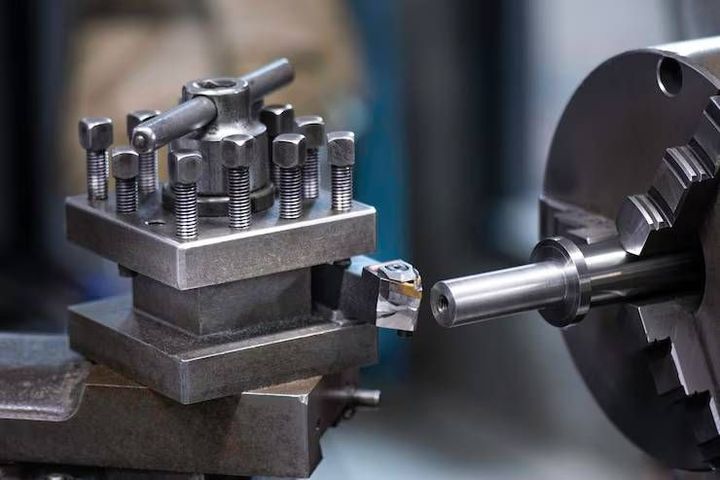
Thread cutting machines use cutting tools to remove material and produce the required thread profile. They can be relevant for certain dimensions, materials, low-volume production, or specialized designs.
Bolt trimming machines refine head geometry after forming when a particular shape or dimensional requirement is needed.
Heat-treatment equipment uses controlled heating and cooling cycles to modify the mechanical characteristics of suitable steel grades.
Inspection machines use gauges, cameras, sensors, and measurement systems to identify dimensional or surface deviations.
Importance
Supporting Industrial Manufacturing
Bolts are fundamental components in mechanical assemblies. They can connect structural elements, machine components, vehicle parts, equipment frames, industrial systems, and many other assemblies.
Because bolts may carry tensile, shear, or clamping loads, their dimensions and material characteristics need to match the intended application.
High-Volume Production
Many industrial applications require large quantities of standardized fasteners. Automated bolt-making equipment can perform repeated forming and threading operations with controlled settings.
Multi-station forming machines can combine several operations into a continuous sequence, reducing the need to manually move each individual blank between forming stages.
Dimensional Consistency
Bolt dimensions can include head diameter, head height, shank diameter, overall length, thread diameter, pitch, and thread length.
Machine setup, tooling condition, material properties, and process control all influence dimensional consistency.
Material Efficiency
Cold forming can shape metal without removing large quantities of material. During cold heading, the material is displaced into the required geometry.
Thread rolling can similarly form threads through material displacement. These characteristics make forming-based processes particularly relevant to high-volume fastener production.
Major Equipment Categories
| Machine or System | Main Function | Typical Process |
|---|---|---|
| Wire drawing machine | Controls wire diameter | Material preparation |
| Cold heading machine | Forms bolt geometry | Head and shank forming |
| Trimming machine | Refines head shape | Secondary forming |
| Thread rolling machine | Forms external threads | Thread production |
| Thread cutting machine | Cuts external threads | Specialized threading |
| Heat-treatment furnace | Modifies material properties | Heat treatment |
| Washing equipment | Removes process residues | Cleaning |
| Coating equipment | Applies selected finishes | Surface treatment |
| Inspection system | Checks dimensions and defects | Quality control |
Recent Updates
Advanced Cold Forming Equipment
Modern Bolt Making Machines increasingly use multiple forming stations, automated feeding systems, electronic controls, and monitoring technologies.
Multi-die and multi-blow equipment can perform several forming operations during a production cycle. Digital controls can help operators monitor selected machine parameters and adjust production settings.
Automated Thread Rolling
Thread rolling equipment has developed toward higher levels of automation and process monitoring. Automated feeding, die positioning, dimensional measurement, and machine monitoring can be integrated into production lines.
Thread rolling remains important because it forms the thread profile through controlled deformation rather than conventional material removal.
In-Line Inspection
Manufacturers increasingly use cameras, laser measurement, sensors, and automated gauging systems for production inspection.
An automated inspection station may check features such as bolt length, head dimensions, thread presence, surface conditions, or visible defects. Measurement systems can then separate parts according to predefined criteria.
Digital Production Monitoring
Industrial production equipment can now connect machine controls with manufacturing data platforms. Information such as production counts, machine status, cycle information, temperature, pressure, and selected alarms can be recorded digitally.
This creates opportunities for condition monitoring and production analysis. Data systems can also help identify unusual machine behavior before it affects a larger quantity of production.
Energy and Material Efficiency
Manufacturers are also examining ways to reduce energy consumption and material waste during forming, heat treatment, washing, and finishing processes.
The exact energy requirements depend on bolt dimensions, material, machine design, production speed, heat-treatment conditions, and the overall manufacturing sequence.
Evolving Fastener Standards
International fastener standards continue to be reviewed and updated. ISO 898-1:2013 remains a current international standard for mechanical and physical properties of specified carbon-steel and alloy-steel bolts, screws, and studs, and ISO states that it was reviewed and confirmed in 2025. ISO also has an approved work item, ISO/AWI 898-1, under development that is intended to replace the existing edition.
ISO's fastener standards portfolio also includes specifications covering thread tolerances, coatings, dimensions, and related characteristics. ISO 965-1 and ISO 965-2 address metric screw-thread tolerances, while ISO 4042 covers electroplated coating systems.
Laws or Policies
International Standards
Bolt production is influenced by international standards covering dimensions, threads, materials, mechanical properties, testing, and surface treatments.
ISO 898-1:2013 specifies mechanical and physical properties for applicable carbon-steel and alloy-steel bolts, screws, and studs. It covers specified property classes and metric thread configurations within its defined scope.
Manufacturers may also work with national standards, customer specifications, industry standards, and application-specific requirements.
Thread Specifications
Thread geometry is an important part of bolt manufacturing. ISO standards cover metric thread dimensions and tolerance classes, helping manufacturers maintain compatibility between mating threaded components.
ISO 965-1 establishes general principles and basic data for metric screw-thread tolerances, while ISO 965-2 addresses limits of sizes for internal and external threads.
Mechanical Properties
Bolts used in structural, automotive, machinery, energy, or other demanding applications may require specific mechanical properties.
Depending on the specification, manufacturers can evaluate characteristics such as tensile strength, proof load, yield-related properties, hardness, and elongation. The applicable testing requirements depend on the relevant standard and bolt category.
Marking and Traceability
Some fasteners require markings that identify property class, manufacturer information, material category, or other characteristics.
Traceability can become particularly important in regulated or safety-sensitive industries. Production records can connect material batches, machine settings, heat-treatment information, inspection results, and finished components.
Workplace and Machine Safety
Bolt manufacturing involves forming presses, rotating machinery, cutting equipment, furnaces, conveyors, and automated handling systems. Industrial workplaces therefore need appropriate machine guarding, emergency controls, electrical protection, operator training, and maintenance procedures according to applicable national regulations.
Requirements vary between countries and regions, so manufacturers need to follow the occupational and machinery-safety rules applicable to their production location.
Tools and Resources
Wire Diameter Measurement
Micrometers, laser measurement systems, and other dimensional instruments can verify incoming wire or rod dimensions before forming.
Thread Gauges
Go and no-go gauges are commonly used to check whether manufactured threads fall within specified dimensional limits. More advanced systems can use optical or automated measurement.
Hardness Testing
Hardness testers can evaluate material characteristics after heat treatment. Different testing methods may be selected according to the material, geometry, and applicable specification.
Tensile Testing
Universal testing machines can measure mechanical characteristics of finished bolts according to applicable testing procedures.
Optical Inspection
Camera-based inspection systems can examine head geometry, thread presence, surface conditions, markings, and other visible characteristics.
Production Monitoring Systems
Digital monitoring platforms can collect machine information such as cycle counts, operating status, alarms, temperatures, pressures, and selected process parameters.
Standards Databases
International and national standards organizations provide technical references for bolt dimensions, thread specifications, mechanical properties, coatings, testing, and related fastener requirements. ISO's fastener standards catalog is one useful starting point for identifying relevant international standards.
FAQs
What are Bolt Making Machines?
Bolt Making Machines are industrial machines used to form, thread, heat-treat, finish, and inspect bolts. Different machines perform different stages of the manufacturing process.
How are bolts manufactured?
Bolts are commonly produced from steel wire or rod through material preparation, cold heading, trimming, thread forming, heat treatment, surface finishing, and inspection. The exact sequence depends on the bolt design and specification.
What machine is used to make bolt threads?
A thread rolling machine is widely used to form external bolt threads. Thread-cutting equipment can also be used for selected applications where material is removed to create the thread profile.
What is a cold heading machine?
A cold heading machine forms metal wire into bolt heads and other shapes by applying controlled pressure through dies. Several forming stations can be combined within one machine.
Which standards apply to bolt manufacturing?
Relevant standards depend on the bolt type, material, dimensions, application, and market. ISO 898-1 covers mechanical and physical properties for specified carbon-steel and alloy-steel bolts, screws, and studs, while other ISO standards cover thread tolerances, dimensions, coatings, and related fastener characteristics.
Conclusion
Bolt Making Machines form an important part of modern fastener manufacturing, combining cold forming, threading, heat treatment, finishing, and inspection technologies. Automated production equipment can create precise bolt geometries while digital monitoring and inspection systems support process control. International standards provide specifications for mechanical properties, dimensions, threads, coatings, and related characteristics. As manufacturing systems become more automated and data-driven, bolt production continues to integrate forming technology, measurement systems, machine controls, and quality monitoring.