Batching Plants: Explore Automated Concrete Production and Material Management Systems
Batching Plants are automated systems used to measure, combine, and manage materials for concrete production. They coordinate components such as cement, aggregates, water, and additives according to programmed mix requirements. Modern batching plants use control systems, sensors, and material handling equipment to support consistent production across construction projects and other concrete applications.
Batching Plants: Explore Automated Concrete Production and Material Management Systems
Batching plants are organized systems designed to measure, combine, and manage the materials used in concrete production. They bring together equipment for storing, weighing, transferring, and mixing materials while coordinating these activities through a central control system.
Concrete production requires consistent proportions of several materials. Aggregates, cementitious materials, water, and chemical or mineral additives may need to be measured and combined according to a specified mix design. A batching plant provides a structured environment for carrying out these steps with greater control than manual material handling.
Modern batching plants can range from compact systems for smaller construction activities to large installations designed for continuous or high-volume concrete production. Their configuration depends on production requirements, available space, material characteristics, transportation arrangements, and the type of concrete being produced.
Context
A batching plant can be understood as a combination of storage, weighing, conveying, mixing, and control equipment. Each part has a specific role, but the system is designed to operate as a coordinated production process.
Main Materials
The primary materials handled by batching plants commonly include aggregates, cement, water, and admixtures. Aggregates can include different sizes of sand, gravel, or crushed stone, while cement and supplementary cementitious materials provide the binding component.
Water is measured according to the mix requirements. Admixtures may also be introduced in controlled quantities to influence characteristics such as workability, setting behavior, or other performance properties.
Main Equipment
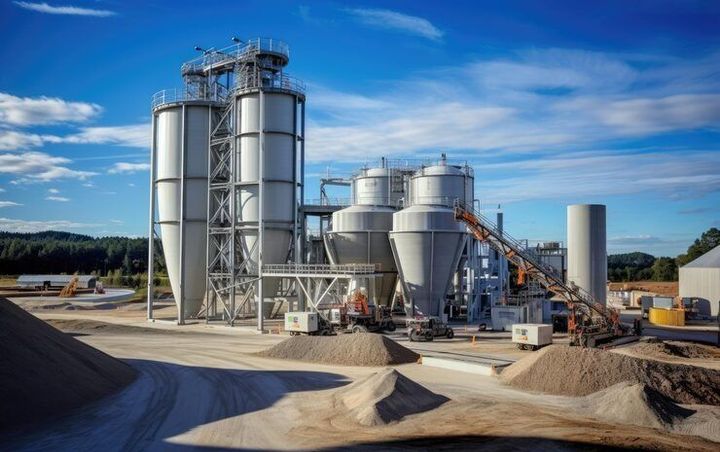
A typical plant can contain several material storage and handling sections. Aggregate bins or hoppers hold different aggregate fractions, while cement and other powder materials are generally stored in dedicated silos.
Weighing systems measure materials before they enter the mixing stage. Conveyors, skip systems, screw conveyors, pumps, and other transfer equipment move materials between different parts of the plant.
| Plant Component | Main Function |
|---|---|
| Aggregate bins | Store and separate aggregate materials |
| Cement silos | Store cementitious powders |
| Weighing systems | Measure individual materials |
| Conveyors or skip systems | Transfer aggregates |
| Screw conveyors | Move powder materials |
| Water system | Measure and transfer water |
| Admixture system | Meter liquid additives |
| Mixer | Combines the selected materials |
| Control system | Coordinates plant operations |
| Dust-control equipment | Helps manage airborne material during handling |
Batching and Mixing
Batching refers to measuring individual materials according to a defined formulation. Once the required quantities are measured, the materials move toward the mixing stage.
The mixing equipment combines the ingredients into a more uniform concrete mixture. Depending on the plant design, mixing may occur in a central mixer or in a truck mixer after measured materials have been transferred.
The arrangement of these stages affects plant operation. A system designed around centralized mixing has different equipment requirements from a system where materials are discharged directly into transport mixers.
Importance
Batching plants are important because concrete production depends on controlled material proportions and coordinated handling. Variations in measurement or material flow can affect the consistency of the finished mixture.
Material Measurement
Accurate weighing is one of the central functions of a batching plant. Separate weighing systems can measure aggregates, cementitious materials, water, and admixtures before they are combined.
Electronic load cells and other measurement devices can be connected to automated controls. This allows the plant operator to monitor the quantities being processed and identify deviations during production.
Production Consistency
Consistent batching helps maintain similar material proportions between successive batches. This is particularly important when concrete is required for large structures or projects involving many production cycles.
Consistency also makes it easier to track production records. Automated systems can record batch information, material quantities, and operational conditions depending on the plant's control architecture.
Material Management
Material management extends beyond weighing. Storage capacity, material flow, moisture conditions, and replenishment all influence plant operation.
Aggregate storage areas need to keep different material sizes separated where required. Cement and other powder materials require suitable silos and conveying systems. Water and admixture systems also need controlled storage and transfer arrangements.
Automation
Automation connects many plant functions into one coordinated workflow. Operators can select or enter a predefined mix configuration, while the control system manages material weighing, sequencing, discharge, and mixing.
Automation does not eliminate the need for supervision. Operators still monitor equipment, materials, alarms, measurement systems, and production conditions.
Recent Updates
From 2024 through 2026, developments in batching plants have continued to focus on automation, monitoring, energy management, and more connected control systems. The exact capabilities vary according to plant design and manufacturer configuration.
Digital Control Systems
Modern control platforms can provide centralized views of plant operations. Operators may be able to monitor material quantities, batch sequences, equipment status, and alarms through digital interfaces.
Improved interfaces can make plant information easier to interpret. Historical production records may also support operational review and troubleshooting.
Sensor-Based Monitoring
Sensors are increasingly used to monitor equipment and process conditions. Measurement systems can track material quantities, temperature, moisture, pressure, and equipment status where appropriate.
Moisture monitoring is particularly relevant for aggregates because changes in moisture can affect the amount of water present in the overall mixture. Automated measurement can help operators account for changing material conditions.
Automated Material Handling
Material transfer is another area where automation can reduce unnecessary manual intervention. Automated gates, conveyors, screw systems, and dosing equipment can coordinate movement according to the production sequence.
The result is a more structured flow from storage through weighing and mixing. Equipment monitoring can also help identify interruptions in material movement.
Energy Management
Energy use is influenced by mixers, conveyors, compressors, pumps, control equipment, and other plant components. Modern plant designs may incorporate more efficient drives, controlled motor operation, and monitoring systems.
Energy management can help operators understand where electricity is being used across the production process. Such information can support equipment planning and operational improvements.
Data and Connectivity
Connected control systems can make plant data more accessible for production monitoring and maintenance planning. Depending on the system, information may be transferred between plant controls, monitoring platforms, and other operational systems.
Data connectivity also creates opportunities for condition monitoring. Equipment operating information can help maintenance teams identify unusual patterns before they become larger operational disruptions.
Laws or Policies
Batching plants operate within regulatory frameworks that can vary by country, region, project, and plant configuration. Requirements commonly relate to workplace safety, environmental management, electrical systems, dust control, noise, and material handling.
Workplace Safety
Workers may interact with conveyors, mixers, silos, electrical panels, loading areas, and other moving equipment. Safety procedures generally require suitable guarding, access controls, emergency stops, warning systems, and safe maintenance practices.
Lockout and isolation procedures are particularly important when personnel inspect or maintain powered machinery. Operators should follow the applicable workplace safety requirements for the location.
Environmental Controls
Concrete production can generate dust during aggregate, cement, and powder-material handling. Plants may therefore require dust-control measures, enclosed transfer points, filtration equipment, or other environmental controls depending on local requirements.
Water management can also be relevant. Wash water and material residues need to be handled according to applicable environmental rules.
Electrical and Equipment Requirements
Batching plants contain motors, sensors, control panels, weighing equipment, and other electrical components. Electrical installations need to comply with the requirements applicable to the operating region.
Plant operators and maintenance personnel should also follow manufacturer documentation and recognized safety practices when working on electrical or mechanical systems.
Tools and Resources
A range of tools supports the operation and maintenance of batching plants. These tools help operators monitor material quantities, inspect equipment, maintain measurement accuracy, and manage production records.
Measurement Equipment
Load cells and weighing systems are central to batching operations. Calibration and inspection procedures help maintain reliable measurement performance.
Moisture measurement equipment can also be useful where aggregate moisture changes significantly during production.
Material Handling Equipment
Conveyors, bucket elevators, skip systems, screw conveyors, pumps, gates, and valves support material movement. Their selection depends on the material type, required flow, plant layout, and operating conditions.
Maintenance Resources
Maintenance documentation typically includes equipment manuals, electrical diagrams, lubrication instructions, inspection schedules, and replacement-component information.
Routine inspection can cover mixer components, conveyor systems, bearings, gates, sensors, weighing equipment, silos, and control panels.
Production Records
Digital batching records can provide useful information about production sequences and material quantities. Records can support quality checks, operational analysis, and traceability where required by the project or organization.
FAQs
What are batching plants used for?
Batching plants are used to measure, combine, and manage materials for concrete production. They coordinate storage, weighing, material transfer, mixing, and control functions within one organized system.
How do batching plants work?
Batching plants generally store materials separately, measure the required quantities, transfer them through the production system, and combine them during the mixing stage. Automated controls coordinate the sequence and monitor operating conditions.
What are the main types of batching plants?
Common configurations include stationary batching plants and mobile batching plants. Stationary systems are generally arranged for longer-term operation at a fixed location, while mobile configurations are designed for relocation between project sites.
Why is automation important in batching plants?
Automation helps coordinate weighing, material transfer, sequencing, mixing, and monitoring. It can improve process consistency and provide production information through digital control interfaces.
What materials are handled by batching plants?
Batching plants commonly handle aggregates, cementitious materials, water, and admixtures. The specific materials depend on the concrete formulation and production requirements.
Conclusion
Batching plants combine material storage, measurement, handling, mixing, and control equipment into an organized concrete production system. Their automated functions help coordinate material quantities and production sequences while supporting consistent operations.
Recent developments have placed greater emphasis on digital controls, sensor monitoring, connected data, automated handling, and energy management. At the same time, safe operation, environmental controls, accurate measurement, and proper maintenance remain essential parts of plant management.