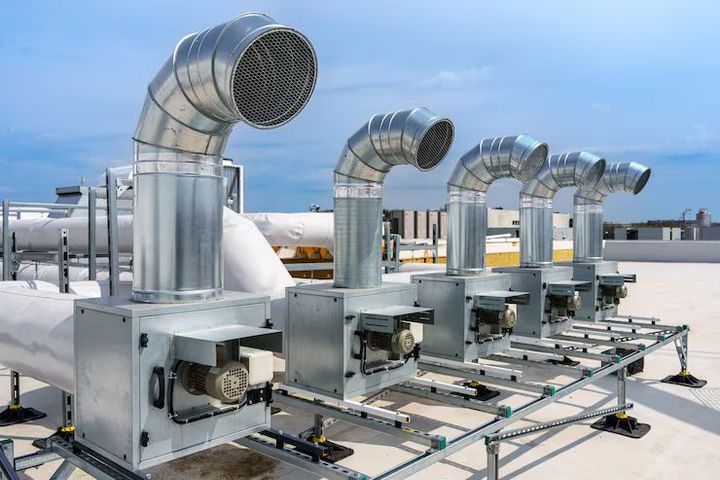
Air Separation Equipment: Explore Types, Processes, and Industrial Applications
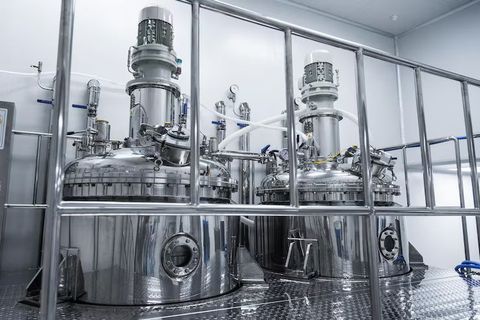
Air Separation Equipment includes machines and process systems used to separate atmospheric air into its main components, particularly oxygen, nitrogen, and argon. These gases are important raw materials or process gases for industries such as steel, chemicals, refining, electronics, food processing, healthcare, and energy.
Atmospheric air contains mostly nitrogen and oxygen, along with smaller quantities of argon, carbon dioxide, water vapor, and other gases. Air separation equipment uses differences in physical or chemical properties to isolate selected components.
Large industrial plants commonly use Air Separation Units (ASUs) based on cryogenic distillation. Smaller or specialized systems may use pressure swing adsorption, vacuum pressure swing adsorption, or membrane separation. The appropriate technology depends on required gas, purity, flow rate, pressure, and operating conditions.
How Air Separation Works
The basic process begins by drawing atmospheric air into the plant.
A simplified cryogenic process includes:
Air intake: Atmospheric air enters through filters that remove larger particles.
Compression: Main air compressors increase the air pressure.
Pre-treatment: Water vapor, carbon dioxide, and selected hydrocarbons are removed to protect the cold equipment.
Cooling: Heat exchangers progressively cool the purified air.
Liquefaction: At very low temperatures, part of the air becomes liquid.
Distillation: Liquid and gaseous streams move through distillation columns where nitrogen, oxygen, and sometimes argon are separated according to their different boiling characteristics.
Product handling: Separated gases can be compressed, stored, distributed through pipelines, or converted into liquid products.
Large cryogenic plants can cool air to approximately −190°C before the principal separation process.
Main Types of Air Separation Equipment
Cryogenic air separation units are used for large-volume production of oxygen, nitrogen, and argon. They use refrigeration and distillation and can produce both gaseous and liquid products.
Pressure Swing Adsorption (PSA) systems use adsorbent materials that preferentially retain selected components of compressed air. Pressure changes allow the material to regenerate and repeat the separation cycle.
Vacuum Pressure Swing Adsorption (VPSA) systems use a vacuum stage during regeneration. They are commonly associated with oxygen generation at selected purity and flow requirements.
Membrane separation systems pass compressed air through specialized membranes. Different gases move through the membrane at different rates, allowing a selected gas stream to be concentrated.
Importance
Supplying Industrial Gases
Oxygen, nitrogen, and argon are essential in many industrial processes. Steel production uses oxygen in furnaces and converters, while nitrogen can be used for inerting and process protection. Argon is used in selected metal processing and other controlled-atmosphere applications.
Large ASUs can therefore become an important part of an integrated industrial plant. Linde's current engineering information describes ASUs producing oxygen, nitrogen, argon, and, in some configurations, other rare gases.
Supporting Steel Production
Steel plants use substantial quantities of oxygen. Oxygen can support combustion and oxidation processes and can help remove selected impurities during steelmaking.
Nitrogen and argon also have roles in steel processing. Their exact use depends on the furnace, refining process, equipment configuration, and production method.
Supporting Chemical and Refining Operations
Chemical and petrochemical facilities use nitrogen for inert atmospheres, equipment purging, and selected process applications. Oxygen can be used in oxidation processes and other chemical operations.
An on-site ASU can provide gases directly to a large industrial facility through dedicated pipelines. This arrangement can be useful when continuous gas flow and specific purity requirements are important.
Supporting Electronics Manufacturing
Semiconductor and electronics manufacturing can require high-purity process gases. Nitrogen is widely used in controlled manufacturing environments, while oxygen, argon, and other gases can be used at different stages.
Modern ASUs designed for electronics applications can therefore require sophisticated purification, monitoring, and process-control systems.
Supporting Healthcare and Food Applications
Oxygen produced through air separation can be used in healthcare environments after meeting applicable purity and handling requirements.
Nitrogen can be used in food processing for controlled atmospheres, chilling, freezing, and packaging applications. Liquid nitrogen is particularly useful where very low temperatures are required.
Major Equipment Categories
| Equipment | Main Function | Typical Role |
|---|---|---|
| Air filter | Removes particles | Air intake |
| Main air compressor | Raises air pressure | Initial processing |
| Molecular sieve | Removes moisture and CO₂ | Air purification |
| Heat exchanger | Transfers heat | Air cooling |
| Turboexpander | Produces refrigeration | Cryogenic cooling |
| Distillation column | Separates air components | Gas separation |
| Coldbox | Contains cryogenic equipment | Low-temperature process |
| Cryogenic pump | Moves liquid products | Liquid handling |
| Storage tank | Holds liquid gases | Product storage |
| Control system | Monitors process conditions | Plant operation |
Recent Updates
More Flexible ASU Operation
Recent air-separation development has placed greater attention on operational flexibility. Some modern plants can adjust production according to changing electricity availability and industrial demand.
Linde has described flexible ASU concepts designed to adapt production to changing power conditions. Such approaches can be relevant because cryogenic air separation requires substantial electrical energy for compression and refrigeration.
Modular Air Separation Plants
Modular construction is another development in industrial gas equipment. Instead of fabricating every major component entirely at the final plant location, selected systems can be assembled into modules and transported to the site.
Modular approaches can include coldboxes, heat exchangers, columns, valve skids, pumps, and control-system assemblies.
Digital Process Control
Modern ASUs increasingly use computerized control systems to monitor pressure, temperature, flow, purity, compressor operation, and other process variables.
Advanced analytics and automated control can help operators understand process conditions and identify changes that require attention. The level of automation varies between plants.
High-Purity Gas Production
Demand for high-purity nitrogen and other gases remains important in electronics and semiconductor manufacturing. This requires careful control of contaminants and purification stages.
Modern ASUs can therefore be configured around particular purity, pressure, and flow requirements rather than using one standard configuration for every application.
Energy Management
Compression is one of the major energy-consuming stages in air separation. Equipment designers therefore focus on compressor efficiency, heat-exchanger performance, refrigeration cycles, process integration, and flexible operation.
Some modern plants are designed to adjust production according to changing electricity conditions, while maintaining required gas availability.
Expansion of Industrial Gas Capacity in India
India continues to see air-separation capacity associated with large industrial projects. For example, Linde reported expansion of its ASU capacity supporting Jindal Stainless at Kalinganagar, Odisha, with the additional plant planned to support expanded industrial production.
Large integrated industrial locations can use on-site ASUs because oxygen and nitrogen can be supplied directly to nearby production units.
Laws or Policies
Gas Cylinder Rules
In India, compressed-gas handling and storage can fall under the Gas Cylinders Rules, 2016, administered through the Petroleum and Explosives Safety Organisation (PESO) and related authorities.
The rules contain requirements concerning cylinder filling, storage, testing, identification, handling, and safety. They also address gas purity and requirements for certain electrical installations in premises handling particular flammable gases.
Recent Regulatory Changes
PESO has published several amendments affecting gas-cylinder requirements during 2025 and 2026. These include amendments concerning compressed gases, cylinders, valves, markings, and related requirements.
The exact requirement depends on the gas, pressure, container type, installation, and activity involved.
Cryogenic Storage
Air separation plants may produce liquid oxygen, liquid nitrogen, or liquid argon. These products require specialized cryogenic storage equipment because they are maintained at extremely low temperatures.
India's Static and Mobile Pressure Vessels (Unfired) Rules provide a regulatory framework relevant to certain pressure vessels and cryogenic installations. PESO published amendments to these rules during 2025.
Industrial and Environmental Requirements
Large air-separation installations can also fall under broader industrial, environmental, electrical, fire-safety, building, and occupational requirements depending on their location and configuration.
An individual plant may therefore need to consider several regulatory frameworks rather than relying on one rule covering the entire installation.
Oxygen Safety
Oxygen requires particular attention because it strongly supports combustion. Equipment, piping, valves, materials, cleaning procedures, and operating practices must be appropriate for oxygen applications.
Oil, grease, incompatible materials, and other contaminants can create serious hazards in oxygen systems. Appropriate engineering standards and manufacturer requirements should therefore be followed when designing or operating oxygen equipment.
Tools and Resources
Process Flow Diagrams
A process flow diagram can show the movement of atmospheric air through compressors, purification equipment, heat exchangers, expansion equipment, distillation columns, and product streams.
It provides a simplified picture of how the complete air-separation process operates.
Gas Purity Analyzers
Gas analyzers measure the composition or purity of product streams. Depending on the application, instruments can monitor oxygen concentration, nitrogen purity, argon content, moisture, or other impurities.
Continuous measurement can help operators identify changes in product quality.
Pressure and Temperature Instruments
Pressure transmitters, temperature sensors, flow meters, and level instruments are fundamental parts of ASU monitoring.
Cryogenic processes require particularly careful temperature measurement because extremely low temperatures influence the physical state of the gases.
Energy Monitoring Systems
Energy-monitoring systems can track electricity consumption associated with compressors, pumps, cooling equipment, and other major loads.
This information can help engineers understand how operating conditions influence overall plant energy use.
Simulation and Engineering Software
Process simulation software can represent compressors, heat exchangers, distillation columns, expansion systems, and gas streams.
Engineers can use such models to examine process configurations, equipment capacities, temperatures, pressures, and product recovery before or during plant development.
Technical Standards and Regulatory Resources
Engineering teams can consult relevant ISO, IEC, ASME, BIS, PESO, and other applicable technical materials depending on the equipment and installation.
For Indian installations, PESO publications and the India Code platform can help users locate applicable legislation and subordinate rules.
FAQs
What is Air Separation Equipment?
Air Separation Equipment consists of machines and process systems that separate atmospheric air into gases such as oxygen, nitrogen, and argon. Equipment can use cryogenic distillation, adsorption, or membrane technologies.
How does an air separation unit work?
A typical cryogenic air separation unit filters and compresses atmospheric air, removes moisture and carbon dioxide, cools the purified air to cryogenic temperatures, and separates its components through distillation.
What gases can Air Separation Equipment produce?
The principal products are nitrogen, oxygen, and argon. Depending on the plant configuration, additional gases such as krypton and xenon can also be recovered in specialized systems.
What is a cryogenic air separation unit?
A cryogenic air separation unit uses very low temperatures and distillation to separate air components. It is commonly used for large-volume production and can produce both gaseous and liquid oxygen, nitrogen, and argon.
Where is Air Separation Equipment used?
Air Separation Equipment is used in steel production, chemical processing, refining, electronics manufacturing, food processing, healthcare, glass production, and other industries requiring industrial gases.
Conclusion
Air Separation Equipment separates atmospheric air into useful gases through technologies such as cryogenic distillation, pressure swing adsorption, vacuum pressure swing adsorption, and membrane separation. Large ASUs use compressors, purification systems, heat exchangers, turboexpanders, cryogenic columns, storage systems, and automated controls to produce industrial gases. Recent developments include modular plant designs, flexible operation, digital control, high-purity production, and improved energy management. In India, gas-cylinder and cryogenic pressure-vessel regulations administered through authorities such as PESO are important considerations for applicable installations.