3D Printing Machines: Explore Types, Components, and Industrial Applications
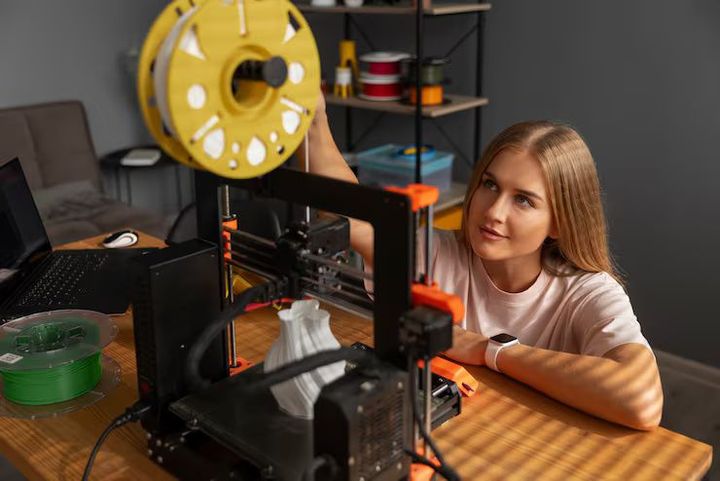
3D Printing Machines are equipment systems that create physical objects by adding material layer by layer from digital design data. This manufacturing approach is commonly called additive manufacturing, because material is progressively added instead of being removed from a larger block
ISO/ASTM 52900 defines additive manufacturing around the principle of creating three-dimensional shapes through successive addition of material. The standard was reviewed and confirmed in 2025 and remains current.
A typical 3D printing process begins with a digital model created using computer-aided design software. The model is converted into instructions that tell the machine how to build each layer. Depending on the technology, the machine may use plastic filament, polymer resin, metal powder, ceramic material, or another suitable feedstock.
How 3D Printing Works
The basic process can be explained in several stages:
Digital design: A component is created using CAD or another 3D modeling system.
Model preparation: The digital model is positioned and divided into layers using slicing or manufacturing software.
Material preparation: The appropriate filament, resin, powder, wire, or other feedstock is loaded.
Layer formation: The machine deposits, melts, cures, or fuses material according to the programmed pattern.
Layer-by-layer construction: Additional layers are added until the complete object is formed.
Post-processing: The finished part may require support removal, cleaning, curing, heat treatment, machining, polishing, or other processing.
The exact sequence depends on the printing technology and material.
Main Types of 3D Printing Machines
Material extrusion machines push heated thermoplastic material through a nozzle to create successive layers. They are widely associated with filament-based printing.
Vat photopolymerization machines use liquid resin that is selectively cured using light. SLA and related technologies belong to this category.
Powder bed fusion machines selectively fuse material within a powder bed. Laser-based and electron-beam systems can process polymers or metals depending on the machine design.
Material jetting machines deposit small droplets of material and selectively solidify them. They can produce detailed components and, with suitable systems, multiple materials.
Binder jetting machines deposit a binding material onto a powder bed to join selected regions. Additional processing may be required to obtain the final material properties.
Directed energy deposition machines introduce material into a region where energy, such as a laser or electron beam, creates a melt pool and builds or repairs material.
Sheet lamination machines join layers of sheet material to create three-dimensional structures.
Importance
Rapid Product Development
3D printing allows designers and engineers to create physical prototypes directly from digital models. Design changes can then be incorporated into subsequent versions without creating an entirely new conventional production setup.
This can be useful during product development, testing, engineering evaluation, and design verification.
Complex Geometries
Some additive manufacturing processes can produce shapes that are difficult to manufacture through conventional machining or molding. Internal channels, lattice structures, curved surfaces, and customized geometries can be incorporated into suitable designs.
However, each printing technology has geometric limitations. Layer orientation, support structures, minimum feature dimensions, thermal behavior, and material characteristics all influence the final result.
Customized Components
3D printing can produce components with different geometries from the same machine by changing the digital design. This makes additive manufacturing useful for applications requiring customized parts, anatomical models, specialized tooling, and low-volume components.
Reduced Material Waste in Selected Processes
Because additive manufacturing places material mainly where the part is designed to exist, some processes can use material more efficiently than manufacturing methods that remove large amounts of material.
Actual material efficiency depends on the machine, geometry, support structures, failed builds, post-processing, and production method.
Industrial Production
3D printing has moved beyond basic prototypes into selected production applications. Aerospace, automotive, medical technology, electronics, tooling, architecture, education, research, and industrial manufacturing can use different additive manufacturing methods.
India's National Strategy on Additive Manufacturing identified applications across areas including electronics, photonics, medical devices, agriculture, and food processing, while promoting development of materials, machines, products, and related technologies.
Main Machine Components
| Component | Function | Common Example |
|---|---|---|
| Build platform | Supports the printed object | Heated print bed |
| Print head | Deposits or processes material | Extrusion nozzle |
| Material system | Supplies feedstock | Filament spool or powder bed |
| Motion system | Moves printing components | Motors and linear rails |
| Controller | Coordinates machine operation | Electronic control board |
| Sensors | Monitor operating conditions | Temperature sensors |
| Enclosure | Controls the printing environment | Heated chamber |
| Software | Converts design into machine instructions | Slicing software |
| Cooling system | Controls selected temperatures | Fans or liquid cooling |
Recent Updates
Improved Industrial Qualification
Industrial additive manufacturing increasingly emphasizes repeatability, process control, and qualification rather than simply producing a physical shape.
ISO/ASTM 52920:2023 establishes qualification principles and requirements for industrial additive manufacturing processes and production sites. This reflects the growing focus on controlled manufacturing environments and consistent production processes.
Process Monitoring and Data Collection
Modern industrial machines can monitor temperatures, energy input, powder behavior, layer formation, machine conditions, and other process information.
ISO/ASTM 52953:2025 establishes requirements for registering data acquired through process monitoring and quality control for metal additive manufacturing. It addresses the organization and storage of multimodal manufacturing data.
New Data Requirements
Digital information is becoming an increasingly important part of additive manufacturing. ISO/ASTM 52951:2026 specifies methods, parameter sets, and models for developing data packages for additively manufactured parts, covering information associated with workflows from design through acceptance.
This supports greater consistency when digital designs, machine parameters, materials, inspection information, and production records need to be connected.
Metal Printing Safety
Metal powder-bed systems require specialized safety controls because fine powders, lasers, heat, and other machine hazards can create particular risks.
ISO/ASTM 52938-1:2025 specifies safety requirements for laser-based powder-bed fusion machines using metallic powder. It addresses significant hazards associated with these machines during their operating life.
Development in India
India continues to develop its additive manufacturing ecosystem through research, machine development, materials research, and institutional programs.
MeitY's 2025–26 annual report describes an additive manufacturing initiative involving IISc Bengaluru and C-MET Pune focused on developing advanced 3D printing technology, indigenous materials, and optical devices.
Medical and Aerospace Applications
Standards development is also expanding into specialized sectors. ISO lists standards and projects covering medical additive manufacturing, aerospace metal powder-bed systems, polymer materials, ceramic feedstock, process monitoring, and other specialized applications.
These developments show that industrial 3D printing increasingly involves application-specific qualification, material control, process monitoring, and documentation.
Laws or Policies
India's National Strategy on Additive Manufacturing
India released its National Strategy on Additive Manufacturing through MeitY in 2022. The strategy aimed to develop domestic capabilities covering materials, machines, processes, software, products, research, skills, and an associated manufacturing ecosystem.
The strategy also identified additive manufacturing as an important component of digital manufacturing and encouraged collaboration among research organizations, industry, and other stakeholders.
Standards and Technical Requirements
3D printing does not rely on one universal standard for every machine and application. Requirements can vary according to the printing technology, material, industry, product, and intended use.
ISO/ASTM 52900 provides general terminology and principles, while other standards address design, testing, qualification, safety, materials, process monitoring, and specialized applications.
Product and Workplace Safety
Industrial 3D printing facilities need to consider the hazards associated with their particular equipment and materials. These may include heated surfaces, moving parts, lasers, ultraviolet light, resin chemicals, metal powders, fumes, dust, electrical equipment, and compressed gases.
Workplace controls should therefore be selected according to the machine and material involved.
Environmental and Emission Considerations
Some 3D printing processes can produce airborne particles or chemical emissions. ISO/ASTM 52933:2024 addresses measurement of selected hazardous substances emitted by material-extrusion 3D printers in non-industrial environments such as schools and public spaces.
Industrial facilities may require additional controls based on the material, process, ventilation arrangement, and applicable workplace and environmental requirements.
Sector-Specific Requirements
Medical devices, aerospace components, automotive parts, and other regulated products may require additional qualification and documentation.
For example, ISO 5092:2025 establishes general principles for additive manufacturing of non-active medical implants, while aerospace additive manufacturing has dedicated standards covering equipment performance and reliability.
Tools and Resources
CAD Software
Computer-aided design software is used to create three-dimensional models before printing. Engineers can define dimensions, surfaces, holes, internal channels, and other geometric features.
Slicing Software
A slicer converts a three-dimensional model into layers and generates machine instructions. Settings can include layer thickness, printing speed, infill pattern, temperature, support structures, and other process parameters.
3D Scanners
3D scanners capture the geometry of physical objects and convert it into digital information. Scanning can support reverse engineering, dimensional comparison, inspection, and documentation.
Simulation Tools
Simulation software can help evaluate thermal behavior, material deposition, deformation, support requirements, or potential manufacturing problems before physical production.
Measurement Equipment
Calipers, coordinate-measuring machines, optical scanners, and other inspection equipment can be used to compare printed parts with their intended dimensions.
Standards Databases
ISO and ASTM provide technical references covering additive manufacturing terminology, design, testing, materials, machine qualification, safety, data management, and specialized applications. ISO/ASTM 52927:2024, for example, specifies characteristics and test methods for additive manufacturing parts and materials.
FAQs
What are 3D Printing Machines?
3D Printing Machines are manufacturing systems that create physical objects by adding material layer by layer from digital design information.
What are the main types of 3D Printing Machines?
Major categories include material extrusion, vat photopolymerization, powder bed fusion, material jetting, binder jetting, directed energy deposition, and sheet lamination.
What components are found in a 3D printer?
Common components include a build platform, material system, print head or energy source, motion system, sensors, controller, software, and cooling or environmental-control equipment.
Where are 3D Printing Machines used?
3D Printing Machines are used for prototypes, tooling, customized components, aerospace parts, automotive components, medical applications, electronics, research, education, and selected production applications.
Are 3D Printing Machines used for metal parts?
Yes. Specialized metal additive manufacturing systems can use processes such as laser powder-bed fusion, electron-beam powder-bed fusion, and directed energy deposition. These machines require appropriate materials, process controls, and safety measures.
Conclusion
3D Printing Machines create physical components by progressively adding material according to digital design information. Different technologies use plastics, resins, metals, ceramics, powders, or other feedstocks, with each process having distinct machine components and operating requirements. Recent developments are placing greater emphasis on process monitoring, qualification, digital data, machine safety, and specialized industrial applications. India's additive manufacturing initiatives and international ISO/ASTM standards are also contributing to the development of structured practices for industrial 3D printing.