Waterjet Cutting Machines: Explore Types, Components, and Industrial Applications
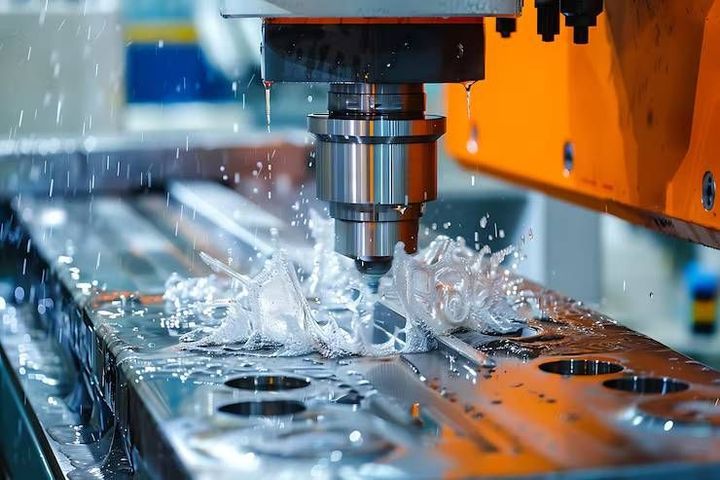
Waterjet Cutting Machines are industrial systems that use a high-pressure stream of water to cut, shape, or machine materials. Depending on the material, the system can use only water or combine water with an abrasive material such as garnet. The resulting jet can create detailed shapes without relying on a heated cutting edge.
Waterjet technology is widely used for metals, stone, glass, ceramics, composites, plastics, rubber, foam, paper, and other materials. Pure-water systems are generally associated with softer materials, while abrasive systems are used for harder materials such as steel, titanium, stone, glass, and composites.
The technology is particularly useful when manufacturers need to cut complex shapes or materials that can be affected by heat from processes such as plasma, flame, or laser cutting.
How Waterjet Cutting Works
The basic process starts with ordinary water entering the machine. A high-pressure pump raises the water pressure, and the pressurized water travels through specialized high-pressure tubing toward the cutting head.
Inside the cutting head, water passes through a very small orifice, creating a narrow, high-velocity stream. For abrasive cutting, garnet is introduced into the stream through a mixing chamber before the combined water-and-abrasive jet exits through a mixing tube.
The cutting head then moves across the workpiece according to a programmed toolpath. A CNC controller coordinates movement, speed, and cutting instructions to produce the required shape.
Main Types of Waterjet Cutting Machines
Pure Waterjet Machines use only pressurized water and are generally used for soft materials such as foam, rubber, insulation, paper, cardboard, textiles, food products, and selected plastics.
Abrasive Waterjet Machines introduce garnet into the water stream. The abrasive particles provide the cutting action needed for harder materials including metals, stone, ceramics, glass, and composites.
CNC Waterjet Machines use computer-controlled movement to follow digital drawings and produce programmed shapes.
Multi-Axis Waterjet Machines add additional movement axes to the cutting head. This can support angled cuts, bevels, and three-dimensional geometries.
3D Waterjet Systems are designed for applications requiring more complex cutting paths than conventional two-dimensional sheet cutting.
Importance
Cold Cutting Process
Waterjet cutting is commonly described as a cold cutting process because the material is removed mechanically rather than through a concentrated heat source. This is important when heat could alter material characteristics or create a heat-affected region.
The absence of a conventional thermal cutting zone can be useful for materials where heat-related changes need to be minimized.
Processing Different Materials
One important characteristic of waterjet technology is its ability to work with many different material categories.
Common examples include:
Stainless steel and carbon steel
Aluminum and copper
Titanium
Granite and marble
Glass
Ceramics
Rubber and foam
Plastics
Composite materials
Carbon-fiber materials
Paper and cardboard
The appropriate machine configuration depends on the material, thickness, required geometry, edge requirements, and production conditions.
Complex Shapes
CNC-controlled waterjet systems can follow digital geometries containing curves, holes, corners, and intricate profiles.
This makes them useful for producing components with shapes that may require multiple operations when using conventional cutting methods.
Limited Material Heating
Because the cutting mechanism relies on water and, when required, abrasive particles rather than a flame or electrical arc, the process does not introduce the same type of thermal cutting zone associated with flame or plasma processes.
This characteristic can be relevant when working with heat-sensitive materials or components where thermal effects need to be controlled.
Main Components
| Component | Main Function |
|---|---|
| High-pressure pump | Raises water pressure |
| Water filtration | Removes unwanted particles |
| High-pressure tubing | Carries pressurized water |
| Cutting head | Produces the cutting stream |
| Orifice | Forms the narrow water jet |
| Mixing chamber | Combines water and abrasive |
| Mixing tube | Guides the abrasive jet |
| Abrasive hopper | Holds cutting abrasive |
| CNC controller | Controls movement and cutting sequence |
| Cutting table | Supports the workpiece |
| Catcher tank | Receives water and cutting material |
Waterjet systems commonly combine a high-pressure system, machine movement structure, and control system.
Recent Updates
Higher-Pressure Pump Technology
Waterjet systems continue to develop through improvements in pump technology, cutting heads, motion control, and software.
Current commercial systems include pumps operating around 60,000 psi, or approximately 4,150 bar, while some specialized systems use higher pressure levels. Higher pressure is only one factor in cutting performance; nozzle design, abrasive delivery, material characteristics, cutting speed, and software also influence results.
Improved Motion Control
Modern waterjet systems use advanced motion-control software to compensate for characteristics of the waterjet stream.
Unlike a rigid cutting tool, a waterjet can change direction slightly as it passes through material. Software models can account for material thickness, cutting speed, and jet behavior to improve dimensional results.
Multi-Axis Cutting
Five-axis and other multi-axis configurations are increasingly used for applications involving bevels, angled surfaces, and three-dimensional geometries.
For example, current commercial systems include cutting-head technologies designed for bevel cutting and taper compensation.
Digital Manufacturing
Waterjet cutting is increasingly connected with CAD files, CNC programming, digital nesting, production monitoring, and automated machine controls.
A typical digital workflow can begin with a CAD drawing. Software converts the geometry into a machine toolpath, after which the controller directs the cutting head along the programmed X-Y coordinates.
Abrasive Management
Abrasive waterjet systems require controlled delivery of garnet or another suitable abrasive. Modern equipment can monitor abrasive flow and incorporate systems designed to improve material handling and reduce manual handling requirements.
Some newer commercial platforms are also developing automated abrasive recovery and recycling approaches.
Greater Automation
Automation is extending beyond basic CNC movement. Current systems can combine digital programming, automatic cutting parameters, machine monitoring, advanced cutting heads, and integrated software.
These developments are helping waterjet equipment become part of increasingly connected manufacturing environments.
Laws or Policies
International Machinery Safety
Waterjet cutting involves high-pressure water, moving machinery, electrical equipment, abrasive particles, and potentially heavy workpieces. Safety requirements therefore depend on the machine design, workplace, country, and application.
ISO 12100 provides general principles for machinery safety, including risk assessment and risk reduction throughout relevant stages of a machine's life cycle.
Machinery Risk Assessment
A waterjet installation should be evaluated as a complete machine system. Relevant considerations can include high-pressure components, unexpected machine movement, electrical hazards, abrasive handling, noise, water management, workpiece movement, and access to hazardous areas.
Protective measures can include guarding, emergency stopping systems, appropriate isolation procedures, operator training, and manufacturer-defined operating procedures.
Regional Requirements
Different jurisdictions have their own machinery, workplace safety, electrical, environmental, and pressure-equipment requirements.
Manufacturers and operators may therefore need to consider applicable rules from authorities such as workplace-safety regulators, machinery authorities, electrical regulators, and environmental agencies.
International standards can provide technical references, but the applicable legal requirements depend on the jurisdiction where the machine is manufactured, installed, or operated.
Environmental and Water Management
Waterjet systems generate a mixture of water, removed material, and, in abrasive applications, spent abrasive. Appropriate collection and handling procedures are important.
The treatment or disposal method depends on the material being cut, abrasive used, local environmental requirements, and whether the water is recirculated.
Machine Documentation
Operators should have access to appropriate technical documentation covering installation, operation, inspection, maintenance, emergency procedures, and safety precautions.
The exact documentation requirements vary by jurisdiction and machine type.
Tools and Resources
CAD Software
Computer-aided design software is commonly used to create the geometry that a waterjet machine will cut. The resulting drawing can then be converted into a suitable machine toolpath.
CNC Programming Software
CNC software translates design information into movement instructions. It can define cutting paths, entry points, cutting speeds, pierce sequences, and other parameters.
Nesting Software
Nesting software arranges multiple parts within a sheet or plate layout. This can help organize material usage and cutting sequences.
Abrasive Management Systems
Abrasive delivery equipment controls the quantity and consistency of garnet entering an abrasive waterjet cutting head.
The abrasive grade and flow rate can influence cutting behavior and equipment wear.
Water Filtration
Filtration systems help remove unwanted particles from incoming or recirculated water. Appropriate water quality can be important for high-pressure components and cutting-head operation.
Inspection Equipment
Calipers, coordinate-measuring equipment, optical measurement systems, and other inspection tools can be used to check dimensions and cut geometry.
Simulation and Monitoring Software
Digital simulation can help visualize cutting paths before production. Monitoring systems can track machine status, cutting parameters, pump conditions, and other operating information.
These tools can help integrate Waterjet Cutting Machines into modern digital manufacturing environments.
FAQs
What are Waterjet Cutting Machines?
Waterjet Cutting Machines are CNC-controlled systems that use high-pressure water, with or without abrasive particles, to cut and shape different materials.
What is the difference between pure and abrasive waterjet cutting?
Pure waterjet cutting uses only high-pressure water and is generally intended for softer materials. Abrasive waterjet cutting adds garnet or another abrasive so the system can cut harder materials such as metal, stone, glass, and ceramics.
What materials can Waterjet Cutting Machines cut?
Depending on the machine configuration, waterjets can process metals, stone, glass, ceramics, composites, plastics, rubber, foam, paper, cardboard, and other materials. Material thickness and cutting requirements influence the appropriate setup.
What are the main components of a waterjet machine?
Major components include a high-pressure pump, water filtration system, high-pressure plumbing, cutting head, orifice, abrasive system where applicable, CNC motion system, cutting table, catcher tank, and control software.
Are waterjet machines suitable for industrial applications?
Yes. Waterjet systems are used across aerospace, automotive, metal fabrication, architecture, stone processing, electronics, transportation, manufacturing, and other industrial fields. Their applications range from simple sheet profiles to complex components and specialized material cutting.
Conclusion
Waterjet Cutting Machines use high-pressure water, and in many applications abrasive particles, to create precise cuts across a wide range of materials. Pure-water and abrasive systems serve different material categories, while CNC and multi-axis technologies expand the range of shapes that can be produced. Recent developments include improved pumps, motion control, multi-axis cutting, digital programming, monitoring, and abrasive management. Understanding the machine's components, material requirements, safety framework, and application conditions helps explain how waterjet technology fits into modern industrial manufacturing.