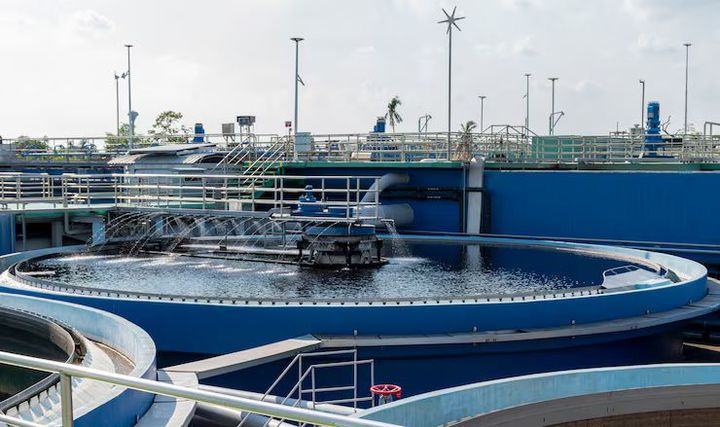
Water Treatment Plants: Guide to Water Purification Method
Water Treatment Plants are systems designed to improve the quality of raw water so it can be used for drinking, industrial processes, commercial applications, irrigation, or other intended purposes. Raw water can contain suspended particles, dissolved minerals, microorganisms, organic matter, colour, turbidity, and other impurities.
A water treatment plant combines different physical, chemical, biological, and membrane-based processes according to the characteristics of the incoming water and the required quality of treated water.
The treatment sequence can vary considerably. A municipal drinking-water plant may use coagulation, clarification, filtration, and disinfection, while an industrial plant may require softening, demineralization, ultrafiltration, reverse osmosis, or other specialized processes.
In India, drinking-water quality is referenced against IS 10500:2012, which remains the BIS specification for drinking water and was reaffirmed in 2023. The standard includes requirements for physical, chemical, radiological, and microbiological characteristics.
Main Components of a Water Treatment Plant
A typical water treatment system can include:
- Raw-water intake
- Screening system
- Raw-water storage
- Coagulation system
- Flocculation tank
- Clarifier
- Pressure or gravity filters
- Activated carbon filter
- Water softener
- Ultrafiltration system
- Reverse osmosis system
- Disinfection system
- Chemical dosing system
- Treated-water storage
- Pumps and pipelines
- Instrumentation and monitoring system
The exact arrangement depends on the raw-water source, flow rate, contaminant profile, treatment objectives, and final application.
Types of Water Sources
Water treatment plants can process water from different sources.
Surface water can come from rivers, lakes, reservoirs, and canals. It may contain suspended solids, microorganisms, organic matter, and seasonal variations in water quality.
Groundwater generally has lower suspended-solid levels but can contain dissolved minerals, hardness, iron, fluoride, salts, or other naturally occurring constituents.
Seawater and brackish water contain higher concentrations of dissolved salts and generally require desalination processes such as reverse osmosis.
Municipal or recycled water can require additional treatment when it is intended for industrial reuse or other controlled applications.
Importance
Safe Water Quality
Water treatment reduces contaminants and improves water quality for the intended application. For drinking-water systems, treatment must address physical, chemical, and microbiological characteristics.
BIS describes IS 10500:2012 as the Indian Standard specifying requirements and test methods for drinking water.
Industrial Process Water
Many industrial processes require water with controlled hardness, conductivity, suspended solids, silica, dissolved salts, or microbial characteristics.
Industries such as pharmaceuticals, food processing, textiles, chemicals, electronics, power generation, and manufacturing can therefore use specialized water-treatment systems.
Protection of Equipment
Water containing excessive hardness, suspended solids, dissolved minerals, or corrosive constituents can affect boilers, cooling systems, heat exchangers, pipelines, membranes, and process equipment.
Pretreatment systems such as softeners, filtration units, demineralizers, and membrane systems can help control these water-quality characteristics.
Water Reuse
Water treatment can also support recycling and reuse programs.
Treated water can be directed toward applications such as cooling, washing, gardening, flushing, process operations, or other uses where the required water quality is appropriate.
Desalination
Reverse osmosis and related membrane technologies allow water-treatment systems to remove a substantial portion of dissolved salts from brackish water and seawater.
Desalination is particularly relevant in areas where freshwater availability is limited or where alternative water sources are required.
Recent Updates
Advanced Membrane Treatment
Membrane processes have become important in modern water-treatment systems.
Common technologies include:
- Microfiltration
- Ultrafiltration
- Nanofiltration
- Reverse osmosis
- Membrane bioreactors for selected water-reuse applications
Each membrane process has a different separation range and operating principle.
Ultrafiltration can remove many suspended particles, colloids, and microorganisms, while reverse osmosis provides a much finer separation of dissolved salts and other small constituents.
Digital Monitoring
Modern treatment plants increasingly use online sensors and automated monitoring.
Typical measurements can include:
- pH
- Conductivity
- Turbidity
- Flow
- Pressure
- Temperature
- Total dissolved solids
- Dissolved oxygen
- Chlorine residual
PLC, HMI, and SCADA systems can connect these measurements with pumps, valves, dosing systems, filters, and membrane equipment.
Energy-Efficient Treatment
Energy consumption is an important consideration in water-treatment design, particularly for high-pressure membrane systems.
Variable-frequency drives, efficient pumps, optimized operating pressures, membrane-cleaning strategies, and energy monitoring can help improve plant operation.
Improved Water Reuse
Modern water-treatment planning increasingly considers the complete water cycle rather than treating water as a single-use resource.
Treatment systems can combine filtration, membranes, disinfection, and monitoring to produce water for selected reuse applications.
Updated Water Standards
BIS continues to maintain and update standards related to different water categories. For example, IS 3328:2026 provides updated quality requirements for swimming-pool water and references IS 10500:2012 for drinking-water requirements.
BIS also lists IS 14543:2024 for packaged drinking water other than packaged natural mineral water and IS 13428:2024 for packaged natural mineral water.
Laws or Policies
Water treatment in India is influenced by water-quality standards, environmental regulations, public-health requirements, and requirements established by central and state authorities.
Drinking-Water Quality
For drinking-water applications, IS 10500:2012 provides requirements for water intended for human consumption. BIS records the standard as the second revision, reviewed in 2023, with four amendments listed in its current standard record.
The standard covers parameters including colour, odour, taste, turbidity, pH, total dissolved solids, metals, chemicals, pesticides, and microbiological characteristics.
Water Treatment Management
BIS has also established IS 17482:2020 for piped drinking-water supply management systems. The framework addresses source intake, water treatment, residue management, storage, distribution, and related management practices. BIS's current page was updated in April 2026.
Packaged Drinking Water
Where treated water is intended for packaged drinking-water applications, applicable product standards must be considered separately.
BIS currently lists IS 14543:2024 for packaged drinking water other than packaged natural mineral water and IS 13428:2024 for packaged natural mineral water.
Environmental Considerations
Water-treatment plants can generate backwash water, filter residues, reject streams, membrane concentrate, and other residuals.
Treatment-plant design should therefore consider appropriate collection, treatment, recovery, recycling, or disposal routes for these streams according to the applicable environmental requirements.
Tools and Resources
Water-treatment plants use mechanical equipment, chemical systems, filtration units, membranes, instrumentation, and laboratory equipment.
| Tool or System | Main Purpose |
|---|---|
| Raw-water pump | Transfers incoming water |
| Screen | Removes larger particles and debris |
| Coagulation system | Helps destabilize fine suspended particles |
| Flocculation tank | Promotes formation of larger flocs |
| Clarifier | Separates settled particles |
| Sand filter | Removes suspended particles |
| Multimedia filter | Provides staged particulate filtration |
| Activated carbon filter | Reduces selected organic compounds, colour, and odour |
| Water softener | Reduces hardness |
| Ultrafiltration system | Removes fine suspended particles and many microorganisms |
| Reverse osmosis system | Reduces dissolved salts and other small constituents |
| UV system | Uses ultraviolet radiation for microbial control |
| Chlorination system | Provides chemical disinfection |
| Chemical dosing system | Adds treatment chemicals at controlled rates |
| pH controller | Monitors and adjusts acidity or alkalinity |
| Conductivity meter | Monitors ionic content |
| Turbidity meter | Measures water clarity |
| Flow meter | Measures water movement |
| Pressure sensor | Monitors system pressure |
| PLC | Controls treatment sequences |
| HMI | Displays operating conditions |
| SCADA | Supports centralized monitoring and data records |
| Laboratory equipment | Supports water-quality testing |
Pretreatment Systems
Pretreatment is important when downstream equipment is sensitive to suspended solids, hardness, biological growth, or other contaminants.
Screening, clarification, filtration, softening, and activated carbon can be used individually or in combination.
Membrane Systems
Membrane systems require careful control of feed pressure, flow, recovery, temperature, and water chemistry.
Membrane fouling and scaling can affect performance, so pretreatment and routine monitoring are important parts of membrane-based treatment.
Disinfection Systems
Disinfection is used when microbial control is required.
Common technologies include ultraviolet treatment, chlorination, ozone, and other methods. The appropriate method depends on the source water, treatment configuration, intended use, and applicable quality requirements.
Automation and Instrumentation
Automation systems can coordinate pumps, valves, chemical dosing, filtration cycles, membrane operation, alarms, and water-quality monitoring.
Historical process data can also help identify changes in pressure, flow, conductivity, turbidity, or other operating conditions.
FAQs
What is a Water Treatment Plant?
A Water Treatment Plant is a system that processes raw or contaminated water through one or more treatment stages to achieve the quality required for a particular application.
What are the main water purification methods?
Common methods include screening, coagulation, flocculation, clarification, filtration, activated carbon treatment, softening, ultrafiltration, reverse osmosis, and disinfection.
What is the role of reverse osmosis in water treatment?
Reverse osmosis uses a semi-permeable membrane and pressure to separate dissolved salts and other small constituents from water. It is widely used for desalination and high-purity water applications.
What is the difference between a Water Treatment Plant and an ETP?
A Water Treatment Plant generally treats raw water to make it suitable for a particular use, while an Effluent Treatment Plant treats industrial wastewater generated by manufacturing or other industrial activities.
Which standard is used for drinking water in India?
IS 10500:2012 is the Indian Standard for drinking-water specification. BIS records it as the second revision, reviewed in 2023, with four amendments.
Conclusion
Water Treatment Plants combine physical, chemical, biological, and membrane-based processes to improve water quality for drinking, industrial, commercial, and other applications. Treatment stages can include screening, coagulation, clarification, filtration, softening, membrane separation, and disinfection depending on the source and intended use. Modern systems increasingly use automation, online monitoring, energy-efficient equipment, membrane technology, and water-reuse approaches. In India, treatment design should consider the applicable BIS water-quality standards and relevant regulatory requirements for the intended application.