Tyre Building Machines: Explore Tire Manufacturing Technology and Automated Assembly
Tyre Building Machines are used to assemble the different layers and components of tyres before the final curing stage. These machines coordinate material placement, drum rotation, component alignment, and automated assembly processes. Modern tyre building systems combine mechanical controls, sensors, automation, and digital monitoring to support consistent tyre manufacturing across different production requirements.
Tyre Building Machines: Explore Tire Manufacturing Technology and Automated Assembly
Context
Tyre Building Machines are industrial systems used to assemble the different components of a tyre into a structured green tyre before curing. The building process brings together materials such as inner liners, textile or steel reinforcement layers, sidewall components, bead assemblies, and tread-related components according to the tyre design.
A tyre is made from several materials that need to be positioned in a controlled sequence. Tyre building equipment helps coordinate these materials while maintaining suitable alignment, tension, positioning, and assembly conditions.
The building process generally takes place before the green tyre moves to a curing system. During curing, heat and pressure transform the assembled green tyre into its final shape and physical structure.
Main Stages of Tyre Building
The exact sequence varies according to tyre design and machine configuration, but a typical process can include:
Preparing the tyre-building drum and required materials.
Applying the inner liner to the drum.
Positioning reinforcement materials.
Applying sidewall and other structural components.
Forming and positioning bead assemblies.
Bringing different tyre components together.
Applying tread and belt-related assemblies.
Shaping the green tyre.
Inspecting the assembled tyre.
Transferring the green tyre to the next production stage.
The machine coordinates these operations through mechanical systems, drive mechanisms, control equipment, and operator interfaces.
Main Components
A Tyre Building Machine contains several components designed to manage material handling and assembly.
| Component | Main Function |
|---|---|
| Building drum | Supports the tyre during assembly |
| Drum drive | Rotates the building drum |
| Material applicators | Position tyre components |
| Bead handling system | Positions bead assemblies |
| Rollers | Press and consolidate materials |
| Carriage system | Moves application equipment |
| Cutting equipment | Prepares material sections |
| Sensors | Monitor position and operating conditions |
| Control system | Coordinates machine functions |
| Operator interface | Allows monitoring and machine control |
Types of Tyre Building Machines
Tyre building equipment can be designed for different tyre categories and production arrangements. Passenger-car tyre systems, commercial-vehicle tyre systems, truck and bus tyre systems, and specialty tyre equipment may have different configurations.
Some systems are designed around a single building stage, while more integrated systems combine multiple assembly operations within one automated production arrangement.
The machine configuration depends on tyre dimensions, construction, material characteristics, production volume, and required automation level.
Importance
Tyre Building Machines are important because tyre manufacturing requires accurate assembly of multiple materials. Small differences in material placement or alignment can influence the structure and balance of the green tyre.
Component Alignment
Accurate positioning is important when combining reinforcement layers, bead assemblies, sidewalls, belts, and tread components.
Automated applicators and controlled drum movement can help maintain repeatable positioning during production.
Material Handling
Tyre manufacturing uses rubber compounds, textile materials, steel reinforcement, and other components. Each material can have different dimensions, flexibility, tension characteristics, and handling requirements.
Building equipment coordinates these materials so they can be assembled in the intended sequence.
Automated Assembly
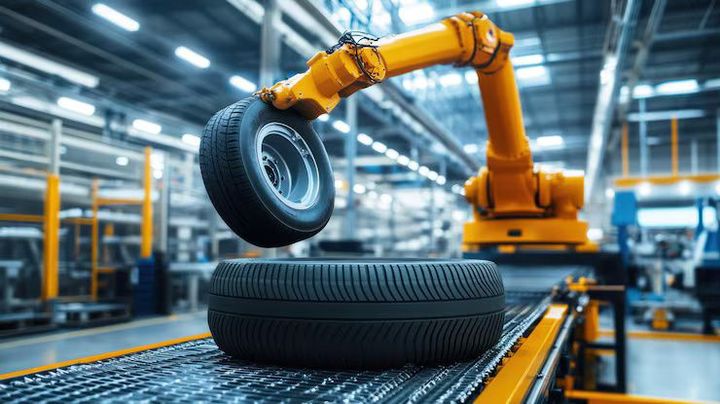
Automation reduces the number of repetitive manual operations involved in tyre building. Automated systems can control drum rotation, component placement, material feeding, cutting, and other processes.
The level of automation varies between machines and manufacturing facilities.
Production Consistency
Consistent assembly conditions are important because tyres must meet defined design and manufacturing specifications. Sensors and control systems can monitor machine conditions and help maintain repeatable operating parameters.
Green Tyre Formation
The output from a tyre building machine is generally called a green tyre. It contains the assembled components but has not yet undergone the final curing process.
The green tyre must maintain its intended shape and component arrangement while moving to the curing stage.
Recent Updates
Recent developments in Tyre Building Machines have focused on automation, digital controls, machine vision, process monitoring, data collection, and integration with broader manufacturing systems.
Advanced Automation
Modern equipment can automate several material placement and assembly operations. Automated component feeding, drum positioning, material cutting, and process sequencing can reduce repetitive operator intervention.
Automation can also support more consistent machine movement and process timing.
Digital Controls
Digital control systems allow operators to configure and monitor machine parameters through centralized interfaces. These systems can coordinate multiple machine functions while displaying operating information.
Electronic controls can also support production data recording and process monitoring.
Sensor-Based Monitoring
Sensors can monitor drum position, material movement, pressure, tension, temperature, and other machine conditions depending on the equipment configuration.
Continuous monitoring can provide information about process variations and equipment status.
Machine Vision
Vision systems can be incorporated into manufacturing environments to inspect material placement, component position, dimensions, and other visual characteristics.
Machine vision can complement traditional inspection methods by providing automated image-based checks.
Data Integration
Modern tyre manufacturing equipment can be connected with plant-level production and monitoring systems. Production information can be collected and analyzed to support traceability and process management.
Integration can also help coordinate material information, production sequences, machine status, and quality records.
Flexible Production
Tyre manufacturers may produce different sizes and designs on the same production line. Modern building systems can be configured for multiple production requirements through controlled machine adjustments and digital settings.
Changeover procedures depend on machine design and the specific tyre construction.
Laws or Policies
Tyre manufacturing facilities are subject to workplace safety, machinery, electrical, environmental, and product-related requirements. Specific regulations vary by country and manufacturing application.
Machinery Safety
Tyre building equipment contains moving drums, rollers, cutting mechanisms, applicators, conveyors, and other moving parts. Suitable guards, emergency controls, safety interlocks, and operating procedures are important.
Personnel should receive appropriate training before operating or maintaining the equipment.
Electrical Safety
Tyre building systems commonly contain motors, sensors, control panels, drives, and automation equipment. Electrical installations should comply with applicable local requirements and recognized safety practices.
Regular inspection can help identify damaged wiring, loose connections, and other electrical concerns.
Rubber Processing Environment
Tyre manufacturing may involve rubber compounds, adhesives, solvents, and other materials depending on the production process. Facilities should follow applicable workplace exposure, ventilation, chemical handling, and environmental requirements.
The specific requirements depend on the materials and processes used at the facility.
Product Standards
Finished tyres may be subject to national and international technical requirements covering dimensions, performance, marking, testing, and other characteristics.
Tyre manufacturers need to identify the requirements applicable to the markets and vehicle categories they serve.
Workplace Procedures
Clear operating procedures can address machine startup, material loading, changeovers, inspection, cleaning, maintenance, and emergency response.
Lockout and energy-isolation procedures are particularly important during maintenance activities involving moving or powered equipment.
Tools and Resources
Tyre Building Machines rely on several supporting tools, systems, and technical resources.
Building Drums
The building drum provides the forming surface around which tyre components are assembled. Drum dimensions and configuration vary according to tyre construction.
Material Feeding Systems
Material feeding systems deliver rubber, reinforcement layers, sidewall components, and other materials to the building area.
Controlled feeding helps maintain appropriate material positioning and movement during assembly.
Rollers and Applicators
Rollers can press materials against the drum or previously applied layers. Applicators position specific components according to the production sequence.
Their movement and pressure may be controlled mechanically or electronically.
Measurement Equipment
Measurement tools can be used to check material width, thickness, component position, drum dimensions, and other production characteristics.
Digital measurement equipment can support more repeatable inspection procedures.
Sensors and Monitoring Systems
Position sensors, pressure sensors, temperature sensors, tension measurement systems, and other instrumentation provide information about machine operation.
The appropriate sensor arrangement depends on the machine design and manufacturing process.
Maintenance Resources
Routine maintenance may include inspection of bearings, rollers, drives, pneumatic systems, electrical components, sensors, cutting equipment, and material handling mechanisms.
Machine manuals, maintenance schedules, technical drawings, and calibration procedures provide important references for maintaining equipment.
FAQs
What are Tyre Building Machines?
Tyre Building Machines are industrial systems used to assemble the different components of a tyre before the curing stage. They coordinate material placement, drum rotation, component alignment, and green tyre formation.
How do Tyre Building Machines work?
The machine rotates a building drum while different tyre components are applied in a defined sequence. Automated applicators, rollers, feeding systems, and control mechanisms help position and assemble the materials.
What components are used in tyre building?
Common components include inner liners, reinforcement layers, bead assemblies, sidewalls, belts, and tread-related materials. The exact combination depends on the tyre design.
What is a green tyre?
A green tyre is an assembled tyre that has not yet undergone the curing process. It contains the required components in their intended arrangement and is transferred to a curing system for final forming and processing.
What recent technologies are used in Tyre Building Machines?
Recent systems increasingly incorporate automation, digital controls, sensors, machine vision, data collection, and manufacturing-system integration. These technologies support process monitoring and repeatable component placement.
Conclusion
Tyre Building Machines play an important role in assembling the multiple materials that form a tyre before curing. Modern systems combine controlled drum movement, material handling, automated application, sensors, and digital controls to support consistent assembly. Recent developments include greater automation, machine vision, process monitoring, and production data integration. Safe operation also requires appropriate machinery protection, electrical controls, maintenance procedures, and compliance with applicable tyre manufacturing requirements.