Tower Cranes for High-Rise Construction: Guide to Components and Applications
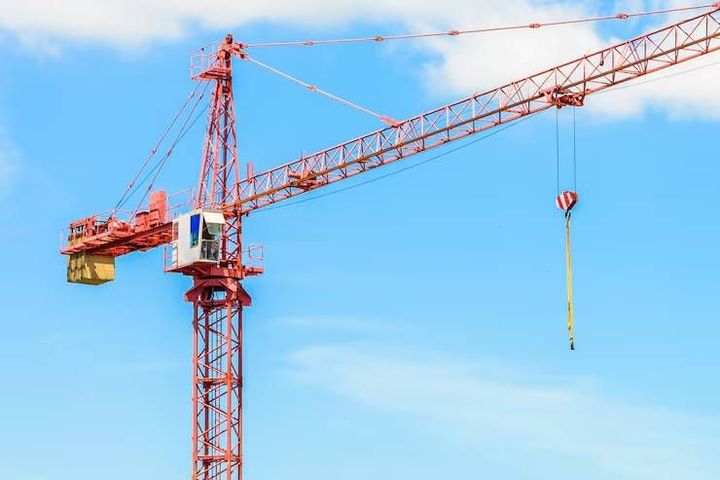
Tower cranes for high-rise construction are large lifting machines designed to move materials vertically and horizontally around construction sites. Their tall mast and rotating jib allow them to reach considerable heights and working radii while occupying a relatively compact ground area.
They are commonly used for reinforced concrete structures, commercial buildings, residential towers, bridges, industrial facilities, and other large construction projects. Their ability to lift materials to elevated floors makes them particularly important as buildings become taller.
A tower crane normally remains fixed at a prepared location during a major phase of construction. Some models can also climb upward as the building rises, allowing the crane to maintain an appropriate working height.
How Tower Cranes Work
The basic operating principle is relatively straightforward. A motor-driven mechanism moves a trolley along the horizontal jib, while a hoisting system raises or lowers the suspended load.
The crane can perform several coordinated movements:
Hoisting: Raises or lowers materials using wire ropes, drums, and lifting equipment.
Trolley travel: Moves the load inward or outward along the jib.
Slewing: Rotates the upper crane structure around the tower.
Travelling: Some tower cranes can move along rails at ground level.
Climbing: Selected cranes can increase their height as construction progresses.
The crane operator controls these movements through a cabin or remote control system, depending on the crane design and project arrangement.
Main Components
Foundation or base provides the structural connection between the crane and the supporting ground or building structure. Its design depends on the crane configuration and site conditions.
Mast consists of vertical steel sections that provide the crane's height. Additional mast sections can sometimes be added during construction.
Slewing unit allows the upper structure to rotate around the vertical axis.
Jib is the horizontal or angled working arm that provides the crane's lifting radius.
Counter-jib extends in the opposite direction from the main jib and supports counterweights and selected machinery.
Counterweights balance the crane's structure and help maintain the required operating configuration.
Trolley travels along the jib and changes the horizontal position of the suspended load.
Hoisting mechanism uses a motor, drum, wire rope, and related components to raise and lower loads.
Hook and lifting equipment connect the crane to the load through suitable lifting accessories.
Operator cabin provides controls and visibility for the crane operator on configurations that use a cabin.
Importance
Supporting High-Rise Construction
As a building rises, materials must be moved between ground level and elevated working areas. Tower cranes can transport structural components, reinforcement materials, concrete-related equipment, formwork, façade components, and other loads.
Their vertical reach makes them particularly relevant to multi-story construction where conventional ground-based lifting equipment may not reach the required height.
Moving Heavy Materials
Construction projects frequently involve materials that are too heavy or cumbersome for manual movement. A tower crane can lift these loads according to its rated capacity and load chart.
The usable lifting capacity changes according to factors such as load position, jib configuration, radius, height, wind conditions, and crane configuration. Operators therefore need to work within the specified operating limits.
Supporting Multiple Construction Activities
One tower crane can support several activities when the site layout and lifting plan are appropriately organized.
Typical applications include:
Reinforcement movement
Formwork handling
Structural steel placement
Concrete-related material handling
Prefabricated component placement
Façade and building-envelope work
Equipment positioning
Material distribution across floors
The exact application depends on the project design and the crane's technical specifications.
Improving Vertical Material Flow
High-rise projects require a continuous movement of materials between different levels. A tower crane can become an important part of this material-flow system.
Its position, jib length, lifting capacity, and operating radius need to correspond with the building footprint and construction sequence.
Main Crane Types
| Tower Crane Type | Main Characteristic | Typical Application |
|---|---|---|
| Hammerhead | Fixed horizontal jib | High-rise and large building projects |
| Luffing jib | Jib angle can change | Dense urban construction |
| Self-erecting | Designed for relatively rapid setup | Smaller construction sites |
| Travelling tower crane | Moves along prepared rails | Large linear projects |
| Climbing tower crane | Height increases during construction | Tall buildings |
| Topless crane | No traditional tower-top peak | Projects with multiple cranes |
Recent Updates
Smarter Load Monitoring
Modern tower cranes increasingly incorporate electronic monitoring systems that provide information about load conditions, operating limits, movement, and selected crane parameters.
Load-moment systems can help operators remain aware of the relationship between load and working radius. Such systems are important because a crane's capacity is not represented by one fixed number across its entire operating range.
ISO 10245-3:2019 establishes requirements for limiting and indicating devices specifically for tower cranes, and the standard was confirmed as current after review in 2024.
Anti-Collision Technology
Large construction projects may require several cranes to operate within overlapping areas. Electronic anti-collision systems can monitor crane positions and movement and provide warnings or intervention when defined separation limits are approached.
A 2025 BIS draft related to precast construction specifically notes the use of anti-collision devices where multiple cranes have overlapping operating radii.
Digital Monitoring
Connected crane systems can collect operational information such as lifting cycles, movement patterns, equipment status, and selected maintenance indicators.
Digital monitoring can help project teams understand crane utilization and identify conditions that require inspection or technical attention.
Remote and Assisted Operation
Remote-control technology is developing across the construction-equipment sector. Depending on the crane design, project conditions, and local requirements, selected functions can be operated or monitored away from the traditional cabin.
Automation can also assist with predefined movements, positioning, and monitoring. Human oversight remains important because construction sites contain changing conditions, people, temporary structures, and unpredictable obstacles.
Climbing Systems for Tall Buildings
Self-climbing and externally climbing tower-crane configurations can increase crane height as a building progresses. The crane can be connected to the building structure at selected stages, allowing it to continue serving higher floors.
This approach is particularly relevant to tall structures where a conventional fixed-height arrangement would eventually become insufficient.
Improved Safety Monitoring
Current crane technology increasingly combines sensors, cameras, limit devices, load monitoring, wind measurement, and digital records.
The objective is to provide operators and project teams with more information about crane conditions. Technology does not replace competent operation, inspection, maintenance, lifting plans, or site safety procedures.
Laws or Policies
International Standards
Tower crane design and operation are addressed by several international standards. ISO 4306-3:2016 establishes terminology and definitions for tower cranes, including assembled, permanently erected, and mobile self-erecting configurations. The standard was reviewed and confirmed as current in 2026.
ISO 4301-3:2021 provides classification requirements for tower cranes based on factors including working cycles, load spectrum, and average displacement. It was also reviewed and confirmed as current in 2026.
ISO 8686-3:2018 addresses design principles for loads and load combinations specifically for tower cranes used in construction. The standard was confirmed as current following its 2023 review.
Construction-Site Safety
Requirements for tower cranes differ between countries and may be established through occupational safety legislation, construction regulations, engineering standards, inspection rules, and local authority requirements.
Common regulatory themes include:
Crane structural integrity
Load limits
Operator competence
Inspection and testing
Lifting accessories
Wind limitations
Electrical safety
Emergency systems
Maintenance records
Assembly and dismantling procedures
Site exclusion zones
Project teams need to identify the rules applicable to the country, jurisdiction, project type, and crane configuration.
India and BIS Standards
For projects in India, the Bureau of Indian Standards maintains standards relevant to tower cranes. BIS currently lists IS 6521 (Part 1):1972, covering the design of static and rail-mounted tower cranes, with a 2025 review/reaffirmation record.
BIS also maintains standards work through its Mechanical Engineering Department committee covering cranes, lifting chains, and related equipment. Its current program includes work related to tower-crane design, terminology, ropes, testing, operation, maintenance, and safety.
The National Building Code of India 2016 provides a broad framework for building construction, including structural design, construction safety, and related building requirements.
Inspection and Maintenance
Tower cranes require planned inspection and maintenance because their structures, ropes, hooks, brakes, electrical systems, limit devices, and lifting mechanisms experience repeated loading.
Inspection intervals and procedures vary according to jurisdiction, manufacturer instructions, crane type, operating environment, and applicable standards.
Tools and Resources
Load Charts
A tower-crane load chart shows the permitted lifting capacity under specified configurations and working radii. Operators use this information to determine whether a planned lift falls within the crane's rated limits.
Wind Monitoring Systems
Wind speed can significantly affect crane operation, particularly when handling large or lightweight loads. Anemometers and crane monitoring systems can provide wind information to operators and site teams.
Anti-Collision Systems
These systems use positioning information and predefined safety zones to monitor relationships between multiple cranes or between a crane and selected site structures.
Crane Planning Software
Digital planning tools can represent crane locations, jib coverage, lifting zones, building geometry, and potential interference areas. Such tools can help planners evaluate crane positioning before physical installation.
Inspection Records
Digital inspection platforms can organize information about inspections, maintenance activities, component conditions, lifting equipment, and corrective actions.
BIM and Construction Planning
Building Information Modeling can represent the building structure and selected temporary construction equipment within a digital environment. When combined with crane planning, BIM can help teams visualize lifting areas and identify potential spatial conflicts.
FAQs
What are Tower Cranes for High-Rise Construction?
Tower Cranes for High-Rise Construction are tall lifting machines designed to move materials vertically and horizontally around multi-story construction projects. Their height, jib length, and lifting capacity can be configured according to project requirements.
What are the main components of a tower crane?
Major components include the foundation or base, mast, slewing unit, jib, counter-jib, counterweights, trolley, hoisting mechanism, wire rope, hook, controls, and safety-monitoring equipment.
How do tower cranes help with high-rise buildings?
Tower cranes can lift materials from ground level to elevated floors and move them across the construction area. Climbing configurations can increase the crane's working height as the building rises.
What safety systems are used on tower cranes?
Common systems include load monitoring, limit devices, emergency controls, wind monitoring, anti-collision technology, position monitoring, and other application-specific protective systems.
Which standards cover tower cranes?
International references include ISO 4306-3 for terminology, ISO 4301-3 for classification, ISO 8686-3 for loads and load combinations, and ISO 10245-3 for limiting and indicating devices. National requirements may add further rules depending on the project location.
Conclusion
Tower Cranes for High-Rise Construction are important lifting systems for moving materials across tall and complex building projects. Their main components include the mast, jib, trolley, hoisting mechanism, counterweights, slewing system, and safety-monitoring equipment. Recent developments include digital monitoring, anti-collision technology, climbing systems, improved load information, and connected construction planning. International standards and national regulations provide technical and safety frameworks that help define appropriate design, operation, inspection, and maintenance practices.