Thermoforming Machines: Explore Types, Processes, and Industrial Applications
Thermoforming Machines are industrial systems used to shape heated thermoplastic sheets into specific three-dimensional forms. The plastic sheet is heated until it becomes soft, positioned over or inside a mould, and then shaped using vacuum, air pressure, mechanical force, or a combination of these methods.
Thermoforming is widely used because one flat plastic sheet can be transformed into trays, containers, covers, panels, liners, packaging components, and technical parts. The British Plastics Federation describes thermoforming as a process that uses softened thermoplastic sheet with air pressure and, in some applications, plug assistance.
A simple example is a plastic food tray. A flat plastic sheet enters a thermoforming machine, is heated, formed over a mould, cooled, and then trimmed into individual trays.
How Thermoforming Works
A typical thermoforming cycle contains several stages:
Sheet feeding: Plastic sheet is supplied from a roll or as individual sheets.
Heating: Heating elements soften the thermoplastic material.
Clamping: The softened sheet is held securely in position.
Forming: Vacuum, compressed air, a plug, or mechanical movement shapes the material against a mould.
Cooling: The formed plastic is cooled so it retains the required shape.
Trimming: Excess material is removed around the finished component.
Stacking or handling: Finished parts are separated, collected, or transferred to another production stage.
The exact sequence varies according to the machine design and product requirements. Modern systems can combine forming, cutting, stacking, labeling, and other operations within a connected production line.
Main Materials
Thermoforming Machines generally process thermoplastics because these materials soften when heated and become rigid again when cooled.
Common materials include:
PET and PETG: Used in packaging and selected technical products.
PP: Used in food containers, trays, lids, and other applications.
PS and HIPS: Used in packaging and formed containers.
ABS: Used for technical and automotive components.
PVC: Used in selected packaging and industrial applications.
PC: Used where particular mechanical or optical properties are required.
Material selection depends on temperature requirements, thickness, flexibility, appearance, chemical compatibility, recycling considerations, and the intended application.
Importance
Efficient Plastic Forming
Thermoforming can convert large sheets of plastic into many different shapes using moulds and controlled heating. This makes the technology useful for products ranging from relatively small packaging containers to large automotive and industrial components.
The British Plastics Federation identifies food packaging as a major thermoforming application, alongside pharmaceutical, electronics, toiletries, and other industrial uses.
Flexible Product Design
A thermoforming mould can be designed around the required shape of a product. Features such as cavities, raised sections, recesses, ribs, edges, and openings can be incorporated into the formed part.
This flexibility allows the same basic forming concept to be adapted for different product categories.
High-Volume Packaging
Thermoforming is widely associated with packaging because machines can repeatedly form multiple cavities from a continuous sheet or roll-fed material.
Common examples include:
Food trays
Disposable cups
Lids
Blister packs
Clamshell packaging
Medical packaging
Bakery containers
Product trays
Display packaging
Large Technical Components
Thermoforming is not limited to small packaging. Heavy-gauge thermoforming can produce larger components for automotive, transportation, logistics, appliances, and other industrial applications.
Modern sheet-processing systems can handle large forming areas and substantial forming depths for applications requiring larger plastic components.
Main Machine Categories
| Machine Type | Main Forming Method | Typical Applications |
|---|---|---|
| Vacuum former | Vacuum pressure | Trays, covers, packaging |
| Pressure former | Compressed air | Detailed packaging and technical parts |
| Plug-assist former | Mechanical plug plus vacuum or air | Deep containers and controlled wall thickness |
| Roll-fed thermoformer | Continuous sheet from roll | High-volume packaging |
| Sheet-fed thermoformer | Individual sheets | Technical and larger components |
| Twin-sheet former | Two heated sheets | Hollow or double-wall parts |
| Heavy-gauge former | Thick plastic sheet | Automotive and industrial parts |
Recent Updates
Greater Automation
Modern Thermoforming Machines increasingly combine several production steps into integrated systems. Forming, punching, stacking, handling, and other operations can be connected within one production line.
Manufacturers are also developing modular systems in which additional components can be integrated according to production requirements.
Improved Material Efficiency
Material reduction has become an important area of development in plastic processing. Manufacturers are working on thinner packaging structures, improved forming control, better material distribution, and increased use of recycled content where technically appropriate.
Thermoforming technology companies have also highlighted recycling, plastic reduction, and efficient use of energy and compressed air as current development areas.
Recycling and Regrind Integration
Plastic material removed during trimming can sometimes be processed into reusable material known as regrind. Equipment for thermoforming applications can be integrated with systems that handle production scrap and recycled material.
Modern polymer-processing systems can prepare and process internal regrind and post-consumer recycled material for thermoforming sheet production, depending on material requirements and product specifications.
Digital Machine Controls
Newer machines increasingly use digital human-machine interfaces, electronic sensors, programmable controls, and automated monitoring.
These systems can help operators monitor heating zones, forming pressure, cycle parameters, material movement, and machine conditions. Digital controls can also make repeatable production settings easier to manage.
Complex and Large-Format Parts
Recent equipment development has expanded thermoforming capabilities for larger components. At NPE 2024, ILLIG presented systems for large-format automotive and logistics applications, including sheet-processing machines with forming areas reaching 3,000 × 2,000 mm and drawing depths up to 800 mm.
Broader Industry Applications
Thermoforming continues to appear across food, medical, automotive, household appliances, electronics, logistics, and technical manufacturing.
Equipment manufacturers currently identify applications ranging from cups and blister packs to automotive components, technical parts, household-appliance components, and medical applications.
Laws or Policies
Plastic Waste Management
Plastic products made through thermoforming can fall within broader plastic-waste rules depending on their material, application, and market.
In India, the Plastic Waste Management Rules have been amended several times, including amendments in 2024. The framework includes requirements related to plastic packaging and extended producer responsibility.
Other countries have their own packaging, recycling, labeling, waste-management, and producer-responsibility requirements.
Food-Contact Packaging
Thermoformed food containers must meet applicable food-contact requirements in the markets where they are used.
In India, BIS documentation identifies Indian Standards relating to plastics used in contact with food and notes their connection with food-packaging regulations.
Other markets may apply requirements from organizations and regulators such as the U.S. Food and Drug Administration, European Union food-contact framework, or other national authorities.
Recycling Standards
Recycling requirements are becoming increasingly relevant to thermoformed products. BIS lists IS 14534:2023 as a guideline for recovery and recycling of plastic waste, with an amendment issued in 2025.
International manufacturers may also need to consider local recycling symbols, recycled-content requirements, material identification, packaging rules, and extended producer responsibility frameworks.
Machine Safety
Thermoforming equipment contains heaters, moving moulds, cutting mechanisms, pneumatic systems, electrical controls, and other potentially hazardous components.
Machine designers and operators therefore need to consider applicable machinery-safety requirements, guarding, emergency controls, electrical safety, operator training, and risk assessment. Requirements vary by country and machine configuration.
Tools and Resources
Thermoforming Moulds
The mould determines the shape of the finished component. Moulds can be produced from materials such as aluminum and other suitable tooling materials.
Mould design influences forming depth, cooling, material distribution, release from the mould, surface appearance, and production speed.
Heating Systems
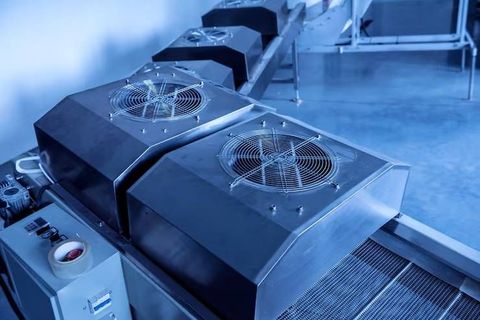
Heating systems soften the plastic sheet before forming. Infrared heating elements are commonly used in thermoforming equipment.
Uniform heating is important because different temperatures across the sheet can produce inconsistent wall thickness or incomplete forming.
Vacuum Pumps
Vacuum systems remove air between the heated plastic sheet and mould. Atmospheric pressure then pushes the softened sheet against the mould surface.
Vacuum forming is one of the most established thermoforming techniques and can be combined with advanced pneumatic, hydraulic, and electronic controls.
Pressure-Forming Systems
Pressure forming uses compressed air to push the heated plastic against the mould. The additional pressure can help reproduce finer details compared with conventional vacuum forming.
Some systems combine vacuum and compressed air to achieve the required forming result.
Plug-Assist Systems
A plug is a mechanical component that pushes the softened sheet toward the mould before vacuum or pressure completes the forming process.
Plug assistance can help distribute material more evenly, particularly in deeper shapes where conventional vacuum forming could produce excessive thinning in certain areas.
Trimming and Cutting Equipment
After forming, excess plastic may need to be removed. Cutting systems can separate individual products from the surrounding sheet.
Depending on the machine design, trimming may occur within the same production line or as a separate operation.
Quality-Control Tools
Manufacturers can use measurement equipment to inspect:
Wall thickness
Product dimensions
Forming depth
Surface appearance
Weight
Seal dimensions
Shape consistency
Material characteristics
Digital monitoring can also record machine parameters during production, helping identify changes in forming conditions.
FAQs
What are Thermoforming Machines?
Thermoforming Machines are industrial systems that heat thermoplastic sheets until they soften and then shape them over or inside moulds using vacuum, compressed air, mechanical plugs, or combinations of these methods.
What is the thermoforming process?
The thermoforming process generally involves feeding a plastic sheet, heating it, clamping it, forming it against a mould, cooling it, and trimming the finished component.
What types of Thermoforming Machines are available?
Common types include vacuum forming machines, pressure formers, plug-assist systems, roll-fed machines, sheet-fed machines, twin-sheet formers, and heavy-gauge thermoforming systems.
Where are Thermoforming Machines used?
They are used in food packaging, medical packaging, automotive components, electronics, household appliances, logistics products, technical parts, trays, cups, lids, and other plastic applications.
What materials can thermoforming machines process?
Common materials include PET, PETG, PP, PS, HIPS, ABS, PVC, and polycarbonate. The appropriate material depends on the required properties, forming conditions, product design, and regulatory requirements.
Conclusion
Thermoforming Machines heat thermoplastic sheets and shape them into packaging, containers, technical components, and large industrial parts. Vacuum forming, pressure forming, plug assistance, roll-fed processing, and heavy-gauge forming represent important variations of the technology. Current developments include greater automation, digital controls, recycled-material integration, material reduction, and larger or more complex formed components. As plastic regulations and recycling requirements continue to develop worldwide, thermoforming technology is also evolving around material efficiency, production control, and responsible material management.