Subsea Pumps and Control Systems: Guide to Components and Practical Insights
Subsea Pumps and Control Systems are technologies installed on or near the seabed to move fluids and manage subsea production equipment. They are commonly associated with offshore oil and gas developments, where wells may be located far below the ocean surface and connected to floating, fixed, or onshore processing facilities.
A subsea pump can increase fluid pressure or assist movement through subsea flowlines. A control system manages equipment such as pumps, valves, sensors, and other subsea components while allowing operators to monitor operating conditions from a remote location.
These systems are particularly important in deepwater environments, where equipment must operate under high external pressure, low temperatures, difficult access conditions, and demanding fluid-flow conditions.
How Subsea Pumping Works
A typical subsea boosting arrangement receives production fluids from one or more wells. The pump adds energy to the flowing fluid, helping maintain pressure and move the production stream toward a downstream destination.
The simplified process is:
Subsea wells: Fluids enter the production system from subsea wells.
Flow gathering: Manifolds and flowlines collect and transport production.
Boosting: A subsea pump increases pressure when additional hydraulic energy is required.
Monitoring: Sensors measure selected pressure, temperature, flow, vibration, and equipment conditions.
Control: A subsea control system sends commands and receives operating information.
Surface integration: Umbilicals, communication systems, and topside controls connect the subsea equipment with surface facilities.
The actual arrangement depends on water depth, reservoir conditions, fluid characteristics, field layout, production strategy, and equipment configuration.
Main Components
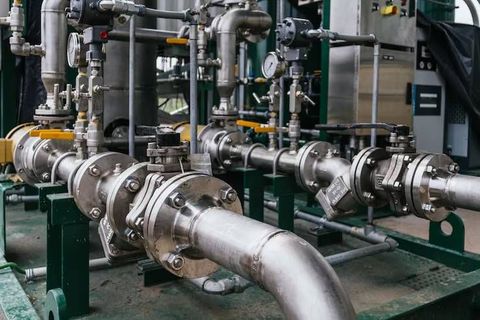
Subsea pump: The primary hydraulic machine used to provide additional pressure or flow assistance. Different pump designs can be selected according to fluid composition, pressure requirements, flow rate, and operating environment.
Pump motor: Provides mechanical energy to the pump. Depending on the system, the motor may be electrically powered through subsea electrical infrastructure.
Pump housing: Protects internal equipment from the surrounding subsea environment and maintains the required pressure boundary.
Control module: Provides electronic or electrohydraulic control functions for subsea equipment.
Sensors: Measure conditions such as pressure, temperature, vibration, flow, electrical characteristics, and equipment status.
Umbilical: A connection between surface facilities and subsea equipment that can contain hydraulic lines, electrical conductors, optical fibers, and other elements.
Subsea manifold: Collects or distributes production and injection fluids between wells, flowlines, and other subsea equipment.
Valves and actuators: Control fluid movement and isolate selected parts of the system.
Importance
Supporting Deepwater Production
As offshore fields extend into deeper water, maintaining adequate pressure and reliable fluid movement becomes increasingly important. Subsea boosting can help move production through long flowlines and support the connection of remote wells to processing facilities.
The technology can therefore influence the layout and operating strategy of an offshore development.
Managing Long Flowlines
Fluid flowing through long subsea pipelines experiences pressure losses caused by friction, elevation changes, fluid properties, and other hydraulic effects.
A subsea pump can provide additional pressure to compensate for selected losses. This can help maintain the required flow conditions between the production area and downstream processing equipment.
Monitoring Remote Equipment
Subsea equipment may be located many kilometers from the surface facility. Direct physical access is difficult, particularly in deepwater environments.
Control systems therefore provide remote monitoring and command capabilities. Operators can observe selected measurements and send instructions through communication and control infrastructure.
Supporting Equipment Protection
Control systems can monitor operating parameters and initiate predefined responses when abnormal conditions are detected. Depending on the system design, these responses can include changing pump operation, closing valves, isolating equipment, or initiating shutdown sequences.
Protection strategies are developed through engineering analysis and application-specific risk assessment.
Major Components and Functions
| Component | Main Function | Typical Role |
|---|---|---|
| Subsea pump | Adds hydraulic energy | Fluid boosting |
| Motor | Drives pump | Mechanical power |
| Control module | Manages equipment | Command and monitoring |
| Sensors | Measure conditions | Operational data |
| Umbilical | Connects surface and seabed systems | Power and communication |
| Manifold | Collects or distributes fluids | Flow management |
| Valves | Regulate or isolate flow | Fluid control |
| Actuators | Move valves | Automated operation |
| Communication link | Transfers information | Remote monitoring |
Recent Updates
Updated Subsea Production Framework
A significant international development is ISO 13628-1:2025, which provides general requirements and recommendations for the development and operation of subsea production and injection systems. The standard covers the lifecycle from concept development through decommissioning and abandonment. It is the third edition and was published in January 2025.
The updated framework reflects the broader evolution of subsea production systems and provides a reference for engineers working with integrated offshore equipment.
Standardized Subsea Boosting Systems
Recent projects indicate continued development of standardized subsea boosting architectures. In 2026, SLB OneSubsea announced a contract for a subsea boosting system for bp's Thunder Horse project in the Gulf of America. The announcement noted that the project follows other subsea boosting developments using a common standardized system approach.
Standardization can simplify engineering and equipment integration across projects that share similar technical requirements.
Advanced Control and Monitoring
Modern subsea control architectures can combine electronic control, hydraulic actuation, high-speed communications, and sensor feedback. Such systems allow surface operators to receive information from subsea equipment and adjust operating parameters remotely.
Subsea pump control systems can also be integrated with broader production-control architectures, allowing pumps, instruments, and other subsea equipment to operate as part of a coordinated system.
Increased Digital Monitoring
More sensors and higher-capacity communication links are enabling greater amounts of subsea operating data to reach surface control systems.
This information can support equipment condition monitoring, performance analysis, troubleshooting, and operational planning. The usefulness of digital monitoring depends on sensor reliability, communication availability, data quality, and appropriate interpretation.
Electrification and Subsea Processing
Subsea production is increasingly incorporating electrically powered equipment and processing technologies. Pumps, compressors, separation equipment, and other subsea systems can be combined to move selected processing activities closer to the wells.
Subsea processing can reduce the need to transport untreated fluids over long distances in some field configurations, although the appropriate architecture depends on field-specific engineering and economics.
Integration With Remote Operations
Remote operation is a central feature of subsea production because many components cannot be reached quickly by personnel. Remotely operated vehicles and intervention tools can also support inspection, maintenance, and selected intervention activities.
The integration of control systems with remote intervention technologies can provide additional flexibility for managing subsea equipment.
Laws or Policies
International Standards
Subsea production systems are designed according to combinations of international standards, industry specifications, national regulations, classification requirements, and project-specific technical rules.
ISO 13628-1:2025 provides general requirements for subsea production and injection systems. Other parts of the ISO 13628 framework address specific areas such as wellhead and tree equipment, umbilicals, remotely operated interfaces, and other subsea components.
Subsea Control Requirements
ISO 13628-6 addressed subsea production control systems, including surface control equipment, subsea-installed control equipment, and control fluids. The 2006 edition has since been withdrawn, so engineers must identify the current applicable standards and project specifications rather than relying on an older edition alone.
Offshore Regulatory Frameworks
Regulatory requirements vary according to where a subsea development is located. Countries and offshore jurisdictions may establish rules covering well integrity, environmental protection, electrical equipment, pressure systems, offshore structures, emergency shutdown systems, and operational safety.
For example, offshore projects may need to comply with requirements established by national petroleum regulators, maritime authorities, environmental agencies, workplace-safety regulators, and classification organizations.
Environmental Requirements
Subsea production projects are subject to environmental requirements that can address drilling activities, produced fluids, chemical use, emissions, seabed disturbance, spills, decommissioning, and waste management.
The applicable requirements depend on the country, offshore jurisdiction, project type, and development location.
Equipment Qualification
Subsea pumps and control components must be engineered for their expected pressure, temperature, fluid composition, water depth, mechanical loads, electrical conditions, and operating lifetime.
Qualification activities can include design verification, material assessment, pressure testing, functional testing, system integration testing, and other project-specific evaluations.
Tools and Resources
Subsea Control Software
Control platforms allow operators to monitor equipment measurements, issue commands, configure operating sequences, and observe alarms or system conditions.
These platforms can integrate information from pumps, valves, sensors, control modules, and other subsea equipment.
Hydraulic and Flow Simulation
Flow simulation tools can model pressure losses, fluid behavior, temperature changes, multiphase flow, and pump performance.
Engineers can use these models to evaluate how different equipment configurations may behave under expected operating conditions.
Digital Monitoring Systems
Condition-monitoring platforms collect information from sensors installed on pumps, motors, valves, and control equipment.
Parameters such as vibration, temperature, pressure, current, voltage, and flow can provide information about equipment performance.
ROV Systems
Remotely Operated Vehicles can travel underwater and interact with subsea equipment through cameras, manipulators, tooling, and specialized interfaces.
ROV interfaces are an established part of subsea system design, allowing selected equipment to be accessed and operated remotely.
Engineering Standards Databases
ISO and other recognized standards organizations provide technical references for subsea production equipment and system design. Engineers and project teams should use the current edition applicable to their project rather than relying on withdrawn documents.
Maintenance and Inspection Data
Historical operating records can help engineers identify equipment trends and investigate changes in pump performance, vibration, temperature, pressure, or other parameters.
Combining monitoring data with engineering models can support more informed decisions about equipment condition and operational changes.
FAQs
What are Subsea Pumps and Control Systems?
Subsea Pumps and Control Systems are equipment and technologies installed underwater to assist fluid movement and remotely manage subsea production equipment. They combine pumps, motors, sensors, valves, control modules, communication systems, and supporting infrastructure.
How do subsea pumps work?
A subsea pump receives production fluid and adds hydraulic energy to increase pressure or support fluid movement through subsea flowlines. The pump is controlled according to the requirements of the wider production system.
What components are used in subsea control systems?
Typical components include control modules, sensors, hydraulic lines, electrical connections, communication links, valves, actuators, surface control equipment, and subsea interfaces.
Where are Subsea Pumps and Control Systems used?
They are mainly associated with offshore oil and gas developments, particularly projects involving long subsea flowlines, remote wells, deepwater fields, or subsea processing arrangements.
Which standards apply to subsea production systems?
International standards include the ISO 13628 series and related industry specifications. ISO 13628-1:2025 provides updated general requirements and recommendations for subsea production and injection systems. Specific projects may also be subject to national regulations, classification requirements, and additional technical standards.
Conclusion
Subsea Pumps and Control Systems combine hydraulic equipment, electrical systems, sensors, communication links, valves, and control technologies to manage fluid movement and subsea production operations. Pumps can support pressure management and long-distance flow, while control systems provide monitoring and remote operation of underwater equipment. Recent developments include updated international standards, standardized boosting architectures, advanced monitoring, electrification, and greater integration of subsea processing technologies. The complete system must be designed around water depth, fluid characteristics, field layout, operating conditions, applicable regulations, and lifecycle requirements.