Plastic Granulators: Explore Their Working Principles
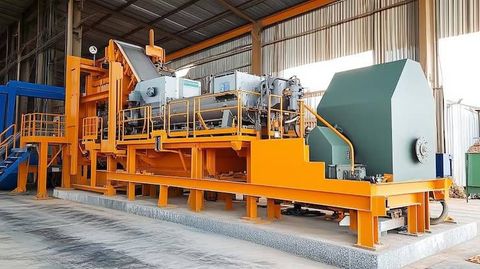
Plastic granulators are machines used to reduce plastic materials into smaller, more uniform particles. They are commonly found in plastic processing, recycling, manufacturing, and waste-management operations. By converting larger plastic pieces into granules or flakes, these machines can make later processing stages easier to manage.
A typical plastic granulator uses a rotating cutting system and a stationary cutting surface. Plastic enters the cutting chamber, where repeated cutting reduces its size until the particles can pass through a screen with the required opening size.
Granulators can process different plastic materials, including production scrap, rejected components, rigid plastic pieces, films, containers, and selected post-consumer materials. Machine configuration depends on the material type, particle-size requirement, throughput, and downstream process.
Main Components of a Plastic Granulator
A granulator generally contains several important components that work together during size reduction.
- Feed hopper: Guides plastic material into the cutting chamber.
- Rotor: Rotates at a selected speed and carries cutting blades.
- Fixed blades: Work against the rotor blades to cut the material.
- Screen: Controls the approximate particle size leaving the chamber.
- Motor and drive: Provide rotational power to the rotor.
- Cutting chamber: Contains the rotor, blades, and screen.
- Housing: Supports the main assembly and helps contain material during processing.
- Collection system: Transfers or collects the processed plastic.
The design of these components affects cutting efficiency, particle consistency, energy consumption, and machine operation.
How Plastic Granulators Work
The working principle is based mainly on mechanical cutting and controlled size reduction.
First, plastic material is introduced through the feed hopper. The rotor then moves the material into the cutting zone. Rotating blades and stationary blades create a cutting action that breaks the plastic into progressively smaller pieces.
The material continues moving inside the chamber until the particles are small enough to pass through the screen. Larger pieces remain in the cutting area for additional reduction.
The final particle size is influenced by screen opening, blade geometry, rotor configuration, material properties, and operating conditions. A properly selected combination can produce a more consistent output for subsequent processing.
Types of Plastic Granulators
Plastic granulators are available in several configurations based on the material and application.
Standard granulators are commonly used for general plastic production scrap and rigid components.
Heavy-duty granulators are designed for larger or more demanding plastic materials and may use stronger cutting assemblies.
Low-speed granulators can be used where controlled material feeding and reduced noise are important considerations.
Central granulators can process production scrap from several manufacturing areas through a centralized arrangement.
Beside-the-machine granulators are positioned close to processing equipment so that production scrap can be reduced shortly after generation.
Film granulators are configured for flexible plastic materials and require appropriate feeding and cutting arrangements.
Importance
Plastic granulators play an important role in material-size reduction and recycling workflows. Their main function is to convert larger plastic pieces into a form that can be handled more easily by washing, separation, extrusion, compounding, or other downstream processes.
Improved Material Handling
Large plastic components can occupy considerable storage and handling space. Granulation reduces the physical size of the material, making movement and temporary storage more manageable.
Uniform particles can also provide more predictable feeding into subsequent processing equipment.
Support for Recycling Processes
Mechanical recycling commonly involves several stages, such as collection, sorting, size reduction, washing, drying, separation, and reprocessing. Granulation is an important size-reduction stage within many such systems.
After granulation, suitable plastic flakes can proceed toward washing or further processing depending on the recycling line.
Particle-Size Control
The screen plays an important role in determining the approximate size of the output. Different screen openings can be selected according to the requirements of the next processing stage.
| Parameter | Typical Consideration |
|---|---|
| Rotor speed | Influences cutting action and throughput |
| Blade geometry | Affects cutting efficiency |
| Screen opening | Influences particle size |
| Material type | Determines suitable cutting arrangement |
| Feed characteristics | Influences processing stability |
| Motor capacity | Relates to processing load |
| Cooling arrangement | Helps manage heat in selected applications |
Production Scrap Reduction
Plastic manufacturing can generate runners, sprues, rejected parts, edge trims, and other process residues. Granulators can reduce suitable scrap into smaller particles for further internal processing or recycling.
This can support material-flow management by converting certain production residues into a more consistent form.
Process Integration
Modern granulators can be integrated with conveyors, separators, dust-control systems, washing lines, dryers, extruders, and monitoring equipment.
Integration can help create a continuous material flow rather than treating size reduction as an isolated operation.
Recent Updates
Plastic granulation technology has developed alongside broader trends in recycling, automation, energy efficiency, and material traceability.
Automated Monitoring
Modern processing lines increasingly use sensors and control systems to monitor operating conditions. Parameters such as motor load, temperature, vibration, rotor operation, and material flow can be monitored to support consistent machine performance.
Automation can also help identify abnormal operating conditions before they develop into larger process interruptions.
Improved Cutting Systems
Rotor and blade designs continue to evolve for different plastic materials. Blade arrangement, cutting angle, rotor geometry, and screen configuration can be selected according to the material being processed.
This is particularly relevant when processing materials with different thicknesses, hardness levels, or flexibility.
Energy-Efficient Operation
Energy efficiency has become an important consideration for plastic-processing equipment. Manufacturers and recycling facilities increasingly examine motor efficiency, drive systems, operating speed, and material-feeding conditions when evaluating overall energy use.
Efficient operation depends not only on the motor but also on correct machine sizing and suitable operating conditions.
Integration With Recycling Lines
Granulators are increasingly considered as part of complete recycling systems rather than standalone machines. A processing line may combine sorting, shredding, granulation, washing, drying, separation, extrusion, and pelletizing.
Digital monitoring can connect several stages and provide information about material movement and equipment operation.
Circular-Economy Focus
Plastic waste management policies are increasing attention on recycling and traceability. In India, the regulatory framework includes Extended Producer Responsibility for plastic packaging, with digital registration and monitoring through CPCB systems.
Laws or Policies
In India, plastic processing and recycling activities are influenced by the Plastic Waste Management Rules, 2016, and subsequent amendments.
The Plastic Waste Management (Amendment) Rules, 2024 introduced further changes to the regulatory framework, including provisions related to plastic raw materials, packaging, and registration requirements.
Plastic waste processors are also subject to registration requirements under the applicable framework. CPCB guidance states that plastic waste processors are required to register with the concerned State Pollution Control Board or Pollution Control Committee through the centralized EPR framework.
The regulatory environment has continued to develop through 2025 and 2026. CPCB's plastic-waste portal currently lists the Plastic Waste Management amendments from 2024, 2025, and 2026, indicating that organizations should consult the latest applicable notification rather than relying only on older guidance.
The earlier plastic EPR portal was discontinued from 28 June 2026 following migration to the Common EPR Portal. Existing registered entities were instructed to verify their migrated information on the new platform.
For a granulation or recycling facility, relevant considerations can include:
- Applicable Plastic Waste Management Rules
- Registration requirements for plastic waste processing
- State Pollution Control Board requirements
- EPR-related documentation
- Environmental permissions applicable to the facility
- Material records and processing records
- Applicable workplace and machine-safety requirements
- Current CPCB and MoEFCC notifications
Requirements can vary according to the activity, material category, location, and type of processing facility.
Tools and Resources
Understanding plastic granulators requires knowledge of both mechanical size reduction and plastic-processing systems.
Technical Resources
Useful areas of study include:
- Plastic material identification
- Polymer processing fundamentals
- Rotor and blade design
- Screen selection
- Particle-size analysis
- Motor and drive systems
- Recycling-line design
- Material separation
- Plastic washing and drying
- Extrusion and pelletizing
Regulatory Resources
The CPCB plastic-waste management dashboard provides access to Plastic Waste Management Rules, amendments, reporting resources, and related documents.
The CPCB EPR framework also provides information on registration, EPR certificates, reporting, and digital monitoring for relevant plastic-waste stakeholders.
Evaluation Points
When studying or specifying a plastic granulator, useful technical questions include:
- What type of plastic will be processed?
- What input dimensions are expected?
- What particle size is required?
- What throughput is needed?
- What rotor and blade configuration is appropriate?
- What screen opening is suitable?
- How will dust and noise be managed?
- How will the output material be collected?
- What downstream process will receive the granulated material?
- What regulatory requirements apply to the processing facility?
FAQs
1. What is a plastic granulator?
A plastic granulator is a machine that reduces plastic materials into smaller particles using rotating and stationary cutting elements. A screen controls the approximate size of the output.
2. How does a plastic granulator work?
Plastic enters the cutting chamber through a feed hopper. Rotor blades cut the material against fixed blades, while the screen allows particles of the required size to leave the chamber.
3. What materials can plastic granulators process?
Depending on the machine configuration, granulators can process production scrap, rigid plastic components, runners, sprues, containers, films, and selected recycled plastic materials.
4. What is the difference between a plastic shredder and granulator?
A shredder generally performs an initial size-reduction stage using tearing or shearing action. A granulator normally uses cutting action to produce smaller and more controlled particles.
5. Why is screen size important in plastic granulation?
Screen opening affects the size of particles that can leave the cutting chamber. Selecting an appropriate screen helps match the granulated material with the requirements of the next processing stage.
Conclusion
Plastic granulators provide controlled mechanical size reduction for plastic manufacturing and recycling processes. Their operation depends on the interaction of rotor blades, fixed blades, screens, drive systems, and material-feeding conditions. Recent developments increasingly connect granulators with automation, monitoring, energy-efficiency measures, and integrated recycling lines. Understanding their working principles can help readers evaluate equipment configuration, particle-size control, process integration, and applicable plastic-waste regulations.