Palletizers: Guide to Automated Packaging Lines and Material Handling Technology
Palletizers are automated material-handling machines that arrange packaged products onto pallets in organized patterns. They are commonly integrated into packaging lines for cartons, bags, cases, containers, and other packaged goods. Modern palletizers use robotic or mechanical systems, sensors, conveyors, and programmable controls to coordinate product movement, stacking patterns, pallet handling, and production workflows.
Palletizers: Guide to Automated Packaging Lines and Material Handling Technology
Palletizers are automated machines used to arrange packaged products onto pallets for storage, transportation, and further handling. They form organized layers of products and place them onto a pallet according to a programmed stacking pattern.
Palletizing is an important stage in many packaging and material-handling operations. Products leaving a filling, wrapping, carton-forming, or other packaging process need to be grouped and prepared for movement through warehouses, distribution areas, or production facilities.
A palletizer can automate this repetitive activity while coordinating product flow from conveyors to the pallet. Depending on the system, products may be arranged using mechanical arms, robotic systems, layer-forming mechanisms, or other automated handling technologies.
Modern palletizers are increasingly connected with conveyors, sensors, programmable controls, vision systems, and warehouse-management technologies. These systems can coordinate product positioning, pallet movement, stacking patterns, and operational monitoring.
Context
Palletizers operate at the end or near the end of many packaging lines. Their primary function is to transform a continuous or grouped product flow into an organized pallet load.
Main Components
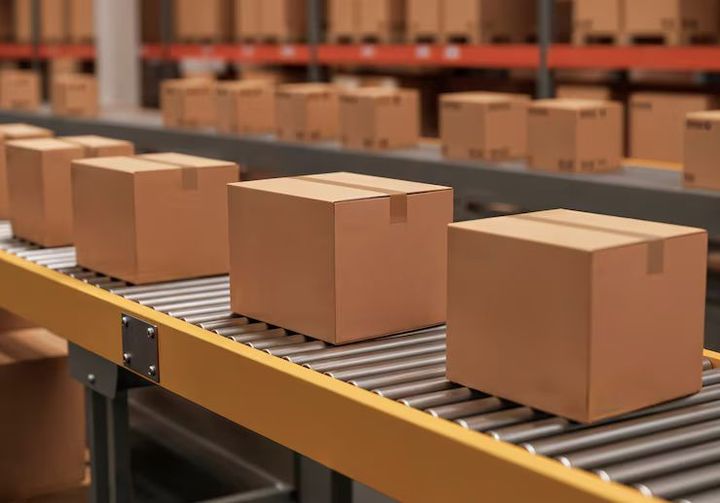
A typical palletizing system contains several interconnected components. Conveyors move products toward the palletizing area, while positioning mechanisms arrange them before stacking.
The pallet handling section introduces empty pallets and moves completed loads away from the working area.
| Component | Main Function |
|---|---|
| Product conveyor | Transfers packaged products |
| Product aligner | Positions products before stacking |
| Layer-forming system | Arranges products into layers |
| Robotic arm | Moves products or groups into position |
| Gripper | Holds products during robotic movement |
| Pallet dispenser | Supplies empty pallets |
| Pallet conveyor | Moves pallets through the system |
| Sensors | Detect products and machine conditions |
| Control system | Coordinates automated functions |
| Safety system | Monitors access and operating conditions |
How Palletizers Work
Products arrive from an upstream packaging machine through a conveyor. The system groups and positions them according to the required pallet pattern.
The palletizer then places each group or layer onto the pallet. The process continues until the programmed number of layers has been completed.
Once the pallet is finished, it can be transferred through a pallet conveyor to another area. A new empty pallet is then introduced into the palletizing position.
Main Types of Palletizers
Conventional palletizers use mechanical systems to organize and stack products. They can be designed for high-throughput packaging environments where product formats remain relatively consistent.
Robotic palletizers use robotic arms with specialized grippers to move products onto pallets. Their programmable movement allows them to handle different stacking patterns and product arrangements.
Layer palletizers form complete product layers before placing them onto the pallet. This configuration can provide organized stacking for suitable product formats.
Bag palletizers are designed for products packaged in bags, including selected food, agricultural, chemical, and industrial materials. Their handling systems are configured around the shape and characteristics of the bags.
Pallet Patterns
A palletizing pattern determines how products are arranged within each layer. Common arrangements can include interlocking patterns, column stacking, and other geometric configurations.
The selected pattern depends on product dimensions, package strength, pallet dimensions, stability requirements, and downstream handling conditions.
Importance
Palletizers contribute to packaging-line automation by organizing products into standardized pallet loads.
Packaging Line Integration
A palletizer can connect with upstream equipment such as case packers, carton sealers, bagging systems, wrapping machines, and conveyors.
Synchronization between these machines helps maintain a controlled product flow. The palletizer needs to receive products at a rate compatible with the upstream packaging equipment.
Consistent Stacking
Automated palletizing systems can follow programmed stacking patterns. Consistent positioning helps create organized pallet loads that can be handled by forklifts and other material-handling equipment.
The final arrangement depends on the product dimensions, pallet configuration, and programmed pattern.
Material Handling
Palletizers reduce the amount of repetitive manual product movement required at the palletizing stage. Automated systems can continuously move packages from the production line to pallets.
This is particularly useful where packaging lines operate at sustained production rates.
Product Protection
A suitable stacking pattern can help distribute packages across the pallet and reduce unnecessary movement during handling. The correct arrangement depends on package strength and the requirements of the finished load.
Pallet stability also depends on wrapping, strapping, pallet condition, package dimensions, and transportation conditions.
Flexible Production
Robotic palletizers can often be programmed for different products and pallet patterns. This can support facilities that handle multiple package sizes or production formats.
Changeover requirements depend on the machine design, gripper configuration, control software, and number of product formats.
Recent Updates
From 2024 through 2026, palletizing technology has continued to develop around robotics, machine vision, flexible automation, digital controls, connectivity, and improved safety systems.
Robotic Palletizing
Robotic arms have become an important part of automated palletizing systems. They can pick individual products or groups and place them according to programmed patterns.
Robot programming allows movement sequences to be adjusted for different products and pallet configurations.
Vision Systems
Machine vision can help identify product position, orientation, package characteristics, and other visual information. Cameras can work with software to provide positioning data to robotic or automated handling systems.
Vision capabilities vary considerably according to the application and system configuration.
Flexible Grippers
End-of-arm tooling is a critical part of robotic palletizing. Vacuum grippers, mechanical clamps, forks, and other tools can be designed for different package types.
Modern systems increasingly emphasize adaptable tooling for handling multiple package formats. The appropriate gripper depends on package material, dimensions, weight, surface characteristics, and required handling method.
Digital Controls
Programmable control systems coordinate conveyors, robots, pallet dispensers, sensors, and safety equipment. Operator interfaces can provide information about machine status, product flow, alarms, and selected production parameters.
Digital controls can also support recipe or product-format management where the system is designed for multiple configurations.
Connectivity
Connected palletizing equipment can exchange data with broader production and warehouse systems. Depending on the installation, information may include production counts, equipment status, alarms, operating hours, and other operational data.
Integration with manufacturing or warehouse platforms can improve visibility across material-handling activities.
Safety Technology
Automated palletizers use safety systems such as guarding, interlocked access points, emergency stops, light curtains, scanners, and other protective devices.
Modern safety architecture is increasingly integrated with machine controls to monitor access and stop or restrict hazardous movement when required.
Laws or Policies
Palletizing systems are subject to workplace safety, machinery, electrical, and material-handling requirements that vary according to the country and facility.
Machine Safety
Palletizers contain moving conveyors, robotic arms, mechanical mechanisms, and automated pallet-handling equipment. Workers must be protected from moving components through appropriate guarding and safety systems.
Access to the machine's operating zone should be controlled according to applicable safety requirements.
Robotic Safety
Robotic palletizers can move quickly through predefined work areas. Safety systems may include physical barriers, access interlocks, presence-sensing devices, emergency stops, and controlled operating modes.
Maintenance personnel require suitable procedures for entering robotic work zones.
Electrical Safety
Palletizing systems contain control panels, motors, sensors, drives, and other electrical equipment. Installation and maintenance should comply with the applicable electrical regulations and equipment documentation.
Electrical isolation procedures are important during inspection and maintenance activities.
Workplace Ergonomics
Although palletizers automate repetitive handling, workers may still interact with pallets, packaging materials, conveyors, and machine controls. Workstation design and manual-handling procedures should account for lifting, reaching, access, and repetitive activities.
Product and Packaging Requirements
The palletizing pattern should be compatible with product and packaging specifications. Some industries may have additional requirements concerning hygiene, contamination control, package integrity, or traceability.
Food, pharmaceutical, chemical, and other regulated production environments can have sector-specific requirements.
Tools and Resources
Palletizing operations rely on mechanical, electrical, digital, and measurement resources.
Conveyors
Conveyors transfer products between packaging machines and the palletizer. Different conveyor designs may be selected according to package size, shape, weight, and line configuration.
Proper alignment and speed coordination are important for maintaining consistent product flow.
Robotic Grippers
Grippers are selected according to the products being handled. Vacuum systems may work with suitable flat surfaces, while mechanical gripping systems can be used for other package shapes.
Tooling should be matched to the product and robot's rated capacity.
Sensors
Photoelectric sensors, proximity sensors, encoders, and other devices can detect products and monitor machine movement.
These sensors help coordinate conveyors, positioning mechanisms, pallet handling, and safety functions.
Machine Vision
Vision systems can provide information about package orientation and location. They can be useful in applications where product position varies before reaching the palletizing area.
Control Software
Programmable logic controllers and robotic control software coordinate the different machine functions. Operators may use human-machine interfaces to select product formats and monitor operating conditions.
Maintenance Resources
Maintenance documentation can include electrical diagrams, robot manuals, lubrication instructions, sensor information, gripper specifications, and conveyor maintenance procedures.
Regular inspection can identify worn belts, damaged sensors, loose mechanical components, gripper issues, and other operational problems.
FAQs
What are palletizers used for?
Palletizers are used to arrange packaged products into organized pallet loads. They are commonly used for cartons, cases, bags, containers, boxes, and other packaged materials.
How do palletizers work?
Products travel from a packaging line into the palletizing system. The machine groups and positions them according to a programmed pattern, then places them onto a pallet layer by layer or through individual robotic movements.
What are the main types of palletizers?
Common types include conventional palletizers, robotic palletizers, layer palletizers, and specialized bag palletizers. Their configurations depend on product characteristics, throughput requirements, pallet patterns, and production-line design.
Why are palletizers important in automated packaging lines?
Palletizers automate repetitive product arrangement and integrate pallet formation with upstream packaging equipment. They help create organized loads for subsequent storage and material-handling activities.
What technologies are used in modern palletizers?
Modern palletizers can use robotic arms, machine vision, programmable controls, sensors, flexible grippers, digital monitoring, connectivity, and integrated safety systems.
Conclusion
Palletizers automate the arrangement of packaged products onto pallets and form an important connection between packaging lines and downstream material handling. Conventional, layer, robotic, and specialized systems can be configured for different products and pallet patterns.
Recent developments have expanded the use of robotics, machine vision, flexible grippers, digital controls, connectivity, and integrated safety technologies. Proper machine integration, pallet pattern selection, equipment maintenance, product handling, and workplace safety remain important for reliable palletizing operations.