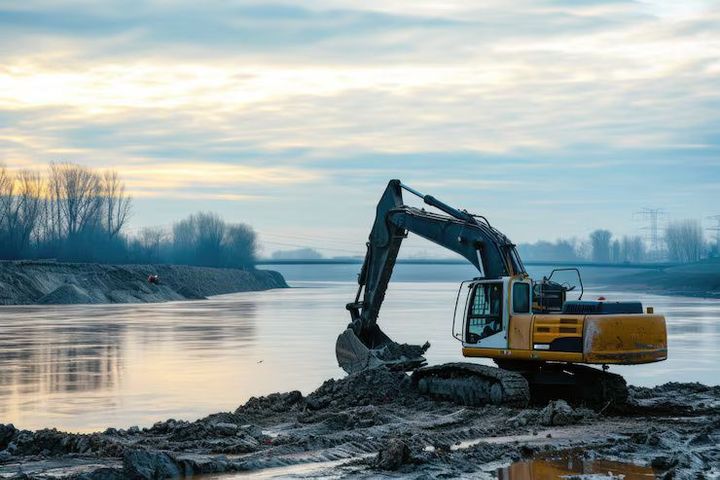
Mining Excavators: Explore Heavy Equipment Technology and Large-Scale Excavation
Mining excavators are large-scale heavy equipment designed for digging, loading, and material handling in demanding excavation environments. They combine powerful hydraulic systems, robust structures, advanced controls, and specialized attachments to handle different ground conditions. Modern mining excavators increasingly use automation, monitoring systems, and improved energy management to support consistent and controlled excavation operations.
Mining Excavators: Explore Heavy Equipment Technology and Large-Scale Excavation
Context
Mining excavators are large machines used for digging, breaking, loading, and moving materials in large-scale excavation environments. They are commonly found in surface mining, quarrying, construction-related earthmoving, and other operations where substantial quantities of rock or soil must be handled.
These machines are designed to work in demanding conditions. Their structures, hydraulic systems, engines or electric drive systems, and attachments are engineered to withstand heavy workloads, abrasive materials, vibration, and extended operating cycles.
A typical mining excavator consists of several major systems working together:
Main frame and undercarriage
Upper structure and rotating platform
Hydraulic system
Power system
Boom and arm
Bucket or specialized attachment
Operator cab and control system
Cooling and lubrication systems
Monitoring and safety systems
The excavator normally positions its bucket or attachment against the working material, penetrates or gathers the material, lifts the loaded attachment, rotates toward the designated area, and releases the material. The cycle then repeats according to the excavation and loading requirements.
Major Types of Mining Excavators
Mining excavators can be grouped according to their design, power system, operating configuration, and intended application. Hydraulic excavators are widely used because their hydraulic systems can deliver substantial digging and lifting forces.
Electric mining excavators are also used in some large-scale operations. Instead of relying entirely on a conventional engine-driven powertrain, they use electric drive systems that can support specific operational and energy-management requirements.
Rope shovels represent another category of large excavation equipment. These machines use a different mechanical arrangement from hydraulic excavators and are associated with large-scale material loading applications.
Main Components
The boom, arm, and bucket form the primary working structure. Their movement determines the reach, digging depth, and loading position of the machine.
The hydraulic system transfers power to cylinders and motors that control the working equipment and machine movements. Pumps, valves, hydraulic lines, cylinders, and filtration components work together to maintain controlled movement.
The undercarriage supports the machine and enables movement across the working area. Tracks are commonly used on large excavators because they provide stability on uneven ground.
The operator cab contains controls, displays, cameras, communication equipment, and other systems used to monitor machine activity and the surrounding work area.
Importance
Mining excavators play an important role in large-scale material handling because they can combine digging and loading functions within a single machine. Their operating capacity influences how material moves from the excavation area toward haulage equipment or other processing stages.
Excavation Performance
Large excavators are designed to penetrate and collect substantial quantities of material during repeated operating cycles. Bucket design, hydraulic pressure, boom geometry, and machine configuration all influence excavation performance.
Different ground conditions may require different attachment configurations. Loose material, compacted soil, fragmented rock, and other materials can place different demands on the machine.
Material Loading
Excavators are often positioned alongside haul trucks or other transport equipment. After collecting material, the excavator rotates and releases the load into the receiving equipment.
Efficient coordination between excavation and haulage can help maintain a consistent material flow. Machine positioning, bucket capacity, swing angle, and loading sequence all influence the overall operating cycle.
Stability and Structural Strength
Mining environments can involve uneven surfaces, substantial loads, vibration, and abrasive materials. Excavator structures therefore need appropriate strength and stability for their intended operating conditions.
The undercarriage, swing mechanism, boom, arm, and bucket experience repeated mechanical forces. Inspection and maintenance programs help identify wear or damage before it affects normal operation.
Automation and Monitoring
Modern mining excavators increasingly incorporate electronic monitoring and control technologies. Sensors can collect information about hydraulic pressure, temperature, engine or motor conditions, operating cycles, and other machine parameters.
Digital monitoring can help operators and technical teams understand machine behavior. Depending on the equipment configuration, automated functions can also assist with positioning, digging sequences, payload monitoring, or operating consistency.
Recent Updates
Mining excavator technology has continued to develop through advances in automation, digital monitoring, electric power systems, operator assistance, and machine connectivity.
Digital Monitoring
Many modern machines include onboard monitoring systems that track operating conditions. Information from sensors can be displayed through digital interfaces and may also be transferred to centralized monitoring platforms.
These systems can help identify changes in machine behavior and support maintenance planning. Data may include hydraulic temperatures, pressure levels, operating hours, fuel or energy use, and other equipment parameters.
Operator Assistance
Electronic control systems can provide operators with information about machine position, bucket movement, loading conditions, and operating parameters.
Cameras and proximity-awareness technologies can also improve visibility around large machines. These features are particularly useful where the excavator operates alongside haulage equipment and other heavy machinery.
Automation
Automation is becoming increasingly relevant in large-scale mining. Depending on the mine and equipment configuration, automated functions can support repetitive movements, machine positioning, digging patterns, and operating-cycle consistency.
Automation does not remove the importance of trained personnel. Human oversight, site procedures, equipment inspection, and operational controls remain important parts of safe machine use.
Electric and Energy-Focused Systems
Electric excavation equipment is receiving greater attention as mining operations examine different approaches to energy management and emissions reduction. Electric drive systems can have different operating characteristics from conventional diesel-powered systems.
The suitability of an electric excavator depends on factors such as mine infrastructure, electrical availability, machine size, operating pattern, and environmental conditions.
Improved Cab Technology
Operator environments are also evolving. Modern cabins can incorporate improved displays, ergonomic controls, cameras, communication systems, and environmental controls.
Clear digital information can help operators monitor machine conditions while maintaining attention on the working area.
Laws or Policies
Mining excavators operate under workplace safety, environmental, electrical, mechanical, and mining regulations that vary by country and site. Operators and organizations need to follow the requirements applicable to their specific location and type of operation.
Workplace safety requirements commonly address machine guarding, operator visibility, emergency controls, maintenance procedures, access systems, and safe separation between mobile equipment and personnel.
Equipment Safety
Excavators should be operated according to manufacturer documentation and site-specific procedures. Operators generally need appropriate training for the equipment configuration and working environment.
Pre-operation inspections can cover tracks, hydraulic systems, attachments, controls, warning systems, structural components, and fluid levels.
Environmental Requirements
Large mining operations may be subject to requirements related to emissions, noise, dust, waste management, land disturbance, and water protection. The specific requirements depend on local legislation and the type of mining activity.
Electric equipment can introduce additional requirements related to electrical infrastructure, charging or power connections, and high-voltage safety where applicable.
Maintenance Records
Maintenance and inspection records can provide evidence that equipment is being managed according to operational procedures. Documentation may include inspection findings, component replacement records, lubrication activities, safety checks, and equipment operating hours.
Tools and Resources
Mining excavators depend on supporting tools, components, and technical resources to maintain controlled operation.
| Tool or Resource | Main Function |
|---|---|
| Hydraulic pressure gauges | Monitor hydraulic system conditions |
| Diagnostic systems | Identify electronic and machine-system conditions |
| Lubrication equipment | Support moving component maintenance |
| Track inspection tools | Check undercarriage condition |
| Wear measurement tools | Monitor component wear |
| Cameras and sensors | Improve visibility and machine awareness |
| Payload monitoring systems | Track material loading information |
| Technical manuals | Provide operating and maintenance procedures |
Buckets and other attachments should match the intended material and operating conditions. Bucket teeth, cutting edges, and related components are exposed to significant mechanical and abrasive forces and therefore require regular inspection.
Hydraulic filters, hoses, cylinders, pumps, and valves are also important resources for maintaining system performance. Correct fluid specifications and appropriate filtration practices help support hydraulic-system operation.
Digital diagnostic platforms can provide additional information about equipment conditions. When combined with inspection records and operator observations, this information can contribute to more structured maintenance planning.
FAQs
What are Mining Excavators used for?
Mining excavators are used for large-scale digging, material collection, loading, and excavation activities. They can handle soil, fragmented rock, minerals, and other materials depending on their configuration and attachment.
How do Mining Excavators work?
Mining excavators use a combination of hydraulic, mechanical, electrical, and control systems to move the boom, arm, and bucket. The machine collects material, rotates toward the loading area, releases the material, and returns to the excavation position.
What are the main types of Mining Excavators?
Common categories include hydraulic excavators, electric excavators, and large rope shovels. Each design uses different power and mechanical systems and may be suited to particular excavation and loading environments.
What components are important in Mining Excavators?
Major components include the undercarriage, upper structure, swing mechanism, hydraulic system, boom, arm, bucket, power system, operator cab, controls, and monitoring equipment.
How is technology changing Mining Excavators?
Recent technology developments include digital monitoring, operator-assistance systems, automation, advanced cameras and sensors, electric drive systems, and improved data connectivity. These technologies can support greater visibility into machine operation and more consistent equipment control.
Conclusion
Mining excavators are fundamental machines for large-scale excavation and material handling. Their combination of powerful working equipment, durable structures, hydraulic or electric systems, and digital controls allows them to operate across demanding environments. Recent developments in automation, monitoring, operator assistance, and energy-focused technologies are expanding their capabilities. Safe operation, appropriate equipment selection, regular inspection, and compliance with applicable requirements remain important for effective use.