Local Artisan Village Visits: Guide to Rural & Cultural Tourism
Local artisan village visits are travel experiences that allow visitors to explore communities where traditional crafts are practiced as part of everyday life.
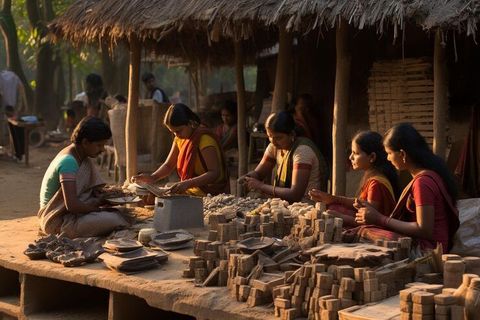
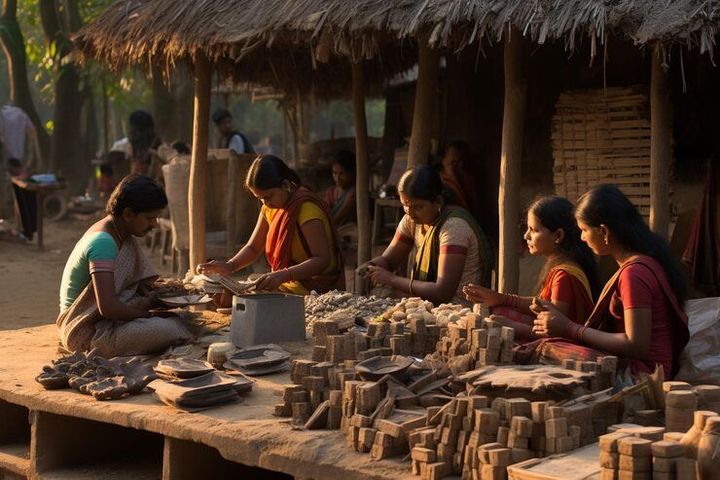
Instead of seeing handicrafts only in museums or exhibitions, visitors can observe artisans working with materials, tools, techniques, and designs that have often been passed through generations.
India has a particularly diverse artisan heritage. Pottery, handloom weaving, embroidery, wood carving, metalwork, basketry, painting, stonework, jewellery traditions, and other crafts are practiced in different regions.
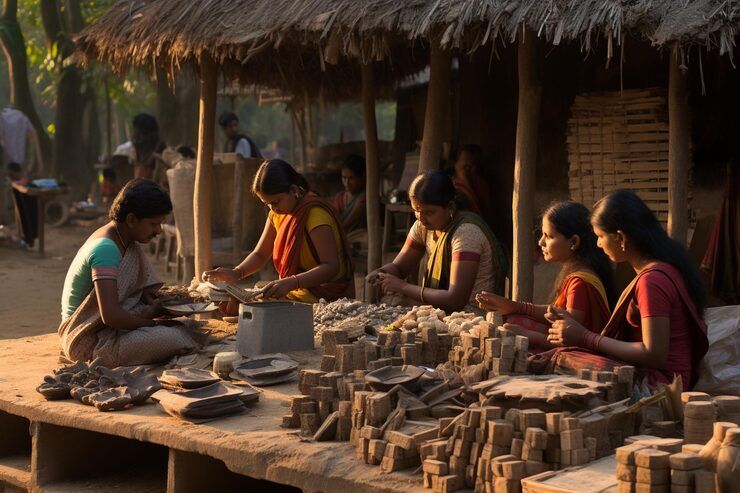
A craft village may combine workshops, traditional homes, community spaces, demonstrations, cultural activities, and nearby attractions. The Ministry of Textiles describes Craft Handloom Villages as places where craft or handloom activity and tourism are developed together, allowing visitors to experience production processes and, in some locations, participate in demonstrations.
Examples of Indian craft destinations include Raghurajpur in Odisha, Anegundi in Karnataka, Vadaj in Gujarat, Mahabalipuram in Tamil Nadu, and Amer in Rajasthan. These locations have been included in government initiatives connecting handicraft clusters with tourism.
A local artisan village visit can therefore be understood as a form of cultural tourism and rural tourism that connects travel with living traditions.
Why Artisan Village Visits Matter Today
Traditional crafts face several challenges, including changing consumer preferences, limited awareness among younger generations, competition from mass-produced goods, and difficulties in maintaining traditional techniques.
Village visits can help address some of these challenges by creating direct cultural contact between visitors and artisan communities. Visitors gain a clearer understanding of how products are made, while communities gain greater visibility for their traditions.
The importance of artisan village tourism can be viewed through several areas:
- Cultural preservation: Traditional skills and techniques can remain visible and relevant.
- Rural development: Tourism can create additional economic activity in rural areas.
- Education: Students and visitors can learn about materials, tools, design, and cultural history.
- Community participation: Local residents can participate in demonstrations, cultural activities, accommodation, and interpretation.
- Heritage awareness: Visitors can better understand the historical background of regional crafts.
- Responsible tourism: Smaller community-based experiences can encourage visitors to respect local customs and environments.
The Ministry of Textiles has developed craft-cluster programs intended to strengthen traditional handicraft communities through infrastructure, training, design development, demonstrations, and other forms of institutional support. In August 2025, the government reported that 124 craft-cluster programs had been implemented across 23 states during 2024–25 under the Ambedkar Hastshilp Vikas Yojana component of the National Handicrafts Development Programme.
A simplified view of the relationship is:
| Area | Potential contribution of village visits |
|---|---|
| Culture | Greater awareness of local traditions |
| Education | Practical learning about traditional crafts |
| Rural tourism | More visitor activity in rural communities |
| Heritage | Documentation and appreciation of traditional practices |
| Community | Participation in tourism-related activities |
| Craft knowledge | Greater visibility for traditional techniques |
Recent Developments in Artisan and Rural Tourism
India's approach to rural and craft tourism has continued to develop during 2025 and 2026.
In August 2025, the Ministry of Tourism published its National Strategy and Roadmap for Development of Rural Tourism in India on its official guidelines platform. The strategy forms part of a wider policy framework for developing rural destinations and encouraging tourism that connects visitors with local communities and culture.
Another important development came in December 2025, when the Ministry of Textiles announced the nationwide rollout of the Chaupal Program. The initiative focuses on increasing awareness of handicraft traditions, strengthening entrepreneurship, and encouraging sustainable handicraft clusters.
In March 2026, the Ministry of Textiles also announced the Mahatma Gandhi Gram Swaraj Initiative. The framework focuses on rural self-reliance in khadi, handloom, and handicrafts, with attention to training, skills, rural enterprises, and broader market linkages.
In July 2026, Indie Haat 2026 was held at the National Crafts Museum and Hastkala Academy in New Delhi from July 10 to 19. The event was linked with Bharat Tex 2026 and highlighted India's handloom and handicraft heritage.
These developments indicate a broader movement toward connecting traditional crafts with cultural tourism, rural development, skills, and heritage interpretation.
Laws, Policies and Government Programs
Artisan village visits in India are influenced by several government policies rather than one single national law specifically governing village visits.
The Ministry of Tourism maintains national strategies covering rural tourism, sustainable tourism, rural homestays, and other tourism areas. These frameworks provide guidance for states, local authorities, communities, and tourism stakeholders developing rural destinations.
The Ministry of Textiles also operates programs through the Development Commissioner (Handicrafts). The National Handicrafts Development Programme focuses on strengthening the handicrafts sector, improving craft quality, supporting traditional knowledge, and integrating artisans into formal economic structures.
The PM Vishwakarma scheme is another relevant national initiative. Launched on September 17, 2023, it covers 18 traditional trades, including pottery, metalwork, sculpture, basket making, toy making, tailoring, carpentry, and other occupations. In July 2026, the government reported that more than 24 lakh traditional artisans had benefited through the scheme's various forms of support.
Rules can also vary by state and destination. Visitors should consider:
- Local photography and filming rules.
- Entry requirements for protected or restricted areas.
- Local environmental regulations.
- Heritage-site rules where applicable.
- Community customs regarding homes and workshops.
- Rules governing accommodation in rural or tribal areas.
- Restrictions on collecting plants, objects, archaeological materials, or cultural artifacts.
The Ministry of Tourism's 2025 guidelines for tribal-area homestays emphasize responsible tourism, community participation, cultural preservation, cleanliness, accessibility, and safety.
Helpful Tools and Resources for Planning
Good preparation can make an artisan village visit more informative and respectful. Visitors can use official government portals and basic travel-planning tools before visiting.
Useful resources include:
- Ministry of Tourism: Information about national tourism strategies and destination development.
- Development Commissioner (Handicrafts): Information about Indian handicrafts, craft clusters, programs, and artisan initiatives.
- Development Commissioner (Handlooms): Information about handloom traditions and Craft Handloom Villages.
- State tourism websites: Local destination information, access details, and regional tourism guidance.
- Digital maps: Useful for checking roads, distances, landmarks, and approximate travel times.
- Translation tools: Helpful when communicating about local craft names, materials, and cultural terminology.
- Travel planning templates: Useful for recording transport, visiting hours, accommodation details, local customs, and emergency contacts.
The official handicrafts portal also provides information about craft clusters and government programs across India.
A simple planning checklist can include:
- Identify the craft tradition associated with the village.
- Check the destination's current visiting information.
- Confirm transportation and road conditions.
- Research appropriate visitor behavior.
- Carry suitable clothing for the local environment.
- Ask before photographing people or private workspaces.
- Avoid touching tools or unfinished work without permission.
- Respect religious, cultural, and household boundaries.
- Keep the village environment clean.
- Learn a few basic words used locally.
Frequently Asked Questions
What is a local artisan village visit?
It is a travel experience focused on visiting a community where traditional crafts are practiced. Visitors may observe artisans, learn about materials and techniques, explore cultural surroundings, and participate in permitted demonstrations.
Which Indian regions are known for artisan villages?
Many parts of India have important craft communities. Examples include Odisha, Gujarat, Rajasthan, Karnataka, Tamil Nadu, Uttar Pradesh, Andhra Pradesh, Kerala, Assam, Himachal Pradesh, Jammu and Kashmir, and other regions. The particular craft differs from one community to another.
Are artisan village visits suitable for educational travel?
Yes. They can provide practical learning about traditional technology, materials, design, cultural history, geography, and community life. Schools and educational groups should coordinate activities carefully and follow local rules.
Can visitors photograph artisans at work?
Photography policies vary. Visitors should ask permission before photographing people, homes, private workshops, religious activities, or unfinished work. Some destinations may have specific restrictions.
How can visitors practice responsible cultural tourism?
Visitors can respect local customs, avoid disrupting work, ask before taking photographs, remain within permitted areas, reduce waste, and learn about the history of the craft before arriving. Responsible behavior helps maintain a respectful relationship between visitors and communities.
Conclusion
Local artisan village visits provide a way to experience India's living cultural heritage beyond conventional monuments and museums. They connect visitors with traditional crafts, rural landscapes, community knowledge, and regional history.
The growing policy focus on rural tourism, craft clusters, traditional skills, and community participation shows that artisan villages have an important place within India's wider heritage tourism and cultural tourism landscape. Recent initiatives such as the rural tourism strategy, Chaupal Program, Mahatma Gandhi Gram Swaraj Initiative, and craft-focused events in 2025–2026 demonstrate continued government attention to these areas.